





The most common reasons at a glance
Usually one of a few adjustable factors is off. The table helps you place your situation.
| What you notice | Likely cause | What to change |
|---|---|---|
| Fine right after applying cream, tight again an hour later | Humectants without a sufficient protective film, or the cream has already been washed off | After washing, apply a care product containing fats or wax that forms a film |
| Hands are rougher after work than in the morning | Lots of water, soap, hand sanitiser or cleaning products during the day | Reapply a small amount after every wash; wear gloves for wet work |
| The tube lasts forever, hands stay dry | Amount too small, applied too rarely | Use more, especially in the evening; do not forget the backs of your hands and between your fingers |
| It stings when you apply it | Small cracks; some ingredients can feel unpleasant on cracked skin | Switch to a care product with few ingredients; if the discomfort persists, get it checked by a doctor |
| Only bad in winter | Cold outside, dry heated air inside | Gloves outdoors, richer care in the evening |
| Only on fingertips, knuckles or cuticles | Areas under particular strain | Care for these areas specifically (see links below) |
Moisture needs a film
Skin care creams work with two principles. Humectants such as glycerin, urea or aloe bind water in the outer layer of the skin (stratum corneum). Occlusives such as waxes, butters and oils lay down a film that slows evaporation. One review describes humectants as double-edged: they draw water from deeper skin layers into the epidermis, where it is easily lost to the environment, and only in humid air do they also take water from the surroundings (Sethi et al. 2016). Without a film on top, the skin can feel dry again shortly after you apply cream.
This is where the myth “glycerin dries out the skin” comes from. It is not true as stated. According to a review, glycerin improves the hydration of the stratum corneum and barrier function, especially in cold and dry air (Fluhr et al. 2008). It simply works best together with a film that holds the bound water in place. More on the three principles: Humectants, occlusives, emollients.
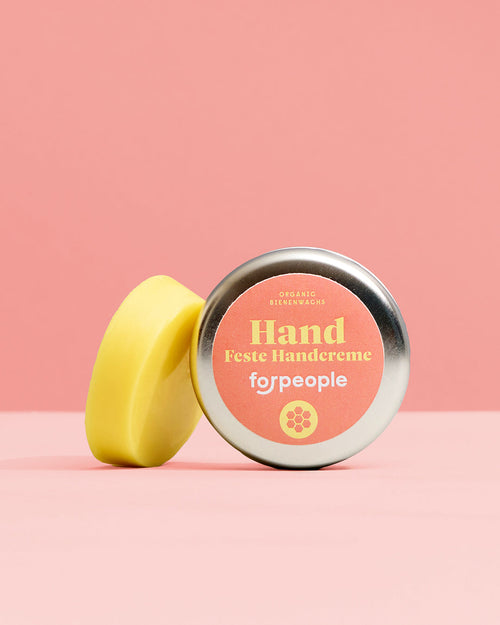
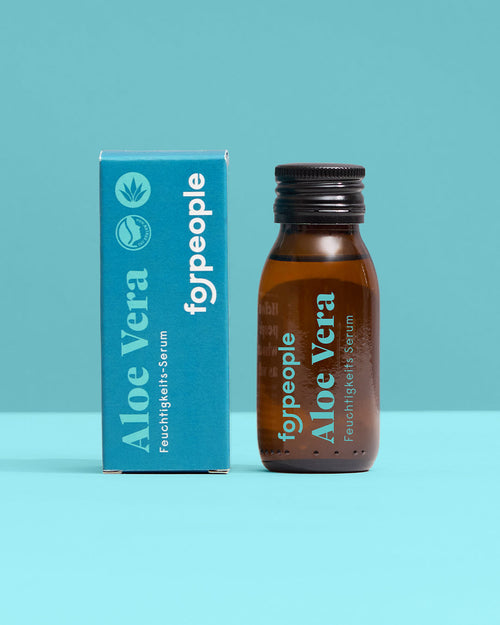
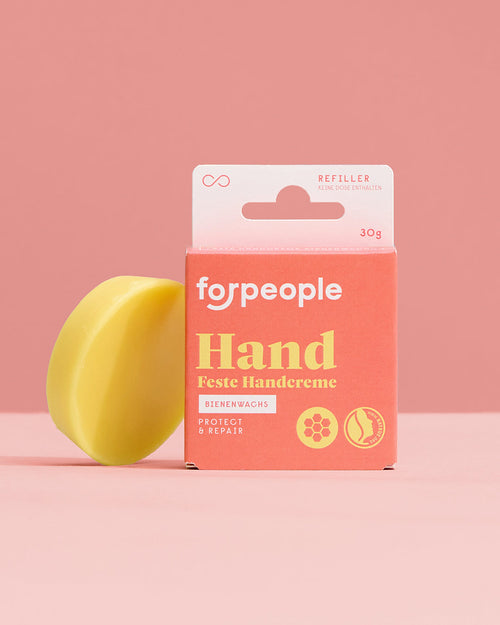
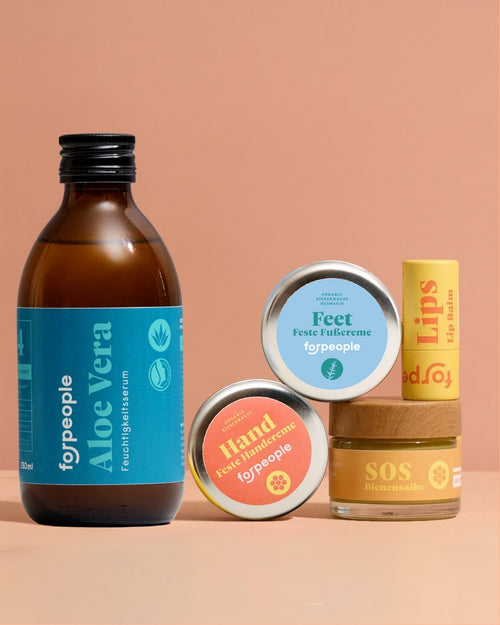
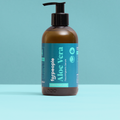
A water-free product such as the Solid Hand Cream - Beeswax consists, according to its INCI list, of beeswax, olive and sunflower oil plus St. John's wort and aloe extract. It brings no water of its own but lays down the film. If you want to combine moisture and film, you can first apply a water-based product such as the Aloe Vera Serum 99.6% and put the solid cream on top. How that works is explained in Combining aloe vera serum with oil or solid cream.
Too little, too rarely, at the wrong time
As with any active ingredient, how well a care product works depends on the amount, and that is often where things fall short in everyday life (Lodén 2003). Dermatology offers a reference point, the fingertip unit: the amount of ointment from the fingertip to the first crease of the index finger. In a study with 30 adults, participants needed an average of 1.2 of these units for one hand (Long & Finlay 1991). For everyday life this means: during the day, small amounts are enough if you apply them often. In the evening you can use considerably more.
Timing matters too. Film-forming oils and waxes work best on slightly damp skin (Sethi et al. 2016). So after washing, just pat your hands dry and apply cream while they still feel a little damp. How best to spread a solid cream is shown in How to apply solid cream properly.
The most important application is the one in the evening. At night, the film stays on for hours. How long a care film lasts in everyday life is explained in How long does a care film stay on the skin?.
Washing removes the care again
A cream disappears from the skin in several ways: it is absorbed, evaporates, flakes off with the uppermost skin cells or is rubbed off through contact with other materials (Lodén 2003). When you wash your hands, surfactants also do more than lift dirt: they interact with the fats and proteins of the stratum corneum. This can cause tightness and dryness after washing; a high pH increases the effect (Ananthapadmanabhan et al. 2004).
Occupational safety rules show how much washing already counts as a lot. The German Technical Rule for Hazardous Substances TRGS 401 classifies work with frequent hand washing as wet work. Anyone who washes their hands at least 15 times per working day falls into the same group as someone with more than two hours of skin contact with water per day. Alcohol-based hand sanitisers also count as aqueous liquids there (TRGS 401). More in Dry, cracked hands from frequent washing and Rough hands from washing up and cleaning.
In practice this means: a pea-sized amount after every wash makes more sense than a lot twice a day. For wet work or cleaning products, a glove protects better than any cream; what to keep in mind is explained in Hand cream under latex or nitrile gloves?.
When the cream itself does not suit you
Not every care product is good for every skin. Studies show that some moisturisers improve the skin's barrier function and others worsen it, even in healthy skin. Which effect occurs depends on the composition (Lodén 2012). The literature names, among other possible factors, emulsifiers that can weaken the barrier, as well as fragrances and acids whose smell or stinging makes use unpleasant (Lodén 2003). No ingredient group is bad in principle because of this. But if a cream does not work for you, switching to a differently built formula is worth a try.
Urea is a well-researched humectant. Some people find it unpleasant on cracked skin. When urea and when a water-free cream is the better fit is explained in Urea or water-free cream?. If you want to avoid fragrance, Without fragrance and essential oils helps you read the INCI list. According to its INCI list, the Solid Hand Cream - Beeswax contains no added fragrance and no essential oils.
A one-week test
Do not change everything at once; give a clear routine seven days:
- Wash your hands with lukewarm rather than hot water, rinse well, just pat dry.
- Straight afterwards, apply a small amount of film-forming care, including on the backs of your hands, knuckles and cuticles.
- If you use a humectant: apply it first, then the film on top.
- In the evening, use a generous amount, massage it in well and do not wash your hands again afterwards.
- Outdoors in the cold, wear gloves; for wet work, wear protective gloves.
If your hands do not feel noticeably better after a week, the cause is more likely the formula or something that should be clarified by a doctor.
When to seek medical advice
- Your skin does not improve after two to three weeks despite consistent care.
- Cracks bleed, hurt or do not close.
- The skin is red, swollen, weeping or forms blisters.
- The problems are linked to your work; then your company doctor is also a point of contact.
Such changes can be caused by a skin condition, and a care cream is no substitute for having it checked.
Frequently asked questions
Why are my hands dry even though I moisturise all the time?
Usually the care does not stay on the skin long enough: amounts too small, no protective film, the wrong timing or frequent washing afterwards. Apply cream straight after washing on slightly damp skin, and generously in the evening.
Does glycerin dry out your hands?
No. Glycerin binds water in the stratum corneum. Without a protective film on top, however, that water can evaporate again. That is why it works best together with fats or waxes.
Can you moisturise your hands too often?
Frequent small applications make sense if you wash your hands a lot. If your skin feels soggy or greasy, use less each time.
Does a greasy cream work better than a light one?
Not automatically. What matters is that a film forms that lasts long enough. Thin layers suit the daytime, a richer product the evening. Why some creams feel greasier than others is explained in Greasy or well cared for?.
How long does it take for dry hands to improve?
With a consistent routine, many people feel a difference after a few days. If nothing changes after two to three weeks, have your skin looked at by a doctor.
At forpeople
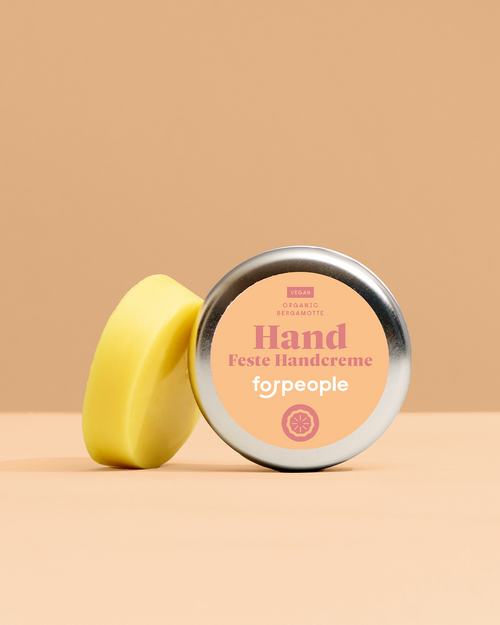
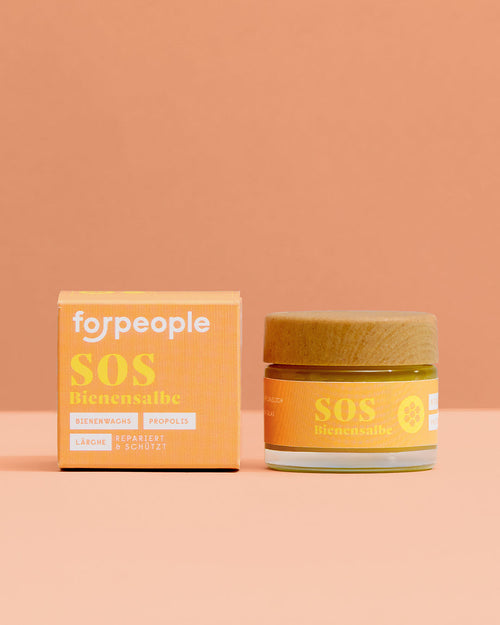
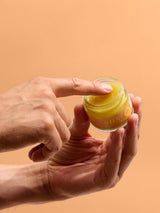
Our hand care is water-free and forms a film. The Solid Hand Cream - Beeswax (30 g, €9.90) has no added fragrance. The Solid Vegan Hand Cream - Bergamot (30 g, €9.90) is based on candelilla wax, jojoba oil, olive oil, shea butter and hemp seed oil and smells of lemon and bergamot. For evening care and particularly rough areas there is the Beeswax Salve Larch & Mandarin in a Glass Jar (50 g, €12.90) with olive, almond and castor oil, beeswax, larch resin and propolis; if you react to resin or propolis, read the allergy notes first. You can refill the hand cream tin with the Solid Hand Cream Refill - Beeswax (40 g, €7.90). If you want serum, salve, hand, foot and lip care together, you will find them in the Dry Skin Set – Intensive Care for Very Dry Skin (5 products, €49.90). More on this: Why hands dry out faster · Cracked fingertips in winter · Dry knuckles · Overnight hand mask
Sources
- Lodén M (2003): Role of topical emollients and moisturizers in the treatment of dry skin barrier disorders. Am J Clin Dermatol 4(11): 771–788. https://doi.org/10.2165/00128071-200304110-00005
- Lodén M (2012): Effect of moisturizers on epidermal barrier function. Clin Dermatol 30(3): 286–296. https://doi.org/10.1016/j.clindermatol.2011.08.015
- Sethi A, Kaur T, Malhotra SK, Gambhir ML (2016): Moisturizers: The Slippery Road. Indian J Dermatol 61(3): 279–287. https://doi.org/10.4103/0019-5154.182427
- Fluhr JW, Darlenski R, Surber C (2008): Glycerol and the skin: holistic approach to its origin and functions. Br J Dermatol 159(1): 23–34. https://doi.org/10.1111/j.1365-2133.2008.08643.x
- Long CC, Finlay AY (1991): The finger-tip unit – a new practical measure. Clin Exp Dermatol 16(6): 444–447. https://doi.org/10.1111/j.1365-2230.1991.tb01232.x
- Ananthapadmanabhan KP, Moore DJ, Subramanyan K, Misra M, Meyer F (2004): Cleansing without compromise: the impact of cleansers on the skin barrier and the technology of mild cleansing. Dermatol Ther 17 Suppl 1: 16–25. https://doi.org/10.1111/j.1396-0296.2004.04s1002.x
- Ausschuss für Gefahrstoffe (2022, zuletzt geändert 2024): TRGS 401 Gefährdung durch Hautkontakt – Ermittlung, Beurteilung, Maßnahmen. GMBl 2022 S. 895–926; zuletzt geändert GMBl 2024 S. 769. https://www.baua.de/DE/Angebote/Regelwerk/TRGS/pdf/TRGS-401.pdf