



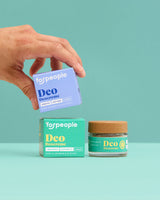
Step by step
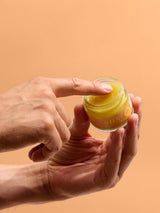
- Warm it up: hold the tin or bar in your hand for a moment, or rub your palm or fingertips over the surface a few times. The warmth of your skin is enough to soften the top layer. This is also how the instructions for our hand creams and salves describe it.
- Take some: rub the cream directly over the dry areas, for example over the backs of your hands, your knuckles or your heels. With salves in a jar, take a small amount with a dry fingertip.
- Spread: rub your palms together until the cream turns glassy and smooth. Then stroke it over the backs of your hands, your fingers and cuticles.
- Massage in: work it in gently for one to two minutes, with a little pressure on the particularly dry areas. The oils sink into the uppermost layers of the stratum corneum, the wax stays as a thin film (Patzelt et al. 2012; Stamatas et al. 2008).
- Check: if your skin is still clearly shiny after five to ten minutes, it was too much. Use less next time.
Why warm it up? Beeswax only melts between 62 and 65 °C, candelilla wax between 68.5 and 72.5 °C (Regulation (EU) No 231/2012). So the warmth of your skin does not melt the wax, it softens the oils and butters in the cream. That is why rubbing releases only a thin layer and the cream stays firm in the tin. In winter this takes longer; more in Storing solid cosmetics.
How much is right?
Because solid creams contain no water that evaporates when you apply them, you need less than of a cream from a tube. In dermatology there is a measure for tubes, the fingertip unit: a strip from a tube with a 5 mm opening, as long as the last joint of the index finger. In the original study, one such unit of an ointment covered on average about 286 cm² of skin, and on average 1.2 units were used for one hand (Long & Finlay 1991). There is no comparable measure for solid creams. The following guide values come from our product instructions and from practice:
| Body area | Amount | How it works best |
|---|---|---|
| Hands | 2–3 strokes over the palm for both hands | after washing and drying your hands, a little more in the evening |
| Feet and heels | about pea-sized for both feet | in the evening, stroke directly over heels and balls of the feet, massage in briefly |
| Body | warm it in your hands or stroke it directly over the skin | after showering, on warm, still slightly damp skin |
| Lips | 1–2 strokes with the stick | thinly and more often, especially outdoors and in the cold |
| Salve in a jar | a small amount on a fingertip | sparingly, warm it between your fingers and spread thinly |
| Deodorant cream | a small amount on your fingertips | thinly on clean, dry underarms |
How amount and yield fit together is explained in Why does solid cream last so long?.
Damp or dry skin?
Water-free care brings no water of its own. It forms a film that slows evaporation and so holds the water that is already in the stratum corneum. How well the stratum corneum works depends strongly on its water content (Rawlings & Harding 2004). This leads to a simple rule:
- Body and feet: after showering, just pat dry and apply to warm, still slightly damp skin. That way the film holds the moisture that is there right now.
- Hands: dry them well after washing, then apply. Wet fingers do not pick up the cream well, and water does not belong in the tin. Why this matters for shelf life is explained in Hygiene with water-free cosmetics.
- Completely dry skin: the solid cream works here too. Your skin just becomes supple a little more slowly.
The right order
Water and wax do not combine without an emulsifier. So apply water-based and water-free care one after the other, not mixed. Background: Emulsifiers in cosmetics.
- Cleanse and dry or pat dry.
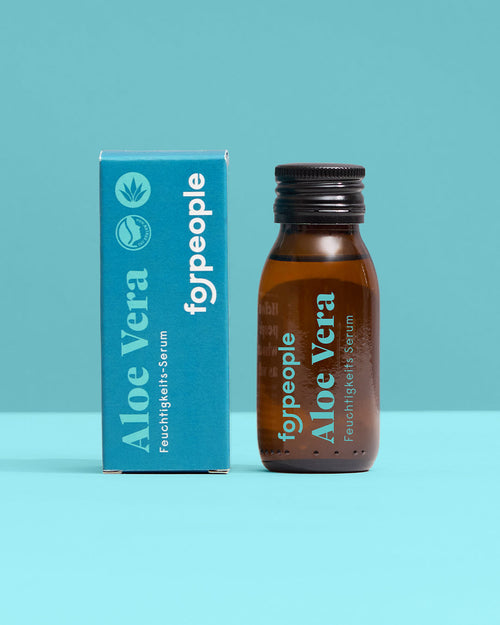
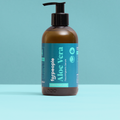
- Water-based care, for example the Aloe Vera Serum 99.6%. Let it sink in for one to two minutes.
- Oil or solid cream on top.
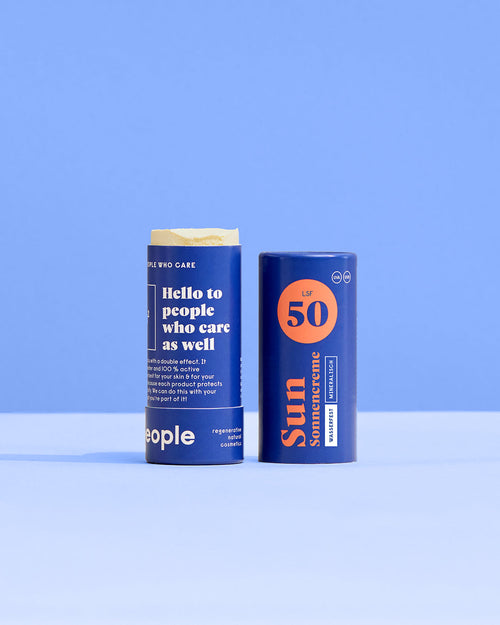
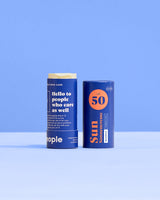
- On your face during the day, sun protection goes last, for example the Solid Sunscreen SPF50, evenly and not too sparingly.
More on combining them is in Combining aloe serum with oil and cream.
Common mistakes and how to avoid them
| Mistake | What happens | Better |
|---|---|---|
| using your usual tube amount | the film stays shiny and sticky | start with 2–3 strokes, add more if needed |
| spreading cold cream straight away | it leaves streaks and is hard to spread | warm it briefly in your hand or rub your palms together |
| going into the tin with wet fingers | water gets to the cream | dry first, then apply |
| cream on the palm and grabbing things right away | residue on your phone, paper, door handle | focus on the backs of your hands and fingers, work it in for one to two minutes |
| putting serum over the solid cream | the serum beads off the film | serum first, then solid cream |
| applying to irritated or injured skin | it can sting or bother you | leave these areas out, have them checked by a doctor if needed |
| tin left open next to the sink | splashes and warmth | close the lid, store in a dry place |
Why too much cream feels greasy is explained in Greasy or well cared for?; how long the film then lasts is covered in How long does a care film stay on the skin?.
Frequently asked questions
Can I rub the solid cream straight from the tin onto my skin?
Yes. For hand and foot cream this is the usual way: you rub the surface over the dry areas and then spread it with your hands.
Do I need to melt the cream first?
No. It is enough to soften the surface with the warmth of your skin. You do not need a radiator, hair dryer or water bath to apply it.
How long does it take to sink in?
With the right amount, usually one to two minutes. A light, waxy film remains noticeable; it is part of water-free care.
Can I use solid hand cream on my face?
It is made for the hands. The skin on your face is thinner and more sensitive. If you want to try it there, test it on a small area first and avoid the eye area.
Why do my hands feel slippery after applying it?
Then it was too much or the cream has not been worked in yet. Keep massaging or remove the excess with a cloth.
At forpeople
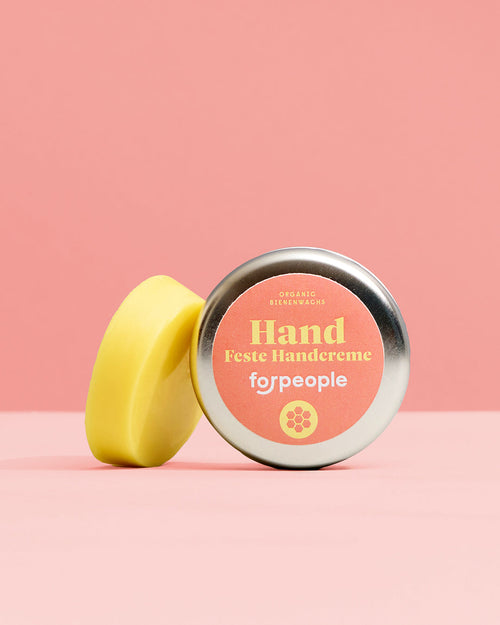
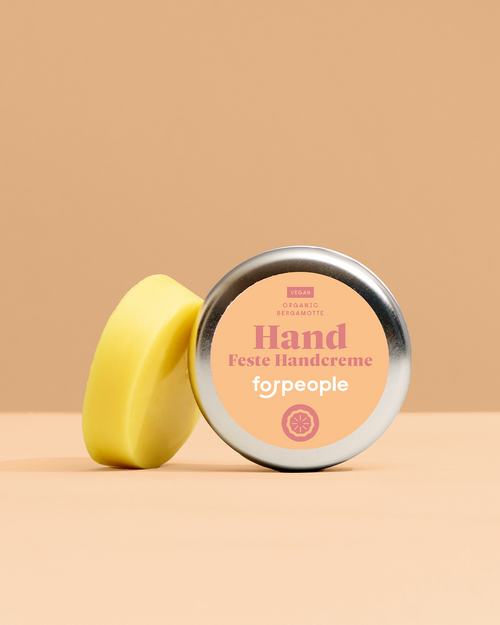
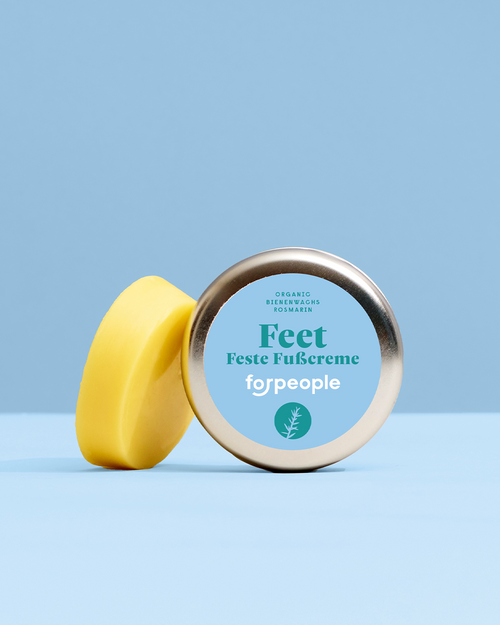
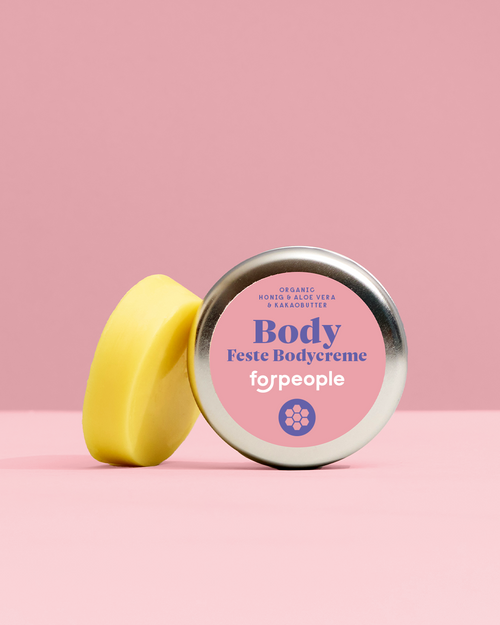
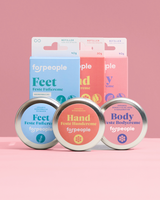
The instructions on our product pages follow the same principle: warm it up, rub it directly over dry areas, massage it in. The Solid Hand Cream - Beeswax (30 g, €9.90) and the vegan Solid Vegan Hand Cream - Bergamot (30 g, €9.90) are made for the hands, the Solid Foot Cream – Rosemary & Sage (40 g, €9.90) for heels and balls of the feet, the Solid Body Butter - Beeswax & Aloe Vera (40 g, €9.90) for the body. Read more: Solid cream or tube · Water-free cosmetics · Refillable hand cream · Body oil or body butter
Sources
- Patzelt A, Lademann J, Richter H, Darvin ME, Schanzer S, Thiede G et al. (2012): In vivo investigations on the penetration of various oils and their influence on the skin barrier. Skin Res Technol 18(3): 364–369. https://doi.org/10.1111/j.1600-0846.2011.00578.x
- Stamatas GN, de Sterke J, Hauser M, von Stetten O, van der Pol A (2008): Lipid uptake and skin occlusion following topical application of oils on adult and infant skin. J Dermatol Sci 50(2): 135–142. https://doi.org/10.1016/j.jdermsci.2007.11.006
- Europäische Kommission (2012): Verordnung (EU) Nr. 231/2012 mit Spezifikationen für Lebensmittelzusatzstoffe, Einträge E 901 Bienenwachs und E 902 Candelillawachs. ABl. L 83: 1. https://eur-lex.europa.eu/eli/reg/2012/231/oj
- Long CC, Finlay AY (1991): The finger-tip unit – a new practical measure. Clin Exp Dermatol 16(6): 444–447. https://doi.org/10.1111/j.1365-2230.1991.tb01232.x
- Rawlings AV, Harding CR (2004): Moisturization and skin barrier function. Dermatol Ther 17 Suppl 1: 43–48. https://doi.org/10.1111/j.1396-0296.2004.04s1005.x