


Why water-free products can count as low microbiological risk
Microorganisms need freely available water. How much of it a product contains is described by water activity (aw): pure water has a value of 1, a completely dry product a value of 0. One review calls water the ideal growth factor for microorganisms in cosmetics and describes how manufacturers deliberately lower water activity to slow microbial growth (Halla et al. 2018). Low water activity is one of the hurdles that can keep cosmetics stable even without conventional preservatives (Varvaresou et al. 2009).
The EU guidelines on the product safety report distinguish three groups of products (Implementing Decision 2013/674/EU):
- Products with a low microbiological risk: neither a preservation efficacy (challenge) test nor microbiological quality tests on the finished product are required; the manufacturer must, however, provide a scientific justification. As examples, the guidelines name products with more than 20% alcohol, products based on organic solvents and products with a very high or very low pH.
- Single-use products and products that cannot be opened: only quality tests on the finished product are required.
- All other products: they need both.
How a manufacturer justifies that a product is low-risk is described in the international standard ISO 29621. It gives guidance on using a risk assessment to determine whether a finished product presents a low risk of microbial contamination during production and use. Whether that applies to a specific water-free product is decided case by case in the safety assessment – not by the label "water-free".
Where the risk lies during use
A product leaves production clean. What happens afterwards depends to a large extent on how it is used. A study of 91 cosmetic products before, during and after use found that contaminated products were relatively rare overall, but that microbes can be introduced during use (Campana et al. 2006). With water-free products, four points matter most:
- Water from outside: wet fingers, splashes in the shower or condensation bring in exactly what the product otherwise lacks. A drop of water in a tin creates a small spot where microbes can grow.
- Dirt and skin residue: reaching into a jar with unwashed hands brings in more microbes.
- Heat: high temperatures soften solid creams and speed up the ageing of oils. Tips are on the page Storing solid cosmetics.
- Air and light: these affect the oils, not the microbes. Plant oils can oxidise over time and smell rancid. That is not a hygiene problem, but a reason not to keep a product forever.
Jar, tin, stick, pump: what the packaging changes
The more often fingers and product come into contact, the more can be introduced. According to one review, jars and open bottles are more likely to become contaminated than closed systems such as airless pumps (Halla et al. 2018). How much the closure matters was shown in an older experiment with an unpreserved, water-based skin lotion: after two weeks of use, 71% of the screw-cap containers were contaminated, but only 10% of the pump bottles (Brannan and Dille 1990). These figures apply to a water-based lotion without preservatives and cannot be transferred directly to water-free products. They do show why the way you take product out matters. There is now also a standardised method for measuring how well packaging protects its contents and grading it into levels (Catovic et al. 2020).
| Form | Contact with fingers | What to look out for |
|---|---|---|
| Jar or tin (balm, solid cream) | every time you use it | only take product out with dry, clean fingers or a clean spatula; close the lid straight away |
| Stick or tube (lip care, solid sunscreen) | hardly any, you apply it directly | put the cap back on; don't share the stick |
| Bar (solid soap) | constant, together with water | let it drain after use and dry on a soap dish |
| Bottle with dropper or cork (oil, serum) | low, as long as fingers don't touch the opening | don't touch the opening; close after use |
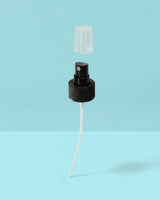
| Pump bottle | very low | keep the pump head clean |
Everyday hygiene, step by step
- Wash and dry your hands before reaching into a jar or tin. Dry fingers matter more with water-free products than with any others.
- Don't take product out with wet hands straight after the shower. If you apply it after showering, dry your hands first. Your skin may be damp, the product should not be.
- Close the lid and don't leave the tin open in the bathroom.
- Store cool, dry and out of the sun, not on the radiator, not in the car.
- When refilling, clean the tin and let it dry completely before the new refill goes in. How refills work is explained on the page Refilling with refills.
- Check the shelf life: the packaging shows either a best-before date or the open-jar symbol. What both mean is explained on the page Cosmetics shelf life and the PAO symbol.
How to tell a product is no longer good
- spots, dots or a film that weren't there before, especially where water has been
- a rancid, soapy or musty smell
- drops of water or a damp patch in the product
In these cases, stop using the product. A light, even film on a solid cream that has melted once can, however, be harmless: fats sometimes crystallise differently after melting. More on the page Storing solid cosmetics.
Frequently asked questions
Are water-free cosmetics germ-free?
No. They offer microbes hardly any conditions to grow, but they are not sterile. If water gets in, that can change.
Can I use my finger to take product from the tin?
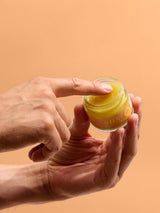
Yes, with clean, dry fingers. If you want to be extra careful, use a spatula. With solid creams it is often enough to run a finger briefly over the surface.
What should I do if water has got into the tin?
Pour the water out straight away, dab with a clean cloth and let the tin dry open. If spots or a changed smell appear later, stop using the product.
Do I need to keep water-free cosmetics in the fridge?
No. Cool, dry and shaded is enough. Condensation can form when you take something out of the fridge.
Why does an aloe serum need preservation but a balm does not?
Aloe juice is mostly water. The background is on the page Preservation and water in cosmetics.
At forpeople
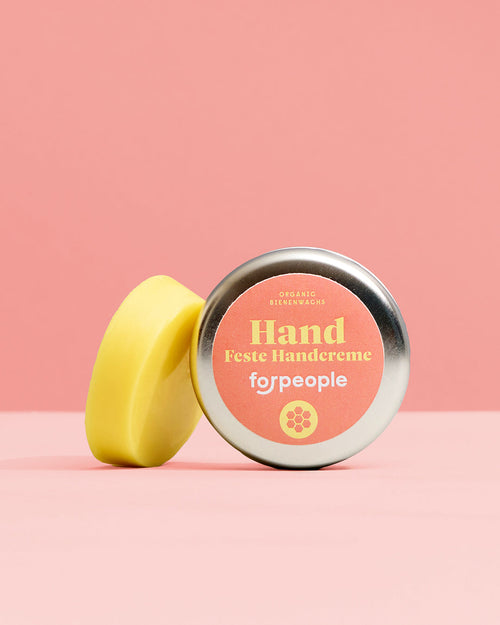
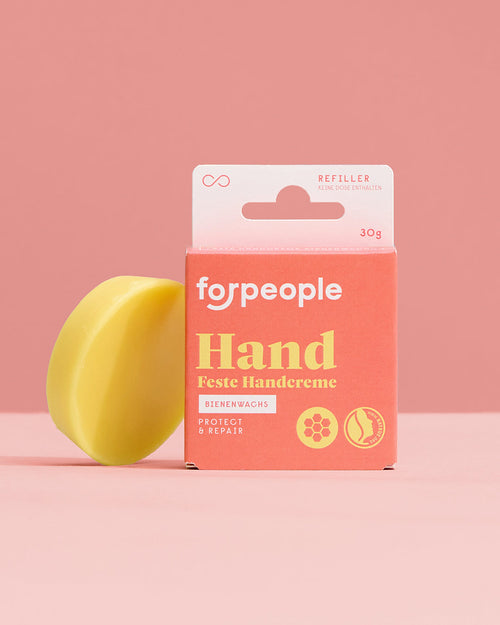
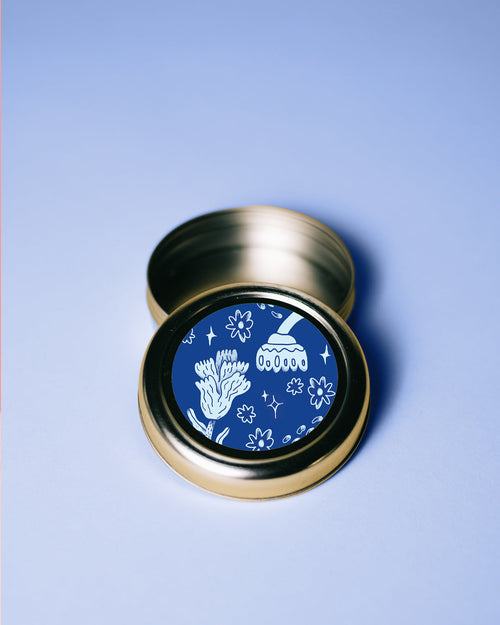
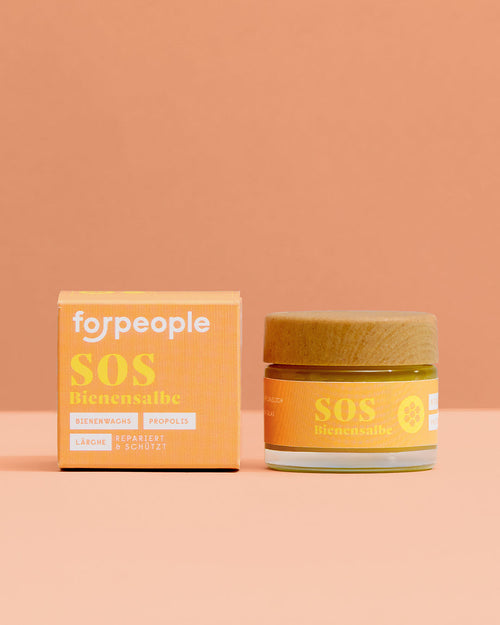
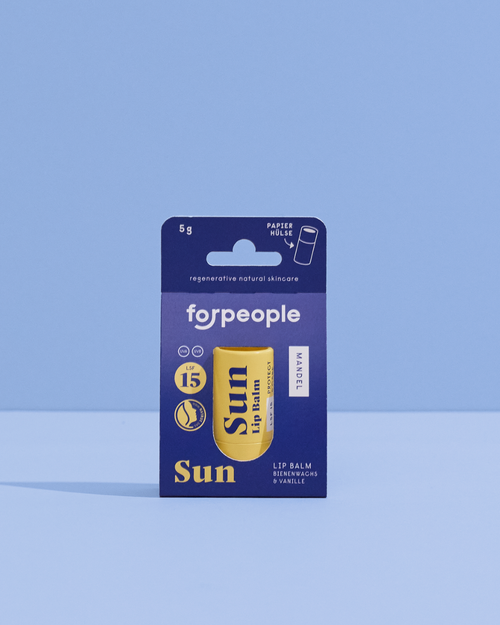
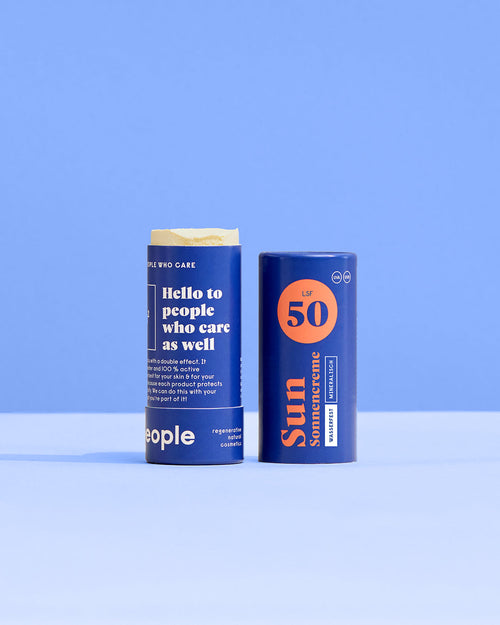
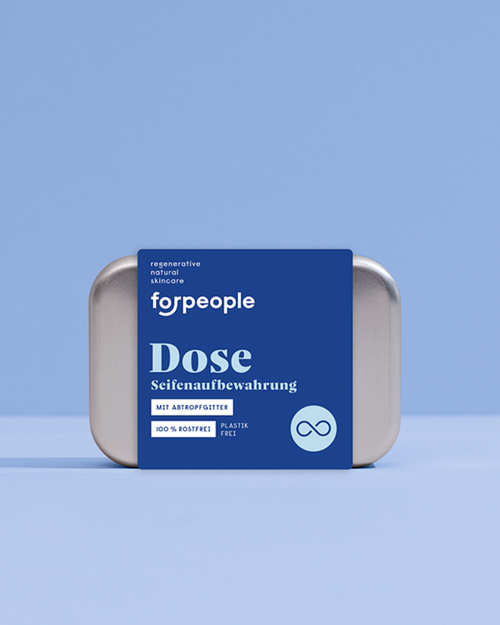
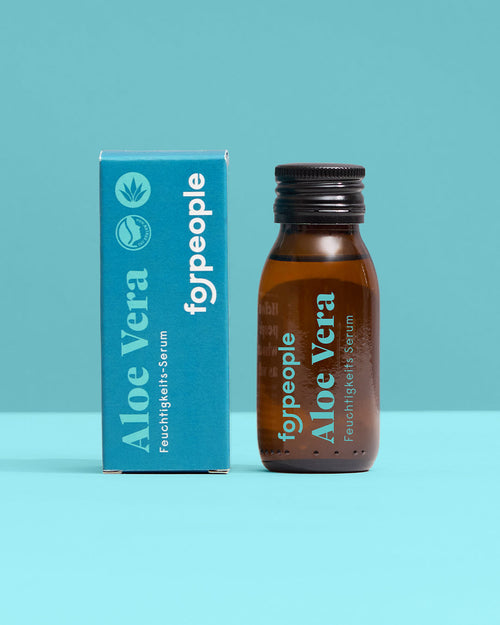
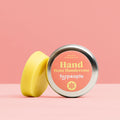
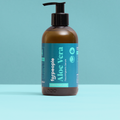
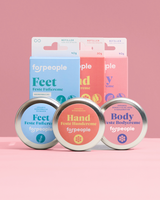
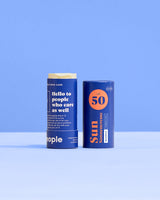
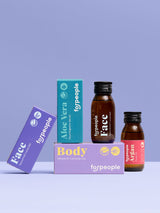
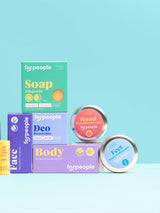
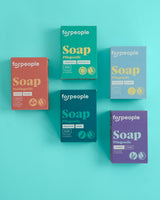
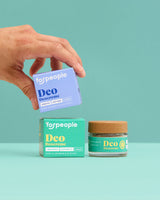
Solid creams such as the Solid Hand Cream - Beeswax (30 g) come in a metal tin and are water-free according to their INCI. There is a matching Solid Hand Cream Refill - Beeswax (€7.90): clean the tin, dry it well, put the refill in. If you'd like a second tin, you'll find it as the Empty Cosmetic Tin. The Beeswax Salve Larch & Mandarin in a Glass Jar (50 g) is best taken out with dry fingers or a spatula. The lip balm stick Lip Balm - SPF15 Almond & Vanilla and the Solid Sunscreen SPF50 in a paper tube without plastic coating are applied directly, without touching them. Solid soaps contain water from production and dry best on a rack such as the Aluminium Soap Tin with Drainage Grid. The Aloe Vera Serum 99.6% is water-based and therefore preserved with potassium sorbate and sodium benzoate.
Read more: Water-free cosmetics · Water-free, low-water, anhydrous · How to apply solid cream · Solid cosmetics in hand luggage
Sources
- Halla N, Fernandes IP, Heleno SA et al. (2018): Cosmetics Preservation: A Review on Present Strategies. Molecules 23(7): 1571. doi:10.3390/molecules23071571
- Varvaresou A, Papageorgiou S, Tsirivas E et al. (2009): Self-preserving cosmetics. Int J Cosmet Sci 31(3): 163–175. doi:10.1111/j.1468-2494.2009.00492.x
- Campana R, Scesa C, Patrone V et al. (2006): Microbiological study of cosmetic products during their use by consumers: health risk and efficacy of preservative systems. Lett Appl Microbiol 43(3): 301–306. doi:10.1111/j.1472-765X.2006.01952.x
- Brannan DK, Dille JC (1990): Type of closure prevents microbial contamination of cosmetics during consumer use. Appl Environ Microbiol 56(5): 1476–1479. doi:10.1128/aem.56.5.1476-1479.1990
- Catovic C, Martin S, Desaint S et al. (2020): Development of a standardized method to evaluate the protective efficiency of cosmetic packaging against microbial contamination. AMB Express 10(1): 81. doi:10.1186/s13568-020-01016-4
- Durchführungsbeschluss 2013/674/EU der Kommission vom 25. November 2013 über Leitlinien zu Anhang I der Verordnung (EG) Nr. 1223/2009 über kosmetische Mittel, Teil A Nr. 3.3.2. ABl. L 315 vom 26.11.2013, S. 82. eur-lex.europa.eu/eli/dec_impl/2013/674/oj
- ISO 29621:2017 Cosmetics – Microbiology – Guidelines for the risk assessment and identification of microbiologically low-risk products. International Organization for Standardization, Genf.