

The terms at a glance
Packaging and shops use many variations. They sound similar but do not always promise the same thing.
| Term | What it usually means | What to look for |
|---|---|---|
| water-free | no water and no water-containing raw materials in the formula | INCI starts with an oil, butter or wax; no Aqua, no juice, no "… Water" |
| anhydrous | technical term from Greek, literally "without water"; in cosmetic development it means water-free | same as water-free |
| waterless | common marketing term for water-free products | sometimes also used for powders or concentrates that you mix with water yourself |
| low-water | water is present, but less than in a typical cream | no fixed limit; Aqua usually appears further down the INCI |
| no added water | no pure water added | plant juices, hydrosols or aloe juice may still be included |
| solid | describes the form, not the water content | solid soaps are made with water or juice |
For comparison: according to one review, typical skin care products contain between 50 and 85% water; water-free products are the exception (Richaud et al. 2024). What going without water means for emulsifiers, preservation and skin feel is explained on the page Water-free cosmetics.
No legal definition, but rules for claims
The EU Cosmetics Regulation does not define "water-free". However, claims about cosmetics must follow common criteria set out in a separate regulation. These include truthfulness, evidential support and honesty: if a product is said to contain a particular ingredient, that ingredient must be deliberately present, and every claim must be backed by verifiable evidence (Regulation (EU) No 655/2013).
How these criteria apply to "free from" claims is described in a technical document drawn up by a working group of the EU member states. It is not legally binding but is used as guidance. Two points from it fit "water-free" well (Technical document on cosmetic claims 2017):
- Truthfulness: if a product is claimed not to contain a specific ingredient, that ingredient should not be present. Applied here: a product with aloe juice or rose water is not water-free, even if "Aqua" does not appear on the list.
- Honesty: "free from" claims are not appropriate for an ingredient that is not normally used in that type of product anyway. Highlighting a pure plant oil as "water-free" therefore tells you little – oils never contain water as an ingredient.
How to spot water in the INCI
Ingredients are listed in descending order of weight at the time they were added. Ingredients below 1% may follow in any order (Regulation (EC) No 1223/2009, Art. 19). Water hides behind several names. The descriptions in the table come from the European Commission's CosIng ingredient database (CosIng).
| INCI name | What it is | Contains water? |
|---|---|---|
| Aqua | water, function "solvent" | yes |
| Aloe Barbadensis Leaf Juice | juice expressed from the leaves of the aloe | yes, the juice is mostly water |
| … Flower Water, … Leaf Water (e.g. Rosa Damascena Flower Water) | aqueous solution from steam distillation, i.e. a hydrosol | yes |
| Aloe Barbadensis Leaf Juice Powder | dried aloe juice | not as a powder; it is usually mixed back up with Aqua |
| … Leaf Extract, … Flower Extract | an extract of the plant | cannot be told from the INCI; usually a small amount at the end |
| Glycerin, Alcohol | humectant or alcohol | not water, but not an oil or wax either |
A quick rule of thumb: if the list starts with an oil, a butter or a wax, such as "Cera Alba" or "Butyrospermum Parkii Butter", and neither Aqua nor a juice nor "… Water" appears, the product is water-free. The page How to read an INCI list walks you through it step by step.
Why plant juices and hydrosols count as water
According to one review, aloe leaf gel is about 99.5% water; the rest consists of polysaccharides, minerals, organic acids and other dissolved substances (Hamman 2008). A hydrosol is, by definition, an aqueous solution. For the formula it makes little difference whether the water comes from the tap, from a plant or from a still: it behaves like water.
This has two consequences. First, a product with juice or hydrosol needs protection against microbes, just like a cream with Aqua; the background is on the page Preservation and water in cosmetics. Second, it needs an emulsifier as soon as oil and juice are to be combined into a cream. What "aloe instead of water" means in practice is explained on the page Aloe vera instead of water.
Borderline cases: soap, extracts, solid form
- Solid soap: soap is made when fats react with a lye. The lye is prepared with water or a plant juice. The INCI lists the water in the amount added during production. Some of it evaporates while the soap cures; how much remains is not shown on the list. Solid soap is therefore not water-free, even if it feels dry.
- Extracts in water-free creams: some water-free products list a plant extract at the end of the INCI. Whether it is added as an oil extract or in another form is not revealed by the word "Extract". If in doubt, ask the manufacturer.
- Solid does not mean water-free, liquid does not mean water-based: a body oil is liquid and still water-free. A solid soap is solid and contains water.
Why water-free products still need to be handled cleanly is covered on the page Hygiene and water-free cosmetics.
Frequently asked questions
Is "water-free" a protected term?
No. There is no legal definition. Like any claim, however, it must be true and backed by evidence. In our understanding, calling a product with plant juice "water-free" goes against the principle of truthfulness.
Is "anhydrous" different from "water-free"?
No. "Anhydrous" is the technical term; "waterless" and "water-free" are the everyday English expressions. All three mean a formula without water.
Does a product with "no added water" contain no water at all?
Not necessarily. The wording only rules out pure water. Aloe juice, cucumber juice or rose water may still be included. A look at the INCI tells you.
Are solid products always water-free?
No. Solid soaps contain water from production. Solid creams, balms and lip care made from oils, butters and waxes, on the other hand, are usually water-free.
How much water is "low-water"?
There is no fixed limit. Check where Aqua appears in the INCI: the further down, the lower the share.
At forpeople
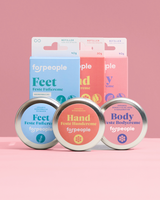
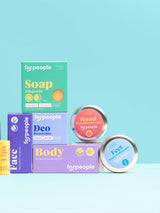
Most forpeople products are water-free according to their INCI, but not all of them. The table shows what the product pages say.
| Product | First ingredient according to the INCI | Contains water? |
|---|---|---|
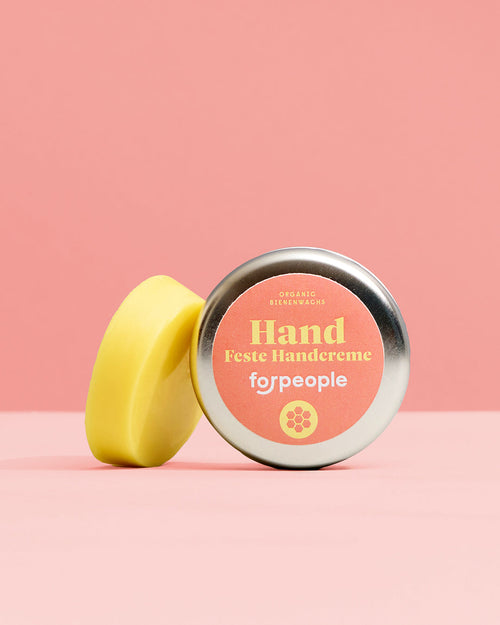
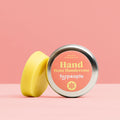
| Solid Hand Cream - Beeswax, 30 g | Cera Alba (beeswax) | no |
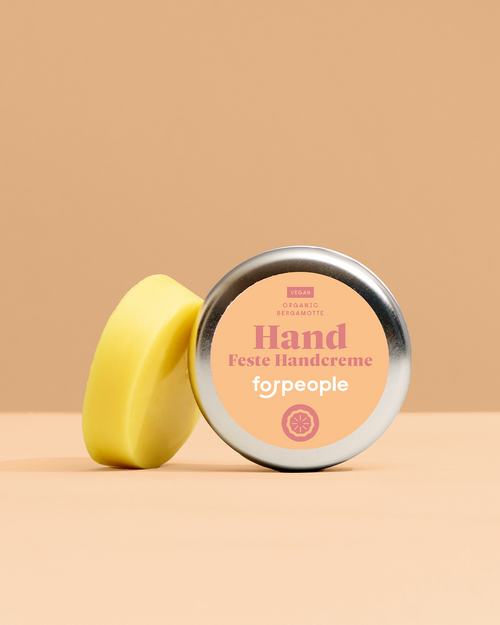
| Solid Vegan Hand Cream - Bergamot, 30 g | Euphorbia Cerifera (Candelilla) Wax | no |
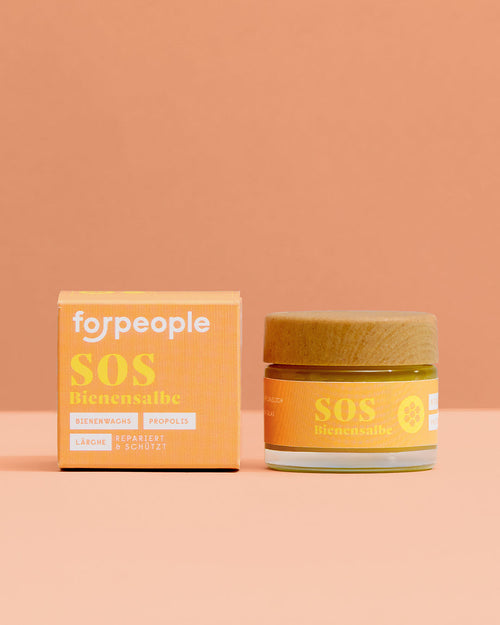
| Beeswax Salve Larch & Mandarin in a Glass Jar, 50 g | Olea Europaea Fruit Oil (olive oil) | no |
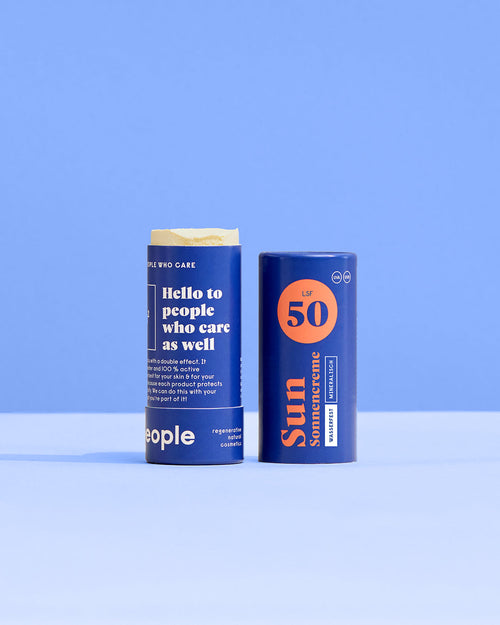
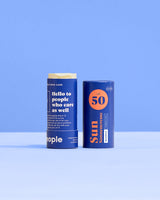
| Solid Sunscreen SPF50, 40 g | Butyrospermum Parkii Butter (shea butter) | no |
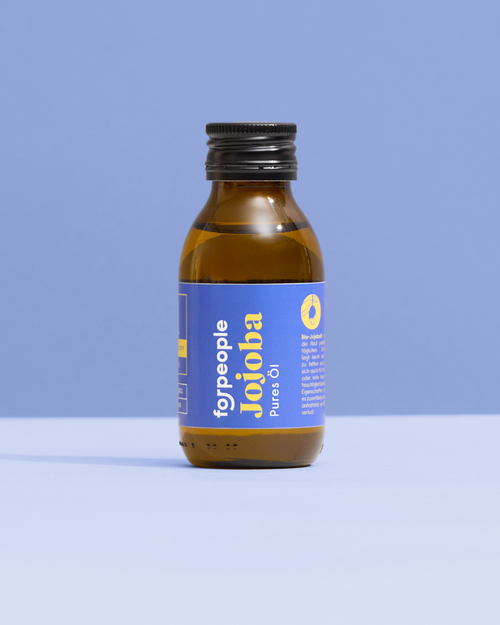
| Jojoba Oil - pure, 100 ml | Simmondsia Chinensis Seed Oil | no |
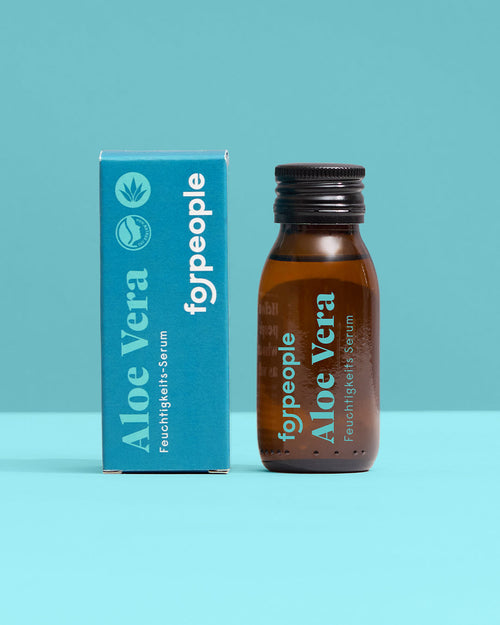
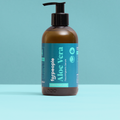
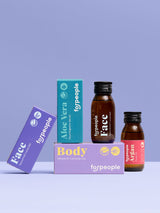
| Aloe Vera Serum 99.6%, 50 ml | Aloe Barbadensis Leaf Juice | yes, through the aloe juice; preserved with potassium sorbate and sodium benzoate |
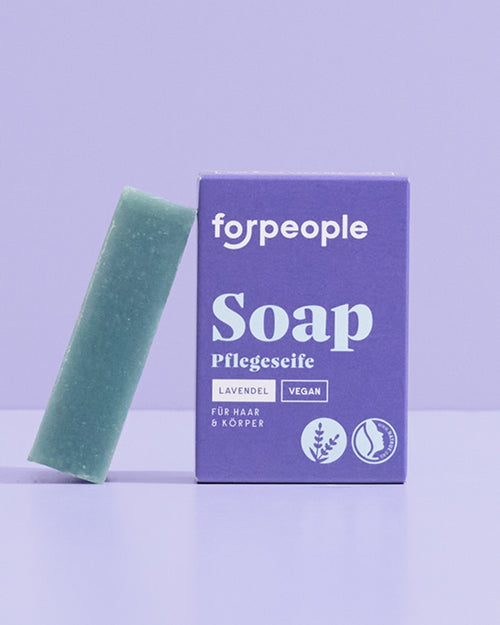
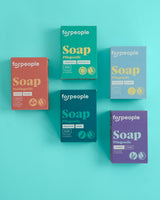
| Aloe Vera Soap – Lavender, 75 g | Olea Europaea Fruit Oil; Aqua in third place | yes |
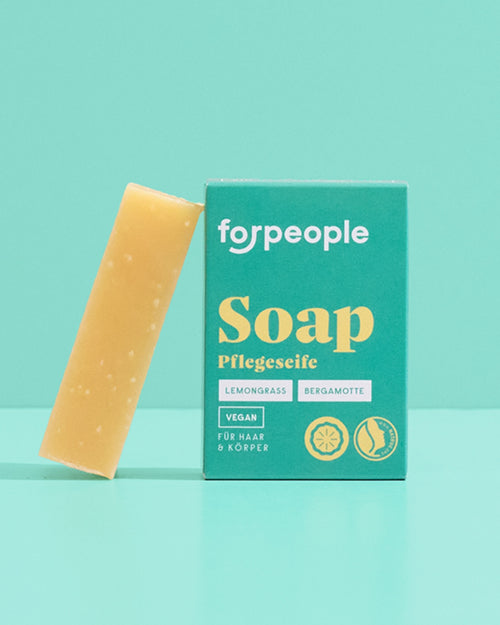
| Aloe Vera Soap - Lemongrass | Olea Europaea Fruit Oil; Aloe Barbadensis Leaf Juice in third place, Aqua further down | yes |
Several water-free products, such as the hand cream with beeswax, list "Aloe Barbadensis Leaf Extract" at the end of the INCI, i.e. a small amount of aloe extract. These products do not list Aqua or aloe juice.
Read more: Solid cream or tube · Aloe vera serum 99.6%: what's inside? · Salve, balm, butter, cream · Emulsifiers in cosmetics
Sources
- Verordnung (EG) Nr. 1223/2009 des Europäischen Parlaments und des Rates vom 30. November 2009 über kosmetische Mittel, Art. 19 Abs. 1 Buchst. g. ABl. L 342 vom 22.12.2009, S. 59. eur-lex.europa.eu/eli/reg/2009/1223/oj
- Verordnung (EU) Nr. 655/2013 der Kommission vom 10. Juli 2013 zur Festlegung gemeinsamer Kriterien zur Begründung von Werbeaussagen im Zusammenhang mit kosmetischen Mitteln. ABl. L 190 vom 11.7.2013, S. 31. eur-lex.europa.eu/eli/reg/2013/655/oj
- Sub-Working Group on Claims (2017): Technical document on cosmetic claims, version of 3 July 2017, Annex III „Free from claims“. Europäische Kommission, Working Group on Cosmetic Products (rechtlich nicht bindend). ec.europa.eu/docsroom/documents/24847
- Europäische Kommission: CosIng – Datenbank kosmetischer Inhaltsstoffe, Einträge AQUA, ALOE BARBADENSIS LEAF JUICE, ALOE BARBADENSIS LEAF JUICE POWDER, ALOE BARBADENSIS LEAF EXTRACT, ROSA DAMASCENA FLOWER WATER (abgerufen am 30.09.2026). ec.europa.eu/growth/tools-databases/cosing
- Hamman JH (2008): Composition and applications of Aloe vera leaf gel. Molecules 13(8): 1599–1616. doi:10.3390/molecules13081599
- Richaud M, Rasasombat S, Cuq P et al. (2024): Water in cosmetics and Caenorhabditis elegans as an alternative model for lifespan assessment. Int J Cosmet Sci 46(1): 96–105. doi:10.1111/ics.12912