


Two worlds: pharmacopoeia and cosmetics
In pharmacy, preparations for application to the skin have their own monograph in the European Pharmacopoeia, "Semi-solid preparations for cutaneous application" (Ph. Eur. monograph 0132). In the pharmaceutical literature, bases are divided by composition into groups such as ointments, creams, gels, emulsions and suspensions (Daniels & Knie 2007); reviews also list pastes (Oliveira & Almeida 2023). A study by the US drug authority showed that ointments and creams can be distinguished mainly by their content of water and volatile substances and by their composition, while creams and lotions differ in their flow behaviour (Buhse et al. 2005).
The EU Cosmetics Regulation defines what a cosmetic product is: a product that comes into contact with the external parts of the body in order to clean, perfume, change the appearance of, protect or keep it in good condition, or to correct body odour. As examples it lists "creams, emulsions, lotions, gels and oils for the skin". It does not define terms such as salve, balm or butter. Whether a product is a cosmetic is assessed case by case, taking all its characteristics into account (Regulation (EC) No 1223/2009, Article 2 and recital 7). A medicinal product, by contrast, is under EU law among other things a substance presented as a means of treating or preventing human disease (Directive 2001/83/EC, Article 1).
Important for you: the word "salve" on a cosmetic tin does not turn the product into a medicine. What matters is its purpose and presentation.
The terms at a glance
| Term | Typical composition | Consistency | Typical use | Water |
|---|---|---|---|---|
| Salve / ointment | oils, waxes, often resins or mineral fats | spreadable, softens at skin temperature | small, very dry or stressed areas, at night | in pharmacy mostly none or little water; in cosmetics usually water-free |
| Cream (classic) | emulsion of water, oil and emulsifier | creamy | larger areas, face, quick absorption | yes, often the largest ingredient |
| Solid cream | wax, plant oils, often plant butter | solid, surface softens with skin warmth | hands, feet, on the go | no |
| Butter (body butter) | mostly plant butters such as cocoa or shea butter, plus oil and wax | firm to soft, melts on the skin | body, elbows, knees, shins | usually no; some "body butters" are water-based emulsions |
| Balm | no fixed structure; lip and care balms are usually wax and oil | firm to salve-like | lips, small areas | depends on the product; a hair balm is usually a water-based conditioner |
| Paste | fatty base with a high content of insoluble powders | thick, covering | covering protection | depends on the base |
A recent review describes the classification of pharmaceutical bases: water-free, hydrophobic bases made of paraffin, petrolatum, waxes, triglycerides or plant oils form an occlusive film, stay on the skin for a long time and absorb hardly any water. Oil-in-water creams are considered non-occlusive and non-greasy. Pastes contain a high proportion of insoluble powders (Oliveira & Almeida 2023). What this film does is explained in Occlusion and TEWL.
Salve: the classic fatty base
A salve is what many people know from the past: a spreadable mass of fat, oil and wax, often with resin. It leaves a clearly noticeable film. That is why you apply it sparingly and in a targeted way, for example to elbows, heels or cuticles, and preferably in the evening. Because there is no water phase, it needs no emulsifier. More in Emulsifiers in cosmetics and Water-free cosmetics.
Butter: mainly plant butter
Plant butters are fats that are solid at room temperature. Shea butter, for example, is the fat from the kernels of the shea tree (Honfo et al. 2014). A body butter consists largely of such butters and feels rich. In shops, however, "body butter" is also used for water-based, particularly thick emulsions. You can tell the difference by "Aqua" in the ingredient list. More on shea butter: Shea butter: composition, origin and refining.
Solid cream: water-free, but called a cream
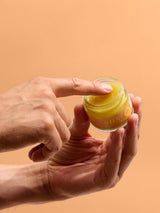
According to the pharmaceutical classification, a solid cream would not be a cream, because it lacks water. In everyday language, the name rather describes purpose and handling: care for hands or feet that is solid in the tin and softens at the surface. Thanks to its higher wax content it is firmer than a salve and can be rubbed directly over the skin. How best to do this is explained in How do I apply a solid cream correctly?; how it differs from a tube cream in Solid cream or tube.
How forpeople products fit in
The following table classifies our products by their ingredient list. The list is sorted by weight, so the first ingredient is the largest (Regulation (EC) No 1223/2009, Article 19).
| Product | First ingredients according to INCI | Water | Classification |
|---|---|---|---|
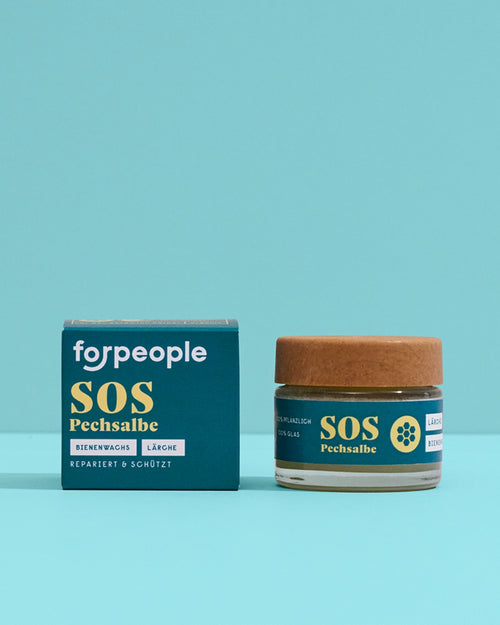
| SOS Pitch Salve - Larch Resin in a Glass Jar | olive oil, larch resin, beeswax | no | salve with resin |
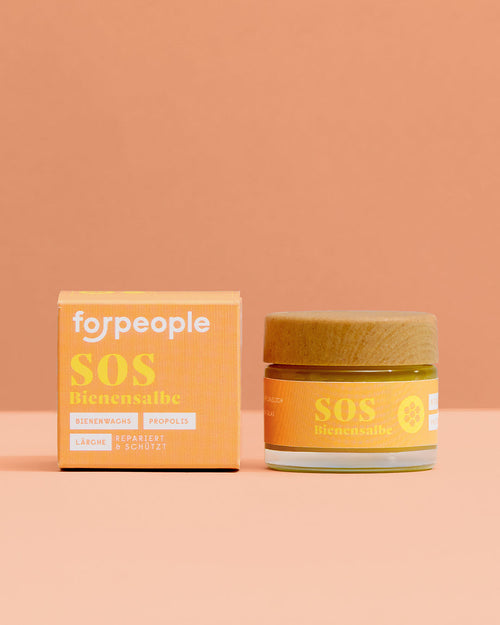
| Beeswax Salve Larch & Mandarin in a Glass Jar | olive oil, almond oil, castor oil, beeswax, larch resin; also alcohol and essential oils | no | salve with resin |
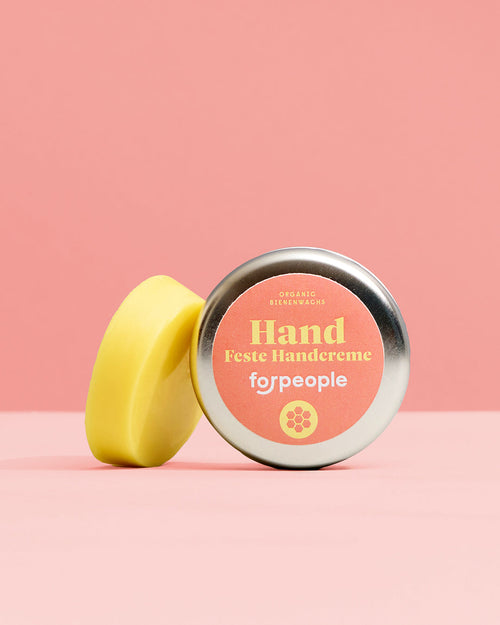
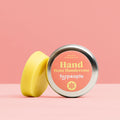
| Solid Hand Cream - Beeswax | beeswax, olive oil, sunflower oil | no | solid cream, wax-based |
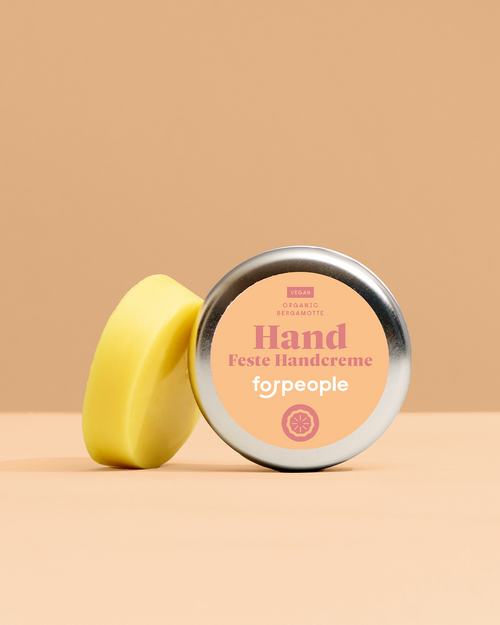
| Solid Vegan Hand Cream - Bergamot | candelilla wax, jojoba oil, olive oil, shea butter | no | solid cream, plant wax |
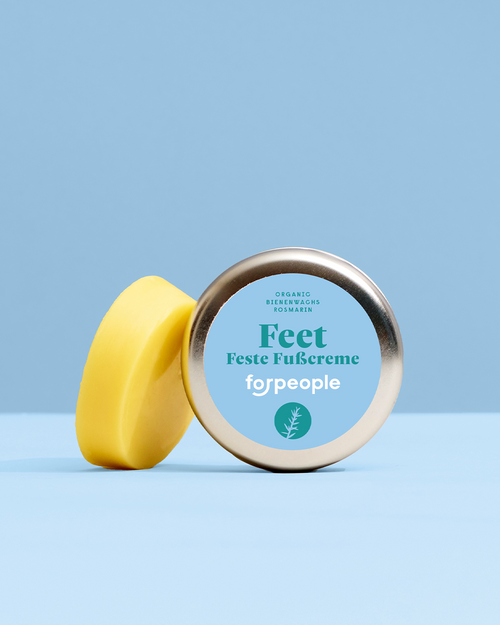
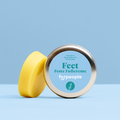
| Solid Foot Cream – Rosemary & Sage | sunflower oil, beeswax, olive oil, shea butter | no | solid cream with butter |
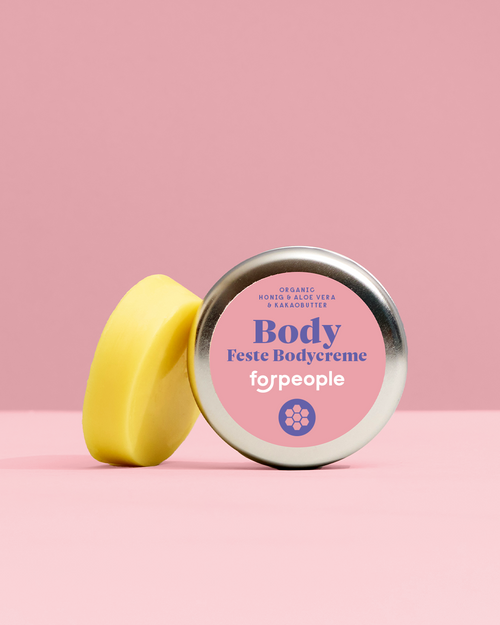
| Solid Body Butter - Beeswax & Aloe Vera | cocoa butter, olive oil, beeswax, sunflower oil, shea butter | no | butter |
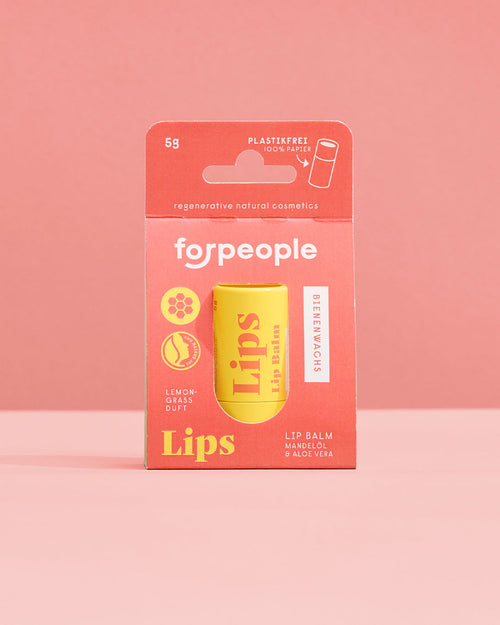
| Lip Balm - Lemongrass | beeswax, sunflower oil, shea butter, almond oil | no | lip balm as a stick |
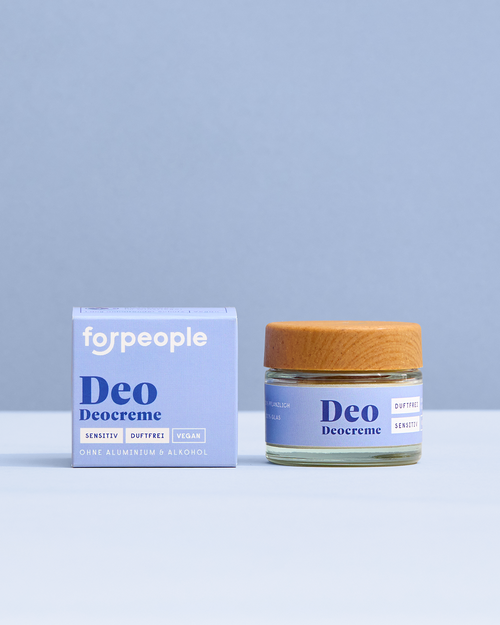
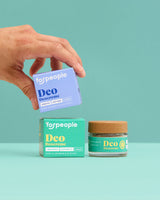
| Sensitive Deodorant Cream | potato starch, shea butter, baking soda, sunflower oil, corn starch, candelilla wax | no | "cream" in the name, structurally more paste-like: powders in a fatty base |
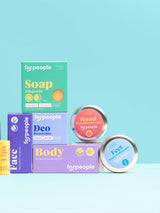
Not every forpeople product is water-free: our solid soaps and the aloe vera serum contain water. The terms are explained in Water-free, low-water, anhydrous. How to read the list yourself is covered in How to read an INCI list. If you want to avoid essential oils, you will find tips in Without fragrance and essential oils.
Frequently asked questions
Is a salve from the drugstore a medicine?
Not automatically. Many salves are cosmetic products. Whether a product is a medicine depends on its purpose and presentation, not on the word salve.
What is the difference between a balm and a salve?
In cosmetics there is no fixed difference. Wax-rich products for lips or small areas are often called balms, softer, spreadable fatty preparations rather salves. For hair, by contrast, a balm usually means a water-based conditioner.
Is body butter always water-free?
No. Some body butters are thick emulsions with water. If "Aqua" is in the ingredient list, the product contains water.
Which form suits very dry hands?
During the day usually a solid cream, because it spreads quickly and leaves little residue. In the evening or for individual very dry areas, a salve with a noticeable film.
Why does a water-free tin say "cream"?
Because "hand cream" and "foot cream" have become the everyday names for this kind of care. In pharmacy a cream contains water; for cosmetics the name mainly describes the purpose.
At forpeople
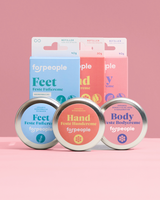
Our solid creams, salves, the body butter, the lip balms and the deodorant creams are water-free. For a light film in everyday life, the Solid Hand Cream - Beeswax (30 g, €9.90) is a good fit; for a more noticeable film on small areas, the SOS Pitch Salve - Larch Resin in a Glass Jar (50 g, €16.90) or the Beeswax Salve Larch & Mandarin in a Glass Jar (50 g, €12.90); for the body, the Solid Body Butter - Beeswax & Aloe Vera (40 g, €9.90). All of them are cosmetics, not medicines. Read more: Greasy or well cared for? · Body oil or body butter · Candelilla wax or beeswax · Why does solid cream last so long?
Sources
- European Directorate for the Quality of Medicines & HealthCare (EDQM): European Pharmacopoeia, Monograph 0132, Semi-solid preparations for cutaneous application (Knowledge Database). https://extranet.edqm.eu/4DLink1/4DCGI/Web_View/mono/132
- Daniels R, Knie U (2007): Galenics of dermal products – vehicles, properties and drug release. J Dtsch Dermatol Ges 5(5): 367–383. https://doi.org/10.1111/j.1610-0387.2007.06321.x
- Buhse L, Kolinski R, Westenberger B, Wokovich A, Spencer J, Chen CW et al. (2005): Topical drug classification. Int J Pharm 295(1–2): 101–112. https://doi.org/10.1016/j.ijpharm.2005.01.032
- Europäisches Parlament und Rat (2009): Verordnung (EG) Nr. 1223/2009 über kosmetische Mittel, Erwägungsgrund 7, Artikel 2 und 19. ABl. L 342: 59. https://eur-lex.europa.eu/eli/reg/2009/1223/oj
- Europäisches Parlament und Rat (2001): Richtlinie 2001/83/EG zur Schaffung eines Gemeinschaftskodexes für Humanarzneimittel, Artikel 1. ABl. L 311: 67. https://eur-lex.europa.eu/eli/dir/2001/83/oj
- Oliveira R, Almeida IF (2023): Patient-Centric Design of Topical Dermatological Medicines. Pharmaceuticals (Basel) 16(4): 617. https://doi.org/10.3390/ph16040617
- Honfo FG, Akissoe N, Linnemann AR, Soumanou M, Van Boekel MA (2014): Nutritional composition of shea products and chemical properties of shea butter: a review. Crit Rev Food Sci Nutr 54(5): 673–686. https://doi.org/10.1080/10408398.2011.604142