







The terms: resin, balsam, pitch
Resin is an umbrella term for substances released by plants. In Central Europe, it is harvested from black pine, larch, spruce and fir. Balsam refers to viscous exudates that contain both solid and volatile components (BOKU). Fresh larch resin is such a balsam.
Pitch (“Pech”) in the resin-tapping craft of Lower Austria simply means the raw resin of the black pine. The word comes from the Latin “pix” (ARGE NÖ Pecherstraße 2010). The history of this craft is told on Pitch salve: origin, name and how it was made. In industry, however, the solid, dark residues from distilling tar are also called pitch. That is why the word alone is not clear.
Rosin (colophony) is the solid residue left when the volatile parts are distilled off pine resin. The EU ingredient database CosIng describes it in exactly this way: as the residue left after distilling off the volatile oil from the resin of pines and other members of the pine family (CosIng). The volatile oil that is distilled off is turpentine oil.
Wood tar is something else entirely. It is made by dry distillation: wood or bark is heated without air until its components break down. CosIng describes pine wood tar as the product of the destructive distillation of pine wood (CosIng). Birch tar made from birch bark is one of the oldest materials of all: Neanderthals used it as an adhesive, and experiments show that it can be made with very simple means (Kozowyk et al. 2017).
The substances compared
| Substance | Source | How it is obtained | Appearance and smell | Example INCI name |
|---|---|---|---|---|
| Larch resin (“Venice turpentine”) | European larch (Larix decidua) | borehole at the foot of the trunk, resin scooped out with a resin spoon, filtered | clear, yellowish to greenish, viscous, aromatic | Larix Decidua Resin (as declared on our salves) |
| Pine resin (“pitch”) | mainly black pine (Pinus nigra) | bark removed strip by strip, resin collected in a pot | viscous when fresh, crystallises in air, spicy | depends on the pine species, e.g. “Pinus … Resin” |
| Spruce and fir resin | spruce, fir | hardly commercial today; hardened resin that has seeped out is collected with a scraper (“scrape resin”) | solid, spicy | no separate entry found in CosIng |
| Rosin (colophony) | pine resin | distillation: solid residue | golden yellow, solid | Colophonium |
| Turpentine oil | pine resin | distillation: volatile part | colourless, volatile, aromatic | Turpentine |
| Wood tar | wood or bark, e.g. pine, birch | dry distillation without air | dark, thick, smoky | e.g. Pinus Palustris Wood Tar |
Sources for the table: BOKU, Lagoni 2012, CosIng. How to read ingredient names in general is explained on Reading an INCI list.
Larch resin: the fluid special case
Larch resin is clearly different from pine resin. Its resin acids crystallise much less when exposed to oxygen, so it stays viscous and does not even block the borehole. According to the Bavarian State Institute of Forestry, native larch turpentine contains about 15 to 20 per cent essential oils and 50 to 65 per cent resin acids, plus bitter substances, pigments and water (Lagoni 2012). Because of its low-volatility components, it cannot be separated into liquid turpentine oil and solid rosin as easily as pine resin (BOKU).
Pine resin, turpentine oil and rosin
For centuries, pine resin was an industrial raw material. The two distillation products were used to make paper, varnishes and paints, soaps, sealing wax, putties and much more (ARGE NÖ Pecherstraße 2010). As late as 1959, Lower Austria produced 480 wagonloads of raw resin, from which around 340 wagonloads of rosin and 100 wagonloads of turpentine oil were made (ARGE NÖ Pecherstraße 2010). You may know rosin as the resin violinists rub on their bows.
In cosmetics today, turpentine and rosin matter mainly because of their allergy potential. Since Regulation (EU) 2023/1545, turpentine from pines has been one of the fragrance substances that must be named in the ingredient list once it exceeds 0.001 per cent in products that stay on the skin (Regulation (EU) 2023/1545). More on this on Allergic to tree resin, colophony or propolis? and Essential oils and fragrance allergens.
Wood tar: not a resin, but a product of smouldering
In English, the term “pine tar” often causes confusion: it is used for genuine pine wood tar, but recipes sometimes use it for pine resin as well. The difference is fundamental:
- Resin comes out of the living tree. It is cleaned, and pine resin is also distilled, but it is never charred.
- Tar is made from dead wood or bark at high heat without air. This creates new substances that do not occur in the tree.
- Resin smells spicy and woody, tar smells smoky.
- In the EU database CosIng, pine wood tar is listed with the function “denaturant” (CosIng).
In care salves from the Alpine region with “Pech” (pitch) in the name, resin is usually what is meant. Only the INCI name tells you for sure: “Resin” stands for resin, “Tar” for tar.
Which resins can be found in cosmetics
Besides tree resins, salves often contain propolis, the resinous “bee glue”; in the ingredient list it appears, for example, as “Propolis Extract”. Similar allergy notes apply to propolis as to tree resins, see Allergic to tree resin, colophony or propolis?. Resin salves are mostly water-free preparations of oil and wax; what that means is explained on Water-free cosmetics.
Frequently asked questions
Is pine tar the same as pine resin?
No. Pine tar is pine wood tar made by dry distillation of wood. Pine resin comes out of the living tree. The two smell and behave differently.
Is rosin a resin?
It is the solid part of pine resin that remains after distillation. You can think of it as purified, solid resin.
Why is larch resin more fluid than spruce resin?
Its resin acids crystallise much less in air than those of other conifers. Their resin therefore hardens more quickly.
What does “Venice turpentine” mean?
It is the name for purified larch resin, because Venice was for a long time the most important place where it was traded. It is not the same as turpentine oil from pines.
Does pitch salve contain tar?
A resin salve does not. You can tell whether tar is included from the INCI name: tar appears there as “Tar”.
At forpeople
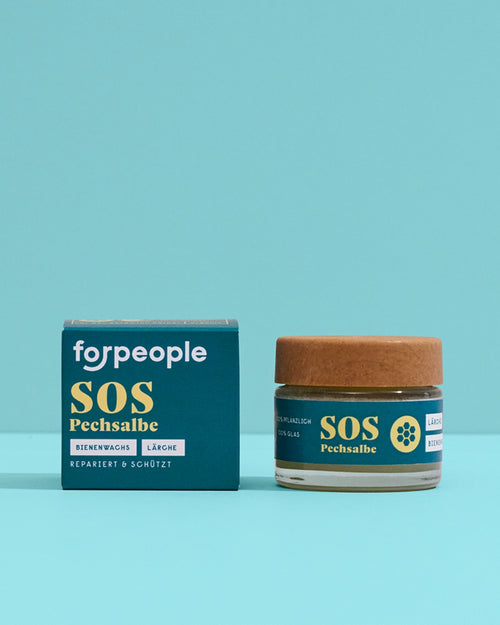
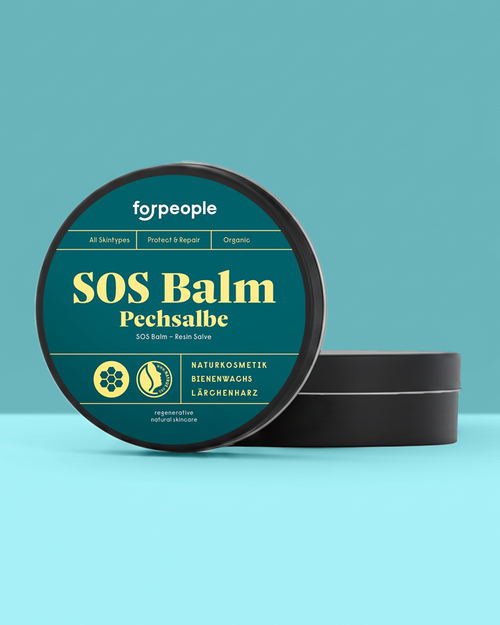
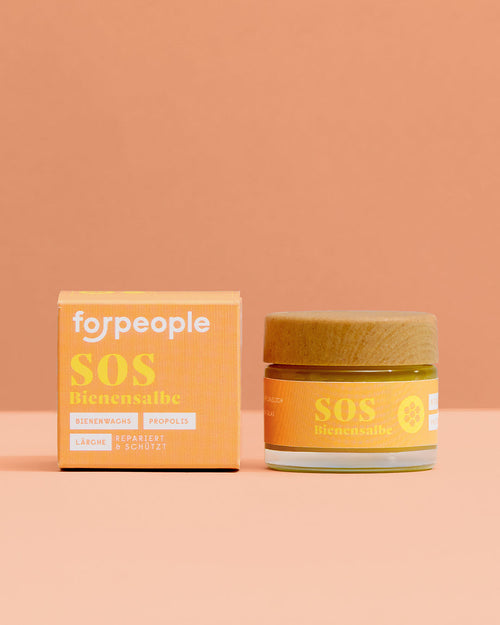
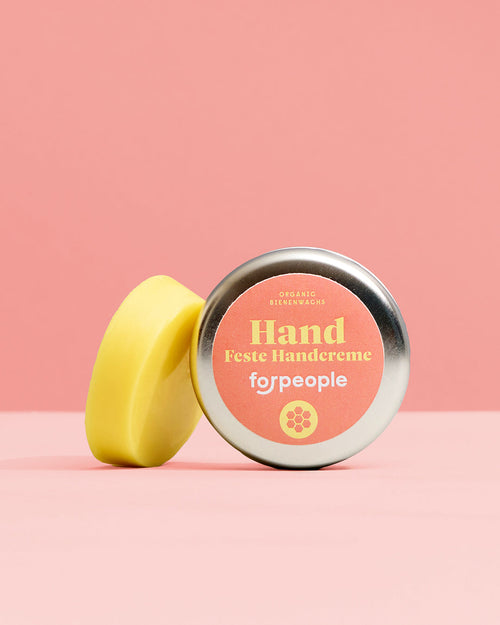
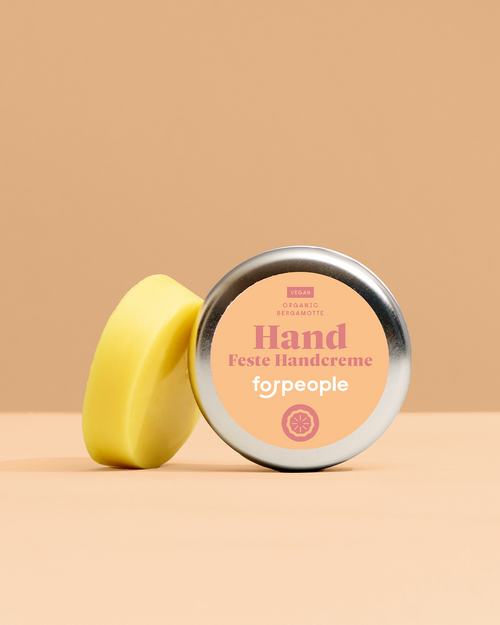
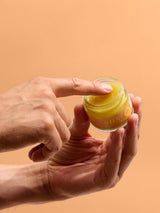
Our salves contain larch resin, no tar and no rosin. The SOS Pitch Salve - Larch Resin in a Glass Jar (50 g, €16.90) contains olive oil, larch resin and beeswax, and the terpenes pinene, terpinolene, alpha-terpinene and terpineol are declared individually. The same formula is available as SOS Pitch Salve - Larch Resin in a Tin (150 g, €39.90). The Beeswax Salve Larch & Mandarin in a Glass Jar (50 g, €12.90) combines larch resin with propolis and essential oils. The Solid Hand Cream - Beeswax (30 g, €9.90) and the vegan Solid Vegan Hand Cream - Bergamot (30 g, €9.90) contain no resin. All of them are cosmetic products for caring for dry, stressed skin. More on this: Pitch salve or drawing salve · Salve, balm, butter, solid cream · Candelilla wax or beeswax · Petroleum jelly or beeswax salve
Sources
- Universität für Bodenkultur Wien (BOKU) (o. J.): Steckbrief Harz, Pech, Balsam. https://boku.ac.at/fileadmin/data/H03000/H91000/H91300/Forschung/Steckbrief_Harz.pdf
- Lagoni N (2012): Vom Lärchenharz zum Terpentin bis Lärchenöl. LWF Wissen 69: 79–81. Bayerische Landesanstalt für Wald und Forstwirtschaft. https://www.lwf.bayern.de/mam/cms04/biodiversitaet/dateien/vom_laerchenharz_w69.pdf
- ARGE NÖ Pecherstraße (2010): Bewerbungsformular „Pecherei in Niederösterreich, Harzgewinnung und Verarbeitung“ für das österreichische Verzeichnis des immateriellen Kulturerbes. Österreichische UNESCO-Kommission. https://www.unesco.at/fileadmin/Redaktion/Kultur/IKE/IKE-DB/files/337.doc
- Europäische Kommission: CosIng – Datenbank kosmetischer Inhaltsstoffe, Einträge COLOPHONIUM (Nr. 33012), TURPENTINE (Nr. 41521), PINUS PALUSTRIS WOOD TAR (Nr. 59487), abgerufen 30.09.2026. https://ec.europa.eu/growth/tools-databases/cosing/
- Kozowyk PRB, Soressi M, Pomstra D, Langejans GHJ (2017): Experimental methods for the Palaeolithic dry distillation of birch bark: implications for the origin and development of Neandertal adhesive technology. Sci Rep 7(1): 8033. https://doi.org/10.1038/s41598-017-08106-7
- Europäische Kommission (2023): Verordnung (EU) 2023/1545 zur Änderung der Verordnung (EG) Nr. 1223/2009 hinsichtlich der Kennzeichnung allergieauslösender Duftstoffe in kosmetischen Mitteln. ABl. L 188: 1. https://eur-lex.europa.eu/eli/reg/2023/1545/oj