


What INCI means and why the list is mandatory
INCI stands for International Nomenclature of Cosmetic Ingredients, the international naming system for cosmetic ingredients. In the EU, the Cosmetics Regulation requires the packaging to carry a list of ingredients headed "Ingredients" (Regulation (EC) No 1223/2009, Art. 19). The names come from a glossary that the European Commission updates regularly and that takes the INCI names into account. Since 30 July 2026, this glossary is set out in Implementing Decision (EU) 2025/1175 (Implementing Decision (EU) 2025/1175).
Because the names are the same internationally, the INCI follows a few conventions:
- Plant ingredients carry their Latin name plus the plant part, for example "Helianthus Annuus Seed Oil" for sunflower oil or "Butyrospermum Parkii Butter" for shea butter.
- Chemical substances appear under their English name, for example "Sodium Bicarbonate" for baking soda or "Zinc Oxide".
- Water is called "Aqua", beeswax "Cera Alba".
An ingredient is any substance that is intentionally used in manufacturing. Impurities in raw materials and technical aids that are no longer present in the finished product do not count (Regulation (EC) No 1223/2009, Art. 19).
The rules at a glance
| Rule | What it means for you |
|---|---|
| Descending order by weight | The first ingredient is the largest by amount. In classic creams, this is usually Aqua. |
| Below 1% in any order | Ingredients below 1% may be listed in any order after those above 1%. Where this threshold lies in the list is not stated on the packaging. |
| Colourants may come last | Colourants may be listed after all other ingredients, usually with a CI number (Colour Index). |
| Nanomaterials | The name must be followed by "(nano)". |
| Fragrances | Fragrance blends appear as "Parfum", flavours as "Aroma". Certain allergenic fragrance substances must also be named individually. |
| Decorative cosmetics in several shades | All colourants of the range may be listed with "+/-" or "may contain". |
All these points are set out in Article 19(1)(g) of the Cosmetics Regulation (Regulation (EC) No 1223/2009). The INCI only has to appear on the outer packaging. If that is not possible for practical reasons, it may be printed on an enclosed or attached leaflet, tag or card, referred to by a symbol showing a hand and a book.
Colourants: the CI numbers
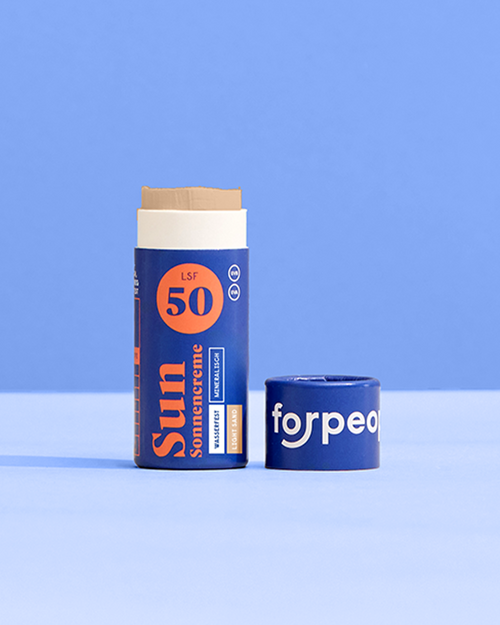
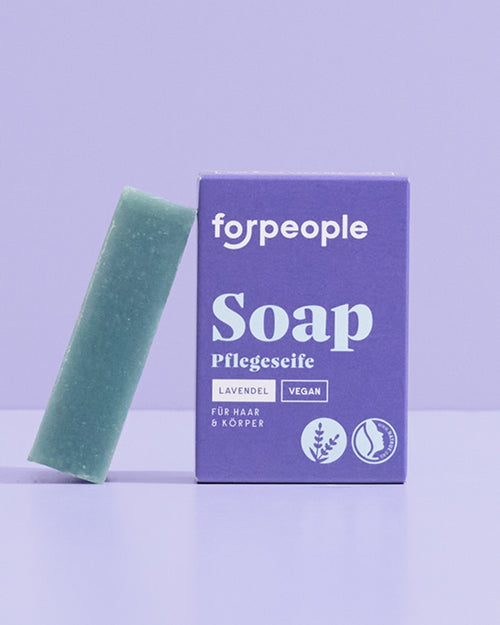
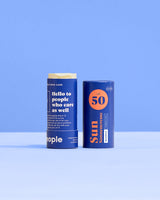
In the INCI, colourants usually carry a five-digit number from the Colour Index. For colourants other than hair dyes, this CI number is the common name in the EU glossary (Implementing Decision (EU) 2025/1175). Two examples from the shop: the tinted Solid Sunscreen SPF50 Mini - Shade LIGHT SAND lists "Iron Oxides (CI 77492)" and "Iron Oxides (CI 77491)", iron oxides for the beige tint. The Aloe Vera Soap – Lavender contains "CI77007", a blue pigment. Why mineral UV filters can appear in the INCI without "(nano)" is explained on the page Nano or non-nano: zinc oxide and titanium dioxide.
Fragrances and allergens
Fragrance and flavour substances may be declared under the collective terms "Parfum" or "Aroma". However, certain fragrance substances known as contact allergens must also be listed individually in the INCI when they exceed a threshold: 0.001% in products that stay on the skin and 0.01% in products that are rinsed off (Regulation (EC) No 1223/2009, Annex III). The EU Scientific Committee on Consumer Safety (SCCS) treats these substances the same way, whether they are added as a single substance or are contained as a constituent of a natural raw material such as an essential oil (SCCS 2012). That is why you often find names like Linalool, Limonene, Citral or Geraniol at the end of the list in natural cosmetics.
The list of fragrance substances that must be declared individually was considerably extended by Regulation (EU) 2023/1545 (Regulation (EU) 2023/1545). Which transition periods apply and what the declarations mean is explained on the page Essential oils and fragrance allergens. An overview of which forpeople products contain no added fragrance can be found on Fragrance-free: ingredients at a glance.
Asterisks and footnotes
Asterisks, superscript numbers and footnotes are not part of the legally required INCI. They are voluntary extra information from the manufacturer, for example on whether a raw material comes from certified organic farming, on the share of such raw materials or on processing. How "organic" and "natural cosmetics" are regulated in cosmetics is explained on the page Natural cosmetics standards explained. As with every statement on the packaging, they must not suggest characteristics that a product does not have (Regulation (EC) No 1223/2009, Art. 20).
An example: the INCI of a solid foot cream
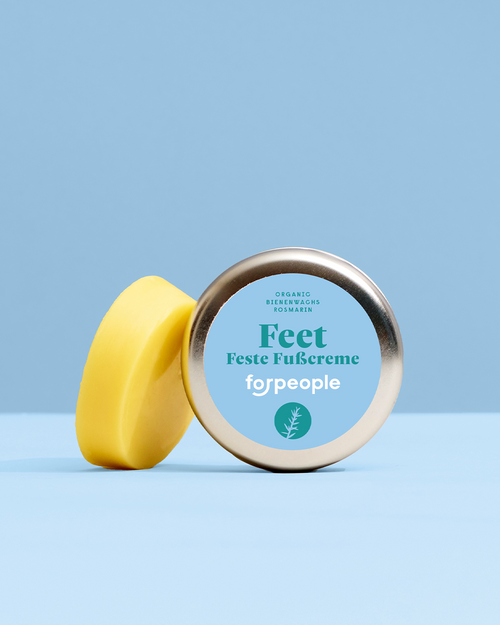
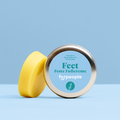
This is how the INCI of the Solid Foot Cream – Rosemary & Sage appears in the shop:
Helianthus Annuus Seed Oil¹², Cera Alba¹, Olea Europea Fruit Oil¹², Butyrospermum Parkii Butter¹, Hypericum Perforatum Flower/Twig Extract*, Rosmarinus Officinalis Leaf Oil*, Eucalyptus Radiata Flower/Leaf/Stem Oil*, Salvia Sclarea Oil, Aloe Barbadensis Leaf Extract*, Linalool**, Limonene**, Geraniol**
* from certified organic farming · ¹ direct trade · ² gently cold-pressed · ** constituent of natural essential oils
How to read it:
- The first positions: Sunflower oil, beeswax, olive oil and shea butter form the base. No "Aqua": the cream is water-free, so neither an emulsifier nor a preservative appears in the list.
- The middle: St. John's wort extract and the essential oils of rosemary, eucalyptus and clary sage. From here on, individual ingredients may already be below 1%; the list does not tell you exactly where that threshold is.
- The end: Linalool, Limonene and Geraniol are not separately added substances. They are constituents of the essential oils and must be named individually because of the allergen labelling rules. The double asterisks make this visible.
- The footnotes: They show the origin and processing of individual raw materials. They are manufacturer information and not part of the mandatory labelling.
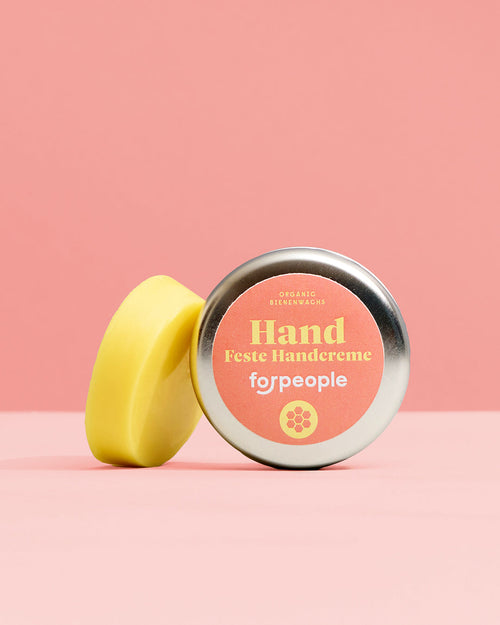
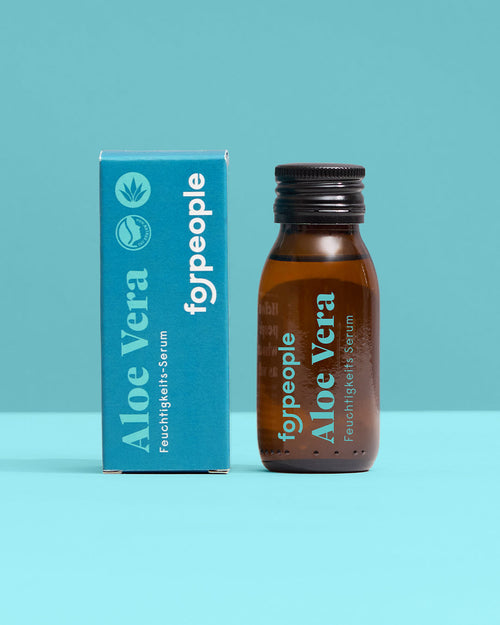
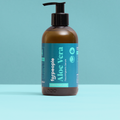
For comparison: the Solid Hand Cream - Beeswax has only five ingredients and no essential oils, so its INCI lists no fragrance allergens either. In the Aloe Vera Serum 99.6%, aloe leaf juice comes first, followed by citric acid and the preservatives potassium sorbate and sodium benzoate; more on this on Preservation and water in cosmetics.
Frequently asked questions
Does the INCI show the amount of an ingredient?
No. The INCI only shows the order, not percentages. Some manufacturers state amounts voluntarily, such as the aloe content of a serum.
Why does an advertised active ingredient appear only at the end?
Many plant extracts and vitamins are used in small amounts. Below 1% they may be listed in any order, so their position says little about the exact amount.
What does "Parfum" mean in the INCI?
It stands for a blend of fragrance substances whose individual components do not have to be named. The exception is the allergenic fragrance substances from Annex III, which are listed individually above the threshold.
How do I find an ingredient I do not tolerate?
Remember the INCI name, not the name in your own language. It is the same throughout the EU. If you are unsure, an allergy card with the exact names helps; if your skin reacts, you should seek medical advice.
What does it mean if an ingredient appears twice?
A plant raw material can occur in different forms, for example as an oil and as an extract. These are then two separate ingredients.
At forpeople
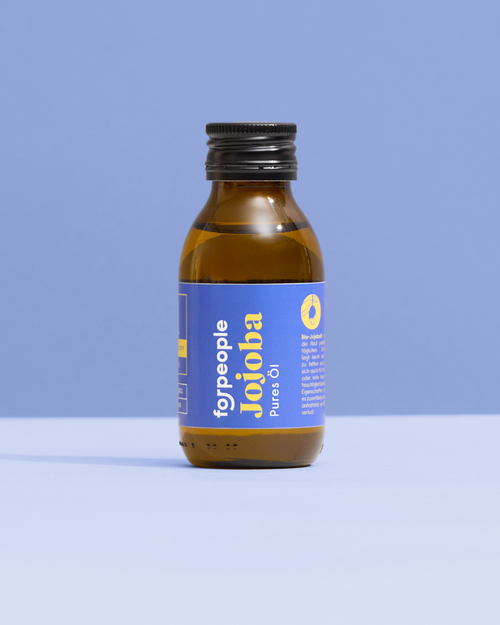
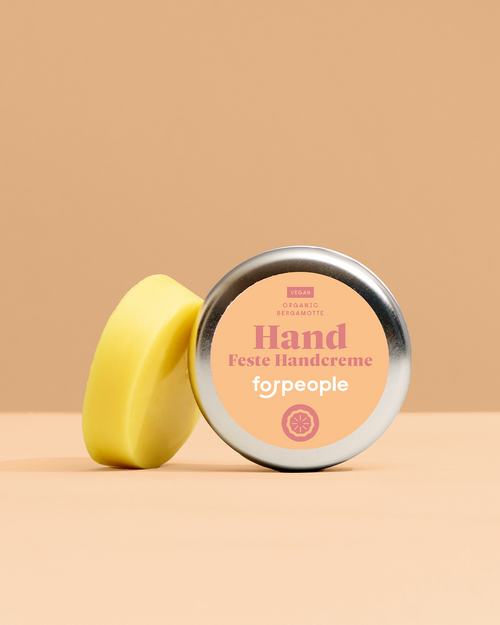
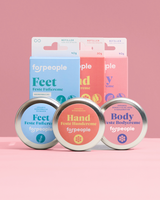
In the shop, every product shows its complete INCI together with an easy-to-understand explanation. Constituents of essential oils such as Linalool or Limonene are marked with a double asterisk. Short lists include the Solid Hand Cream - Beeswax with five ingredients and the Jojoba Oil - pure with a single one: Simmondsia Chinensis Seed Oil. More about jojoba oil on the page Jojoba oil: a liquid wax. The vegan Solid Vegan Hand Cream - Bergamot shows how fragrance allergens from lemon and bergamot oil appear in the list.
- Solid Foot Cream – Rosemary & Sage, 40 g, €9.90
- Solid Hand Cream - Beeswax, 30 g, €9.90
- Jojoba Oil - pure, 100 ml, €16.90
- Solid Sunscreen SPF50 Mini - Shade LIGHT SAND, 20 g, €9.90
Read more: Emulsifiers in cosmetics · Aloe Vera Serum 99.6%: What is inside? · Cosmetics shelf life and the PAO symbol
Sources
- Verordnung (EG) Nr. 1223/2009 des Europäischen Parlaments und des Rates vom 30. November 2009 über kosmetische Mittel, Art. 19 und 20, Anhang III. ABl. L 342 vom 22.12.2009, S. 59. eur-lex.europa.eu/eli/reg/2009/1223/oj
- Durchführungsbeschluss (EU) 2025/1175 der Kommission vom 16. Juni 2025 zur Festlegung von Vorschriften zur Anwendung der Verordnung (EG) Nr. 1223/2009 hinsichtlich des Glossars der gemeinsamen Bezeichnungen von Bestandteilen zur Verwendung bei der Kennzeichnung kosmetischer Mittel und zur Aufhebung des Durchführungsbeschlusses (EU) 2022/677. ABl. L, 2025/1175, 10.7.2025. eur-lex.europa.eu/eli/dec_impl/2025/1175/oj
- Verordnung (EU) 2023/1545 der Kommission vom 26. Juli 2023 zur Änderung der Verordnung (EG) Nr. 1223/2009 hinsichtlich der Kennzeichnung allergieauslösender Duftstoffe in kosmetischen Mitteln. ABl. L 188 vom 27.7.2023, S. 1. eur-lex.europa.eu/eli/reg/2023/1545/oj
- Scientific Committee on Consumer Safety (SCCS) (2012): Opinion on fragrance allergens in cosmetic products. SCCS/1459/11, verabschiedet am 26.–27. Juni 2012. ec.europa.eu – sccs_o_102.pdf