


What beeswax is made of
Beeswax is produced by young worker bees in glands on their abdomen. The bees use it to build the honeycomb in which they store honey and pollen and raise their brood. Chemically, the wax is not a single substance but a mixture of more than 300 components (Huanbutta et al. 2026). The exact composition varies with the bee breed, the age of the wax, the region and the processing.
A recent review names the main groups of substances in the wax of the honey bee (Apis mellifera) (Huanbutta et al. 2026):
| Group | Share (approx.) | What it contributes |
|---|---|---|
| Simple wax esters and hydroxy monoesters | 35–45% | long chains (C40–C48), carry the firmness of the wax |
| Complex wax esters | 15–27% | esters with hydroxy fatty acids or diols |
| Hydrocarbons | 12.0–17.8% | mainly saturated alkanes (C27–C33), water-repellent |
| Free fatty acids | 12–14% | saturated, chain length C24–C32, determine the acid value |
| Other substances | variable | free fatty alcohols and more than 50 aroma compounds that give the typical honey scent |
Wax esters are compounds of a long-chain fatty acid and a long-chain alcohol. They set waxes apart from oils and butters, which consist mainly of triglycerides – glycerol with three fatty acids. How this difference shows up in everyday use is described on the page Jojoba oil: a liquid wax.
Melting range: why beeswax stays solid
Because beeswax is a mixture, it has no sharp melting point but a melting range. The European Pharmacopoeia gives 61–66 °C, other pharmacopoeias give similar values (Huanbutta et al. 2026). At around 32 °C the wax already becomes plastic, meaning it can be shaped. For solid cosmetics this combination is practical:
- At room temperature and body heat, a balm with beeswax stays firm enough not to run.
- When rubbed between the fingers it softens and can be spread.
- During production the wax can be melted with simple heat and mixed with oils.
Beeswax does not tolerate unlimited heat: prolonged heating above 85 °C can change its colour, odour and properties (Huanbutta et al. 2026). For you as a user, summer is more relevant. How to store solid care in the heat is explained on Storing solid cosmetics in summer.
What beeswax does in a solid cream
In ointments and creams, beeswax is used mainly to give texture. In pharmaceutical preparations, amounts of 5–20% are common (Huanbutta et al. 2026). The more wax, the firmer the product: from a soft cream to a balm to a lip stick.
In a water-free formula – made only of oils, butters and waxes, without water – the wax has three jobs:
- Structure: as it cools, the wax forms a fine crystal network that holds the liquid oil. This turns olive oil or sunflower oil into a solid mass.
- Film: after application, part of the oils is absorbed, and a thin wax film remains on the skin. This film is occlusive, meaning it reduces transepidermal water loss – the evaporation of water through the skin to the outside (Huanbutta et al. 2026). How this works is explained on Occlusion and transepidermal water loss.
- Skin feel: a wax film feels less oily than pure oil and stays noticeable for longer after hand washing.
The skin's outermost layer, the stratum corneum, holds water itself through its lipids between the cells and through water-binding substances inside the cells (Rawlings and Harding 2004). A wax film does not replace these structures; it adds to them from the outside. More on this on The skin barrier, simply explained and Humectants, occlusives, emollients.
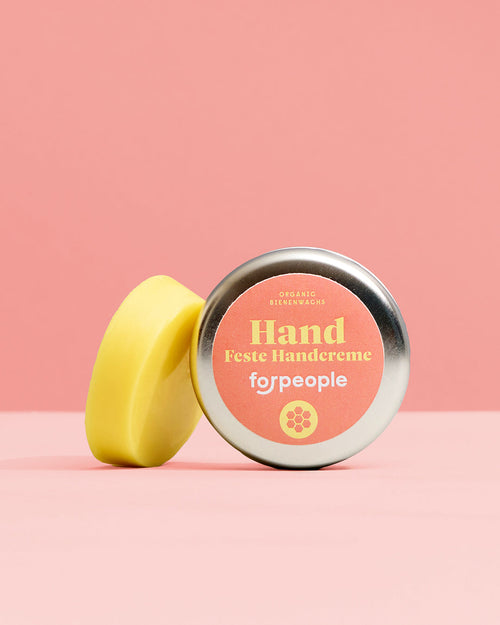
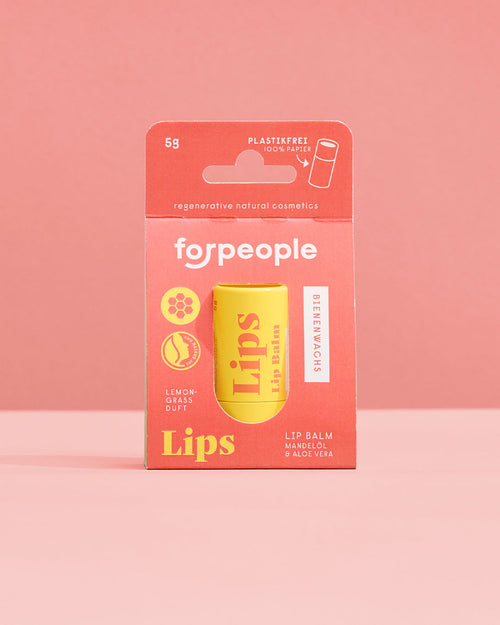
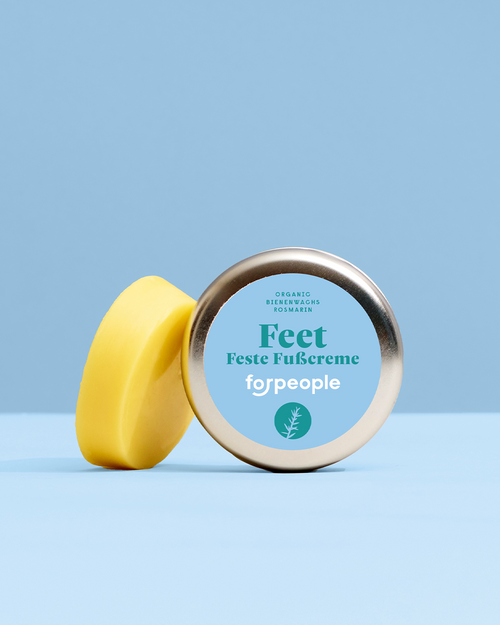
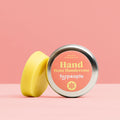
An example: in the Solid Hand Cream - Beeswax, Cera Alba is the first ingredient, followed by olive and sunflower oil. In the Lip Balm - Lemongrass it is also the first ingredient, because a lip balm stick has to be particularly firm. In the Solid Foot Cream – Rosemary & Sage, sunflower oil comes first and beeswax second, which makes it somewhat softer.
Cera Alba and Cera Flava: yellow or white
Raw beeswax is yellow to brownish and smells of honey. Pharmacopoeias distinguish between yellow wax (Cera Flava) and bleached white wax (Cera Alba) (Huanbutta et al. 2026). In the cosmetic ingredient list, the INCI list, beeswax usually appears as Cera Alba – even if the wax itself looks yellowish. How to read an INCI list is explained on Reading an INCI list.
Colour and scent say little about suitability for cosmetics. What matters is that the wax is clean and unadulterated.
Quality and origin: what matters
Beeswax is a natural product whose composition varies. Pharmacopoeias therefore set limits, for example for acid value, ester value and saponification value, and test for foreign substances such as paraffin (Huanbutta et al. 2026). The literature names two quality issues:
- Adulteration: cheaper substances such as paraffin, stearic acid or tallow are sometimes added. Among other things, this lowers the melting range and changes the properties.
- Residues: wax from old combs can contain residues from beekeeping or the environment. This is why analyses such as gas chromatography are used.
For you this means: look for traceable origin and information on quality, such as organic certification of the wax. What natural cosmetics standards cover and what they do not is explained on Natural cosmetics standards explained.
Beeswax and vegan alternatives
Beeswax is an animal product. If you live vegan, you can choose plant waxes such as candelilla wax. It is harder and more brittle than beeswax and consists largely of hydrocarbons rather than wax esters (Hwang et al. 2026; Núñez-García et al. 2022). Formulas therefore have to be adjusted. You will find the comparison on Candelilla wax or beeswax.
When to be careful
Beeswax has long been used in cosmetics. Still, any skin can react to individual substances, including beeswax or ingredients that go into a formula with it, such as propolis or essential oils. If your skin turns red or stings after application, stop using the product. Cosmetics do not belong on open or broken skin. If a skin change persists, have it checked by a doctor.
Frequently asked questions
Is beeswax comedogenic?
There are no robust, generally valid figures on this. How a cream works on your skin depends on the whole formula and on your skin. Wax balms are common for hands, feet, lips and body; for the face, it is best to try a small area first.
Does a wax film clog the skin?
A thin wax film reduces the evaporation of water, but it does not seal the skin airtight. How much a cream covers depends on the wax content and the amount. A thin layer is enough.
Why is a cream with beeswax so firm at first?
Because the wax only melts above about 60 °C. Warm it for a few seconds between your fingers or on your skin, then it spreads. More on this on Solid cream or tube.
Can beeswax go off?
The wax itself is very stable. In a cream it is mainly the oils that age. A rancid smell is a sign that you should no longer use the product. Notes on shelf life are on Shelf life of cosmetics.
Do all water-free creams contain beeswax?
No. Vegan formulas use plant waxes such as candelilla wax. General information on formulas without water is on Water-free cosmetics.
At forpeople
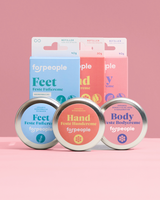
Beeswax (Cera Alba) is in the ingredient list of these products:
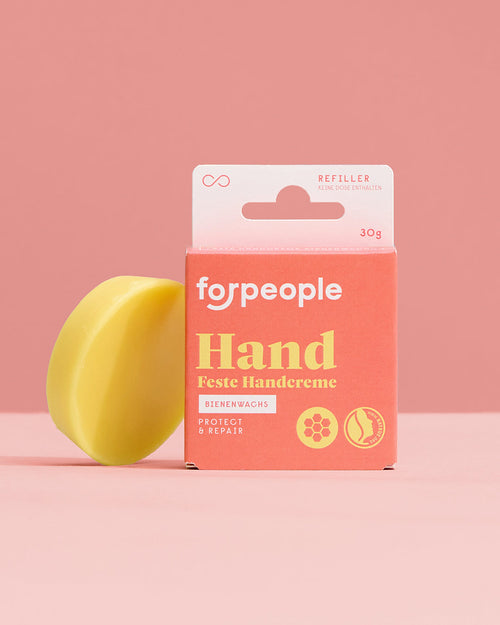
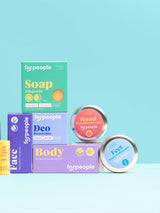
- Solid Hand Cream - Beeswax, 30 g, €9.90 – Cera Alba first, with olive and sunflower oil, without essential oils. Available as a refill for €7.90 to refill the tin (how refilling works).
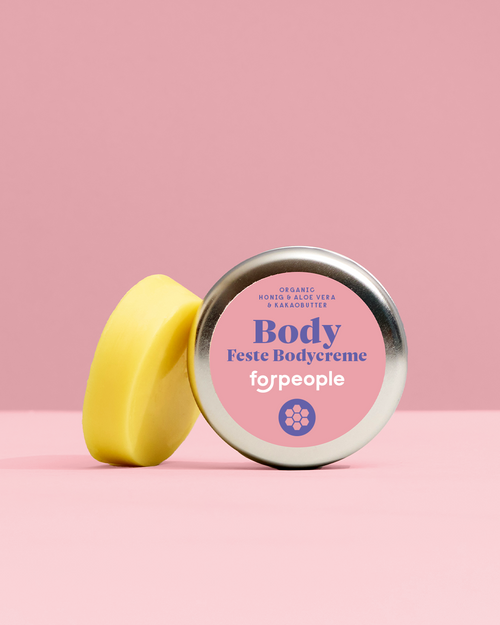
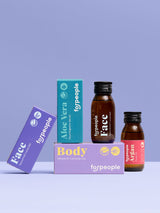
- Solid Body Butter - Beeswax & Aloe Vera, 40 g, €9.90 – with cocoa butter, olive oil, beeswax, sunflower oil and shea butter.
- Lip Balm - Lemongrass, 5 g, €4.90 – beeswax, sunflower oil and shea butter.
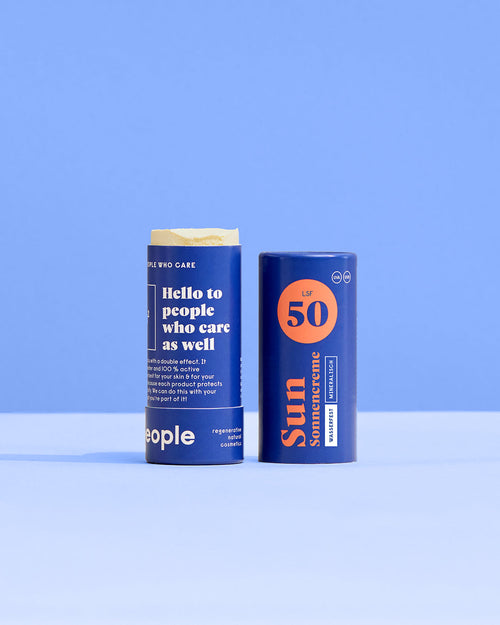
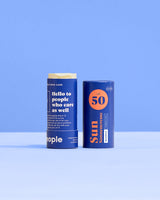
- Solid Sunscreen SPF50, 40 g, €17.90 – mineral, based on shea butter with beeswax.
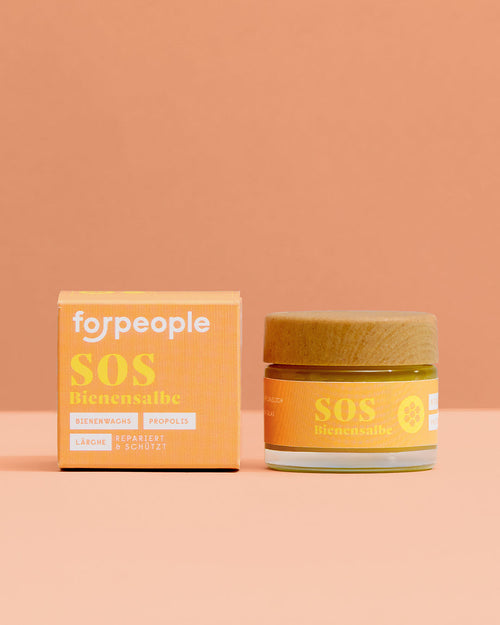
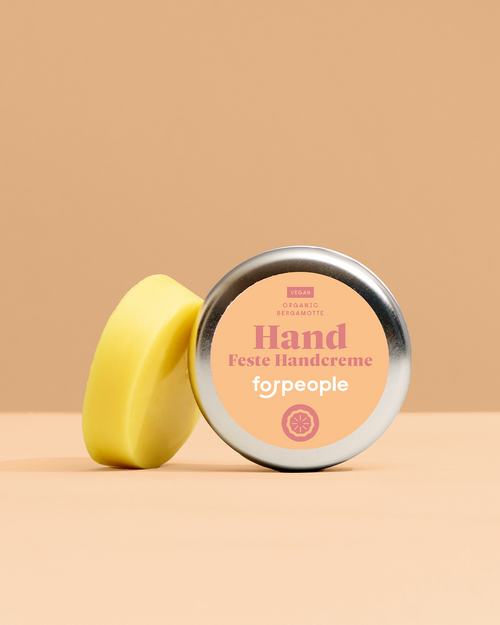
The Solid Foot Cream – Rosemary & Sage and the Beeswax Salve Larch & Mandarin in a Glass Jar also contain beeswax. The Solid Vegan Hand Cream - Bergamot is vegan, without beeswax, made with candelilla wax.
Sources
- Huanbutta K, Chuttong B, Danmek K et al. (2026): Beeswax in Pharmaceutical Sciences: A Comprehensive Review of Its Chemical Composition, Functional Applications, Types, and Formulation Roles. Int J Mol Sci 27(8): 3486. doi:10.3390/ijms27083486
- Rawlings AV, Harding CR (2004): Moisturization and skin barrier function. Dermatol Ther 17 Suppl 1: 43–48. doi:10.1111/j.1396-0296.2004.04s1005.x
- Hwang HS, Kim S, Winkler-Moser JK (2026): The effect of oil unsaturation on gel strength of binary beeswax-candelilla wax oleogels is dependent on the content of hydrocarbons and wax esters. Food Chem 514: 149141. doi:10.1016/j.foodchem.2026.149141
- Núñez-García IC, Rodríguez-Flores LG, Guadiana-De-Dios MH et al. (2022): Candelilla Wax Extracted by Traditional Method and an Ecofriendly Process: Assessment of Its Chemical, Structural and Thermal Properties. Molecules 27(12): 3735. doi:10.3390/molecules27123735