


What is different about elbows and knees
Over both joints the skin lies over the bone with little padding. Three things come together.
Stretching: When you bend your arm or leg, the skin tightens over the joint. When you straighten it, the skin is pushed together. How much the skin around the knee stretches during a squat has been measured with motion-capture cameras (Wessendorf & Newman 2012). A supple stratum corneum copes with that; one that has dried out becomes brittle and rough. The same principle applies to the fingers, see Dry knuckles: why exactly there?
Pressure and friction: Elbows rest on desks and armrests, knees carry you in the garden or on the yoga mat, sleeves and trouser legs rub. A thickened stratum corneum is the skin's normal response to lasting pressure or friction (Freeman 2002). It is the same process as with calluses on the feet; more on that under Calluses keep coming back: why, and what helps.
Little oil of its own: In a series of measurements on 50 healthy people, the sebum value averaged 95.65 micrograms per square centimetre on the forehead, 18.45 on the forearm and 2.88 on the leg (Firooz et al. 2012). Elbows and knees themselves were not measured.
For the stratum corneum there is a count in 301 people: on the arms and legs it consisted of 15 cell layers on average, on the trunk of 13 and on the face of 9 (Ya-Xian et al. 1999). The abstract of the study gives no separate values for the tip of the elbow or the kneecap; we did not find reliable series of measurements for exactly these spots.
Causes and what you can do
On top of stretching, pressure and little sebum come winter air, hot showers, scrubbing and clothes that rub. Low humidity and low temperatures reduce the skin's barrier function and make it more susceptible to mechanical stress (Engebretsen et al. 2016); more on that under Dry skin in winter: what helps with cold and indoor heating. What hot water and soap do is covered in Why are shins dry and flaky in winter?
| Cause | What is behind it | What you can do |
|---|---|---|
| Bending and straightening | The skin is stretched and pushed together; a dry stratum corneum becomes rough in the process | Apply cream with the joint bent |
| Leaning on your elbows, kneeling | Pressure and friction; the skin builds more stratum corneum | Soft surface, kneeling pad, change position |
| Little sebum | Hardly any oil film of its own | Fat-based product after showering |
| Cold, dry air | The barrier function drops | In winter, apply more often and use a richer product |
| Scrubbing with a brush, pumice stone or coarse scrub | Extra friction, which is the trigger for more stratum corneum | Smooth with little pressure, once or twice a week at most |
| Rough fabrics, tight sleeves and trousers | Chafing | Soft, slightly looser clothing |
| Applying cream with the arm or leg straight | The skin over the joint is pushed together, little gets into the grooves | Cover these spots deliberately |
Routine: smooth, apply cream, take the load off
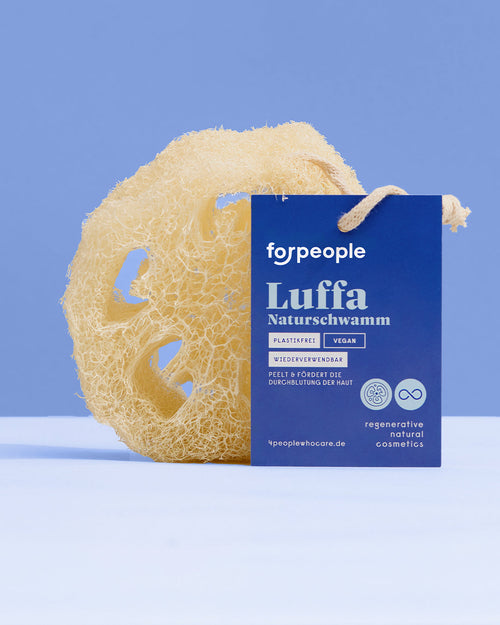
- After a lukewarm shower, smooth with little pressure. The stratum corneum is softened then. Circle briefly over the spot with a soft flannel or a wet Luffa Shower Sponge - Cleansing & Exfoliation, without scrubbing. Once or twice a week is enough; that is a rule of thumb from experience. Blades and callus shavers have no place on elbows and knees. About the sponge: Loofah sponge: how to clean it, how often to replace it?
- Pat dry and apply cream straight away. Fats and waxes lay a water-repellent film on the skin and slow evaporation, most clearly on slightly damp skin (Sethi et al. 2016). The mechanism is explained in Occlusion and TEWL: how a wax film protects your skin.
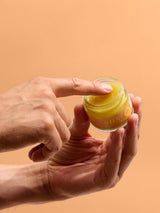
- Apply with the joint bent. That way the skin is taut and the product gets everywhere. You stroke a solid cream directly over the spot and rub it in with your fingers, see How do I apply a solid cream correctly?
- A little more in the evening. A thin layer during the day so that nothing ends up on your clothes. Depending on how dry the skin is, the literature gives one to three times a day, especially after bathing (Sethi et al. 2016).
- Take the load off. A soft surface at your desk and a kneeling pad for gardening take the pressure away.
Which product suits elbows and knees?
You are looking for a product that forms a film and does not end up on your sleeve straight away. What that depends on is explained in How long does a care film stay on the skin?
Humectants work differently. At a low concentration, around 10 percent, urea binds water in the stratum corneum; at a higher one, 20 to 30 percent, it has a keratolytic effect, meaning it loosens the horny layer (Sethi et al. 2016). How that complements a water-free cream is covered in Urea or water-free cream?
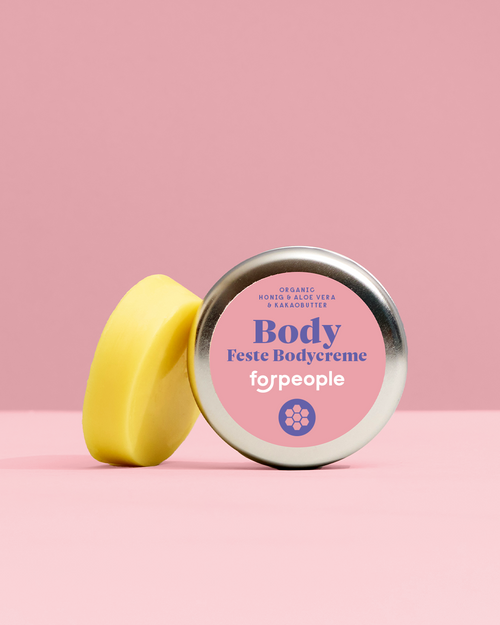
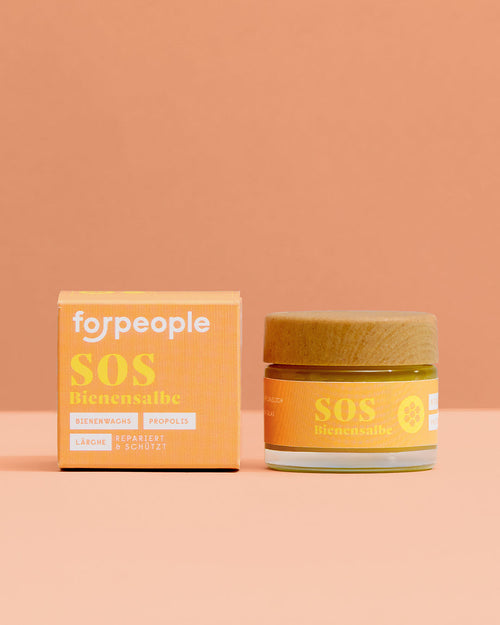
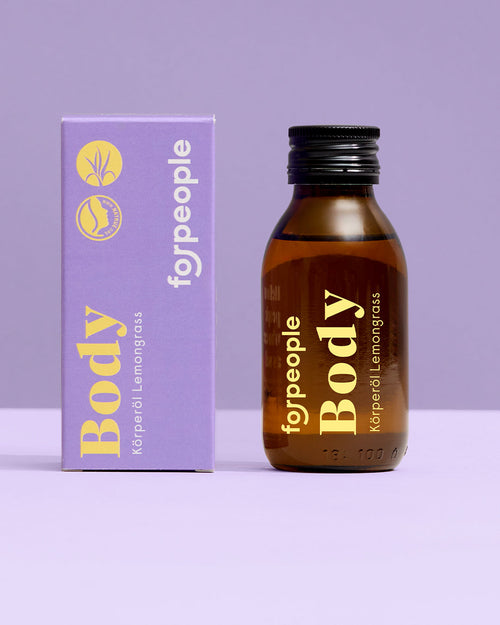
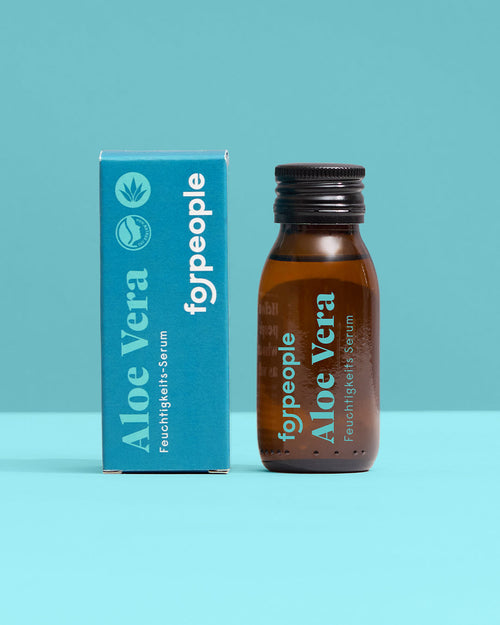
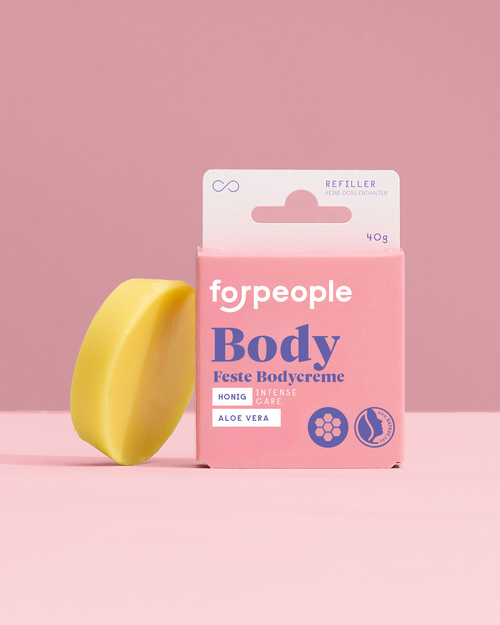
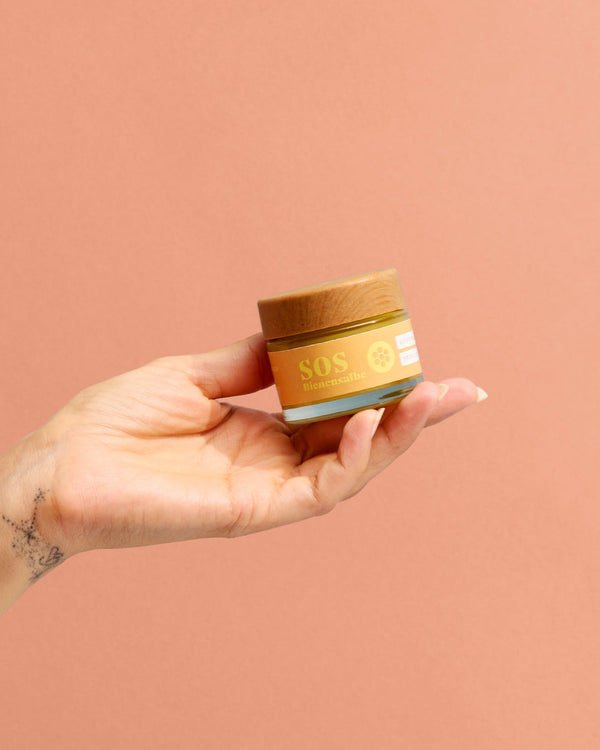
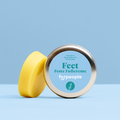
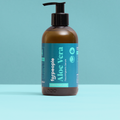
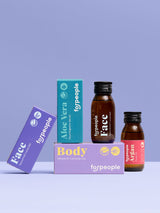
According to its INCI, the Solid Body Butter - Beeswax & Aloe Vera consists of cocoa butter, olive oil, beeswax, sunflower oil, shea butter and aloe extract, with no water and no added fragrance. The Beeswax Salve Larch & Mandarin in a Glass Jar, made from olive, almond and castor oil with beeswax, is softer. It contains larch resin, propolis and essential oils; what that can mean for you is covered in Allergic to tree resin, colophony or propolis? For arms and legs as a whole, an oil such as the Body Oil - Lemongrass is more practical. If you want to combine water and film, apply the Aloe Vera Serum 99.6% first and the cream on top.
When to seek medical advice?
Rough elbows and knees are common. Cosmetics care for the skin; they do not treat diseases. Have the spots checked by a doctor if
- they are sharply defined, red and covered with silvery-white scales,
- they itch a lot, weep or form blisters,
- cracks bleed or hurt,
- similar patches also appear on the scalp or elsewhere on the body, your nails change or your joints hurt,
- nothing changes despite a few weeks of regular care.
Such signs can point to a skin condition such as psoriasis or eczema. That is a matter for a skin specialist. Do not apply care products to open or irritated skin.
What customers say
A selection of verified reviews from our shop (collected via Judge.me), translated from German and partly shortened.
“I was given this SOS salve as a gift and am totally thrilled at how my skin feels good again!!! Keep going and stay on the ball with your great products.”
Customer review of Beeswax Salve Larch & Mandarin in a Glass Jar, 5 out of 5 stars, May 2026, verified purchase
Frequently asked questions
Why are my elbows rough even though I moisturise?
Often little product reaches the joints, or it ends up on your sleeve. Apply cream to the spots deliberately, with the joint bent and straight after showering. If pressure and friction stay, so does the thicker stratum corneum.
Should I exfoliate rough elbows and knees?
Carefully yes, vigorously no. A soft flannel or a wet loofah sponge with little pressure is enough, once or twice a week at most. The skin responds to vigorous scrubbing with more stratum corneum.
How long does it take for the spots to get smoother?
Think in weeks, not days. The stratum corneum has built up over a long time. As long as pressure and friction remain, the skin keeps building it.
Does the solid body butter have a scent?
Scent is often mentioned in reviews. According to its INCI, the body butter contains no added fragrance. It smells of its raw materials: where reviews describe the scent more closely, they mostly name beeswax, occasionally a delicate honey scent. All products with no added fragrance: Without fragrance and essential oils: ingredients at a glance.
The solid body butter is hard. How do I get it onto my skin?
It is solid at room temperature and softens with body heat. Several reviews describe it that way; a single one calls it very hard without warming. After showering, stroke the bar over your warm skin or warm it briefly between your hands. When the tin is empty, you put in the refill.
At forpeople
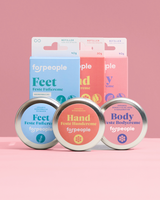
- Solid Body Butter - Beeswax & Aloe Vera, 40 g, €9.90: water-free, no added fragrance, in a metal tin.
- Solid Body Butter Refill - Beeswax & Aloe Vera, 40 g, €7.90: the refill for the tin, same formula.
- Beeswax Salve Larch & Mandarin in a Glass Jar, 50 g, €12.90: soft salve with beeswax, larch resin, propolis and essential oils.
- Body Oil - Lemongrass, 100 ml, €16.90: sesame, safflower, sea buckthorn seed and sunflower oil with lemongrass essential oil.
Do not use the products on injured or irritated skin.
More on this: Why are shins dry and flaky in winter? · Body Oil or Body Butter – Which One When? · Salve, balm, butter, solid cream: the difference
From the blog: Bee Salve: Beeswax & Propolis for Dry, Stressed Skin
Sources
- Wessendorf AM, Newman DJ (2012): Dynamic understanding of human-skin movement and strain-field analysis. IEEE Trans Biomed Eng 59(12): 3432–3438. https://doi.org/10.1109/TBME.2012.2215859
- Freeman DB (2002): Corns and calluses resulting from mechanical hyperkeratosis. Am Fam Physician 65(11): 2277–2280. https://pubmed.ncbi.nlm.nih.gov/12074526/
- Firooz A, Sadr B, Babakoohi S, Sarraf-Yazdy M, Fanian F, Kazerouni-Timsar A et al. (2012): Variation of biophysical parameters of the skin with age, gender, and body region. ScientificWorldJournal 2012: 386936. https://doi.org/10.1100/2012/386936
- Ya-Xian Z, Suetake T, Tagami H (1999): Number of cell layers of the stratum corneum in normal skin – relationship to the anatomical location on the body, age, sex and physical parameters. Arch Dermatol Res 291(10): 555–559. https://doi.org/10.1007/s004030050453
- Engebretsen KA, Johansen JD, Kezic S, Linneberg A, Thyssen JP (2016): The effect of environmental humidity and temperature on skin barrier function and dermatitis. J Eur Acad Dermatol Venereol 30(2): 223–249. https://doi.org/10.1111/jdv.13301
- Sethi A, Kaur T, Malhotra SK, Gambhir ML (2016): Moisturizers: The Slippery Road. Indian J Dermatol 61(3): 279–287. https://doi.org/10.4103/0019-5154.182427