




Why the knuckles in particular?
The skin over the finger joints is skin from the back of the hand, and that is built differently from the palm. Its outer layer, the stratum corneum, is thin: in a Raman spectroscopy measurement it averaged 29.3 micrometres on the back of the hand and 173 micrometres on the palm (Egawa et al. 2007). A thin stratum corneum has less reserve when water and fats are lost.
Then there is movement. When you make a fist, the skin over your knuckles tightens. In a study with 30 people, the skin on the back of the fingers stretched by an average of 29.3 percent when clenching a fist (Liu et al. 2024). With your hand open, the same skin lies in transverse creases. A supple stratum corneum copes with this constant stretching and folding without problems. If it has dried out, it splits exactly in the creases.
What else dries out your knuckles
As the stratum corneum dries, tensile stress builds up in it. How much depends on the humidity; surfactants increase this stress, glycerin lowers it. The authors see it as a mechanical driving force for damage to dry skin (Levi et al. 2010). On the knuckles, this stress meets the stretching of a clenched fist.
- Cold and wind: Low temperatures and dry air reduce the skin's barrier function and make it more susceptible to mechanical stress (Engebretsen et al. 2016). If you clench your hands into fists in the cold or hold bicycle handlebars, your knuckles are right in the wind.
- Washing: Surfactants remove fats from the stratum corneum and interact with its proteins; this leads to tightness and dryness after washing (Ananthapadmanabhan et al. 2004). When drying their hands, many people mainly rub their palms dry; the knuckles stay wet and air-dry.
- Friction: Gloves, jacket sleeves, tools, dumbbells or boxing wraps rub over the knuckles.
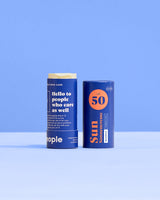
- Sun: The back of the hand is exposed to the sun all summer, often without protection. More in Sun protection for the backs of your hands.
- Forgotten when applying cream: If you rub cream between your palms, it hardly reaches your knuckles.
Why hands in general dry out faster than other skin is explained in Why hands dry out faster.
Knuckles and palm compared
| Feature | Palm and fingertips | Knuckles and back of the hand |
|---|---|---|
| Stratum corneum | very thick | thin |
| Sebaceous glands | none (Smith & Thiboutot 2008) | present |
| Strain | Pressure when gripping | Stretching when making a fist, cold, wind |
| Typical appearance | Cracks at the fingertip, hard areas | Rough, flaky skin, fine cracks in the creases |
| When applying cream | almost always reached | often forgotten |
Fingertips have their own page: Cracked fingertips in winter.
How to care for dry knuckles
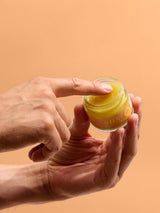
- Apply cream with a fist: Take a small amount of cream, loosely clench your hand into a fist and massage the care into the taut skin over your knuckles with your other hand. That way it also gets into the creases that form when you open your hand.
- After washing: Pat the backs of your hands and knuckles dry thoroughly and apply cream straight away while the skin is still slightly damp.
- In the evening: Apply a richer salve to your knuckles and let it absorb. If you like, wear thin cotton gloves overnight; more in Overnight hand mask.
- Outdoors: Gloves in the cold, windproof gloves when cycling.
- During sport: Keep chafed areas clean and apply care after training. Calluses on the palm have their own page: Calluses from strength training.
How much care makes sense and how to spread a solid cream with body heat is shown in How to apply solid cream properly. If your hands stay dry despite care, the checklist in Dry hands despite moisturising helps. If you do a lot with your hands at work, you will find tips in Hand care for manual work and gardening.
When to seek medical advice
Rough, dry knuckles are common in winter. Have them looked at by a doctor if:
- several knuckles are clearly red or have thick, scaling patches,
- your nails change at the same time, for example with pits, ridges or discolouration,
- the joints underneath hurt, are swollen or stiff,
- blisters form or the skin weeps,
- cracks bleed or do not close after two to three weeks despite consistent care.
Such signs can point to a skin condition that should be assessed by a doctor. A care cream is no substitute.
Frequently asked questions
Why are only my knuckles dry and not the rest of my hand?
The skin over the knuckles is thin, is stretched strongly every time you make a fist and gets cold and wind directly. Yet it is often forgotten when applying cream. This combination makes the knuckles the driest spot on the hand.
Why do my knuckles crack in the creases?
In the transverse creases, the skin is folded and stretched most when you open and close your hand. A dried-out stratum corneum gives way there first.
Does it help to apply cream to my knuckles with a fist?
Yes. With a loosely clenched fist the skin is taut and the care reaches the areas that otherwise lie in creases.
What care is suitable for rough knuckles?
A care product containing fats or wax that forms a film and does not rub off immediately when you move. A thin layer during the day, more in the evening.
Are dry knuckles normal with boxing or strength training?
Friction and sweat put strain on the skin. Care after training keeps it supple. Do not apply cream to open areas; keep them clean until they have closed.
At forpeople
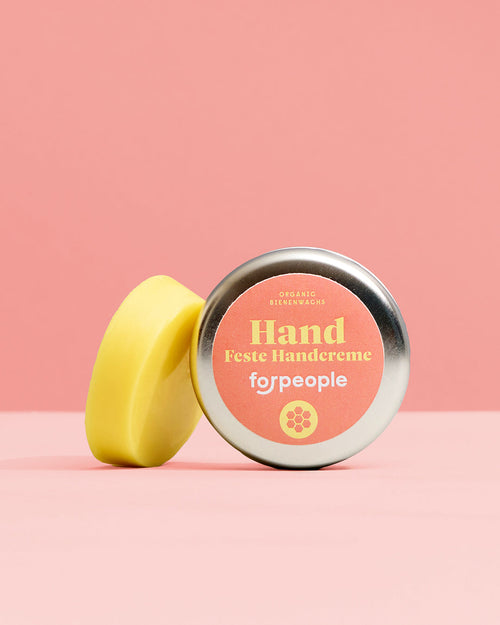
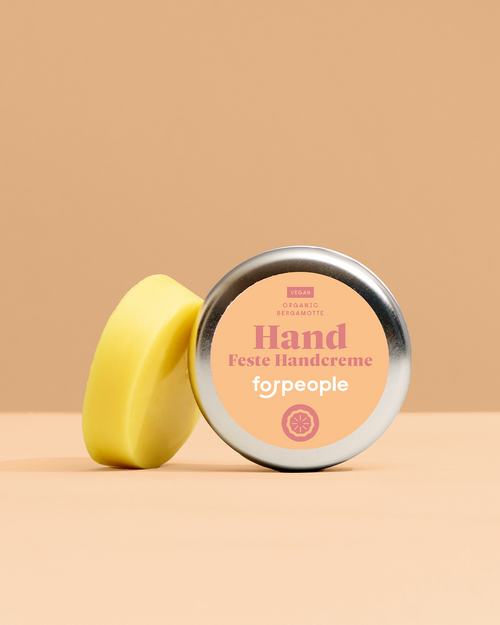
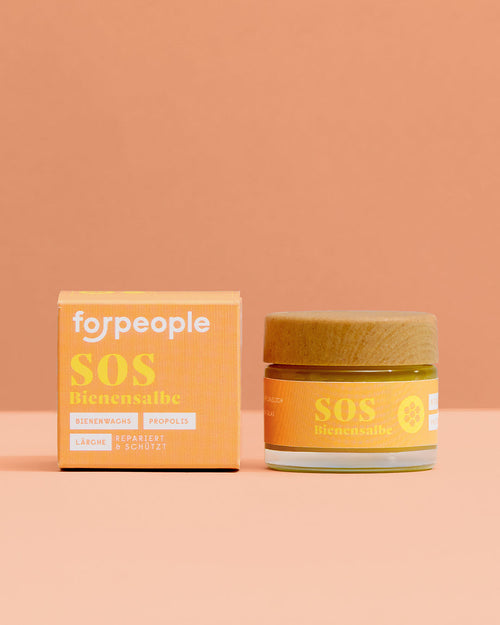
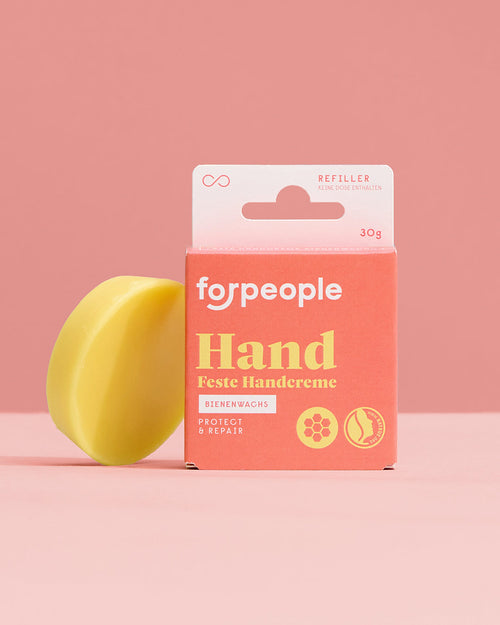
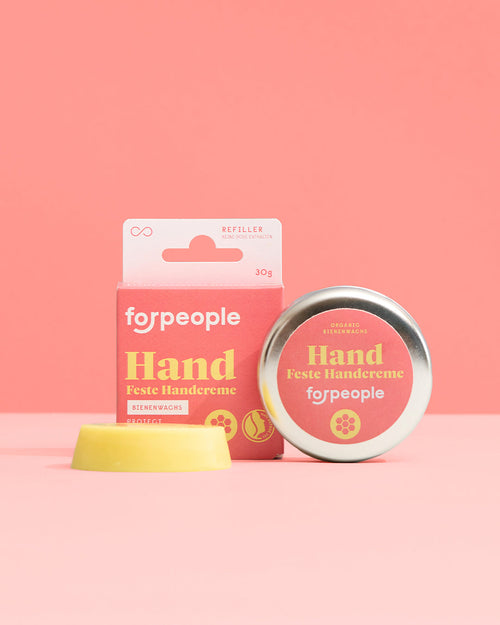
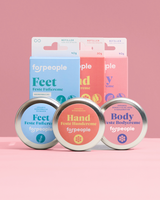
For the knuckles, a water-free care product that forms a film is a good fit. According to its INCI list, the Solid Hand Cream - Beeswax (30 g, €9.90) consists of beeswax, olive and sunflower oil, St. John's wort and aloe extract, without added fragrance. The vegan Solid Vegan Hand Cream - Bergamot (30 g, €9.90) with candelilla wax, jojoba oil and shea butter smells of lemon and bergamot. For evening care there is the Beeswax Salve Larch & Mandarin in a Glass Jar (50 g, €12.90) with larch resin and propolis; please read the allergy notes first. When the hand cream tin is empty, refill it with the Solid Hand Cream Refill - Beeswax (40 g, €7.90); how that works is explained in Refillable hand cream. If you want one tin by the sink and one in your jacket, take the Hand Care Set – For Rough, Cracked Hands (2× Solid Hand Cream) (€16.90). More on this: Dry skin in winter · Peeling skin on your fingers · Dry cuticles · Dry hands with age
Sources
- Egawa M, Hirao T, Takahashi M (2007): In vivo estimation of stratum corneum thickness from water concentration profiles obtained with Raman spectroscopy. Acta Derm Venereol 87(1): 4–8. https://doi.org/10.2340/00015555-0183
- Liu H, Wu C, Lin S, Xi N, Lou VWQ, Hu Y et al. (2024): From Skin Movement to Wearable Robotics: The Case of Robotic Gloves. Soft Robot 11(5): 755–766. https://doi.org/10.1089/soro.2023.0115
- Levi K, Weber RJ, Do JQ, Dauskardt RH (2010): Drying stress and damage processes in human stratum corneum. Int J Cosmet Sci 32(4): 276–293. https://doi.org/10.1111/j.1468-2494.2009.00557.x
- Engebretsen KA, Johansen JD, Kezic S, Linneberg A, Thyssen JP (2016): The effect of environmental humidity and temperature on skin barrier function and dermatitis. J Eur Acad Dermatol Venereol 30(2): 223–249. https://doi.org/10.1111/jdv.13301
- Ananthapadmanabhan KP, Moore DJ, Subramanyan K, Misra M, Meyer F (2004): Cleansing without compromise: the impact of cleansers on the skin barrier and the technology of mild cleansing. Dermatol Ther 17 Suppl 1: 16–25. https://doi.org/10.1111/j.1396-0296.2004.04s1002.x
- Smith KR, Thiboutot DM (2008): Thematic review series: skin lipids. Sebaceous gland lipids: friend or foe? J Lipid Res 49(2): 271–281. https://doi.org/10.1194/jlr.R700015-JLR200