



Where calluses form and why
In deadlifts, rows, pull-ups and on kettlebell handles, the weight rests on a few spots of the palm: at the base of the fingers, below the knuckles and sometimes on the ball of the thumb. The bar presses the skin against the bone there, and when you regrip or the bar rolls, the skin is shifted. The skin responds with a thicker outer layer. Studies of calluses show that more skin cells are produced, the cells stick together more firmly and they shed more slowly (Kim et al. 2010).
This is the same adaptation as on the heels or fingertips. Why hard skin keeps coming back at pressure points is explained in Why hard skin keeps coming back, and why thick heel skin cracks in Why heel skin cracks.
Why calluses tear
Callus is firm but not elastic. Measurements on thickened skin show that it holds less moisture and is less elastic than the skin next to it (Hashmi et al. 2015, measured on the foot). A thick, dry callus forms a step to the soft skin around it. That step is exactly where shear force acts when the bar rolls in your hand.
Moisture adds to this. Skin that holds more moisture, for example from water, has a higher coefficient of friction than dry skin (Sivamani et al. 2003). In an experiment on the heel, softened skin under repeated loading increased the risk of friction blisters (Kirkham et al. 2014). For training this means: sweaty hands, coarse knurling and many repetitions are the typical mix in which a callus tears or a blister forms underneath it.
| State of the callus | What happens on the bar | What helps |
|---|---|---|
| flat, supple | protects, moves with the skin | leave it, moisturise regularly |
| thick, with a raised edge | edge catches on the knurling | carefully file the edge down |
| dry, cracked | tears under tension | moisturise in the evening, keep hands dry before training |
| softened (after a shower or sauna) | softer, shifts more easily | avoid heavy pulling straight afterwards |
| open or with a blister | open skin, germs can get in | cover it, take a break, do not moisturise |
Remove, moisturise or leave alone?
Remove, but only the edge. The aim is a flat callus without a step, not baby-smooth skin. A fine file or pumice stone is enough. Many people file after showering, when the skin is softer, because skin cells swell in water and become more pliable (Évora et al. 2024); take off only a little then, because softened skin gives way faster. No blades, no scissors, no tearing or biting.
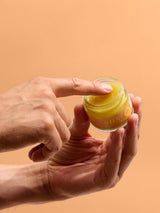
Moisturise so it stays supple. After training and in the evening, massage in a small amount of cream or balm. Water-free creams made of wax and oil leave a film that reduces evaporation. They do not dissolve the callus; ingredients that deliberately soften hard skin are something else, see Urea or water-free cream.
Leave alone what is flat. A flat, supple callus is your protection. If you remove it completely, you will have soft skin in the same spot again and start from scratch.
Chalk, gloves and grip
- Chalk: dries the skin and absorbs sweat. In an experiment on rock samples, however, chalk lowered the coefficient of friction instead of raising it, probably because it dries the skin and forms a slippery powder layer (Li et al. 2001). At the gym it is still mainly used against wet hands. Wash it off after training and moisturise. More in Chalk in climbing.
- Gloves or grip pads: spread the pressure and spare the skin, but change the feel of the grip. If you prefer to hold the bar directly, use them for high volume or when a spot is sensitive.
- Grip: many coaches recommend placing the bar closer to the base of the fingers rather than in the middle of the palm, so less skin bunches up between bar and hand. This is practical experience, not a measurement.
- Lifting straps: take load off the palm during heavy pulls.
Routine for training hands
- Before training: wash your hands, dry them well, no cream.
- During training: wipe off sweat, use chalk if needed.
- Afterwards: wash your hands in lukewarm rather than hot water, dry them and massage in a small amount of cream. More on timing in Moisturise before or after climbing?
- Once a week: check the edges and file them flat.
- If there is an open spot: keep it clean, cover it and rest that hand until the skin has closed.
Have open spots checked by a doctor if they do not close, if there is redness, swelling, warmth or increasing pain, or if a blister fills with cloudy fluid.
Frequently asked questions
Should I remove calluses with a callus shaver?
No. A shaver quickly takes off too much. Only file the raised edge flat.
Does hand cream make calluses soft?
A thin layer of water-free cream keeps them supple but does not dissolve them. Do not apply it right before training, or the bar will slip.
Why do calluses tear mainly during pull-ups and deadlifts?
In these lifts the bar rolls in your hand under high load. The skin is shifted, and a thick edge is pulled along with it.
Should I wear gloves?
That is a matter of preference. They spare the skin but change the feel of the grip. With cared-for, flat calluses many people manage without.
What should I do if a callus has torn?
Keep it clean, cover it, do not moisturise it and do not pull with that hand until the skin has closed again. If it becomes red or swollen, have it checked by a doctor.
At forpeople
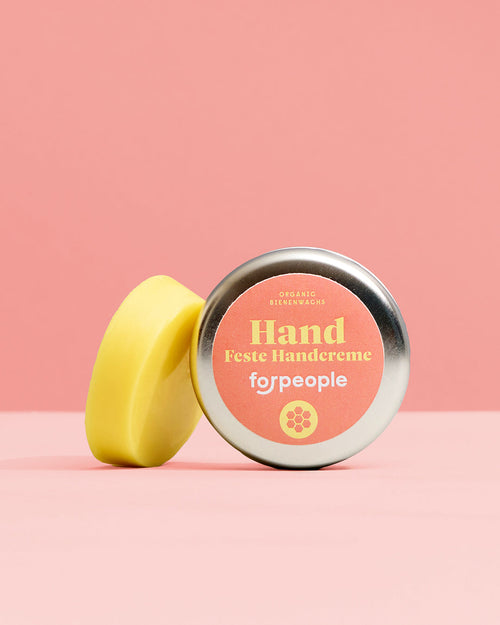
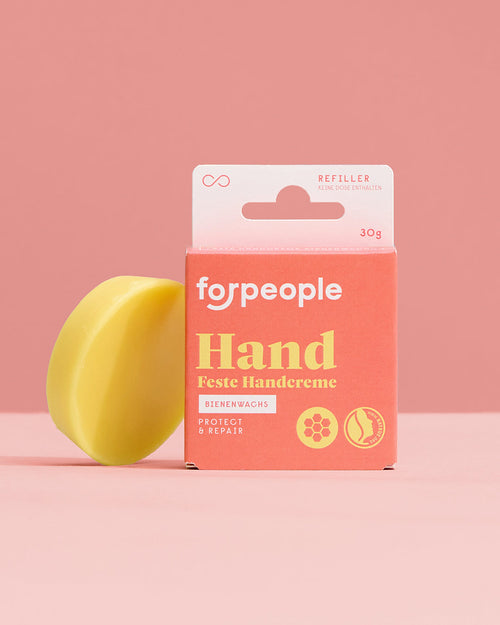
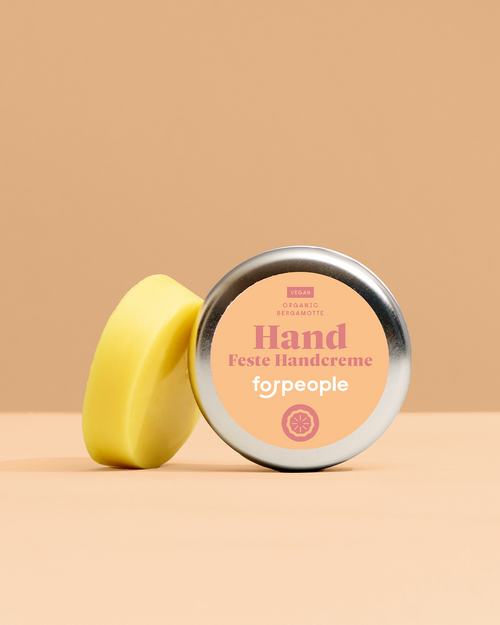
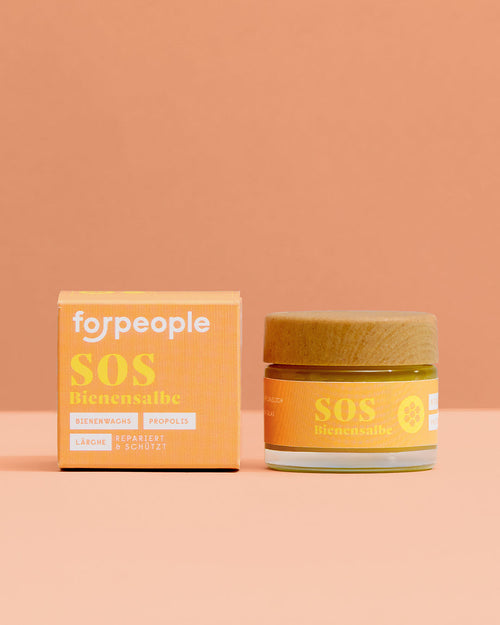
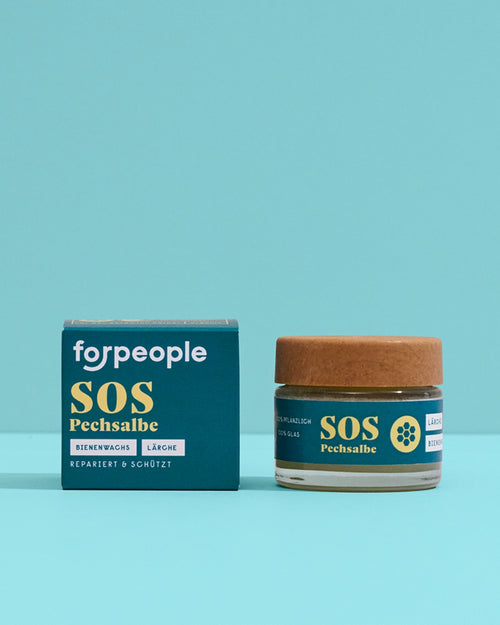
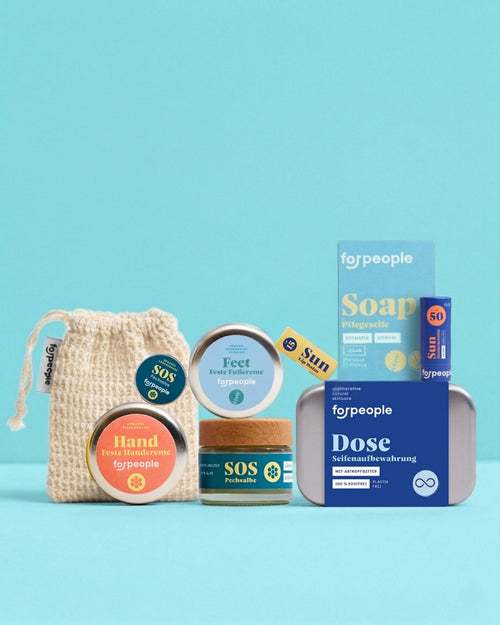
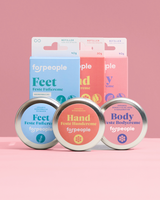
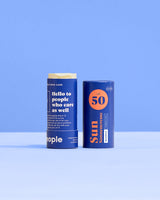
For care after training, the Solid Hand Cream - Beeswax (30 g, €9.90) made from beeswax, olive and sunflower oil fits well; according to its INCI list it has no added fragrance and no essential oils. The tin survives the gym bag and is refilled with the Solid Hand Cream Refill - Beeswax (€7.90). A vegan option with lemon and bergamot oil is the Solid Vegan Hand Cream - Bergamot (30 g, €9.90). For a thicker film overnight there are the Beeswax Salve Larch & Mandarin in a Glass Jar (50 g, €12.90) and the SOS Pitch Salve - Larch Resin in a Glass Jar (50 g, €16.90); both contain larch resin, see Allergy to tree resin. If you also train outdoors, the Outdoor Set – Sun Protection & SOS Care for Stressed Skin (€79.90) combines sun protection and care. More on this: Caring for fingertip calluses when climbing · Fingertips and guitar playing · Hand cream for men · How to apply a solid cream · Chafing when running
Sources
- Kim SH, Kim S, Choi HI, Choi YJ, Lee YS, Sohn KC et al. (2010): Callus formation is associated with hyperproliferation and incomplete differentiation of keratinocytes, and increased expression of adhesion molecules. Br J Dermatol 163(3): 495–501. https://doi.org/10.1111/j.1365-2133.2010.09842.x
- Hashmi F, Nester C, Wright C, Newton V, Lam S (2015): Characterising the biophysical properties of normal and hyperkeratotic foot skin. J Foot Ankle Res 8: 35. https://doi.org/10.1186/s13047-015-0092-7
- Sivamani RK, Goodman J, Gitis NV, Maibach HI (2003): Coefficient of friction: tribological studies in man – an overview. Skin Res Technol 9(3): 227–234. https://doi.org/10.1034/j.1600-0846.2003.02366.x
- Kirkham S, Lam S, Nester C, Hashmi F (2014): The effect of hydration on the risk of friction blister formation on the heel of the foot. Skin Res Technol 20(2): 246–253. https://doi.org/10.1111/srt.12136
- Évora AS, Zhang Z, Johnson SA, Adams MJ (2024): The effects of hydration on the topographical and mechanical properties of corneocytes. J Mech Behav Biomed Mater 150: 106296. https://doi.org/10.1016/j.jmbbm.2023.106296
- Li FX, Margetts S, Fowler I (2001): Use of 'chalk' in rock climbing: sine qua non or myth? J Sports Sci 19(6): 427–432. https://doi.org/10.1080/026404101300149375