




Why not directly before climbing
Above all, climbers need friction on their fingertips. It depends on many things: rock or artificial hold, pressure, temperature and the moisture of your skin. Lab studies on skin friction show that water and creams change friction measurably (Sivamani et al. 2003). A study on holding objects found that people needed the least force to hold on at medium skin moisture, not with very dry or very moist skin (André et al. 2010).
To our knowledge, nobody has measured how a freshly applied cream affects grip on a climbing hold. The experience of many climbers is clear, though: straight after moisturising, holds feel slippery, the chalk forms clumps, and a film is left on the holds that is unpleasant for the next climbers too. That’s why cream doesn’t belong in the time shortly before a session.
Timing at a glance
| When | What you do | Why |
|---|---|---|
| Evening before the climbing day | wash hands, moisturise, a bit more than during the day | the care has the night to absorb |
| Morning of the climbing day | moisturise thinly if your hands feel tight | by the session, the film has absorbed or worn off |
| Shortly before the session | wash hands with water and mild soap, dry well | remove cream residue and skin oil so the chalk sticks well |
| During the session | don’t moisturise; use chalk sparingly, don’t dip your hands in water in between | keep your grip, don’t soften the skin |
| Straight afterwards | wash off chalk, pat dry, moisturise thinly | otherwise chalk keeps drawing moisture from the skin |
| In the evening | a thicker layer, thin cotton gloves if needed | your hands rest, the care stays on the skin longer |
| Rest day | moisturise several times a day, generously in the evening | the skin can recover without chalk and friction |
The timings are based on climbing experience. How quickly a cream absorbs depends on the amount, the formula and your skin. Solid creams are especially easy to dose thinly; how that works is explained under How to apply solid cream. How long a film stays on the skin at all is covered under How long does a care film last?.
Straight after climbing
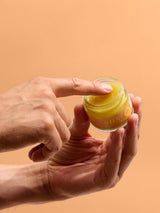
After the session, the skin on your fingers is dry from the chalk and stressed by friction. Chalk binds moisture; a lab study describes that it dries the skin and makes it stiffer (Li et al. 2001). Wash off the chalk with lukewarm water, pat your hands dry and then apply a thin layer. An oily film works best on slightly damp skin: it holds the moisture that is still in the horny layer (Sethi et al. 2016). Why a film of wax and oil slows down evaporation is explained under Occlusion and transepidermal water loss.
Don’t moisturise open, torn or bleeding areas. Keep them clean and cover them. How to deal with torn calluses is covered under Fingertip calluses when climbing.
Night-time care
The evening is the most important time. Measurements over 24 hours show that water loss through the skin is higher in the evening and at night than in the morning (Yosipovitch et al. 1998). At the same time, you hardly use your hands while sleeping, so the cream isn’t wiped off and stays on the skin longer. Use a little more in the evening than during the day and massage the cream especially into fingertips, nail edges and finger creases. Thin cotton gloves keep the care on your hands and protect your bedding. If your hands are still very shiny in the morning, it was too much.
Rest days
On days without climbing, you can be more generous with care. Moisturise thinly after every hand wash, because frequent washing dries your hands out further. More on this under Dry, cracked hands from frequent washing. Rest days are also a good time to file thick callus edges so they are firm again by the next session. How chalk puts strain on your skin is explained under Climbing chalk: what magnesium carbonate does to your skin.
Which care is suitable
- Oil-based rather than water-based: A cream made of waxes, butters and oils leaves a film that reduces evaporation. With water-rich lotions, the water evaporates first; the smaller oil portion is what stays on the skin.
- Easy to dose thinly: After the session and during the day, a little is enough. A solid cream only releases what you glide over your skin.
- Handy: A tin fits in your climbing bag and doesn’t leak.
- Scent as you prefer: Essential oils bring scent and fragrance components that must be declared. If you react sensitively, choose a cream without. More on this under Without fragrance and essential oils.
If your skin reacts to a product with redness or stinging, stop using it. If cracks persist for weeks despite care, or areas become red, warm and painful, have them looked at by a doctor.
Frequently asked questions
How long before climbing should I stop moisturising?
That depends on the amount and the cream. Many climbers apply a thin layer in the morning and wash their hands before the session. Don’t moisturise directly before.
Is it enough to moisturise only after climbing?
After climbing and in the evening are the most important times. On rest days you can moisturise more often.
Does moisturising make calluses too soft?
Not if you moisturise after climbing and in the evening. The cream is meant to keep calluses supple so they don’t become brittle and tear. Skin gets softened mainly by long exposure to water, such as a bath right before climbing.
What do I do with open areas?
Don’t moisturise them, keep them clean, cover them and rest the area. If it becomes red, warm or painful, have it looked at by a doctor.
Can I moisturise in between during a long session?
Better not. A fresh oily film makes holds slippery and the chalk clump. Moisturise after the session.
At forpeople
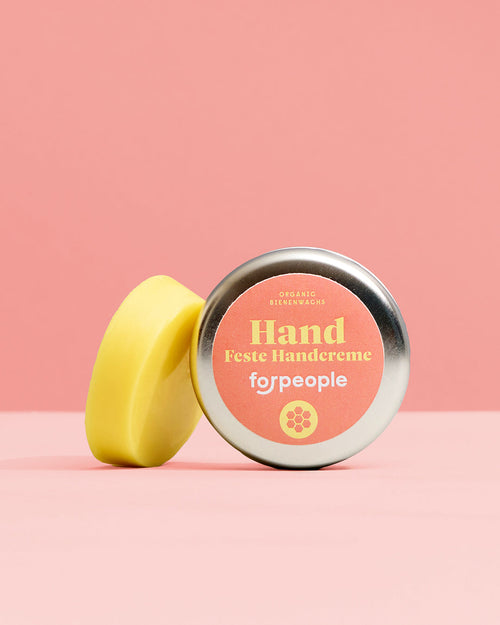
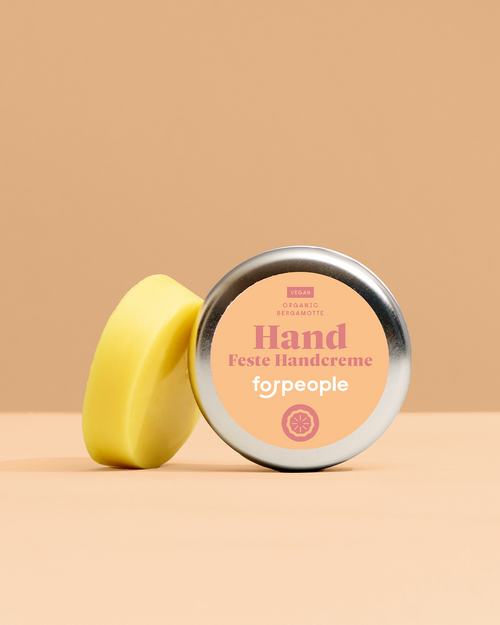
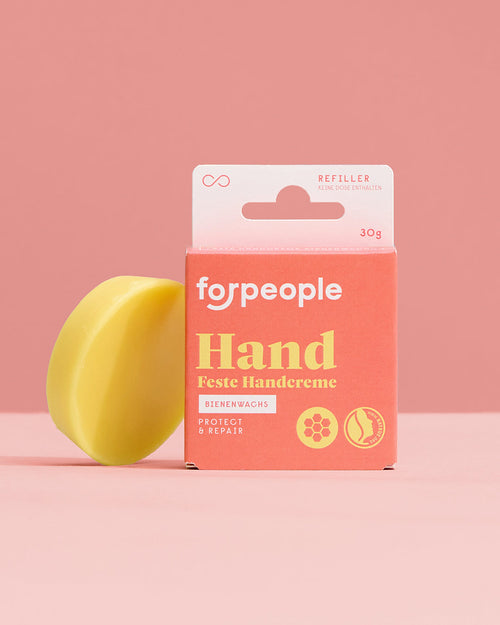
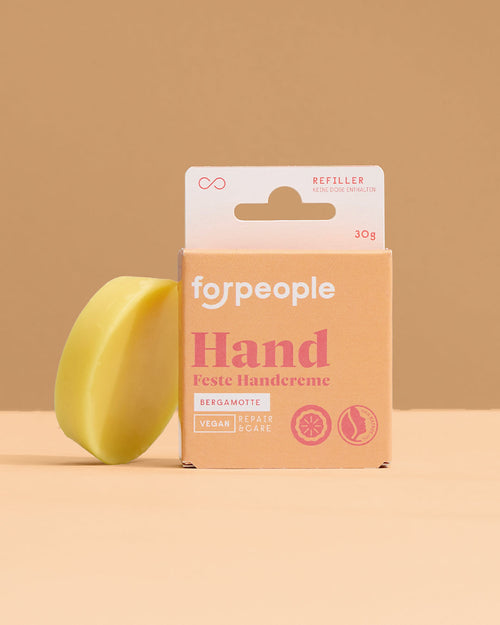
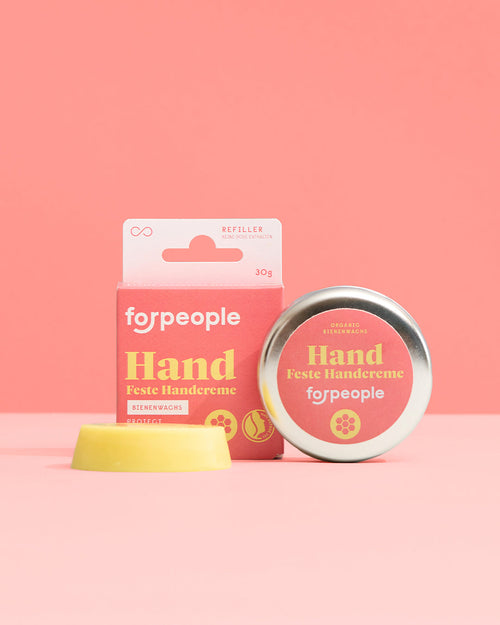
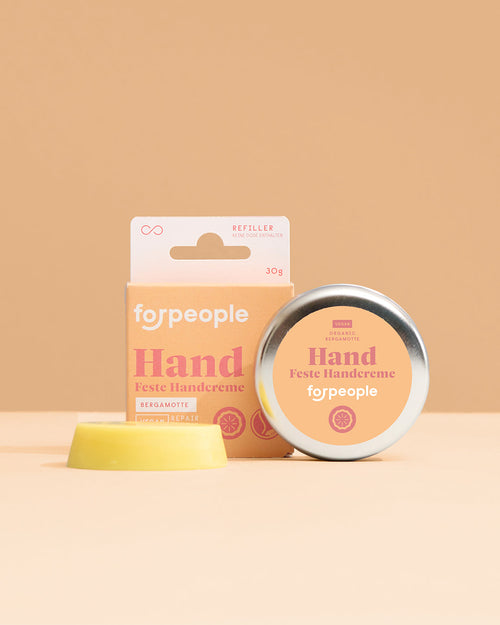
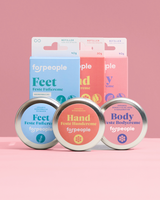
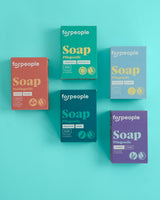
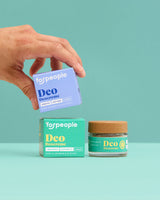
Two solid hand creams are made for care after climbing. According to its ingredient list, the Solid Hand Cream - Beeswax (€9.90) contains beeswax, olive oil, sunflower oil, St. John’s wort extract and aloe extract and no essential oils. The vegan Solid Vegan Hand Cream - Bergamot (€9.90) is based on candelilla wax, jojoba oil, olive oil, shea butter and hemp oil; its scent comes from lemon and bergamot oil with the declared fragrance components limonene, geraniol, citral and linalool. Both are water-free. You refill the empty tin with the Solid Hand Cream Refill - Beeswax or the Solid Vegan Hand Cream Refill - Bergamot (€7.90 each). For your climbing bag and bedside table, there are two creams each in the Hand Care Set – For Rough, Cracked Hands (2× Solid Hand Cream) and the Vegan Hand Care Set – For Dry Hands (2× Bergamot) (€16.90 each). There is more about both creams for climbing in the blog articles Hand care for climbers and Vegan hand care for climbers.
More on this: Chalk and skin · Fingertip calluses · Candelilla wax or beeswax · Refillable hand cream
Sources
- Sivamani RK, Goodman J, Gitis NV, Maibach HI (2003): Coefficient of friction: tribological studies in man – an overview. Skin Research and Technology 9(3): 227–234. https://doi.org/10.1034/j.1600-0846.2003.02366.x
- André T, Lefèvre P, Thonnard JL (2010): Fingertip moisture is optimally modulated during object manipulation. Journal of Neurophysiology 103(1): 402–408. https://doi.org/10.1152/jn.00901.2009
- Li FX, Margetts S, Fowler I (2001): Use of 'chalk' in rock climbing: sine qua non or myth? Journal of Sports Sciences 19(6): 427–432. https://doi.org/10.1080/026404101300149375
- Sethi A, Kaur T, Malhotra SK, Gambhir ML (2016): Moisturizers: The Slippery Road. Indian Journal of Dermatology 61(3): 279–287. https://doi.org/10.4103/0019-5154.182427
- Yosipovitch G, Xiong GL, Haus E, Sackett-Lundeen L, Ashkenazi I, Maibach HI (1998): Time-dependent variations of the skin barrier function in humans: transepidermal water loss, stratum corneum hydration, skin surface pH, and skin temperature. Journal of Investigative Dermatology 110(1): 20–23. https://doi.org/10.1046/j.1523-1747.1998.00069.x