







Cream, hand cream, salve: the answer at a glance
The table summarises what applies to typical skincare products under the EU regulation and the guidance of the German Federal Police (as of October 2026). It is a guide; at the airport, the screening staff decide. Solid cosmetics are classified in more detail in the section How each product form is classified.
| Product | Counts as a liquid? | How to take it |
|---|---|---|
| Hand cream in a tube | yes, creamy | tube of no more than 100 ml into the 1-litre bag; larger tubes in your suitcase |
| Face or body cream in a jar | yes, creamy | jar of no more than 100 ml into the bag |
| Body lotion, liquid sunscreen, serum | yes | only containers up to 100 ml, in the bag |
| Skincare salve or balm | yes, counts as a paste | like cream: up to 100 ml into the bag |
| Medicinal ointment you need during the journey | yes, but medicines are exempt | may also go outside the bag; have a prescription or medical certificate ready (more on this) |
| Solid cream in a tin | borderline | into the bag if the container holds up to 100 ml |
| Solid soap, hard stick | usually not | in your hand luggage as normal |
What the EU means by "liquids"
The rules for hand luggage are set out in Implementing Regulation (EU) 2015/1998, which has been amended several times since. It does not speak of liquids alone, but of "liquids, aerosols and gels", or LAGs for short. The definition reads (Implementing Regulation (EU) 2015/1998, Annex point 4.0.4):
"Liquids, aerosols and gels" (LAGs) shall include pastes, lotions, liquid/solid mixtures and the contents of pressurised containers, such as toothpaste, hair gel, drinks, soups, syrups, perfume, shaving foam and other items with similar consistencies.
The German Federal Police explain it like this: it covers all substances that are liquid, viscous, gel-like, creamy or of a similar consistency at room temperature. In case of doubt, the screening staff decide whether an item may be taken on board (Bundespolizei). The official EU portal "Your Europe" also names creams explicitly as an example (Your Europe).
Why a cream counts as a liquid even though it does not flow
In everyday life, hardly anyone would call a hand cream liquid. For airport screening, however, what counts is not whether something flows but its consistency at room temperature. The German Federal Police's examples show how far the term reaches: besides toothpaste, hair gel and shaving foam, they also list soups as well as cheese spread and meat spread. Hand cream, face cream, body lotion and salve therefore fall under it. The rule goes back to plots in 2006 in which liquid explosives were to be taken on board in drinks bottles; British authorities foiled them, and the EU then restricted liquids in hand luggage (Bundespolizei).
Anything that is creamy, gel-like or liquid at room temperature should be treated as a liquid at the airport: containers of up to 100 ml, all together in one transparent, resealable 1-litre bag.
The 100 ml rule as written
Liquids, aerosols and gels may be exempted from screening with liquid explosive detection equipment if they are in individual containers with a capacity not greater than 100 millilitres or equivalent in one transparent resealable plastic bag of a capacity not exceeding 1 litre, whereby the contents of the bag fit comfortably and the bag is completely closed (Annex point 4.1.3.1). According to the German Federal Police, one such bag is allowed per passenger (Bundespolizei).
Three details matter:
- What counts is the capacity of the container, not how much is in it. A half-empty 200 ml bottle is therefore not allowed.
- Exemptions apply to medicines and special food such as baby food needed during the journey, and to duty-free goods in the sealed security bag (Your Europe).
- Outside the EU different rules may apply. The German Federal Police advise checking the rules of the destination or transit country before you fly (Bundespolizei).
Medicinal ointments and creams
If you need an ointment or cream as a medicine during the journey, the 100 ml limit does not apply. The regulation requires such LAGs to be screened separately at the checkpoint (Annex point 4.1.2.2). According to the German Federal Police, aviation security law sets no quantity limit for them; however, the need must be credible, for which a prescription or a medical certificate is sufficient, for example. If the screening staff cannot establish beyond doubt that the item is harmless, it may not go into your hand luggage. Other rules, such as those on dangerous goods or customs, may set additional limits (Bundespolizei). A skincare cream or salve is not a medicine; like other cosmetics, it belongs in the bag.
New scanners: what the regulation says
Some airports use new equipment that screens hand luggage in three dimensions. The regulation requires liquids to be taken out of hand luggage before screening, unless the equipment can also screen multiple closed LAG containers inside baggage (Annex point 4.1.2.2). For certain older devices of this type approved before 1 August 2024, the regulation states explicitly: they may only be used for containers of up to 100 ml (Annex point 12.4.2.10, inserted by Implementing Regulation (EU) 2024/2108).
Which equipment an airport uses and what applies there cannot be seen from the outside. So plan with the 100 ml rule and check with the airport or airline if you want to take larger amounts. When changing planes, the stricter rule may apply again at another airport.
In the consolidated version of the regulation dated 1 October 2026, the 100 ml rule and the restriction for older equipment are unchanged (Implementing Regulation (EU) 2015/1998). The German Federal Police point out that liquids must still be taken out of hand luggage at the checkpoint and presented separately; if they stay in your bag, they are screened separately, which takes time (Bundespolizei). So follow the instructions at the checkpoint.
How each product form is classified
The table classifies typical product forms against the definition. It is a guide, not a promise: at the airport, the screening staff decide.
| Product form | Consistency at room temperature | Classification under the definition | Recommendation |
|---|---|---|---|
| Solid bar of soap | solid | usually not an LAG | pack dry in your hand luggage |
| Solid stick (lip care, solid sunscreen in a tube) | solid | usually not an LAG; borderline for very soft sticks | if unsure, into the bag |
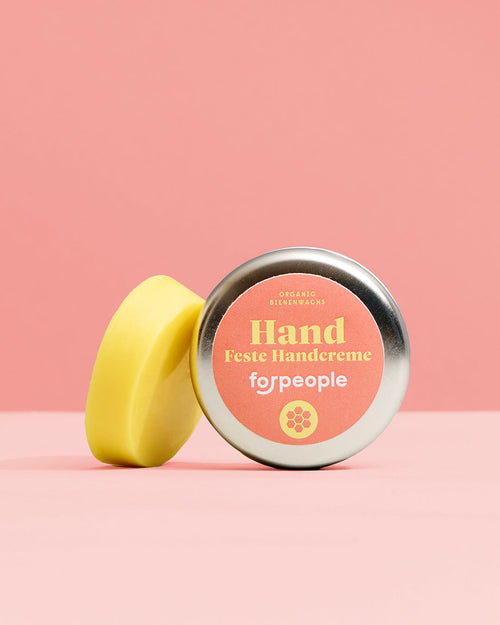
| Solid cream in a tin | solid, softens with skin warmth | borderline; can be classed as creamy | into the bag if the container holds up to 100 ml |
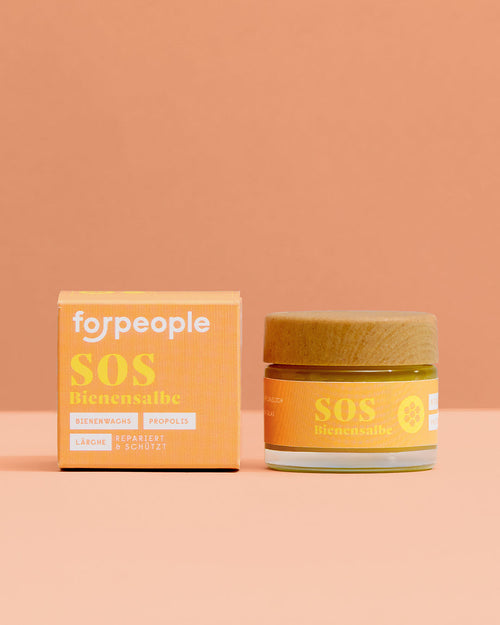
| Balm or salve in a jar | spreadable, paste-like | falls under "pastes" | into the bag |
| Deodorant cream | creamy | falls under LAGs | into the bag |
| Oil, serum, gel | liquid or gel-like | LAG | only up to 100 ml in the bag |
So water-free does not automatically mean "not a liquid". A body oil is water-free and still liquid. What water-free means exactly is explained on the page Water-free, low-water, anhydrous. The difference between salve, balm and cream is described on the page Salve, balm, butter, cream.
Practical travel tips
What customers say
A selection of verified reviews from our shop (collected via Judge.me), translated from German and partly shortened.
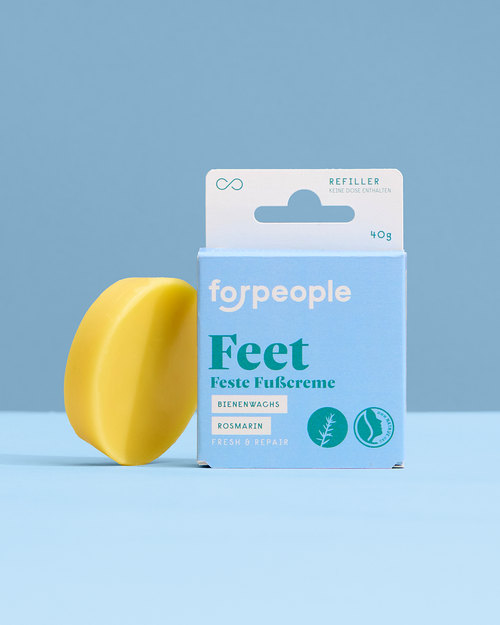
“This solid foot cream is the absolute highlight for my feet! Space-saving when travelling, pleasant scent, easy to apply, great care.”
Customer review of Solid Foot Cream Refill - Rosemary & Sage, 5 out of 5 stars, May 2026, verified purchase
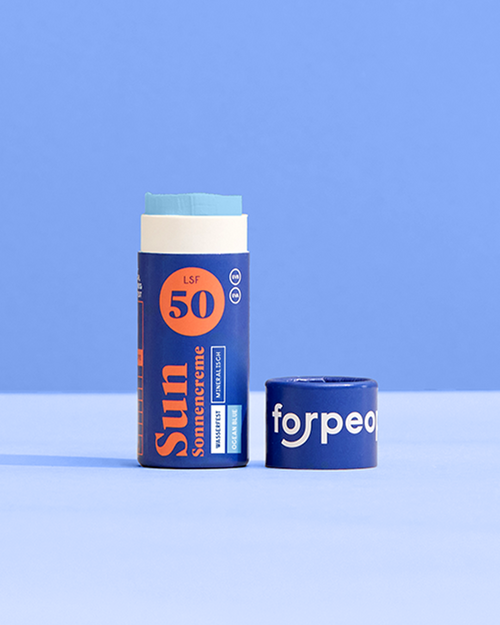
“I am very happy with the sun stick. Always in my handbag. Always to hand.”
Customer review of Solid Sunscreen SPF50 Mini - OCEAN BLUE, 5 out of 5 stars, May 2026, verified purchase
Frequently asked questions
Does hand cream count as a liquid in hand luggage?
Yes. Hand cream is creamy and therefore falls under the liquids, aerosols and gels of the EU rule. A tube or tin with a capacity of no more than 100 ml goes into the transparent 1-litre bag; larger tubes belong in your suitcase, even if they are only half full.
Do salves and ointments count as liquids in hand luggage?
Yes. Salves and balms are spreadable and count as pastes, and therefore as liquids. Treat skincare salves like cream. If you need a medicinal ointment during the journey, the quantity limit does not apply according to the German Federal Police; however, the need must be credible, for example through a prescription or medical certificate, and the ointment is screened separately.
Are creams liquids?
Not in everyday life, but for airport security screening they are. The rule does not ask whether something flows, but whether it is liquid, viscous, gel-like, creamy or similar at room temperature. That is why the German Federal Police even list toothpaste and cheese spread as examples.
How many creams can I pack in my hand luggage?
As many as fit comfortably into one transparent, resealable bag of no more than 1 litre that still closes completely. Each container may hold no more than 100 ml, and one bag is allowed per person.
Does solid sunscreen count as a liquid?
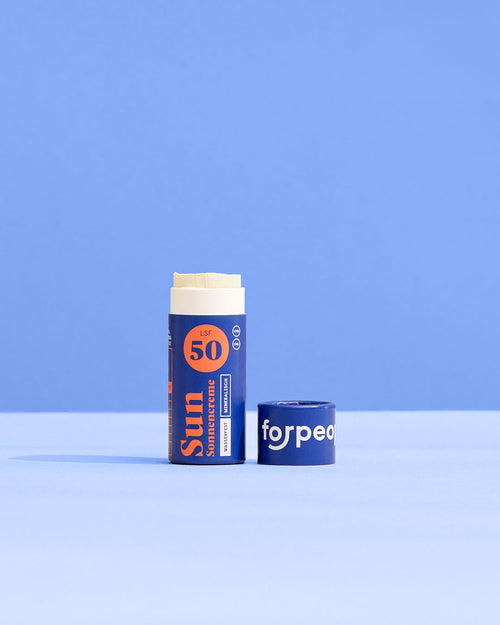
A solid stick in a tube is usually not a liquid under the definition, because it is solid at room temperature. If it softens in the heat, the screening staff may classify it differently. A mini size in the bag keeps you on the safe side.
Can I take solid soap without a bag?
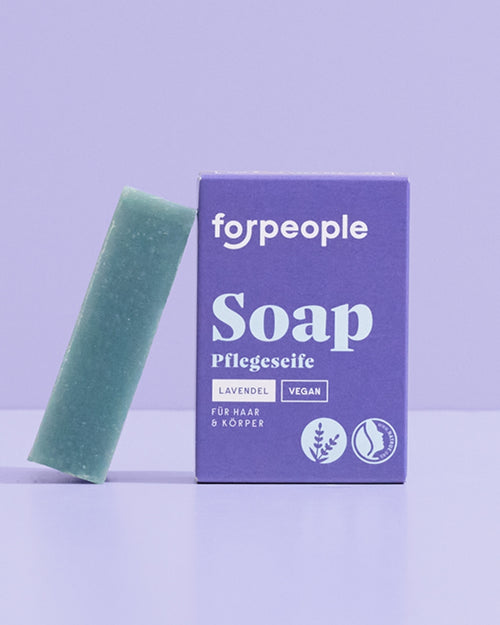
A bar of soap is solid and does not usually fall under liquids according to the definition. There is no guarantee, as the screening staff decide in case of doubt.
Does the amount count in grams or in millilitres?
The regulation refers to 100 millilitres "or equivalent" and to the capacity of the container. So what matters is the container, not the amount inside. In case of doubt, the screening staff decide.
Does the 100 ml rule still apply?
Yes, it is in the current version of the regulation. At airports with certain new scanners, liquids can stay in your bag. Whether larger containers are allowed there depends on the equipment and the airport.
What happens if screening classes a cream as a liquid?
If it doesn't fit into the bag, or the container is larger than 100 ml, you cannot take it in your hand luggage.
Can solid cream melt in a suitcase or backpack?
It can soften in the heat, for example in the car or in the sun. Pack it between clothes and let it set again somewhere cool at your destination. What matters for sun protection in the mountains is explained on Sun protection in the mountains and on snow.
Is hand and lip care worth taking on a flight?
Many people take it on board because skin quickly feels dry in the cabin. A lip balm stick and a small tin of solid cream take up little space. More on Dry skin on a plane.
How do I pack bar soap again after using it?
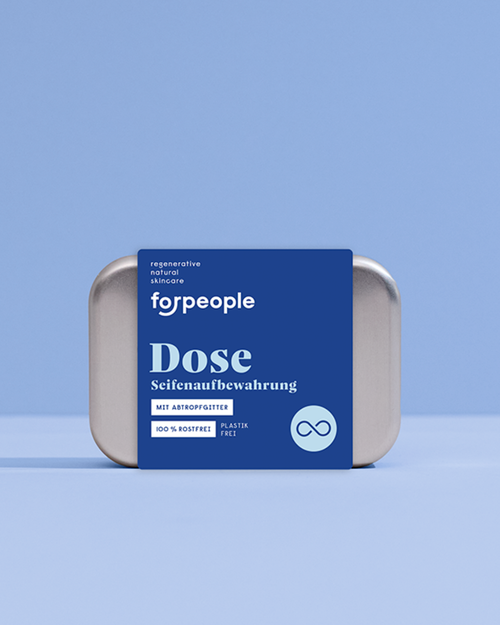
Let it dry as far as possible before packing it, and take a tin with a draining rack or a dry cloth. More on Mushy bar soap: causes and proper storage.
At forpeople
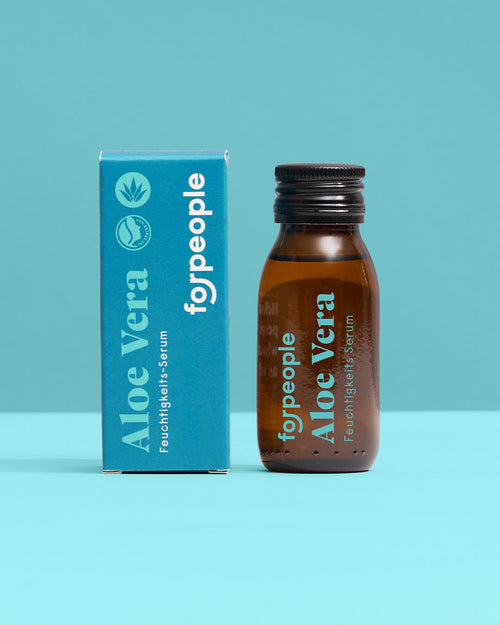
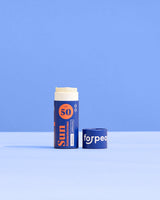
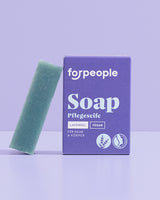
The Solid Sunscreen SPF50 Mini (20 g, €9.90) is a stick in a paper tube without plastic coating. The Aloe Vera Soap – Lavender (75 g) is a solid bar and travels well in the Aluminium Soap Tin with Drainage Grid. The Solid Hand Cream - Beeswax (30 g) is solid but softens with skin warmth; it is one of the borderline cases and is best packed in the bag. The same goes for the Beeswax Salve Larch & Mandarin in a Glass Jar (50 g). The Aloe Vera Serum 99.6% is a liquid; the 50 ml bottle fits in the bag, the large 250 and 300 ml bottles belong in your suitcase.
Read more: Solid cream or tube · Water-free cosmetics · Hygiene and water-free cosmetics · Mineral sunscreen for children
From the blog: Sunscreen without chemical filters – what you should know
Sources
- Durchführungsverordnung (EU) 2015/1998 der Kommission vom 5. November 2015 zur Festlegung detaillierter Maßnahmen für die Durchführung der gemeinsamen Grundstandards für die Luftsicherheit, Anhang Nr. 4.0.4, 4.1.2.2, 4.1.3.1 und 12.4.2.10. ABl. L 299 vom 14.11.2015, S. 1; konsolidierte Fassung vom 1.10.2026. eur-lex.europa.eu/eli/reg_impl/2015/1998/oj
- Bundespolizei: Flüssigkeiten an Bord (abgerufen am 30.09.2026). bundespolizei.de/…/fluessigkeiten-an-bord
- Europäische Union, Your Europe: Gepäckbeschränkungen, zuletzt überprüft am 16.06.2026 (abgerufen am 30.09.2026). europa.eu/youreurope/…/luggage-restrictions