







Why solid creams soften in the heat
A solid cream is a mixture of substances with very different melting ranges. The wax gives the cream its structure, and the oils and butters sit in it like in a sponge. The warmer it gets, the more of the fat turns liquid and the softer the whole mass becomes – long before the wax itself melts.
| Ingredient | Melting behaviour | Source |
|---|---|---|
| Beeswax | melting range 62–65 °C | EU specification for E 901 |
| Candelilla wax | melting range 68.5–72.5 °C | EU specification for E 902 |
| Cocoa butter | occurs in several crystal forms, each with its own melting point; softens in your hand | crystal forms: Loke et al. 2024; softening: practical experience |
| Shea butter | softens and becomes spreadable at skin temperature | practical experience |
| Plant oils (e.g. olive, sunflower oil) | liquid at room temperature | practical experience |
The melting ranges of the waxes come from the EU purity requirements for food additives (Regulation (EU) No 231/2012); similar values apply to cosmetic raw materials, and in individual cases the supplier’s data sheet decides. According to a review, cocoa butter has at least six crystal forms with different melting points (Loke et al. 2024). That explains why a cream with cocoa butter sometimes has a slightly different surface after melting and setting again, such as a pale film or small grains. That is a question of crystals, not of quality. More on the individual waxes and butters: Candelilla wax or beeswax? and Shea butter: composition.
Summer heat traps: car, backpack, windowsill
How quickly an enclosed space heats up is shown by a series of measurements in a dark car on sunny days: on average, the inside temperature rose by around 22 °C (40 °F) within an hour, with 80 % of the rise happening in the first 30 minutes. Even at the coolest measured outside temperature of about 22 °C, the inside reached around 47 °C. Leaving a window slightly open made hardly any difference (McLaren et al. 2005). For solid cosmetics, that means:
- Car: The glove box, centre console and rear shelf are not good places in summer. Take solid creams and sunscreen with you when you get out.
- Beach and backpack: In an inner pocket, wrapped in a cloth or between clothes, in the shade. A cool bag helps too.
- Windowsill and bathroom shelf: No spot in direct sun. Because of steam and splashes, the bathroom is not ideal anyway; a dry cupboard is better.
- Deliveries and parcel boxes: In hot weather, bring the parcel inside soon.
The product safety notes on solid cosmetics say accordingly: “store in a cool, dry place, protect from direct sunlight”. The EU Cosmetics Regulation requires storage conditions to be stated where they are needed to guarantee shelf life (Regulation (EC) No 1223/2009, Article 19). What shelf-life information means is explained on Shelf life of cosmetics and PAO.
Melted – what now?
- Don’t shake or stir: Place the tin flat somewhere cool and shaded and let the cream set again slowly.
- Not in the freezer: Cooling very quickly can make the surface grainy. A cool room or, briefly, the fridge is enough.
- Avoid condensation: If a cold tin meets warm, humid air, water can form on the lid. Let the closed tin reach room temperature before opening it, and wipe off any drops on the lid.
- Check: If the cream smells as usual and looks normal apart from the surface, you can keep using it. If it smells rancid or changes noticeably, throw it away.
For a solid sunscreen: if it has been completely liquid, you cannot tell from the outside whether the mineral filters are still as evenly distributed as before. If in doubt, ask the manufacturer before relying on its protection. Background on sun protection: SPF, UVA and water resistance explained.
In winter: too hard to apply
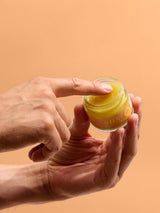
In winter it is the other way round: cold cream is hard to pick up. Hold the tin in your closed hand for a moment or rub your fingertip over the surface until some comes off. The warmth of your skin is enough; a radiator, hairdryer or microwave is not needed and melts the cream unevenly. Why solid care is especially popular in winter is explained on Dry skin in winter.
Hygiene: dry in, dry out
Solid creams are water-free. Microorganisms need water to grow; that is why water-free formulas can do without preservatives. All the more important not to get any water into them. Manufacturers assess this microbiological risk for each product; a standard describes how to identify products with a low risk (ISO 29621:2017).
- Take the cream with dry fingers or a clean spatula, not with wet hands straight after washing.
- Close the tin after use; don’t leave it open next to the sink or shower.
- For hand cream, a simple trick: dry your hands first, then rub your palm briefly over the cream.
More on water and preservation: Preservation and water in cosmetics and Water-free cosmetics.
Inserting a refill
Many solid creams come in a refillable tin. When the tin is empty, wipe it out with a dry cloth and press the refill in. If it is too firm, it is easier to insert after warming it briefly – in your hand, for example, or, for the foot cream according to its instructions, briefly in a water bath; if so, make sure no water gets onto the cream. How the system works is explained on Refillable hand cream.
Frequently asked questions
Is melted cream still okay?
Usually, yes. Melting changes the shape, not the ingredients. Let it set again somewhere cool. If it smells rancid or water has got into it, stop using it.
Can solid cosmetics go in the fridge?
Briefly, yes – after a hot day, for example. Take it out before opening and let it reach room temperature so no condensation forms.
Why does my body butter have white spots?
These are usually fat crystals that form again after warming and cooling. They melt on the skin like the rest of the cream.
Can I leave solid sunscreen in the car?
Better not. A parked car gets very hot quickly, even on mild days. Take it with you or put it in a cool bag.
At forpeople
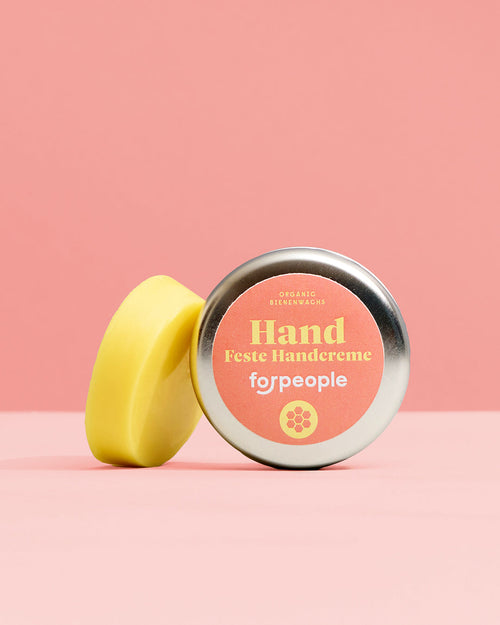
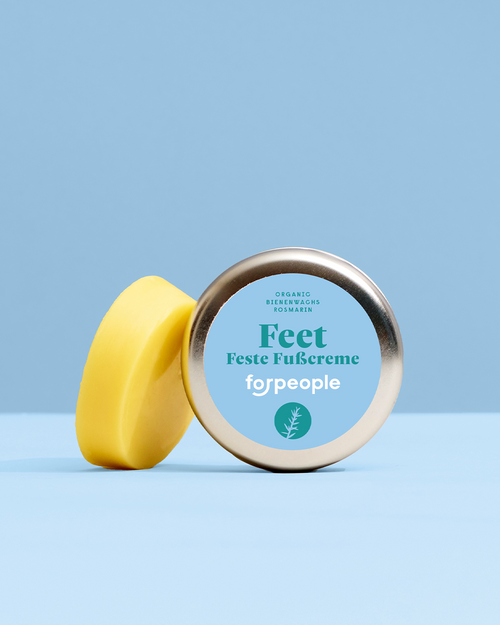
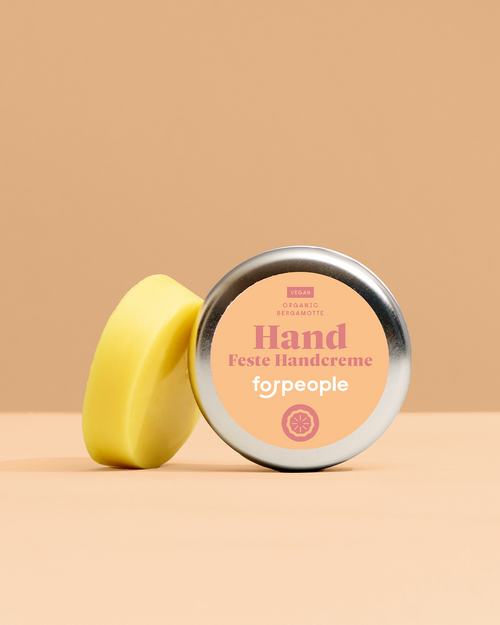
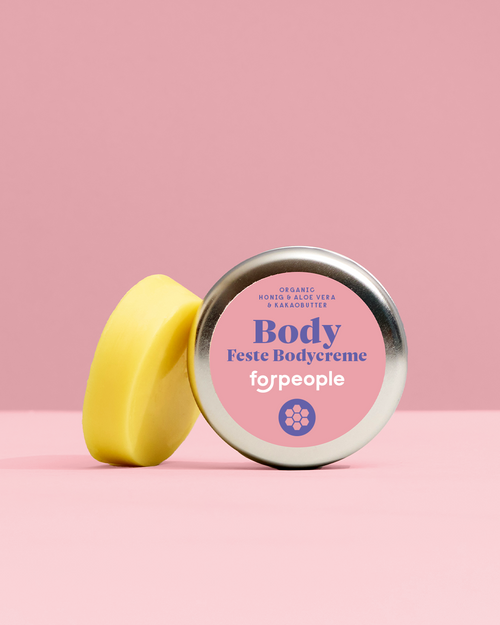
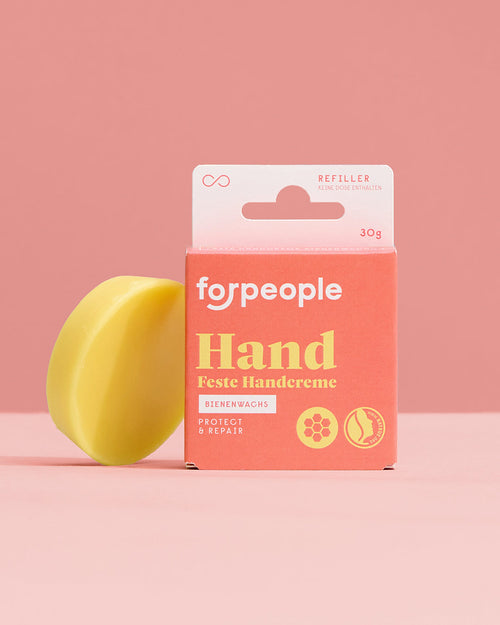
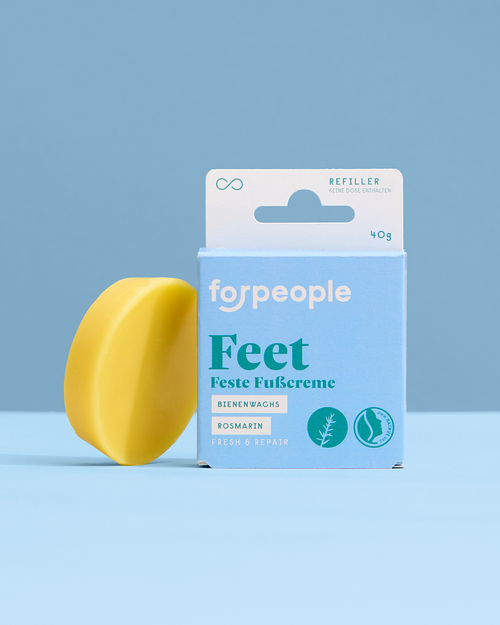
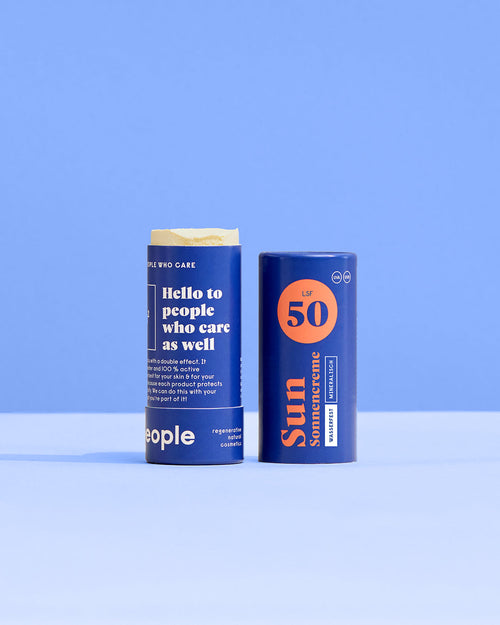
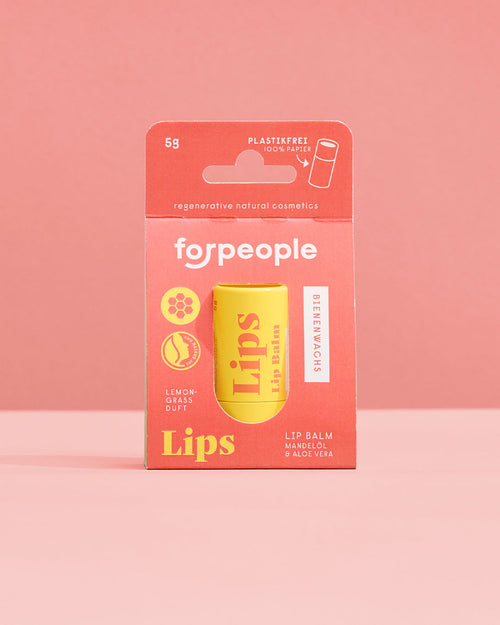
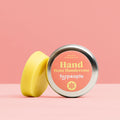
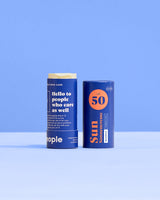
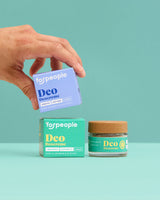
Our solid creams are water-free and come in metal tins or paper tubes. The Solid Hand Cream - Beeswax (30 g, €9.90) and the Solid Foot Cream – Rosemary & Sage (40 g, €9.90) are based on beeswax and plant oils, the foot cream also on shea butter. The Solid Vegan Hand Cream - Bergamot (30 g, €9.90) uses candelilla wax instead of beeswax. The Solid Body Butter - Beeswax & Aloe Vera (40 g, €9.90) contains cocoa butter and shea butter and therefore softens faster in the heat. Refills for hand and foot cream cost €7.90 each, for example the Solid Hand Cream Refill - Beeswax and the Solid Foot Cream Refill - Rosemary & Sage. The Solid Sunscreen SPF50 (40 g, €17.90) and the Lip Balm - Lemongrass (5 g, €4.90) belong in the shade in summer, not on the dashboard. Read more: Solid cream or tube? and Beeswax in skin care.
Sources
- Europäische Kommission (2012): Verordnung (EU) Nr. 231/2012 mit Spezifikationen für die in den Anhängen II und III der Verordnung (EG) Nr. 1333/2008 aufgeführten Lebensmittelzusatzstoffe, Einträge E 901 Bienenwachs und E 902 Candelillawachs. ABl. L 83: 1. https://eur-lex.europa.eu/eli/reg/2012/231/oj
- Loke YH, Phang HC, Mohamad N, Kee PE, Chew YL, Lee SK, Goh CF, Yeo CI, Liew KB (2024): Cocoa Butter: Evolution from Natural Food Ingredient to Pharmaceutical Excipient and Drug Delivery System. Planta Medica 90(11): 824–833. https://doi.org/10.1055/a-2359-8097
- McLaren C, Null J, Quinn J (2005): Heat stress from enclosed vehicles: moderate ambient temperatures cause significant temperature rise in enclosed vehicles. Pediatrics 116(1): e109–e112. https://doi.org/10.1542/peds.2004-2368
- Europäisches Parlament und Rat (2009): Verordnung (EG) Nr. 1223/2009 über kosmetische Mittel, Artikel 19. ABl. L 342: 59. https://eur-lex.europa.eu/eli/reg/2009/1223/oj
- ISO 29621:2017: Cosmetics – Microbiology – Guidelines for the risk assessment and identification of microbiologically low-risk products. https://www.evs.ee/en/iso-29621-2017