


Why cabin air is so dry
At cruising altitude, the outside air is very cold. Cold air can hold only a little water vapour. When this air is drawn in for the cabin and warmed to room temperature, the amount of water stays the same, but the relative humidity drops sharply. On top of that, the air in the cabin is constantly being exchanged. The moisture that passengers give off by breathing and through their skin is not enough to make up for it.
| Environment | Relative humidity | Source |
|---|---|---|
| Home | normally over 30% | WHO 2012 |
| Aircraft cabin | usually less than 20% | WHO 2012 |
| Cabin on long-haul flights, measured | below 10%, reached within 2 hours after take-off and held for the rest of the flight | Guéhenneux et al. 2012 |
In its travel health handbook, the WHO writes that low humidity can cause skin dryness and other discomfort but presents no risk to health. As a measure, it names a moisturising skin lotion (WHO 2012).
What happens to your skin during the flight
A research team measured the skin hydration of eight women on long-haul flights. The participants had stopped using skin care products at least twelve hours before and did not apply any during the flight. Skin hydration on the face and forearms dropped rapidly, most of all on the cheeks, by up to 37% (Guéhenneux et al. 2012). The researchers consider this the likely reason for the feeling of tightness that many long-haul travellers experience.
Experiments on the ground show something similar. In a Japanese study, volunteers sat in very dry air for three or six hours. Afterwards, the water content of the horny layer on the forearm and cheek had dropped significantly, and impressions of the skin surface showed a rougher texture with fine lines (Egawa et al. 2002). That explains why, after a night flight, your skin not only feels tight but can also look duller and rougher.
Areas with thin skin or little natural oil are hit hardest: cheeks, lips and the backs of the hands. Your hands also dry out from hand washing on board. Why lips and hands dry out faster than other skin is explained on Why do lips dry out so quickly? and Why hands dry out faster.
Why water alone does little
Many in-flight tips rely on water: facial sprays, sheet masks, wet wipes. That feels refreshing at first. But in air with less than 20% humidity, water on the skin evaporates again quickly. Without something to slow down evaporation, little of it stays in the skin.
This is where the film of fat comes in. Oils, butters and waxes form a thin film that reduces the evaporation of water from the skin. This is called occlusion. How it works and how the skin's water loss is measured is explained in Occlusion and transepidermal water loss. What role humectants such as aloe or glycerin play is covered in Humectants, occlusives, emollients.
That does not mean water-based products are useless on a plane. A serum or gel can work well if an oil or a solid cream goes on top afterwards. How to combine them is described in Combining aloe vera serum with oil or solid cream.
A simple routine for long flights
- Before departure: cleanse your face, apply a serum if you like, and then a thin layer of care with some fat in it. Apply lip balm.
- After take-off: after washing your hands, dry them and spread a small amount of hand cream.
- Every few hours: top up your lips and add a very thin layer to any areas of your face that feel tight. Better a little and often than a lot once.
- Drinking: drink as usual. According to the WHO, dry cabin air does not cause internal dehydration, and you do not need to drink more than usual. Because coffee and alcohol are diuretic, it is sensible to limit them on long flights (WHO 2012).
- After landing: think about sun protection at your destination, especially in sunny regions or in the mountains.
A solid care product is easy to dose on a plane: run a finger briefly over the surface, warm it between your fingers, spread it. More on this in How to apply a solid cream.
What you can take in your hand luggage
Liquids in hand luggage are subject to special rules. Whether a solid cream, a balm or a lip balm counts as a liquid at security is ultimately up to the security staff. The rules in their exact wording and how different product types are classified can be found in Solid cream in hand luggage: liquid or not?. A serum in a 50 ml bottle always goes in the liquids bag.
Frequently asked questions
Why does my skin feel so tight after a night flight?
Because the horny layer loses water in the dry cabin air. On long-haul flights, skin hydration on the cheeks dropped by up to 37% in measurements. If you apply nothing, you will clearly notice it after a few hours.
Do facial sprays help on a plane?
They refresh briefly. But the water evaporates quickly in the dry air. If you like a spray, apply a thin layer of care with some fat in it afterwards.
Should I apply a thick mask on the plane?
That is not necessary. A thin layer that you renew as needed is usually enough and feels more comfortable over many hours.
Do I need to drink more on a plane so my skin doesn't dry out?
According to the WHO, low humidity does not cause internal dehydration. Drinking as usual is enough. Care from the outside is what helps against dry skin.
Does skin dry out on short flights too?
Humidity drops sharply within the first few hours after take-off. On short flights the effect is smaller because the time is shorter. For a flight of one to two hours, lip balm and a little hand cream are usually enough.
At forpeople
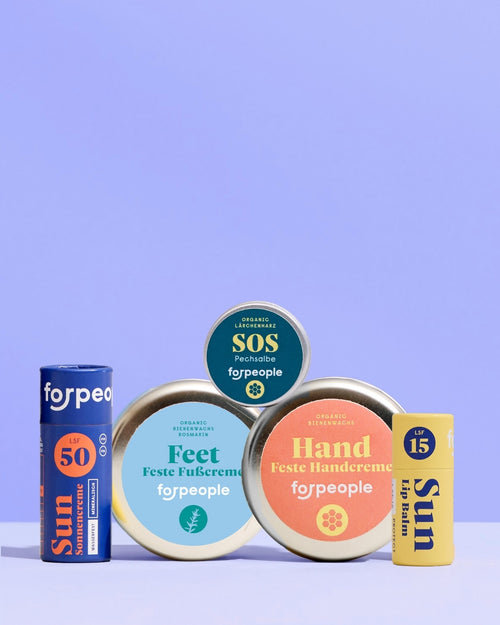
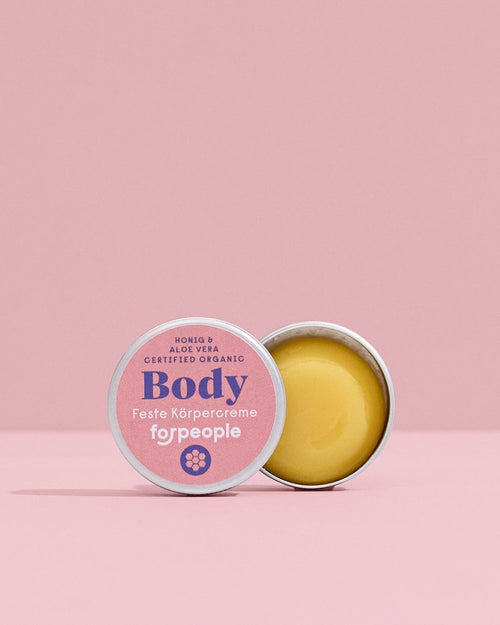
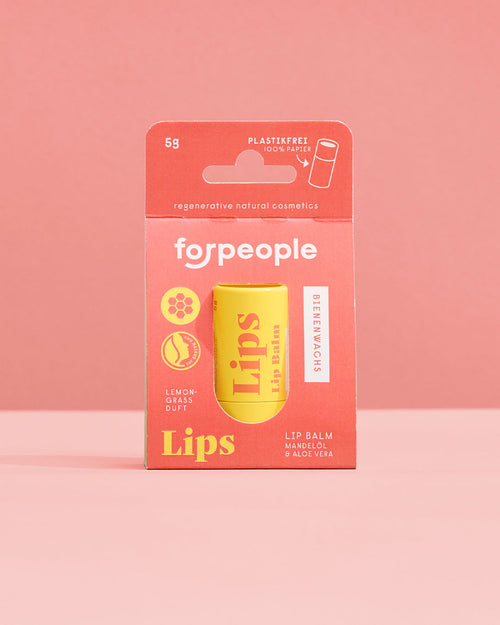
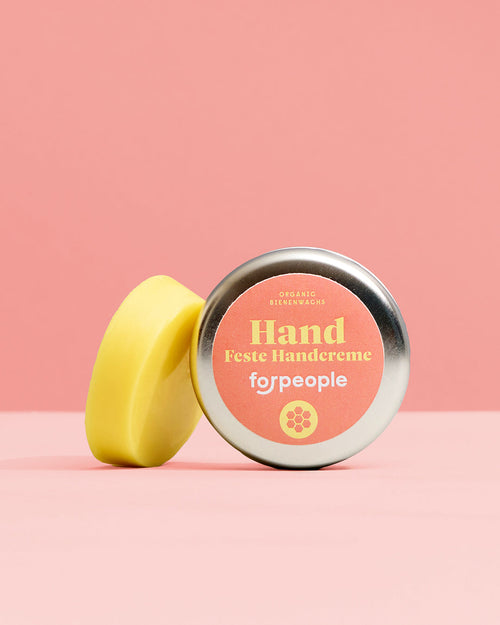
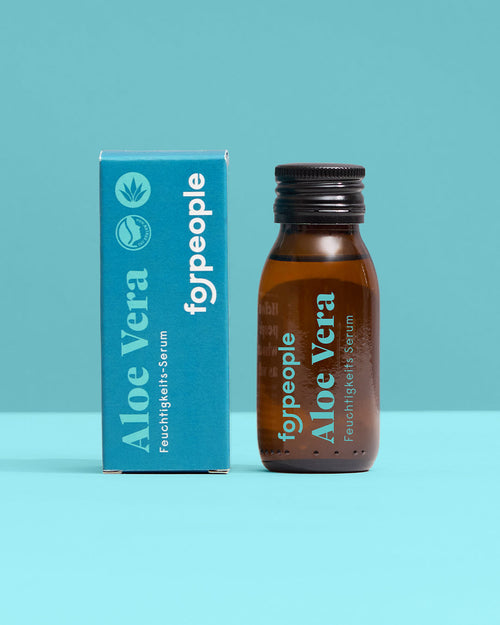
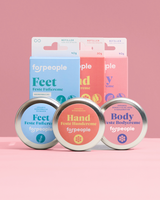
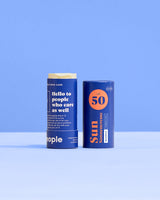
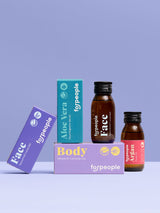
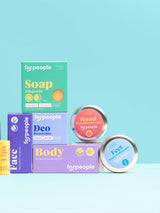
Small solid formats are well suited to the cabin. According to its product description, the skincare Travel Set – for Your Carry-On (€39.90) contains an SPF 50 sunscreen in travel size, the SPF 15 lip balm, the solid beeswax hand cream, a solid foot cream and a travel-size pitch salve. For face and body, the Solid Body Butter Mini – Beeswax & Aloe Vera (8 g, €5.90) is a good fit, made of cocoa butter, olive oil, beeswax, sunflower oil, shea butter and aloe extract, with no added fragrance. For your lips there is the Lip Balm - Lemongrass (5 g, €4.90), for your hands the Solid Hand Cream - Beeswax (30 g, €9.90). If you want to take a serum: the Aloe Vera Serum 99.6% (50 ml, €9.90) consists of aloe juice with citric acid, potassium sorbate and sodium benzoate. So it contains water, is a liquid and goes in the liquids bag; a solid care product then goes on top. If you notice a skin reaction, stop using the product. More on this: Water-free cosmetics · How long does a care film last? · Sun protection in the mountains and snow · Cold cream: water-free and frost
Sources
- World Health Organization (2012): International travel and health. Situation as on 1 January 2012. Geneva: WHO. Chapter 2.1.2 "Cabin humidity and dehydration". https://iris.who.int/handle/10665/75329
- Guéhenneux S, Gardinier S, Morizot F, Le Fur I, Tschachler E (2012): Skin surface hydration decreases rapidly during long distance flights. Skin Research and Technology 18(2): 238–240. https://doi.org/10.1111/j.1600-0846.2011.00560.x
- Egawa M, Oguri M, Kuwahara T, Takahashi M (2002): Effect of exposure of human skin to a dry environment. Skin Research and Technology 8(4): 212–218. https://doi.org/10.1034/j.1600-0846.2002.00351.x