


What happens on your skin overnight
The outer layer of skin, the stratum corneum, holds water in three ways: fats between the skin cells form a barrier, the long, winding path through the cell layers slows evaporation, and water-soluble substances inside the cells, the natural moisturising factor, bind water (Rawlings & Harding 2004). When the skin gets too dry, these processes work less well and the surface becomes rough and flaky.
A film of fat works on the first point. Occlusive substances leave a water-repellent layer on the skin and reduce water loss. They work best when applied to slightly damp skin (Sethi et al. 2016). Covered skin measurably changes its water content and permeability (Zhai & Maibach 2001). How this works in detail is explained on the page Occlusion and TEWL.
The advantage of the night is simply time. During the day you remove any film again when you wash your hands, dry them and pick things up. At night you have six to eight hours without water and without friction. How long a care film lasts otherwise is covered in How long does a care film stay on the skin?.
How to make your own hand mask
- Wash your hands with lukewarm rather than hot water and pat them only lightly dry. A little leftover moisture is intended.
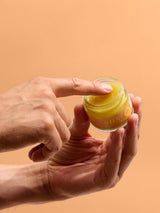
- Use clearly more than during the day, about two to three times the amount. Warm a solid cream between your palms until it softens.
- Spread it on the backs of your hands first, then on your knuckles, fingertips and cuticles. These areas dry out fastest (see dry knuckles and dry, torn cuticles).
- Put on clean cotton gloves and leave them on overnight.
- In the morning, massage in any leftovers or wipe them off with a cloth. Don't wash with hot water straight afterwards.
How much cream you need during the day and how to spread it is covered in How do I apply a solid cream properly?.
Which gloves are suitable?
This is the most important difference from cling film and rubber. Tight plastic gloves hold back sweat and heat. In a study with 20 volunteers, the stratum corneum was measurably swollen 30 minutes after four hours under PVC or latex gloves; three hours later the values were back to normal (Wetzky et al. 2009). On healthy skin, wearing tight gloves for six hours a day on three days did not measurably change barrier function. On skin that had been irritated beforehand, it made it worse (Ramsing & Agner 1996). The German Technical Rule for Hazardous Substances TRGS 401 recommends under-gloves made of sweat-absorbing material for work, changed as soon as they get damp. After the build-up of heat and moisture, it says, the skin is more sensitive to friction, water and cleaning agents (TRGS 401).
| Glove | Property | For the night |
|---|---|---|
| Cotton | breathable, absorbs moisture, washable | first choice |
| Cotton with elastane | fits more closely, doesn't slip off | good if it doesn't constrict |
| Plastic, latex, nitrile | tight, heat and moisture build up | not for hours |
| Wool | warm, can scratch, hard to wash | better not |
| Single-use sheet mask | pre-soaked, used once, usually water-based | not necessary |
Sources for the table: Ramsing & Agner 1996, Wetzky et al. 2009, TRGS 401. Wash the cotton gloves regularly, because they absorb fat. More on gloves at work in Hand cream under latex or nitrile gloves?.
How often makes sense?
There is no fixed rule. For moisturisers in general, the literature mentions once to three times a day depending on dryness, especially after washing (Sethi et al. 2016). The night is one of those applications, and the longest. In dry phases, for example in winter with heating air, you can do the mask every night. Once your hands are back to normal, one or two nights a week are enough. If your hands stay dry despite regular care, it's worth looking at the causes in Why do my hands stay dry even though I moisturise? and Dry skin in winter.
Honey, quark, oil: home remedies, soberly assessed
Many hand mask recipes use food. What you can expect:
- Honey is rich in sugar and binds water, similar to a humectant. But it is sticky and does not form a film of fat. You have to wash it off, and then the care is gone again. If you react to bee products, leave it out (see Allergic to tree resin, colophony or propolis?).
- Quark or yoghurt consist mostly of water. They feel cool but dry off and also have to be washed off.
- Pure plant oil leaves a film, but seals less than petroleum jelly. In one measurement, plant oils made the stratum corneum swell considerably less than petrolatum (Stamatas et al. 2008). Wax binds the oil and makes the film firmer; that's why salves and solid creams are better suited for the night.
The order "moisture first, then fat" makes sense: slightly damp skin or a water-based product, with a film on top. Why is explained in Humectants, occlusives, emollients. If you want to make the salve yourself, you'll find ratios in Making solid cream yourself.
When a hand mask is not enough
A care mask is meant for dry, rough skin. You should seek medical advice if cracks are deep, bleed or don't close for weeks, if the skin is red, swollen or weeping, or if blisters appear. Open or broken skin should not get salve under a glove. If you react to a product with redness or stinging, stop using it.
Frequently asked questions
Does an overnight hand mask really do anything?
It gives the care film time. Overnight it isn't removed by washing and grabbing, so your hands often feel smoother in the morning. But it doesn't replace care after washing your hands during the day.
Can I use disposable gloves instead of cotton gloves?
For an hour that's possible, for the whole night it isn't recommended. Tight gloves trap sweat and heat; the skin is more sensitive afterwards.
How much cream do I need for a hand mask?
About two to three times your daytime amount. Your hands should look glossy but not drip.
Does a hand mask work without gloves?
Yes. Then use a little less so your bedding and pillow don't get greasy, and apply a little more in the morning.
Are single-use hand masks better than a salve?
Not necessarily. They are usually water-based and meant for a short application time. For the night, a film of fat under cotton is the simpler way.
At forpeople
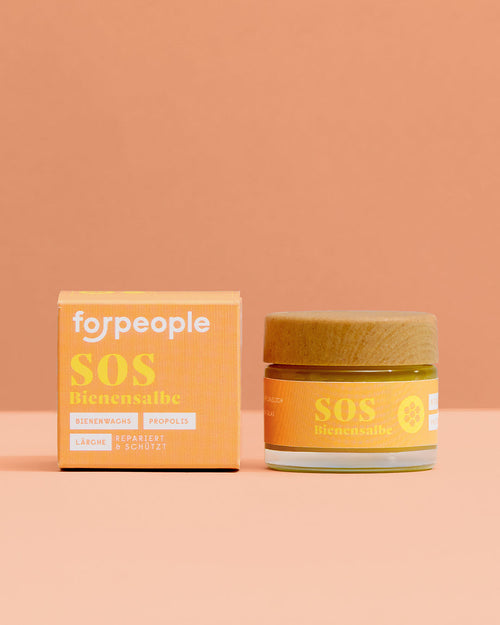
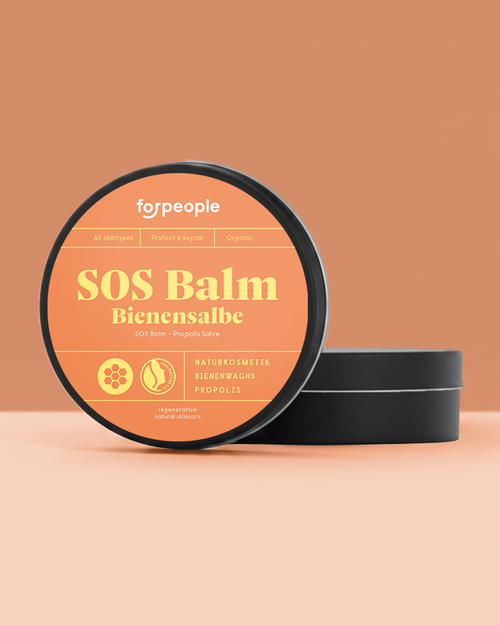
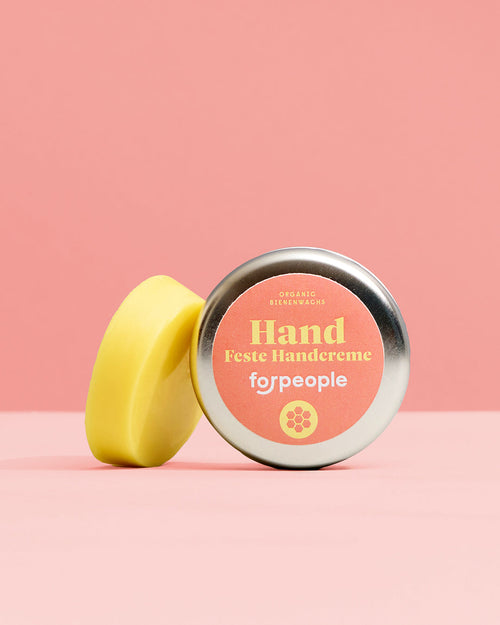
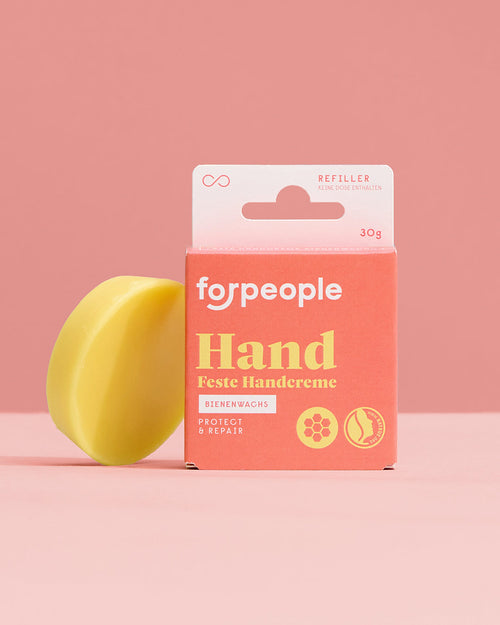
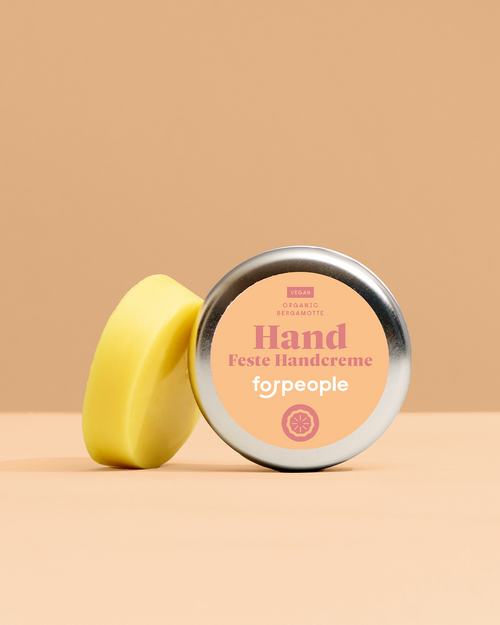
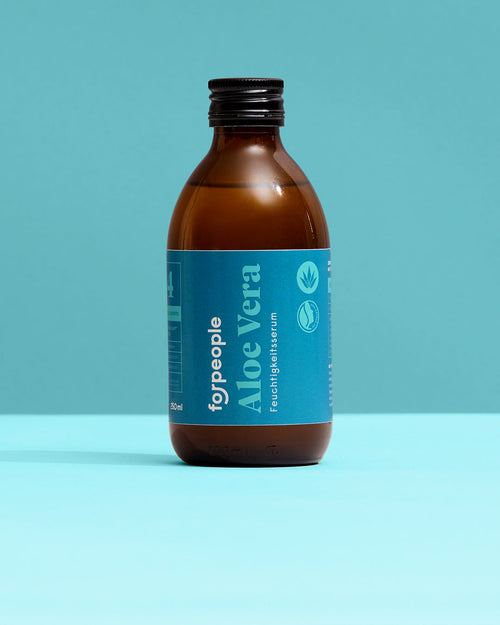
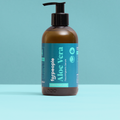
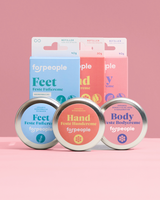
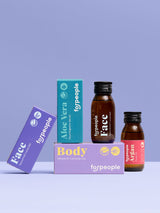
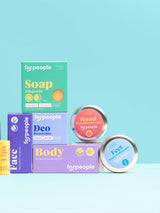
Our water-free salves and solid creams are suited to the night. The Beeswax Salve Larch & Mandarin in a Glass Jar (50 g, €12.90) is soft and can be applied thickly straight from the jar; it is also available as Bee Salve Larch & Mandarin in a Tin (150 ml, €34.90). It contains larch resin, propolis and essential oils. According to its INCI list, the Solid Hand Cream - Beeswax (30 g, €9.90) contains beeswax, olive and sunflower oil, St. John's wort and aloe extract and no added essential oils; you refill the tin with the Solid Hand Cream Refill - Beeswax (€7.90). Vegan and made with candelilla wax is the Solid Vegan Hand Cream - Bergamot (30 g, €9.90). If you want to start with moisture, apply the Aloe Vera Serum 99.6% (250 ml, €24.90) first; it is water-based and contains preservatives. More on this: Water-free cosmetics · Salve, balm, butter, solid cream · Why hands dry out faster · Combining aloe vera serum with solid cream
Sources
- Sethi A, Kaur T, Malhotra SK, Gambhir ML (2016): Moisturizers: The Slippery Road. Indian J Dermatol 61(3): 279–287. https://doi.org/10.4103/0019-5154.182427
- Stamatas GN, de Sterke J, Hauser M, von Stetten O, van der Pol A (2008): Lipid uptake and skin occlusion following topical application of oils on adult and infant skin. J Dermatol Sci 50(2): 135–142. https://doi.org/10.1016/j.jdermsci.2007.11.006
- Zhai H, Maibach HI (2001): Effects of skin occlusion on percutaneous absorption: an overview. Skin Pharmacol Appl Skin Physiol 14(1): 1–10. https://doi.org/10.1159/000056328
- Ramsing DW, Agner T (1996): Effect of glove occlusion on human skin. (I). Short-term experimental exposure. Contact Dermatitis 34(1): 1–5. https://doi.org/10.1111/j.1600-0536.1996.tb02102.x
- Wetzky U, Bock M, Wulfhorst B, John SM (2009): Short- and long-term effects of single and repetitive glove occlusion on the epidermal barrier. Arch Dermatol Res 301(8): 595–602. https://doi.org/10.1007/s00403-009-0980-4
- Rawlings AV, Harding CR (2004): Moisturization and skin barrier function. Dermatol Ther 17(Suppl 1): 43–48. https://doi.org/10.1111/j.1396-0296.2004.04s1005.x
- Ausschuss für Gefahrstoffe (2022): TRGS 401 Gefährdung durch Hautkontakt – Ermittlung, Beurteilung, Maßnahmen. Ausgabe Oktober 2022, GMBl 2022 S. 895–926, zuletzt geändert GMBl 2024 S. 769. https://www.baua.de/DE/Angebote/Regelwerk/TRGS/TRGS-401.html