


Why wax makes oil solid
When wax is dissolved in warm oil and the mixture cools, the wax crystallises. The crystals form a fine network that holds the liquid oil in place. Specialists call such mixtures oleogels. How firm the result becomes does not depend on the amount of wax alone. In a study that always used 6% beeswax, the type of oil alone (linseed, sunflower, olive, fish oil) clearly changed firmness, crystal shape and oil binding (Frolova et al. 2022). A review of plant waxes describes how the chemical and physical properties of the wax determine at what concentration an oil gels at all and how firm it becomes (Thakur et al. 2023).
For you, this means: a recipe that works well with olive oil can turn out a little softer or harder with almond or jojoba oil. If you switch oils, test again.
Starting ratios: wax to oil by weight
Weigh all ingredients on a kitchen scale, ideally to 0.1 g. Measuring cups and tablespoons are too imprecise for wax. The table below shows practical values for beeswax. Butter (such as shea or cocoa butter) counts towards the oil side, but makes the cream firmer at room temperature than a liquid oil.
| Goal | Beeswax : oil (weight) | Approx. wax share | Texture |
|---|---|---|---|
| Lip balm stick | 1 : 1.5 to 1 : 2 | 35–40% | firm enough to cut, stands up in the tube |
| Solid cream to rub on (bar, tin) | 1 : 2 to 1 : 2.5 | 30–33% | firm, only softens on warm skin |
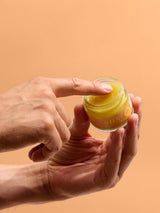
| Salve, balm from a jar | 1 : 4 to 1 : 5 | 17–20% | can be scooped with a finger |
| Soft body balm | 1 : 6 to 1 : 8 | 11–14% | creamy and soft, almost liquid in the heat |
A proven basic recipe for a solid cream is the rule of three: one part each of beeswax, plant butter and oil, for example 20 g, 20 g and 20 g. That fills two small tins. How salve, balm, butter and solid cream differ as terms is explained in Salve, balm, butter, solid cream.
Beeswax, candelilla and butter: what changes
According to the EU specification, yellow and white beeswax have a melting range of 62 to 65 °C, candelilla wax of 68.5 to 72.5 °C (Regulation (EU) No 231/2012). Candelilla wax is harder and more brittle. If you want to replace beeswax with a vegan wax, start with about half to two thirds of the beeswax amount and adjust from there. More on the differences in Candelilla wax or beeswax, and on the structure of beeswax in Beeswax in skin care.
- More butter: the cream becomes firmer at room temperature and feels richer. Shea butter can turn grainy if it cools very slowly. Letting it cool fairly quickly at room temperature without stirring usually helps. Background: Shea butter: composition.
- Light oils such as jojoba or almond oil give a lighter skin feel; olive oil feels richer.
- Season: in summer the wax share can be a little higher, in winter a little lower. How heat changes solid cosmetics is explained in Storing solid cosmetics.
Step by step: how the mixture works
- Clean the work surface, glass, spoon and tins thoroughly and let them dry completely. Not a single drop of water should get into the mixture.
- Weigh the wax and butter and melt them in a water bath over medium heat. Do not heat directly on the hob and do not let it smoke.
- Add the oil and stir until everything is clear and liquid. Then take it off the heat.
- Spoon test: put a metal spoon in the freezer, drop a little of the mixture onto it and wait a minute. If the result is too hard, add a little oil; if it is too soft, add a little wax. Warm briefly and test again.
- If you like, add a small amount of tocopherol (vitamin E) at the end. The EU database of cosmetic ingredients lists it, among other things, as an antioxidant (CosIng), so it protects the oils from oxidation; it is not a preservative.
- Pour into clean, dry tins and let set at room temperature. Only close the lid once the cream has cooled completely, so no condensation forms.
- Label the tin with its contents and the date.
How to apply a solid cream sparingly is explained in How do I apply a solid cream correctly?.
Shelf life and legal points
A mixture of only wax, butter and oil contains no freely available water. Germs find hardly any conditions to multiply in it. That changes as soon as water, hydrosol or aloe juice is added: then you need an emulsifier and a preservative, and the shelf life without preservation drops sharply. Why is explained in How long does homemade cream last?. The water-free mixture still ages: the oils can oxidise and go rancid. How to recognise that is explained in How to tell if a skin oil is rancid. Fresh oils, dry hands when taking some out and a cool, dark place help; more in Hygiene with water-free cosmetics.
Homemade cosmetics are meant for your own use. The EU Cosmetics Regulation applies as soon as a cosmetic product is supplied in the course of a commercial activity, whether in return for payment or free of charge (Regulation (EC) No 1223/2009, Art. 2). Then you need a responsible person (Art. 4), a safety assessment with a safety report (Art. 10) and a notification before placing it on the market (Art. 13). This covers, for example, selling at a market or online, but also free samples handed out by a business. If you give something away privately, say openly what is in it and how long it keeps.
Frequently asked questions
Can I give the ratio in spoons instead of grams?
Better not. Wax can hardly be measured accurately in spoons, and just a few grams change the firmness noticeably. A kitchen scale makes the result repeatable.
My cream has turned out too hard. What can I do?
Melt it again in a water bath, add a little oil, do the spoon test and pour again. If the cream is too soft, a little more wax helps.
Why is my cream grainy?
Usually the shea butter formed crystals while cooling slowly. Melt it completely again and let it cool fairly quickly at room temperature.
How long does a homemade solid cream last?
As long as the oils you used stay fresh. There is no fixed number. If the cream smells rancid or clearly different from the start, stop using it.
Can I sell my solid cream?
Only if you meet all obligations of the Cosmetics Regulation, including a safety assessment by a qualified person and the notification. This does not apply to your own use.
At forpeople
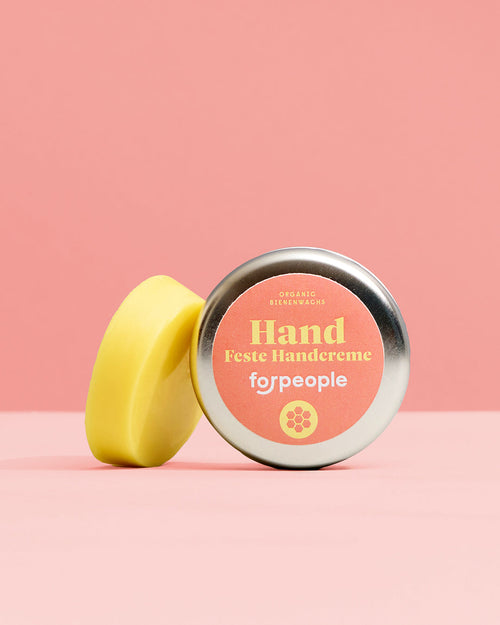
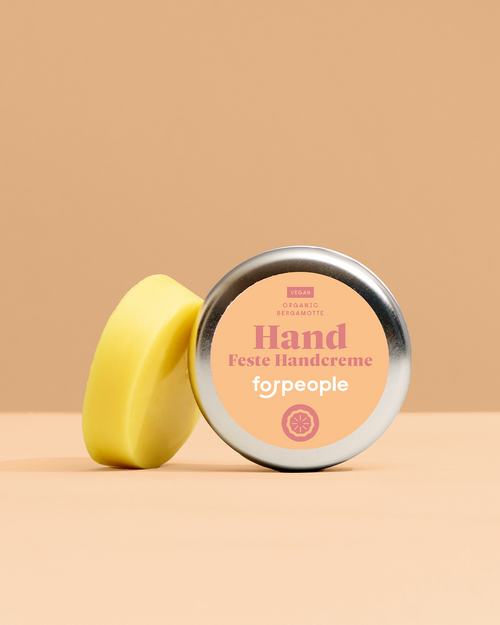
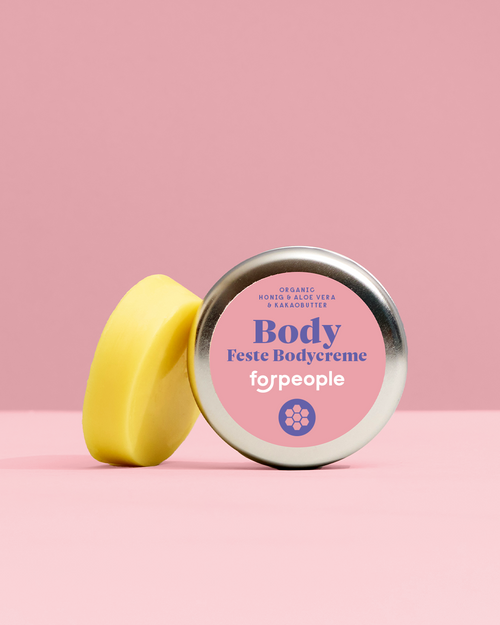
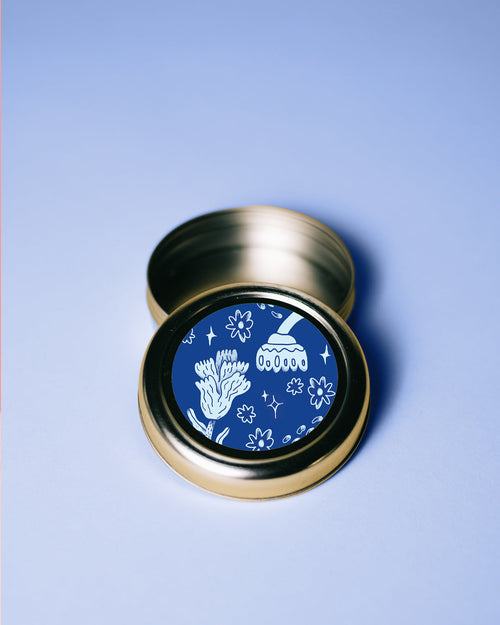
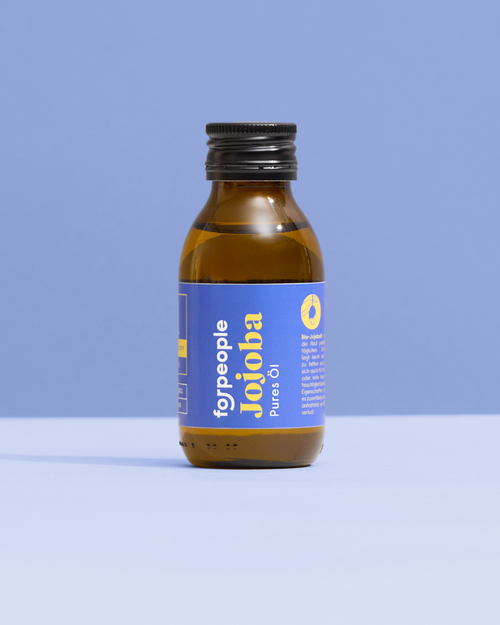
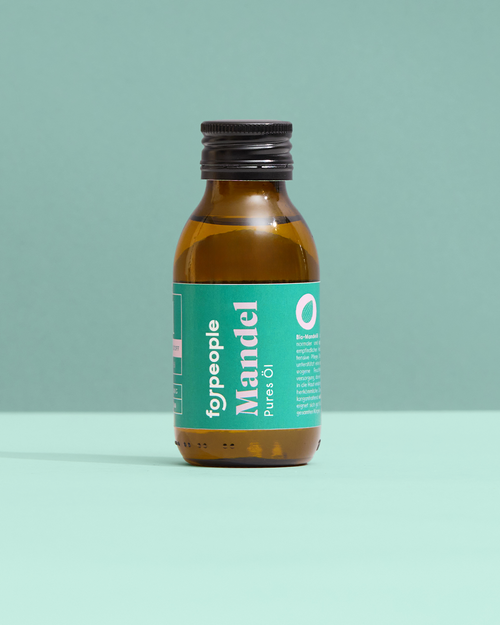
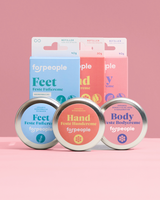
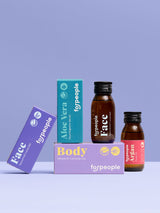
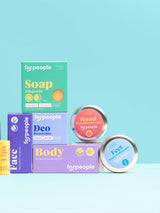
If you would rather not make it yourself: our solid creams are water-free and built on the same principle of wax, oil and, in some cases, butter. The Solid Hand Cream - Beeswax (30 g, €9.90) contains, according to its INCI, beeswax, olive and sunflower oil plus St. John's wort and aloe extract. The vegan Solid Vegan Hand Cream - Bergamot (30 g, €9.90) uses candelilla wax with jojoba and olive oil, shea butter and hemp seed oil. The Solid Body Butter - Beeswax & Aloe Vera (40 g, €9.90) contains cocoa and shea butter and is therefore a little firmer. For your own recipe there is the Empty Cosmetic Tin (€3.90), as well as Jojoba Oil - pure (100 ml, €16.90) and Almond Oil - pure (100 ml, €14.90) for the oil phase. More on this: Water-free cosmetics · Candelilla wax or beeswax · Petroleum jelly or beeswax salve · Homemade cream: shelf life
Sources
- Frolova Y, Sarkisyan V, Sobolev R, Makarenko M, Semin M, Kochetkova A (2022): The Influence of Edible Oils' Composition on the Properties of Beeswax-Based Oleogels. Gels 8(1): 48. https://doi.org/10.3390/gels8010048
- Thakur D, Singh A, Suhag R, Dhiman A, Chauhan DS (2023): Oleogelation based on plant waxes: characterization and food applications. J Food Sci Technol 60(12): 2927–2944. https://doi.org/10.1007/s13197-023-05786-0
- Europäische Kommission (2012): Verordnung (EU) Nr. 231/2012 mit Spezifikationen für die in den Anhängen II und III der Verordnung (EG) Nr. 1333/2008 aufgeführten Lebensmittelzusatzstoffe, Anhang, E 901 Bienenwachs und E 902 Candelillawachs. ABl. L 83: 1. https://eur-lex.europa.eu/eli/reg/2012/231/oj
- Europäisches Parlament und Rat (2009): Verordnung (EG) Nr. 1223/2009 über kosmetische Mittel, Art. 2, 4, 10 und 13. ABl. L 342: 59. https://eur-lex.europa.eu/eli/reg/2009/1223/oj
- Europäische Kommission: CosIng – Datenbank kosmetischer Inhaltsstoffe, Eintrag TOCOPHEROL (Funktionen u. a. Antioxidans). https://ec.europa.eu/growth/tools-databases/cosing/