


What petroleum jelly is
In the ingredient list, petroleum jelly is called “Petrolatum”. The EU database CosIng describes it as a complex mixture of hydrocarbons obtained as a semi-solid when residual oils from petroleum processing are dewaxed. It consists mainly of saturated hydrocarbons with more than 25 carbon atoms (CosIng). In cosmetics, petrolatum may only be used if its full refining history is known and the starting material is not carcinogenic (CosIng, Annex II of the Cosmetics Regulation). In practice, highly refined grades are used that meet the purity requirements for medicinal products (BfR 2018).
During refining, the hydrocarbons are hydrogenated so that they do not oxidise (Sethi et al. 2016). This is why petroleum jelly smells neutral and stays unchanged for a long time.
What a beeswax salve is
Beeswax is a complex natural product made up of more than 300 components, mainly wax esters, hydrocarbons and free fatty acids. It does not melt at one fixed temperature but over a range of about 61 to 66 °C, and it becomes pliable at around 32 °C (Huanbutta et al. 2026). In salves it acts as a framework that holds the liquid oils and forms a protective film on the skin itself. More on its structure on Beeswax in skin care.
The oils in such a salve, such as olive, sunflower or almond oil, consist of triglycerides with unsaturated fatty acids. These double bonds react with oxygen; light and metals such as iron encourage this, and it produces compounds with an off-odour (Choe & Min 2006). That is why a plant oil salve has a best-before date, and why you store it somewhere cool and dark. How to recognise rancid oil is explained on How can I tell if a skin oil is rancid?.
Occlusion: petroleum jelly seals more strongly
This is where the difference is clearest, and the literature is unambiguous. A dermatological review names petrolatum as the most effective occlusive: even at 5 per cent it reduces transepidermal water loss by more than 98 per cent, while lanolin, mineral oil and silicones only reach 20 to 30 per cent (Sethi et al. 2016). In a measurement using confocal Raman spectroscopy, petrolatum made the horny layer swell much more (40 to 60 per cent) than paraffin oil and two plant oils (10 to 20 per cent). There was no statistical difference between the mineral oil and the plant oils, either in penetration into the upper layers of the horny layer or in occlusion (Stamatas et al. 2008).
For beeswax, there is no comparably clear set of measurements. What is known is that it forms an occlusive film in salves (Huanbutta et al. 2026). How strongly a beeswax salve seals depends on the proportion of wax and on the oils. To be honest: if you want the maximum seal, petroleum jelly does the job well. The basics are explained on Occlusion and TEWL and Humectants, occlusives, emollients.
The two compared
| Feature | Petroleum jelly (petrolatum) | Beeswax salve |
|---|---|---|
| Origin | crude oil, highly refined | beeswax from honeycombs, oils from plant seeds and fruits |
| Main components | saturated hydrocarbons | wax esters, hydrocarbons, free fatty acids; triglycerides from the oils |
| Film and occlusion | very strong | present, weaker depending on the formula |
| Oxidation | hardly any, stabilised by hydrogenation | oils can oxidise over time |
| Smell | neutral | slightly of wax and oil, depending on additions |
| Skin feel | shiny, even film | firmer in the tin, melts on the skin, depending on the formula |
| Allergies | low sensitising potential | beeswax rarely; reactions to propolis residues possible |
| INCI name | Petrolatum | Cera Alba or Beeswax plus the names of the oils |
Sources for the table: Sethi et al. 2016, BfR 2018, CosIng, Huanbutta et al. 2026, Choe & Min 2006. On skin feel, see Greasy or well cared for?.
Mineral oil in cosmetics: where things stand
Mineral oil in cosmetics has been debated for years. A distinction is made between saturated hydrocarbons (MOSH) and aromatic hydrocarbons (MOAH). In its updated statement from 2018, the German Federal Institute for Risk Assessment reaches the following conclusions (BfR 2018):
- MOSH are hardly absorbed through the skin.
- Based on current knowledge, no health risks for consumers are to be expected when cosmetic products are applied to the skin.
- With lip care, some of the product is swallowed. Here, the industry association Cosmetics Europe recommends using only mineral oil grades for which an acceptable daily intake has been set. If a manufacturer follows this, the BfR does not expect any health effects from intake through the mouth either.
In 2015, the German consumer organisation Stiftung Warentest found MOAH in all 25 mineral-oil-containing products it examined, with the highest levels in petroleum jelly, and advised against mineral-oil-based lip care (Stiftung Warentest 2015). The BfR statement from 2018 is more recent; it replaces the BfR’s earlier statement from 2015. Our products contain no mineral oil. That is a statement of fact, not a judgement on petroleum jelly.
What suits when
- Petroleum jelly suits you if you want a film that is as dense and odourless as possible, for example on very dry areas overnight.
- A beeswax salve suits you if you prefer care made from wax and plant oils, like a firmer product or want to avoid raw materials from crude oil.
- A vegan alternative with candelilla wax suits you if you do not want to use bee products. The difference is explained on Candelilla wax or beeswax.
The same principle applies to lips; more on Why do lips dry out so quickly?.
Frequently asked questions
Is petroleum jelly a concern on the skin?
According to the BfR’s assessment, no health risks are to be expected from highly refined mineral oils in cosmetics applied to the skin.
Which is more occlusive: petroleum jelly or beeswax?
Petroleum jelly seals more strongly. A beeswax salve also forms a film; how dense it is depends on the formula.
Why does a salve with plant oil go rancid and petroleum jelly does not?
Plant oils contain unsaturated fatty acids that react with oxygen. The hydrocarbons in petroleum jelly are saturated and stabilised by hydrogenation.
Is beeswax vegan?
No, beeswax is an animal product. Plant alternatives include candelilla or carnauba wax.
Can I combine petroleum jelly and a wax salve?
Yes. Both are water-free fatty bases. You can alternate between them depending on the body area and time of day.
At forpeople
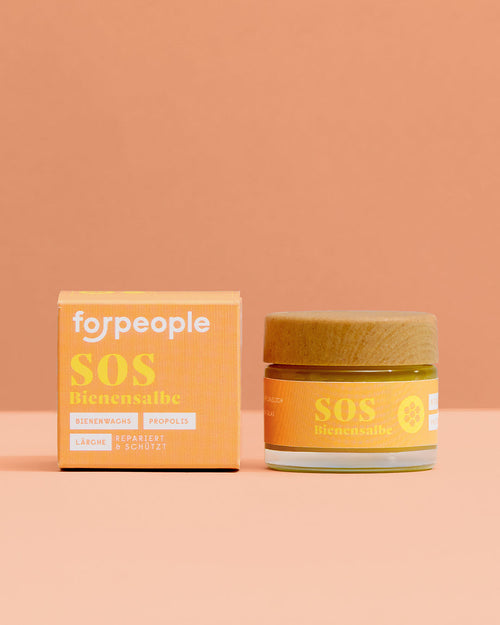
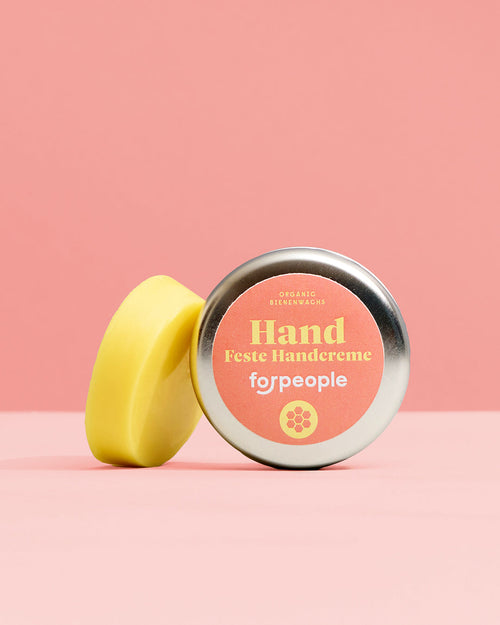
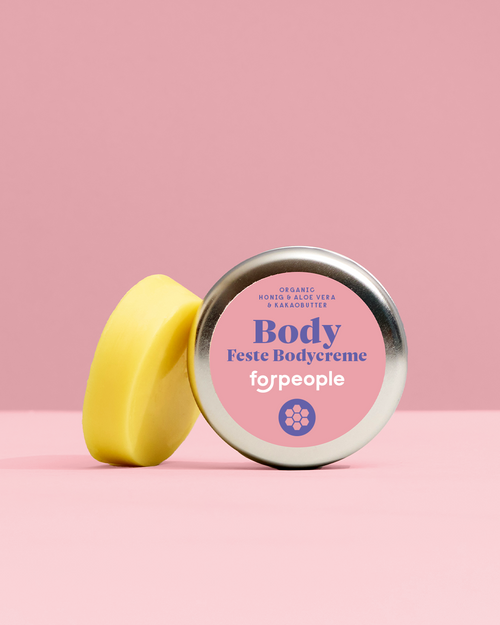
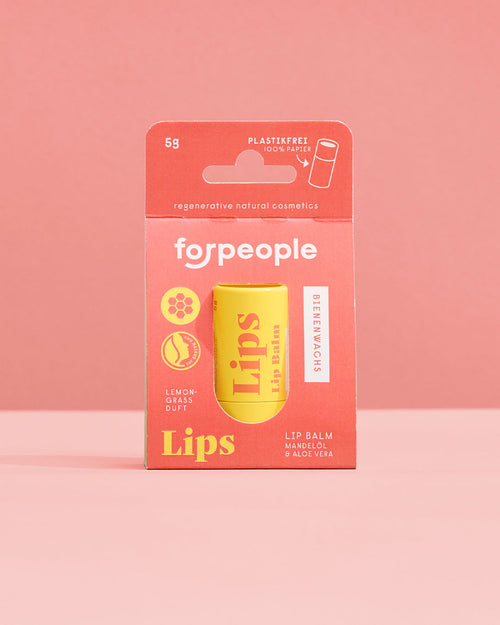
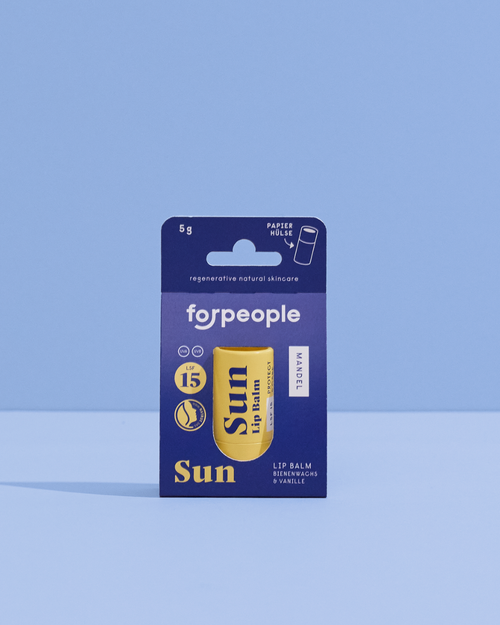
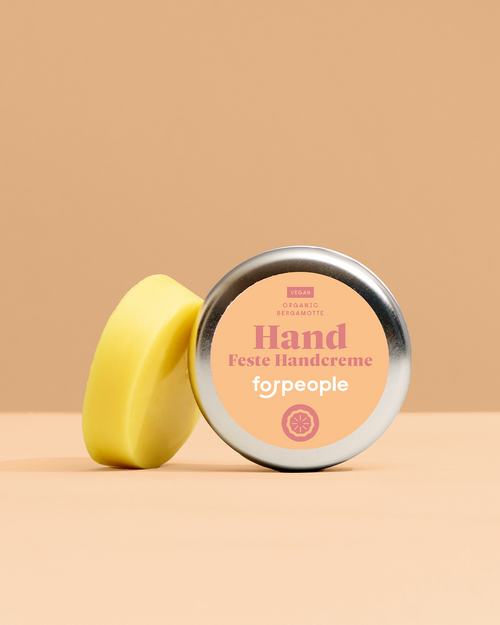
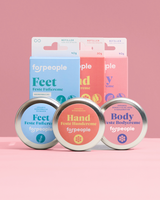
Our salves and solid creams are water-free and contain no mineral oil. The Beeswax Salve Larch & Mandarin in a Glass Jar (50 g, €12.90) combines olive, almond and castor oil with beeswax, larch resin, propolis and essential oils. The Solid Hand Cream - Beeswax (30 g, €9.90) puts beeswax first in its ingredient list. The Solid Body Butter - Beeswax & Aloe Vera (40 g, €9.90) combines cocoa and shea butter with beeswax. For the lips there are the Lip Balm - Lemongrass (5 g, €4.90) and the Lip Balm - SPF15 Almond & Vanilla (€7.90), both based on beeswax. Vegan and without beeswax is the Solid Vegan Hand Cream - Bergamot (30 g, €9.90) with candelilla wax. More on this: Water-free cosmetics · Salve, balm, butter, solid cream · How long does a care film last? · Allergy to resin and propolis
Sources
- Sethi A, Kaur T, Malhotra SK, Gambhir ML (2016): Moisturizers: The Slippery Road. Indian J Dermatol 61(3): 279–287. https://doi.org/10.4103/0019-5154.182427
- Stamatas GN, de Sterke J, Hauser M, von Stetten O, van der Pol A (2008): Lipid uptake and skin occlusion following topical application of oils on adult and infant skin. J Dermatol Sci 50(2): 135–142. https://doi.org/10.1016/j.jdermsci.2007.11.006
- Stiftung Warentest (2015): Mineralöle in Kosmetika: Kritische Stoffe in Cremes, Lippenpflegeprodukten und Vaseline. test.de, 26.05.2015. https://www.test.de/Mineraloele-in-Kosmetika-Kritische-Stoffe-in-Cremes-Lippenpflegeprodukten-und-Vaseline-4853357-0/
- Bundesinstitut für Risikobewertung (2018): Hochraffinierte Mineralöle in Kosmetika: Gesundheitliche Risiken sind nach derzeitigem Kenntnisstand nicht zu erwarten. Aktualisierte Stellungnahme Nr. 008/2018 vom 27. Februar 2018. https://doi.org/10.17590/20180219-123914
- Europäische Kommission: CosIng – Datenbank kosmetischer Inhaltsstoffe, Einträge PETROLATUM (Nr. 79504) und Anhang II Eintrag 904 (Petrolatum), abgerufen 30.09.2026. https://ec.europa.eu/growth/tools-databases/cosing/
- Huanbutta K, Chuttong B, Danmek K, Sriamornsak P, Suwanpitak K, Sangnim T (2026): Beeswax in Pharmaceutical Sciences: A Comprehensive Review of Its Chemical Composition, Functional Applications, Types, and Formulation Roles. Int J Mol Sci 27(8): 3486. https://doi.org/10.3390/ijms27083486
- Choe E, Min DB (2006): Mechanisms and factors for edible oil oxidation. Compr Rev Food Sci Food Saf 5(4): 169–186. https://doi.org/10.1111/j.1541-4337.2006.00009.x