


Where the myth comes from
The question comes up again and again in forums and guides. The observation behind it is real: many people reach for their lip balm several times a day and feel that their lips get tight faster without it than they used to. This leads to the idea that the balm has "spoiled" the lips or that they hold less moisture on their own. Some texts go further and claim that paraffin or silicone "draw moisture out" of the lips. There is no evidence for either.
What does exist is a habit. If you have a balm in every jacket pocket, you use it often, even when your lips are not dry at all. That is harmless. And there are ingredients that leave a noticeable sensation you want to repeat. Both are something different from dependence in the medical sense.
Why lips dry out so quickly
The main reason lies in the lips themselves. A study of 303 women in winter found that almost three times as much water evaporates through the red of the lips as through the cheek. Surface hydration was about one third of the cheek value. The top cells of the lip were not fully keratinised; the authors see this as the reason for the weak barrier (Kobayashi & Tagami 2004). A review confirms that the lip vermilion has a remarkably weak barrier and low moisture content (Tagami 2008).
In addition, the lip vermilion consists of only a few cell layers, has very few sebaceous glands and no sweat glands. It therefore produces hardly any oil or sweat of its own to keep itself supple (Sun et al. 2025). This is exactly where the dependence argument goes wrong: a lip that produces hardly any sebum cannot "unlearn" producing sebum because of a balm. It relies on protection from outside, with or without a lip balm. More on the physiology: Why do lips dry out so quickly?
What is really behind the "can't do without it" feeling
| Trigger | What happens | What you can do |
|---|---|---|
| Licking your lips | Saliva moistens briefly, then evaporates and leaves the lip drier | Keep a balm to hand instead of licking |
| Menthol, camphor | create a cold sensation via nerve receptors without caring for the lip; sensitive lips can sting | choose a balm without cooling additives for everyday use |
| Fragrances, essential oils | pleasant taste or scent; some fragrance substances are known contact allergens | read the ingredient list; if you notice tingling or redness, choose a balm without fragrance |
| Peeling off flakes | small tears, the lip feels rougher | do not pick, apply balm and wait |
| Weather, indoor heating, sun | evaporation increases, the lip dries faster | apply before going out, with a UV filter in the sun |
| Habit | reaching for the balm becomes automatic | apply only when your lips feel tight, but then do it properly |
Menthol acts via a cold receptor in the nerve endings. Research shows that the same receptor responds to cold and to menthol (Peier et al. 2002). That explains the fresh feeling: it is a sensory perception, not care. If you get used to this feeling, you miss it without the balm, even if your lip has not become any drier.
Fragrances are well studied. The EU Scientific Committee on Consumer Safety names fragrance substances that are reported particularly often as contact allergens, including citral and geraniol (SCCS 2012). Above certain amounts, such substances must be listed on cosmetic packaging; in 2023 the EU extended this obligation to further substances (Regulation (EU) 2023/1545). How to find them on the label is explained in Essential oils and fragrance allergens and How to read an INCI list.
Paraffin, petroleum jelly, wax: do they draw out moisture?
No. Fats and waxes are occlusive on the skin: they form a film that reduces evaporation. This applies to beeswax, plant butters and plant oils as well as to petroleum jelly. A study on petroleum jelly showed that it does not just sit on top but spreads into the spaces between the cells of the stratum corneum, and describes it as occlusive (Ghadially et al. 1992). Nothing in this suggests that such a film "draws" water out of the lip. Whether you prefer mineral or plant fats is a matter of taste and conviction, not of safety. A neutral comparison is in Petroleum jelly or beeswax salve; how the film works is explained in Occlusion and TEWL.
Water-based lip products or glosses with a lot of volatile ingredients are different. They feel moist when you apply them, but the water evaporates. What stays on the lip afterwards are the fats again. A pure balm of wax and oil needs no water, no emulsifier and no preservative; more in Water-free cosmetics.
How to care for your lips without constantly reaching for the balm
- Targeted, not constant: Apply when your lips feel tight, before going out in cold or wind, and in the evening before bed. Reapply after eating and drinking.
- Thicker at night: A slightly thicker layer overnight is often enough for your lips to need less care during the day.
- Don't lick: This is the most effective habit. Once saliva evaporates, it tends to dry the lip.
- Simple formula: For everyday use, a balm of wax, butter and oil works well. Cooling additives are a matter of taste and not necessary.
- Think of the sun: The lip vermilion contains little pigment (Sun et al. 2025). Outdoors, by the water and in snow, a lip balm with a UV filter makes sense; more in Sun protection in the mountains and snow.
- Take warning signs seriously: If your lips stay cracked, crusted, red or painful for weeks despite care, have it checked by a doctor. At that point it is no longer a question of care.
Frequently asked questions
Is lip balm addictive?
Not physically. A film of wax and oil does not change how much oil the lip produces, because it has hardly any sebaceous glands. What people experience as addiction is usually habit or the fresh sensation of cooling additives.
How often can I apply lip balm?
As often as your lips need it. There is no fixed upper limit. If you notice that you only reach for it out of habit, it is enough to apply it in the morning, before going out, after eating and in the evening.
Why does my lip balm sometimes sting?
Often it is menthol, camphor, fragrances or essential oils. Cracked lips also react more sensitively. Stop using the balm and switch to a formula without these additives. If redness or stinging persists, seek medical advice.
Does paraffin dry out the lips?
There is no evidence for this. Like waxes and oils, paraffin and petroleum jelly are occlusive and reduce evaporation.
Does forpeople lip balm contain fragrance?
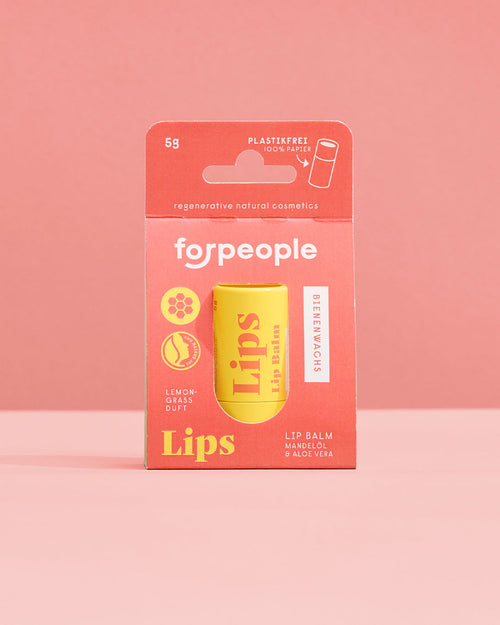
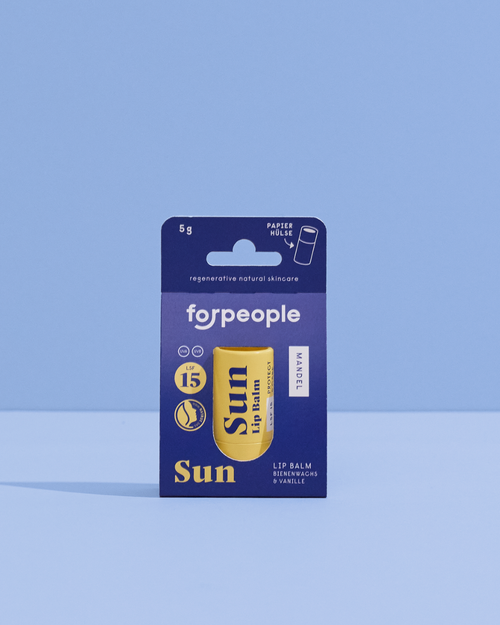
The Lip Balm - Lemongrass contains lemongrass essential oil; according to the ingredient list it contains citral, citronellol and geraniol. The Lip Balm SPF15 contains no essential oil, but vanilla extract.
At forpeople
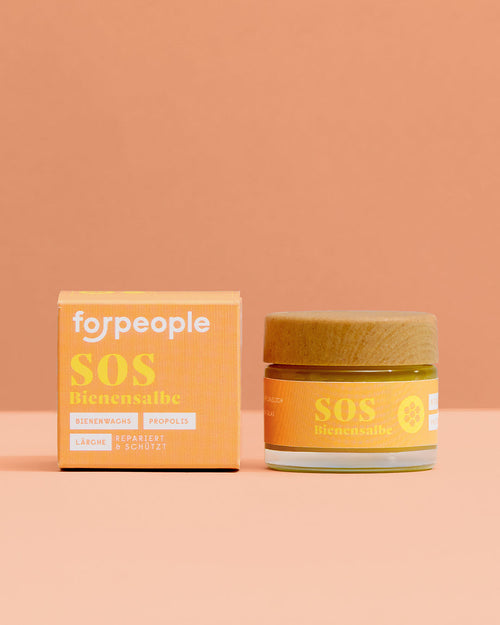
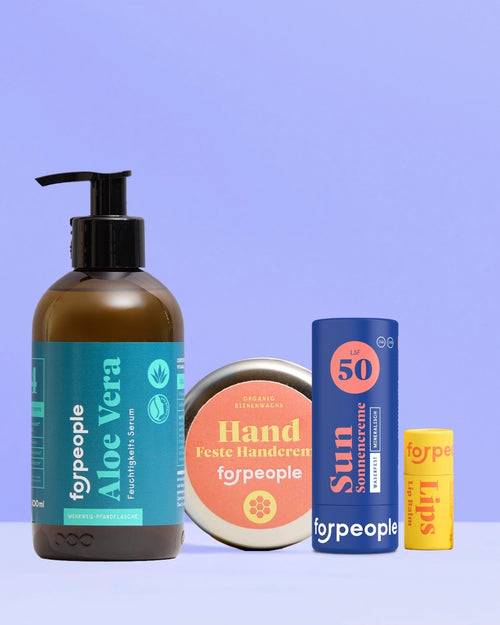
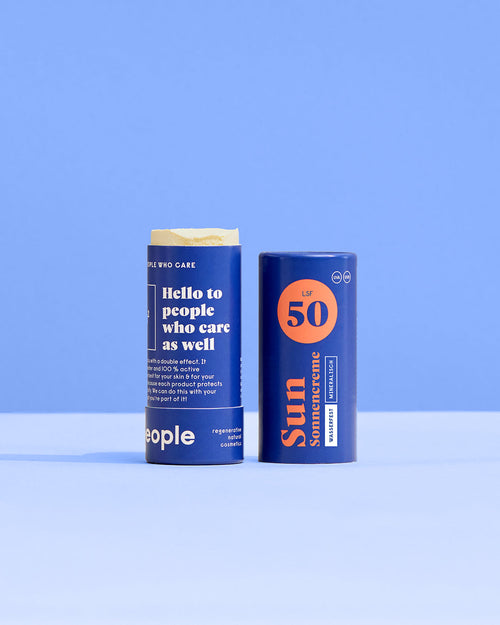
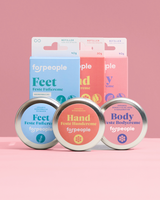
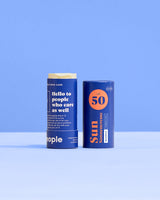
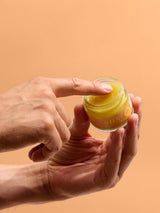
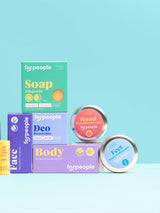
Our lip balms are water-free sticks made of wax, plant oils and shea butter, without menthol and without camphor. According to the ingredient list, the Lip Balm - Lemongrass (5 g, €4.90) consists of beeswax, sunflower oil, shea butter, almond oil, hemp seed oil, aloe vera extract and lemongrass essential oil. If you prefer to avoid essential oils or are out in the sun, choose the Lip Balm - SPF15 Almond & Vanilla (5 g, €7.90) with mineral filters (zinc oxide and titanium dioxide, non-nano). For a thicker layer overnight, the Beeswax Salve Larch & Mandarin in a Glass Jar (50 g, €12.90) is a good fit; it contains larch resin, propolis and essential oils, so if your lips are sensitive, test it on a small area first. For days by the water there is the Family Sun Set – SPF 50, After-Sun & Lip Protection (from €39.90) with Solid Sunscreen SPF50 (40 g, €17.90) and lip balm. All of them are cosmetics; stop using them if your skin reacts. More on this: Why do lips dry out so quickly? · Beeswax in skin care · Without fragrance and essential oils · Resin and propolis: allergy notes
Sources
- Kobayashi H, Tagami H (2004): Functional properties of the surface of the vermilion border of the lips are distinct from those of the facial skin. Br J Dermatol 150(3): 563–567. https://doi.org/10.1046/j.1365-2133.2003.05741.x
- Tagami H (2008): Location-related differences in structure and function of the stratum corneum with special emphasis on those of the facial skin. Int J Cosmet Sci 30(6): 413–434. https://doi.org/10.1111/j.1468-2494.2008.00459.x
- Sun F, Liu Y, Zhang T (2025): Aging of the Human Lip: Current Knowledge and Clinical Implications. J Cosmet Dermatol 24(8): e70310. https://doi.org/10.1111/jocd.70310
- Peier AM, Moqrich A, Hergarden AC, Reeve AJ, Andersson DA, Story GM et al. (2002): A TRP channel that senses cold stimuli and menthol. Cell 108(5): 705–715. https://doi.org/10.1016/s0092-8674(02)00652-9
- Scientific Committee on Consumer Safety (SCCS) (2012): Opinion on fragrance allergens in cosmetic products. SCCS/1459/11. https://ec.europa.eu/health/scientific_committees/consumer_safety/docs/sccs_o_102.pdf
- Europäische Kommission (2023): Verordnung (EU) 2023/1545 zur Änderung der Verordnung (EG) Nr. 1223/2009 hinsichtlich der Kennzeichnung allergieauslösender Duftstoffe in kosmetischen Mitteln. ABl. L 188: 1. https://eur-lex.europa.eu/eli/reg/2023/1545/oj
- Ghadially R, Halkier-Sorensen L, Elias PM (1992): Effects of petrolatum on stratum corneum structure and function. J Am Acad Dermatol 26(3 Pt 2): 387–396. https://doi.org/10.1016/0190-9622(92)70060-s