


Why lips are different from skin
The red part of the lips (the vermilion) is the only place on the face where the lining of the mouth is permanently exposed to the outside. A study of 303 women in winter found that water loss through the lips was almost three times as high as through the cheek, while surface hydration was only about one third. The top cells of the lip were not fully keratinised. The authors see this as the reason for the weak barrier and low water-holding capacity (Kobayashi & Tagami 2004). A review of differences in the horny layer across body sites comes to the same result: the vermilion has a remarkably weak barrier function and low hydration (Tagami 2008).
A more recent review describes further special features (Sun et al. 2025):
- Only a few cell layers: The surface of the vermilion is much thinner than the rest of the facial skin.
- Hardly any oil glands, no sweat glands, no hair: Lips can barely produce the oil that keeps them supple.
- Little melanin: Lips contain less pigment and are therefore more sensitive to UV radiation.
- Always on the move: Talking, eating, drinking and facial expressions put constant strain on the lips.
What a skin barrier is and how water loss is measured is explained on The skin barrier, simply explained and Occlusion and transepidermal water loss.
What dries lips out even more
| Trigger | What happens | What you can do |
|---|---|---|
| Licking your lips | Saliva evaporates quickly and leaves the lips drier than before | keep a balm handy instead of licking |
| Cold and wind | Cold air holds little moisture, wind speeds up evaporation | apply before going out, pull a scarf over your mouth |
| Indoor heating | dry room air draws water from the surface | apply thinly more often during the day, air rooms instead of overheating |
| Sun | little pigment, direct UV exposure, plus heat and wind | lip balm with UV filters, shade, a hat |
| Breathing through your mouth | a constant stream of air over the lips, e.g. during sport or at night | a thicker layer of balm in the evening |
| Peeling off flakes | small tears, the lip gets rougher | don’t pick, apply balm and wait |
The German Federal Office for Radiation Protection advises taking UV exposure especially seriously by the water, in snow and at high altitude, because reflections increase radiation there (BfS). That applies to your lips too, which are often forgotten when applying sunscreen.
What care lips need
Because lips produce hardly any oil of their own, what they need most is something that slows evaporation. Waxes and solid fats do this: they stay on the surface as a thin film. Plant oils make the balm supple and easy to spread. How film-formers, fats and humectants work together is explained on Humectants, occlusives and emollients; for beeswax in particular, see Beeswax in skin care.
- Often, but thin: During the day, apply whenever your lips feel tight – and again after eating and drinking.
- Generously at night: Before bed, apply a thicker layer that can stay on overnight.
- Before going out: In cold and wind, apply while you are still indoors.
- In the sun: Use a lip balm with UV filters and reapply after eating, drinking and swimming.
- Mind the scent: Essential oils and fragrances can irritate sensitive lips. If you are prone to that, choose a balm without added scent; more on Essential oils and fragrance allergens.
The season changes the routine. In winter, a plain balm of wax and oil applied before going out and before bed is usually enough. In summer, UV radiation, salt water and chlorine come into play: a lip balm with UV filters makes sense, reapplied after swimming, eating and drinking. During outdoor sport, skiing or sailing, wind and mouth breathing dry lips out particularly fast; a stick in your jacket pocket helps you reapply regularly. In heat, a lip balm made of wax and oil gets soft – keep it in the shade, not in full sun.
Water-based lip care needs an emulsifier and preservatives; a balm made of wax and oil needs neither. Why is explained on Water-free cosmetics. In winter, lips and hands often dry out at the same time; tips for both are on Dry skin in winter and Why hands dry out faster.
When to get medical advice
Dry, rough lips are usually harmless and improve within a few days with care. Have it checked by a doctor if your lips stay cracked for weeks despite care, are very red or swollen, weep, bleed, or if a spot changes and does not heal. If you suspect you are reacting to a lip balm, stop using it and seek advice.
Frequently asked questions
Why do my lips get drier when I lick them?
Saliva only moistens briefly. It evaporates quickly, and afterwards your lips feel drier than before. A balm reduces evaporation instead of just moistening for a moment.
How often should I apply lip balm?
As often as your lips feel tight – thinly during the day, again after eating and drinking, and a thicker layer in the evening. Because a lot of water evaporates through the lips, frequent application is normal.
Do lips need sun protection?
Yes. They have little pigment and are directly exposed to the sun. Use a lip balm with UV filters and reapply after eating, drinking and swimming.
Is petroleum jelly (petrolatum) or a beeswax balm better?
Both form a film that reduces water loss. A balm of waxes, butters and oils also contains nourishing fats. Which you prefer is mainly a matter of feel and ingredients.
At forpeople
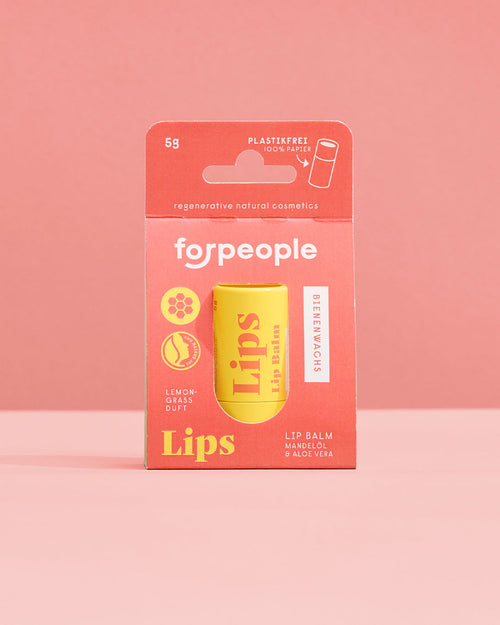
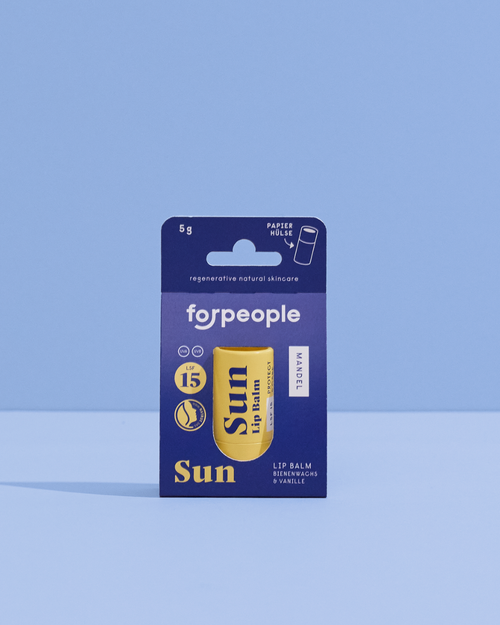
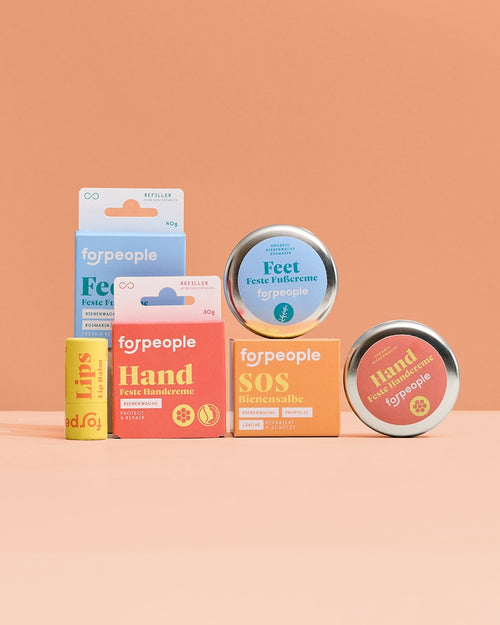
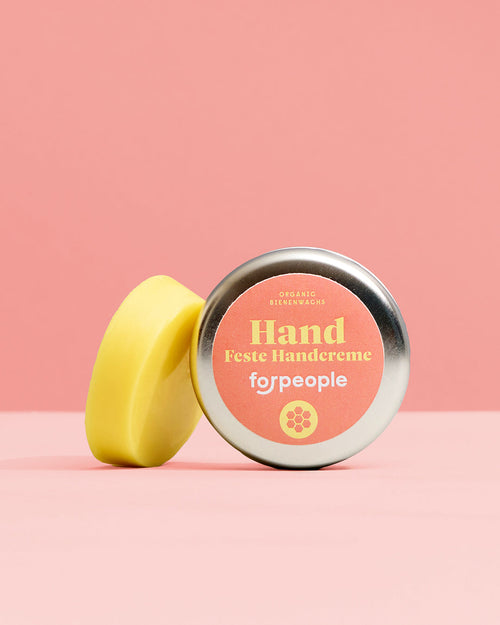
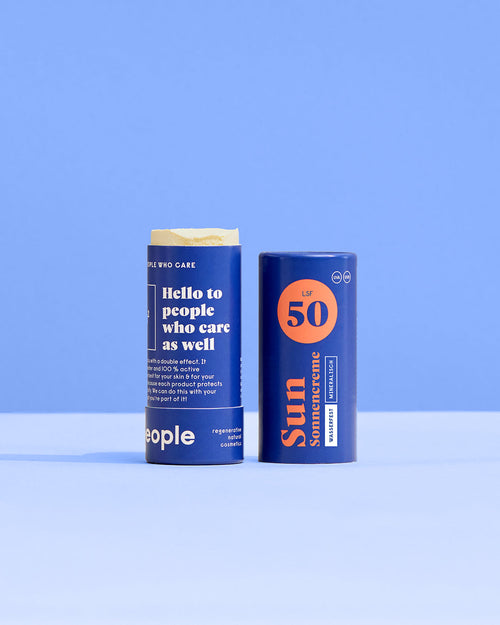
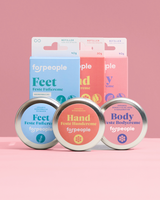
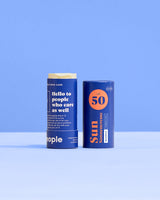
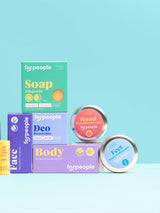
According to its ingredient list, the Lip Balm - Lemongrass (5 g, €4.90) is made of beeswax, sunflower oil, shea butter, almond oil, hemp seed oil, aloe vera extract and lemongrass oil; the essential oil brings the declared fragrance components citral, citronellol and geraniol. The Lip Balm - SPF15 Almond & Vanilla (5 g, €7.90) contains beeswax, sunflower oil, shea butter, almond oil and hemp seed oil, plus vanilla extract and vitamin E – and is formulated with mineral UV filters, zinc oxide and titanium dioxide, non-nano according to the product information. Both lip balms are water-free. The Protection Set for Dry Hands, Feet & Lips (€54.90) brings together several care products with beeswax; for your hands, try the Solid Hand Cream - Beeswax (30 g, €9.90). If you spend the day in the sun, use the Solid Sunscreen SPF50 (40 g, €17.90) on your face. What SPF claims mean is explained on SPF, UVA and water resistance explained; how to store lip balm in the heat on Storing solid cosmetics in summer.
Sources
- Kobayashi H, Tagami H (2004): Functional properties of the surface of the vermilion border of the lips are distinct from those of the facial skin. British Journal of Dermatology 150(3): 563–567. https://doi.org/10.1046/j.1365-2133.2003.05741.x
- Tagami H (2008): Location-related differences in structure and function of the stratum corneum with special emphasis on those of the facial skin. International Journal of Cosmetic Science 30(6): 413–434. https://doi.org/10.1111/j.1468-2494.2008.00459.x
- Sun F, Liu Y, Zhang T (2025): Aging of the Human Lip: Current Knowledge and Clinical Implications. Journal of Cosmetic Dermatology 24(8): e70310. https://doi.org/10.1111/jocd.70310
- Bundesamt für Strahlenschutz (BfS): Tipps zum UV-Schutz. https://www.bfs.de/DE/themen/opt/uv/schutz/tipps/tipps_node.html