







The stratum corneum: thin but crucial
The epidermis renews itself constantly. New cells form in its lower layers and slowly move upwards. On the way they change, flatten, lose their nucleus and become so-called horny cells (corneocytes). At the surface they form the stratum corneum in many layers. At the very top, individual cells shed unnoticed while new ones move up from below (Nemes & Steinert 1999).
Although it is so thin, the stratum corneum takes on most of the skin's protective tasks. The most important is the permeability barrier: it slows down the evaporation of water from the body. It also keeps out many substances, irritants and microorganisms and cushions mechanical stress (Elias 2005).
The brick-and-mortar model
To explain the structure, the image of a brick wall is often used. The horny cells are the bricks. Each one is surrounded by a very tough envelope of cross-linked proteins, with a layer of lipid molecules attached to its outside. Between the cells lie ordered lipid layers, the mortar. Together, cells and lipids make the stratum corneum largely impermeable to water (Nemes & Steinert 1999).
Water that wants to get out has to take a long, winding path around the bricks. This detour also slows water loss (Rawlings & Harding 2004). How this loss is measured and how a skincare film reduces it is explained in Occlusion and transepidermal water loss.
The four building blocks at a glance
| Building block | What it is made of | Function |
|---|---|---|
| Horny cells ("bricks") | flat, dead cells with a firm protein envelope | provide stability, lengthen the path water has to take |
| Lipids ("mortar") | ceramides, cholesterol, free fatty acids | seal the gaps and slow evaporation |
| Natural moisturizing factor (NMF) | small water-soluble molecules, including amino acids, lactic acid, urea | bind water inside the horny cells |
| Acid mantle | slightly acidic pH at the skin surface | controls processes in the stratum corneum, favours the skin's own microflora |
Lipids: ceramides, cholesterol, fatty acids
The lipids between the horny cells have a special composition. According to a review, they consist of about 50% ceramides, 25% cholesterol and 15% free fatty acids (Feingold 2007). The skin makes them itself: small storage bodies in the living cells release precursors into the spaces between the cells, where enzymes turn them into the finished lipid layers. These lipids are not the same as sebum from the sebaceous glands, which additionally covers the skin surface with a thin film of fat.
Natural moisturizing factor
Inside the horny cells there is a mixture of small, water-soluble substances, the natural moisturizing factor, or NMF. It forms when a protein called filaggrin is broken down in the stratum corneum, and it binds water (Rawlings & Harding 2004). Enough moisture in the stratum corneum is in turn a precondition for it to renew itself normally and for the top cells to shed evenly. If it dries out a lot, the cells come off in flakes instead of one by one.
Acid mantle
The skin surface is slightly acidic. In a study with 330 people, the pH on the forearm after 24 hours without showering and without cosmetics was on average below 5; the authors estimate the natural value at 4.7 on average (Lambers et al. 2006). Tap water in Europe usually has a pH of around 8 and, according to the same study, can raise the skin's pH for up to six hours. Soaps change it too. Afterwards it returns to normal on its own.
What puts strain on the skin barrier in everyday life
- Frequent washing: Surfactants in soaps and washing gels dissolve fat, and in doing so they also dissolve lipids from the stratum corneum. Some surfactants also attack the proteins of the horny cells. This can lead to tightness and dryness after washing. A high pH of the washing solution also makes the stratum corneum swell (Ananthapadmanabhan et al. 2004). More in Cracked hands from washing.
- Hot water and long showers: Warm water dissolves fats more easily than cold water. Short, lukewarm showers are gentler on your skin.
- Cold and dry air: Low humidity and low temperatures reduce barrier function and make the skin more susceptible to mechanical stress (Engebretsen et al. 2016). In winter, indoor heating adds to this. Tips in Dry skin in winter.
- Friction and pressure: Tools, gloves, shoes or clothing always rub the same spots. On the feet, the skin reacts with calluses, see Calluses keep coming back.
- Hours of wetness: If you work a lot with water or wear gloves for long periods, the stratum corneum softens. Afterwards it dries out particularly quickly.
Not every part of the body is equally well protected. Hands and feet are especially challenged because they are washed, rubbed and loaded a lot, and because there are no sebaceous glands on the palms and soles. We explain why in Why hands dry out faster and Why heel skin cracks. The lips also have a very thin stratum corneum, more on this in Why lips dry out so quickly.
How skincare supports the stratum corneum
Skincare cannot replace the stratum corneum. But it can improve the conditions under which your skin keeps its barrier in order by itself. Three approaches have proven useful:
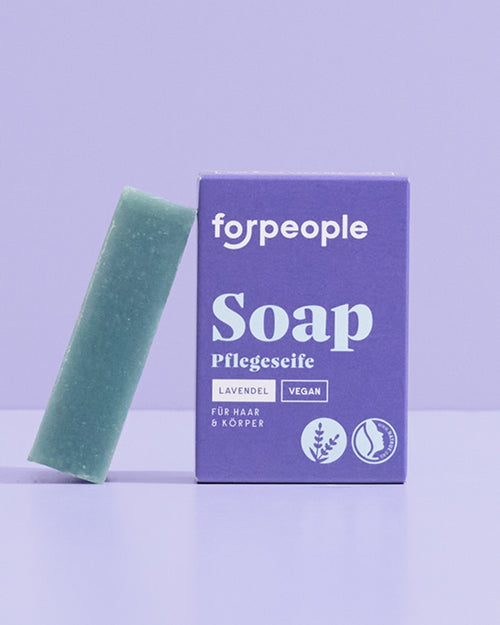
- Wash gently: only as often and as thoroughly as necessary, with lukewarm water and mild cleansing products. A solid soap made from plant oils, such as the Aloe Vera Soap – Lavender, is also a true soap and therefore alkaline. So apply cream to your hands after washing.
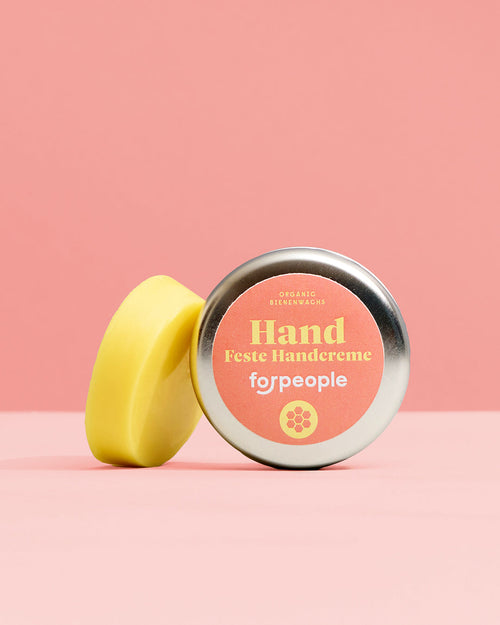
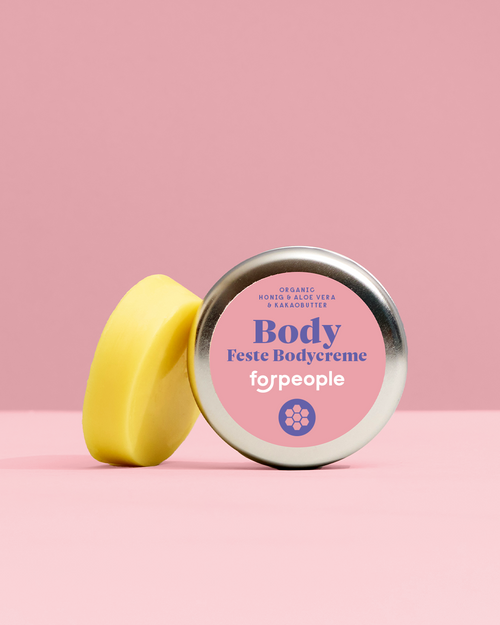
- Slow evaporation: A film of waxes, butters and oils reduces water loss at the surface. That is the principle of a solid hand cream with beeswax or a solid body butter.
- Bind water: Humectants such as glycerin or urea attract water. They are found mainly in water-based creams. We explain the differences in Humectants, occlusives, emollients and Urea or water-free cream?
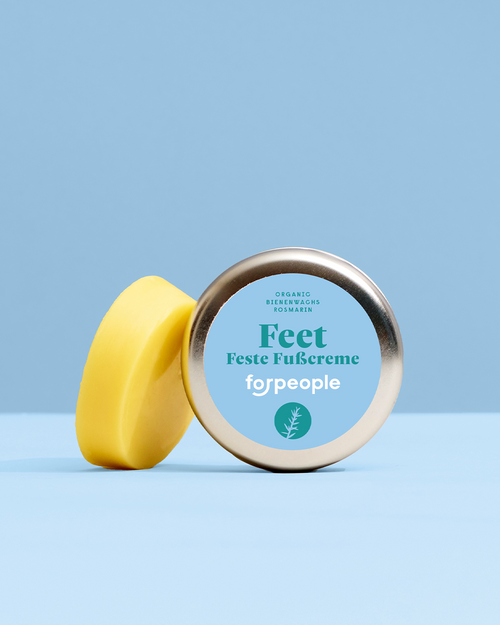
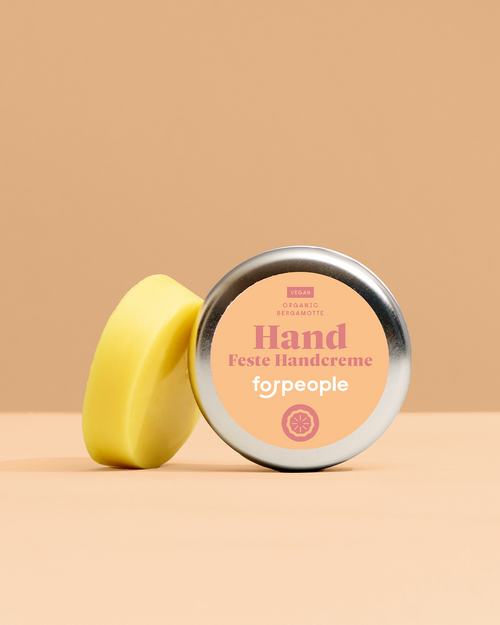
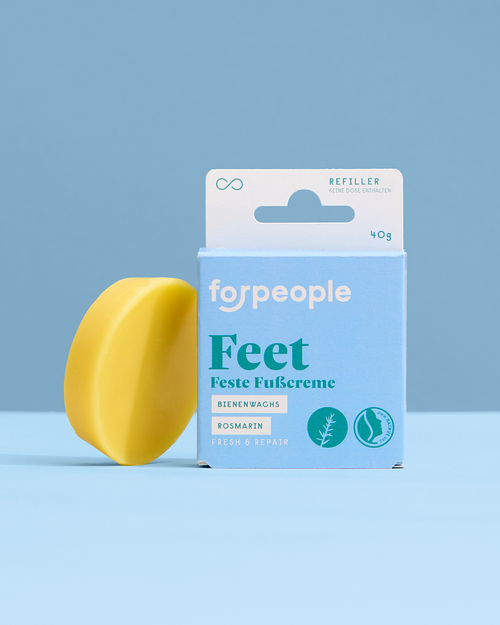
For your feet there is the Solid Foot Cream – Rosemary & Sage, for your hands on the go the vegan Solid Vegan Hand Cream - Bergamot. If your skin keeps flaking heavily, stays cracked or hurts despite care, have it checked by a doctor. Cosmetics care for the skin; they do not treat skin conditions.
Frequently asked questions
How thick is the stratum corneum?
It is very thin, usually thinner than a sheet of paper. On the palms and soles it is much thicker than, for example, on the face or eyelids.
Can you "build up" the skin barrier?
The skin forms its barrier itself, continuously and from the inside. Skincare can protect it from drying out and reduce evaporation. But it does not replace the skin's own lipids.
Why does my skin feel tight after showering?
Water and surfactants have removed fats from the surface and from the stratum corneum, and the water in the top layer evaporates quickly. Applying cream right after drying off helps.
Is soap bad for the skin barrier?
Not in principle. Soap is alkaline and dissolves fat. With normal skin and normal washing frequency, the pH returns to normal on its own. If you wash very often, apply cream afterwards.
What is the difference between sebum and skin lipids?
Skin lipids sit between the horny cells and form the "mortar". Sebum comes from the sebaceous glands and forms an additional film of fat on the surface.
At forpeople
- Solid Hand Cream - Beeswax, 30 g, €9.90: water-free, made of beeswax, olive oil and sunflower oil, without essential oils.
- Solid Vegan Hand Cream - Bergamot, 30 g, €9.90: vegan, with candelilla wax, jojoba oil and shea butter.
- Solid Foot Cream – Rosemary & Sage, 40 g, €9.90, with a refill for €7.90.
- Solid Body Butter - Beeswax & Aloe Vera, 40 g, €9.90: made of cocoa butter, olive oil, beeswax and shea butter.
Sources
- Nemes Z, Steinert PM (1999): Bricks and mortar of the epidermal barrier. Exp Mol Med 31(1): 5–19. https://doi.org/10.1038/emm.1999.2
- Elias PM (2005): Stratum corneum defensive functions: an integrated view. J Invest Dermatol 125(2): 183–200. https://doi.org/10.1111/j.0022-202X.2005.23668.x
- Rawlings AV, Harding CR (2004): Moisturization and skin barrier function. Dermatol Ther 17 Suppl 1: 43–48. https://doi.org/10.1111/j.1396-0296.2004.04s1005.x
- Feingold KR (2007): Thematic review series: skin lipids. The role of epidermal lipids in cutaneous permeability barrier homeostasis. J Lipid Res 48(12): 2531–2546. https://doi.org/10.1194/jlr.R700013-JLR200
- Lambers H, Piessens S, Bloem A, Pronk H, Finkel P (2006): Natural skin surface pH is on average below 5, which is beneficial for its resident flora. Int J Cosmet Sci 28(5): 359–370. https://doi.org/10.1111/j.1467-2494.2006.00344.x
- Ananthapadmanabhan KP, Moore DJ, Subramanyan K, Misra M, Meyer F (2004): Cleansing without compromise: the impact of cleansers on the skin barrier and the technology of mild cleansing. Dermatol Ther 17 Suppl 1: 16–25. https://doi.org/10.1111/j.1396-0296.2004.04s1002.x
- Engebretsen KA, Johansen JD, Kezic S, Linneberg A, Thyssen JP (2016): The effect of environmental humidity and temperature on skin barrier function and dermatitis. J Eur Acad Dermatol Venereol 30(2): 223–249. https://doi.org/10.1111/jdv.13301