


Two testers, two questions
In its hand cream test of 17 January 2025, Stiftung Warentest assessed 17 hand creams intended, according to their packaging, for dry, stressed skin: 13 classic water-based creams, 2 concentrates and 2 solid hand care products in bar form. The test describes the solid products as formulas made of fats, oils and waxes instead of water (Stiftung Warentest 2025). The overall rating is made up of several weighted test points:
| Test point (Stiftung Warentest) | Weight | How it was tested |
|---|---|---|
| Care properties | 40% | Corneometer and Tewameter on the forearms of around 20 female volunteers |
| Skin feel | 20% | Around 20 testers rate smoothness, suppleness, dryness, tightness |
| Application and everyday use | 15% | Taking out, spreading, absorption, stickiness, using a smartphone, opening a bottle |
| Ease of use of the packaging | 10% | Opening, closing, residual amount |
| Labelling and advertising claims | 10% | Labelling under the Cosmetics Regulation, legibility |
| Environmentally critical substances | 5% | Assessment of the ingredient list |
Öko-Test works differently. For its hand cream test of 22 October 2025 with 47 products, the editors had the creams analysed in the lab for substances including formaldehyde and formaldehyde releasers, certain musk compounds and fragrance substances. Where paraffins appeared in the ingredient list, the creams were tested for mineral oil aromatic hydrocarbons (MOAH). The overall rating is based on the ingredients result; further shortcomings such as certain plastic compounds or packaging issues can lower it (Öko-Test 2025). The published method does not describe measuring the care effect on volunteers. More on the mineral oil question in Hand cream without mineral oil.
What the Corneometer and Tewameter measure
The Corneometer measures electrically. It relies on the fact that water changes the electrical properties of the stratum corneum: the moister the top layers of skin, the higher the reading. The European Group for Efficacy Measurements on Cosmetics and Other Topical Products (EEMCO) still considers electrical methods the preferred technique, but stresses that no validation standard is available (Berardesca et al. 2018). The value is indirect: it is not a water content in percent but a device unit. In one device comparison, the Corneometer also responded to salt in the applied formula, while another capacitive device did not (Alanen et al. 2004). What sits on the skin can therefore influence the reading.
The Tewameter measures transepidermal water loss (TEWL): the amount of water that moves through the stratum corneum to the surface per unit of time and area and evaporates. A probe records the water vapour density above the skin. The value is sensitive to humidity, temperature and airflow, differs markedly between body sites and also depends on sweat glands and skin temperature (Alexander et al. 2018). The EEMCO guidance lists a large number of influencing factors and calls for strictly standardised conditions (Rogiers 2001). The basics are explained in Occlusion and TEWL.
| Measurement | What it shows | What it does not show |
|---|---|---|
| Corneometer value | How moist the top layers of the stratum corneum are | Smoothness, cracks, greasy feel, the effect on the hand itself |
| TEWL (Tewameter) | How much water evaporates through the skin | How the skin feels; values vary with the room climate |
| Skin feel (testers) | Subjective smoothness, suppleness, tightness | Measured values; preferences differ |
| Lab analysis (Öko-Test) | Whether substances rated as critical are present | How well a cream cares for the skin |
What this means for a water-free, solid cream
How much water the stratum corneum holds depends on several factors: the lipids between the horny cells, the long, winding path water has to take through the layers, and the natural moisturising factor inside the cells (Rawlings and Harding 2004). Creams can play a part in two ways. Water-based creams with humectants such as glycerin bring water with them and bind it. A water-free cream brings no water of its own; it leaves a film that reduces evaporation, so the skin holds on to its own water better. The differences are explained in Humectants, occlusives, emollients.
For reading a test, this means:
- Timing matters. The measurement was taken 12 to 16 hours after the last application, after two weeks of applying twice a day and using a standard washing solution meant to stress the skin. So it answers: how much water does the stratum corneum hold the next day? How your hands behave right after applying, or when you reapply more often, is not captured.
- The measuring site is the forearm. That makes results comparable. But because water loss differs markedly between body sites, forearm values only roughly transfer to the backs of your hands and your palms. Why hands are different is explained in Why hands dry out faster.
- Results are relative to comparison areas. Stiftung Warentest compared against a reference cream that moisturises the skin well and against an untreated patch of skin. A result is therefore always relative, not absolute.
- The product group is small. Two solid products out of 17 are not enough for general statements about “solid hand creams”. A test result applies to the products tested at the time of the test.
How to read hand cream tests for yourself
- Check who measured what. Care effect on volunteers and ingredients in the lab are two different questions.
- Look at the weighting. Packaging, labelling or environmental criteria can shift a rating even when the care is similar, and vice versa.
- Mind the date and the formula. Manufacturers change formulas. Compare the ingredient list in the test with the one on your pack. How to do that is explained in How to read an INCI list.
- Translate it to your day. If you wash your hands often, what counts is how easily you can reapply. At the office, what counts is whether paper and keyboard stay clean; see Hand care at the office.
- Take your own skin feel seriously. Whether a film feels pleasant or too greasy is personal. Tips are in Greasy or cared for?.
Frequently asked questions
Do solid hand creams do worse in tests?
That cannot be said in general. In the 2025 Stiftung Warentest test, 2 of the 17 products were solid hand creams. That is too few for a statement about the whole product group. The measurement also captures only one point in time, the next day.
What is a Corneometer?
A measuring device that estimates, via electrical properties of the skin, how much water the outermost skin layer contains. It gives a comparative value in device units, not a percentage.
What does a low TEWL value mean?
Less water is evaporating through the skin. That points to an intact stratum corneum or a film on the skin. The value depends strongly on room climate and measuring site, which is why it is measured under fixed conditions.
Why measure on the forearm and not on the hand?
The inner forearm is flat, easy to reach and less exposed in everyday life. That makes comparable measurements easier. The skin on the hands behaves differently, though.
Does a good test result mean the cream is right for me?
Not necessarily. Fragrance, skin feel, absorption and your daily routine play a big role. A checklist is in Solid hand cream: what to look for.
At forpeople
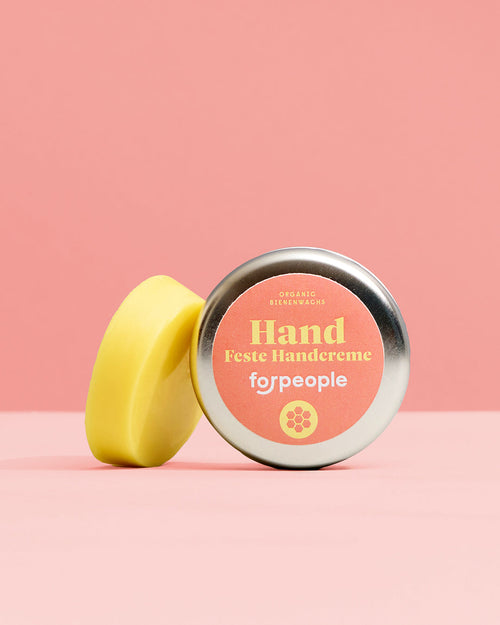
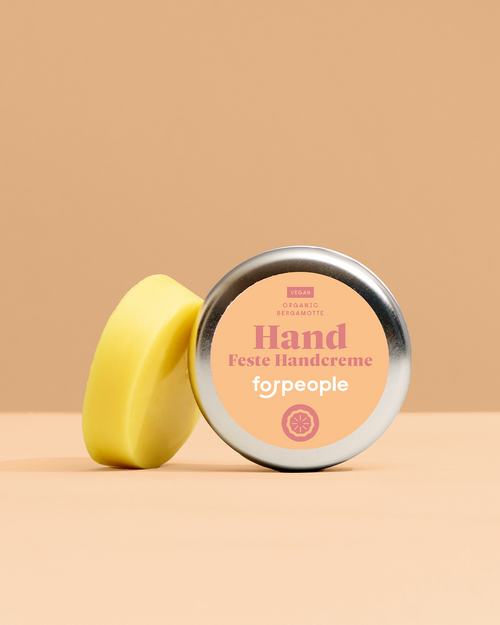
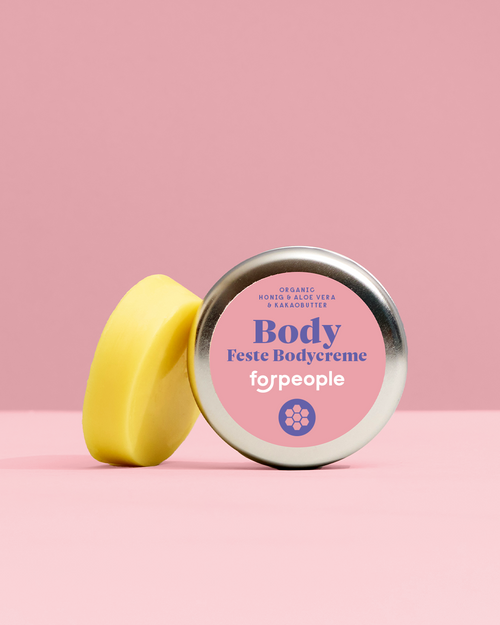
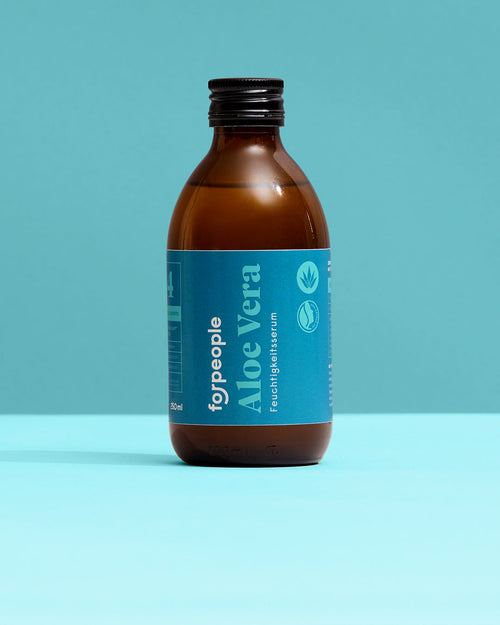
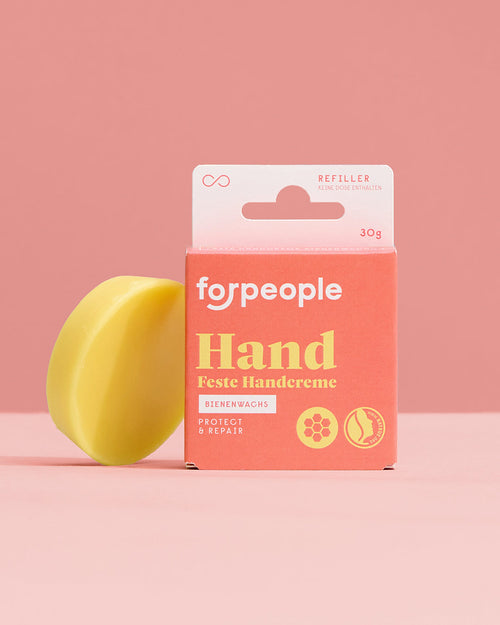
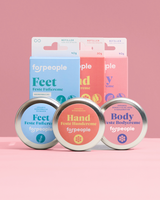
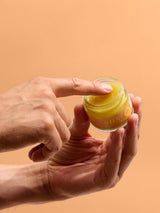
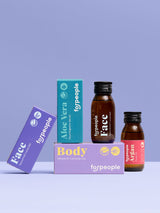
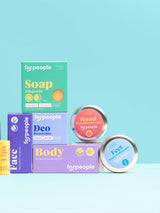
Our solid creams are water-free and work with a film of wax and oils. The Solid Hand Cream - Beeswax (30 g, €9.90) contains beeswax, olive and sunflower oil plus St. John's wort and aloe extract according to its INCI. The vegan Solid Vegan Hand Cream - Bergamot (30 g, €9.90) uses candelilla wax, jojoba, olive and hemp oil and shea butter. For larger areas there is the Solid Body Butter - Beeswax & Aloe Vera (40 g, €9.90). If you want to combine water and film, apply the water-based Aloe Vera Serum 99.6% (250 ml, €24.90) first and the solid cream afterwards; how that works is explained in Combining aloe vera serum with oil or solid cream. For refilling there is the Solid Hand Cream Refill - Beeswax (€7.90). More on this: Dry hands despite moisturising · Solid cream or tube · Urea or water-free cream · What does organic mean for hand cream?
Sources
- Stiftung Warentest (2025): Handcreme im Test: Rettung für raue Hände. test.de, 17.01.2025 (test 2/2025), section „So haben wir getestet“. https://www.test.de/Handcremes-im-Test-5400915-0/
- Öko-Test (2025): Handcremes im Test: Bekannte Marken enttäuschen. oekotest.de, 22.10.2025 (Jahrbuch für 2026), sections „Testverfahren“ and „Bewertungslegende“. https://www.oekotest.de/kosmetik-wellness/handcremes-im-test-bekannte-marken-enttauschen_15126_1.html
- Berardesca E, Loden M, Serup J, Masson P, Rodrigues LM (2018): The revised EEMCO guidance for the in vivo measurement of water in the skin. Skin Res Technol 24(3): 351–358. https://doi.org/10.1111/srt.12599
- Alanen E, Nuutinen J, Nicklén K, Lahtinen T, Mönkkönen J (2004): Measurement of hydration in the stratum corneum with the MoistureMeter and comparison with the Corneometer. Skin Res Technol 10(1): 32–37. https://doi.org/10.1111/j.1600-0846.2004.00050.x
- Alexander H, Brown S, Danby S, Flohr C (2018): Research Techniques Made Simple: Transepidermal Water Loss Measurement as a Research Tool. J Invest Dermatol 138(11): 2295–2300.e1. https://doi.org/10.1016/j.jid.2018.09.001
- Rogiers V, EEMCO Group (2001): EEMCO guidance for the assessment of transepidermal water loss in cosmetic sciences. Skin Pharmacol Appl Skin Physiol 14(2): 117–128. https://doi.org/10.1159/000056341
- Rawlings AV, Harding CR (2004): Moisturization and skin barrier function. Dermatol Ther 17 Suppl 1: 43–48. https://doi.org/10.1111/j.1396-0296.2004.04s1005.x