


What the law covers and what it does not
The EU organic regulation sets out how organic production works and when a product may be labelled as organic. It applies to live or unprocessed agricultural products, to processed agricultural products intended for use as food, and to feed. On top of that come some products closely linked to agriculture that are listed in its Annex I, including beeswax, essential oils and natural gums and resins (Regulation (EU) 2018/848, Art. 2 and Annex I). A processed food may only be called organic in its sales name if at least 95% by weight of its agricultural ingredients are organic (Art. 30).
Finished cosmetic products are not on this list. They fall under the Cosmetics Regulation. It has no organic definition, but it prohibits texts and names that imply characteristics a product does not have (Regulation (EC) No 1223/2009, Art. 20). The common criteria for cosmetic claims require truthfulness and evidence: if an ingredient is advertised, it must be deliberately present, and the properties of an ingredient must not be transferred to the whole product if that is not the case (Regulation (EU) No 655/2013, Annex, No. 2 and 3).
| Food | Cosmetics (e.g. hand cream) | |
|---|---|---|
| Own organic rules in EU law | Yes, EU organic regulation | No, only individual raw materials can be certified organic |
| Minimum share for “organic” in the name | 95% of agricultural ingredients | No legal value; private standards set their own |
| Control | Certificate from a control body for every operator | General ban on misleading claims; certification only via private standards |
More on the difference between law and label is in Natural cosmetics explained: law, ISO 16128, NATRUE and COSMOS.
Organic raw material or organic product
In practice, the most important distinction is this: an organic raw material is not the same as an organic product. Olive oil, sunflower oil, shea butter, beeswax or lavender oil can come from certified organic farming or organic beekeeping. Certificates under the organic regulation exist for these raw materials. So a hand cream can be “with organic olive oil” even if other ingredients are not organic. Whether the whole product should be called an “organic hand cream” depends on what share is actually organic and what a figure refers to.
Some ingredients can never be organic: water and minerals do not come from agriculture. Chemically heavily modified substances count only in part, depending on the standard. That is another reason why organic shares vary so much between products.
How to recognise the organic share
The ingredient list names the ingredients in order of weight, the largest first (Regulation (EC) No 1223/2009, Art. 19). Organic raw materials are usually marked with an asterisk and explained in a footnote, for example “*from certified organic farming”. Here is how to read it:
- Which ingredients have an asterisk? If the marked ingredients are at the top, the organic share makes up a large part of the weight. If they are at the end, they are small amounts.
- Is “Aqua” or “Water” listed first? Then a large part is water, which cannot be organic. A high organic share of the whole product is then hardly possible mathematically.
- What does a percentage refer to? “95% organic” can refer to the whole product, to the agricultural ingredients or to the natural substances. Those are three different numbers.
- Is a standard named? Then its calculation rules apply, and you can look them up.
A worked example shows why water makes such a difference: a cream made of 70% water and 30% organic oils has an organic share of the whole product of at most 30%, even though all agricultural ingredients are organic. A water-free cream of organic oils and organic wax can reach up to 100% mathematically. That says nothing about which cream cares for the skin better; it only shows that a percentage without its reference tells you little. How water-free formulas are built is explained in Water-free cosmetics, and how to read the list in general in How to read an INCI list.
How standards calculate the organic share
Private standards define when a product may be certified as “organic”. Their rules differ above all in how they treat water and plant juices.
| Rulebook | Minimum organic requirement | How water is treated |
|---|---|---|
| EU organic regulation (food only) | 95% of agricultural ingredients | Water is not an agricultural ingredient |
| COSMOS, Organic level | At least 95% of the physically processed agro-ingredients and at least 20% of the total product (10% e.g. for rinse-off products) | Water can never be counted as organic; the juice of fresh plants is not considered water |
| NATRUE, Organic level | At least 95% of the natural substances of plant and animal origin from organic farming or wild collection | Water only counts if it comes directly from the plant as a juice |
| ISO 16128-2 | No minimum, only calculation methods for organic and natural shares | Does not regulate claims and is not a label |
Sources: COSMOS-standard 2025, sections 6.2 and 7.1; NATRUE 2021, sections 3.1.1 and 4.2; ISO 16128-2:2017. For products based on plant juice, such as aloe vera juice instead of water, this can make a big difference. More in Aloe vera instead of water.
What “organic” says and what it does not
“Organic” describes how a raw material was grown or obtained. It is not a statement about how well a cream cares for the skin, how it feels or how well it is tolerated. An essential oil from organic farming contains fragrance substances that must be declared just like one from conventional farming; if you want to avoid fragrance substances, you still have to read the list with organic cosmetics (Essential oils and fragrance allergens, Without fragrance and essential oils). Conversely, a cream without organic raw materials can care for your skin well. The criteria that matter for a solid hand cream are in Solid hand cream: what to look for.
Frequently asked questions
Is “organic hand cream” a protected term?
Not in the sense of the EU organic regulation, which does not apply to cosmetics. The term must not be misleading, though. What is protected are the organic claims for the individual raw materials, which require an organic certificate.
What does “kbA” mean on German labels?
It stands for “kontrolliert biologischer Anbau”, meaning from certified organic farming. The abbreviation usually appears in the footnote to the ingredient list and refers only to the marked ingredients.
Why does one cream say 95% organic and another 20%?
Because the figures can refer to different things: to the agricultural ingredients or to the whole product including water. If in doubt, ask what the figure refers to.
Is certified organic cosmetics automatically natural cosmetics?
With COSMOS Organic and the NATRUE organic level, the natural cosmetics rules of the respective standard also apply. A single organic raw material in an otherwise conventional cream, by contrast, does not make the product natural cosmetics.
Is organic cosmetics better tolerated?
That cannot be said in general. Organic refers to how the plant was grown, not to the chemical composition of an oil. If your skin reacts, stop using the product and seek medical advice if needed.
At forpeople
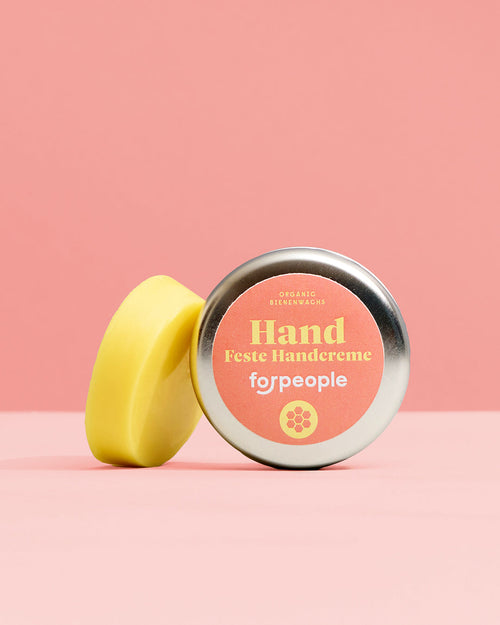
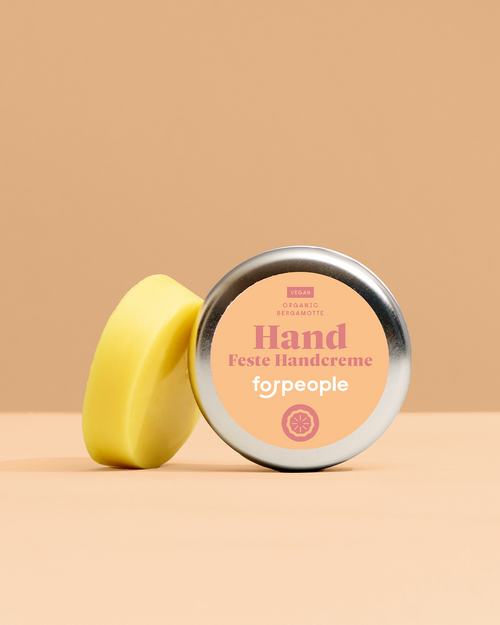
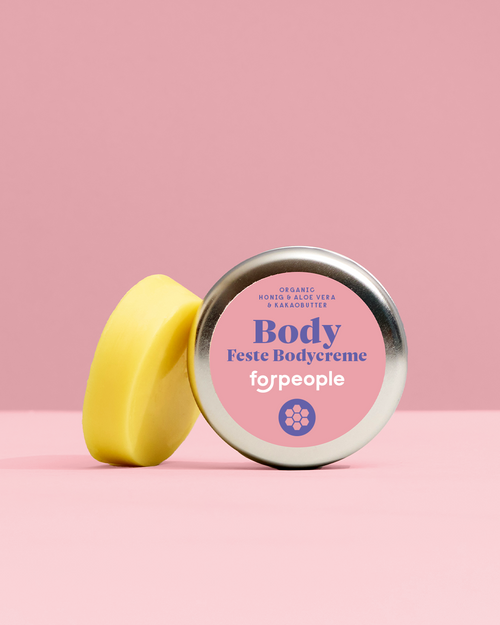
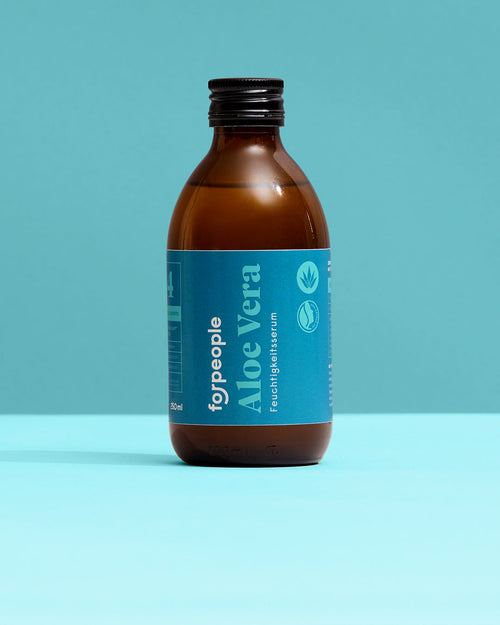
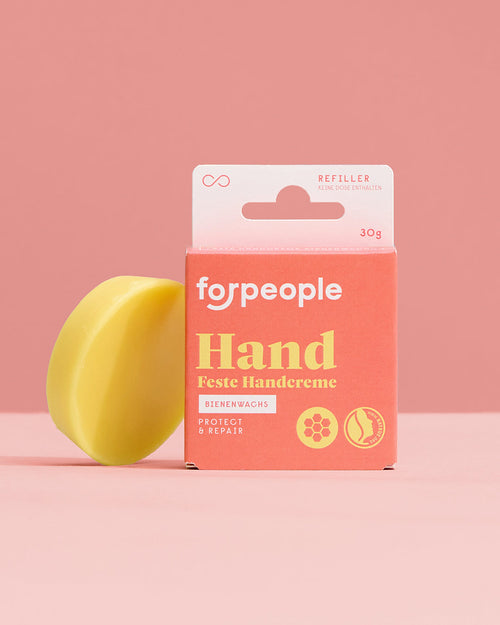
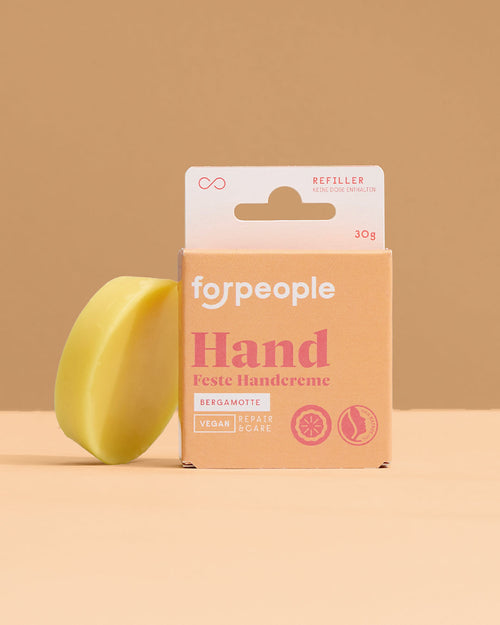
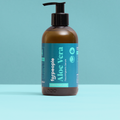
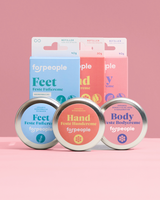
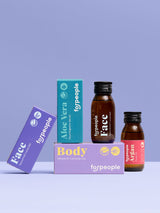
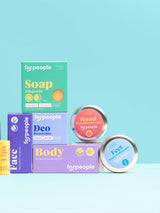
You can find which evidence we hold for our raw materials and certificates on our Certification page. The full ingredient list with all footnotes is on every product page, for example for the Solid Hand Cream - Beeswax (30 g, €9.90), the vegan Solid Vegan Hand Cream - Bergamot (30 g, €9.90) and the Solid Body Butter - Beeswax & Aloe Vera (40 g, €9.90); all three are water-free. The Aloe Vera Serum 99.6% (250 ml, €24.90) is based on aloe vera juice instead of water. To refill the tins there are the Solid Hand Cream Refill - Beeswax and the Solid Vegan Hand Cream Refill - Bergamot (€7.90 each). If anything is unclear, just write to us. More on this: Hand cream without mineral oil · How hand cream tests measure · Ointment, balm, butter, solid cream · Shelf life and the PAO symbol
Sources
- European Parliament and Council (2018): Regulation (EU) 2018/848 on organic production and labelling of organic products, Art. 2, Art. 30 and Annex I. OJ L 150: 1. https://eur-lex.europa.eu/eli/reg/2018/848/oj
- European Parliament and Council (2009): Regulation (EC) No 1223/2009 on cosmetic products, Art. 19 and 20. OJ L 342: 59. https://eur-lex.europa.eu/eli/reg/2009/1223/oj
- European Commission (2013): Commission Regulation (EU) No 655/2013 laying down common criteria for the justification of claims used in relation to cosmetic products, Annex. OJ L 190: 31. https://eur-lex.europa.eu/eli/reg/2013/655/oj
- COSMOS-standard AISBL (2025): COSMOS-standard – Cosmetics Organic and Natural Standard, Version 4.2, 1 September 2025, sections 6.2 and 7.1. https://www.cosmos-standard.org/en/cosmos-standard/
- NATRUE (2021): NATRUE Label criteria: requirements to be met by natural and organic cosmetics, Version 3.9, sections 3.1.1 and 4.2. https://natrue.org/uploads/2025/09/EN-NATRUE-Label_Requirements_v3.9-final-version-1.pdf
- ISO 16128-2:2017: Cosmetics – Guidelines on technical definitions and criteria for natural and organic cosmetic ingredients – Part 2: Criteria for ingredients and products. https://www.evs.ee/en/iso-16128-2-2017