


What the law says – and what it doesn’t
Regulation (EC) No 1223/2009 governs the safety, labelling and advertising of all cosmetics, whether conventional or natural. It has no “natural cosmetics” category with requirements of its own. But Article 20 prohibits text, names and pictures that imply characteristics or functions the products do not have (Regulation (EC) No 1223/2009).
How claims must be substantiated is set out in a separate regulation with six common criteria (Regulation (EU) No 655/2013):
- Legal compliance: What is mandatory anyway may not be advertised as a special benefit.
- Truthfulness: If an ingredient is named, it must be deliberately present; properties of a single substance may not be transferred to the whole product if that is not true.
- Evidential support: Claims need adequate, verifiable evidence.
- Honesty: No exaggeration beyond the evidence.
- Fairness: No denigration of competitors or of legally used ingredients.
- Informed decision-making: Claims must be clear and understandable.
For “natural cosmetics”, this means a manufacturer may use the term but must live up to it the way consumers understand it. Where the line lies is answered more precisely by the seal standards than by the law.
ISO 16128: a calculation guide, not a seal
The international standard ISO 16128 has two parts. Part 1 (2016) defines categories of ingredients, for example natural, natural-derived and mineral substances, as well as organic ones (ISO 16128-1:2016). Part 2 (2017) describes how to calculate indexes for a product from them: a natural index, a natural origin index, an organic index and an organic origin index (ISO 16128-2:2017).
What matters is what the standard, by its own account, does not cover: claims and labelling, safety for people and the environment, social issues and packaging. A statement like “x % of natural origin according to ISO 16128” is therefore a manufacturer’s calculation, not a certification. It says nothing about which substances make up the rest. It does not replace a look at the ingredient list; how to read one is explained on How to read an INCI list.
NATRUE: natural cosmetics in two levels
NATRUE is an international association based in Brussels. Its criteria, currently in version 3.9, allow only three groups of substances in certified products (NATRUE 2021):
- Natural substances: of plant, mineral or animal origin, obtained with physical processes; mineral oil is explicitly excluded. Examples are fatty oils or plant extracts.
- Derived natural substances: made from natural substances such as fats, oils, waxes or sugars through permitted chemical reactions. They are only allowed if their function cannot be achieved with natural substances, and they are on a positive list.
- Nature-identical substances: only if they cannot be obtained from nature, such as certain mineral pigments and preservatives – also governed by positive lists.
For finished products, NATRUE awards two levels, called “natural” and “organic” in the standard. For each product group, a table sets minimum levels of natural substances and maximum levels of derived natural substances. For the organic level, at least 95 % of the natural substances of plant and animal origin must come from controlled organic farming or certified wild collection. Audits are carried out by independent certifiers approved by NATRUE.
COSMOS: Organic and Natural
The COSMOS standard is managed by a non-profit association based in Brussels; it was developed by BDIH (Germany), Cosmebio and Ecocert (France), ICEA (Italy) and the Soil Association (UK). The current version 4.2 dates from 1 September 2025 (COSMOS 2025). It divides ingredients into five groups: water, mineral ingredients, physically processed agro-ingredients, chemically processed agro-ingredients and other ingredients. There are two signatures:
- COSMOS ORGANIC: At least 95 % of the physically processed agro-ingredients (such as oils, butters, waxes) must be organic, and at least 20 % of the total product. For rinse-off products, non-emulsified water-based products and products with at least 80 % minerals, 10 % is enough.
- COSMOS NATURAL: No minimum share of organic ingredients.
Among other things, both require that substances with petrochemical parts of the molecule together make up no more than 2 % of the finished product, and permitted preservatives are listed. The natural share is calculated using a fixed formula.
The approaches compared
| Law (EU) | ISO 16128 | NATRUE | COSMOS | |
|---|---|---|---|---|
| What is it? | Regulations 1223/2009 and 655/2013 | international standard | private standard with a seal | private standard with a seal |
| Defines “natural cosmetics”? | no | defines ingredient categories and indexes | yes, with positive lists | yes, with ingredient groups and lists |
| Levels | – | indexes instead of levels | natural, organic | COSMOS NATURAL, COSMOS ORGANIC |
| Organic requirement | – | organic index is calculated | organic: at least 95 % of natural plant and animal substances organic | ORGANIC: 95 % of physically processed agro-ingredients organic, at least 20 % (or 10 %) of the product |
| Independent audit | official supervision as for all cosmetics | not provided for | yes, approved certifiers | yes, approved certifiers |
| Governs claims? | yes | no | rules for using the seal | rules for the signatures |
How to check natural cosmetics yourself
- Check the seal: A seal applies to a specific product, not automatically to the whole brand. COSMOS offers a product database on its website; NATRUE also runs a database.
- Read the INCI list: The list is sorted by weight in descending order; only ingredients below 1 % may follow at the end in any order. So the first ingredients make up the largest part.
- Water and preservation: If “Aqua” comes first, the product needs an emulsifier and preservatives. That is not a flaw, but it is a difference from water-free formulas. More: Preservation and water, Emulsifiers in cosmetics and Water-free cosmetics.
- Scent: Natural cosmetics can contain fragrance components too, for example from essential oils. How to spot them: Essential oils and fragrance allergens and No added scent: ingredients at a glance.
Frequently asked questions
Is “natural cosmetics” a protected term?
No. There is no legal definition in the EU. Manufacturers must still follow the general rules for claims; the term is only defined more precisely in private standards such as NATRUE and COSMOS.
What does “98 % of natural origin” mean?
Usually a calculation according to ISO 16128. It shows how much of the product consists of natural or natural-derived substances. It does not involve an independent audit.
Are natural cosmetics automatically better tolerated?
No. Natural substances can also cause reactions, for example components of essential oils. Tolerance depends on the individual formula and your skin.
Are certified natural cosmetics always organic?
Not necessarily. Both standards have a level without a minimum organic share (NATRUE natural, COSMOS NATURAL) and an organic level.
At forpeople
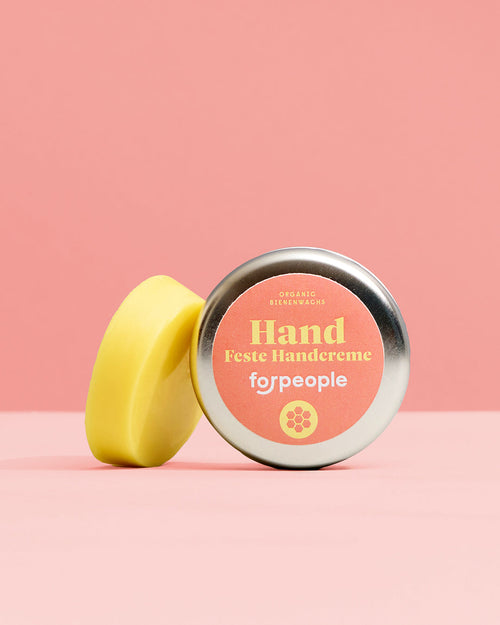
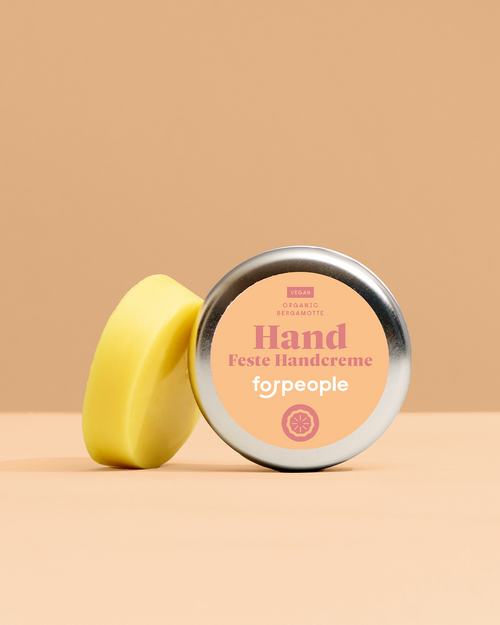
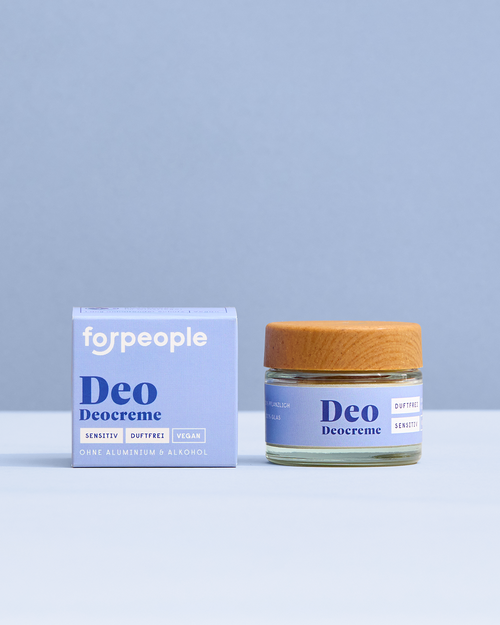
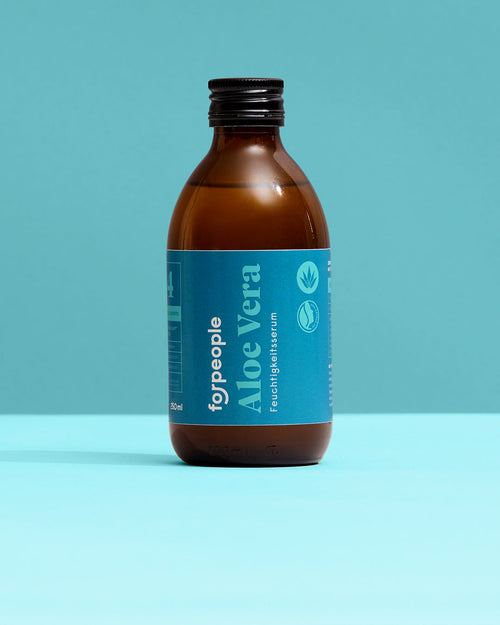
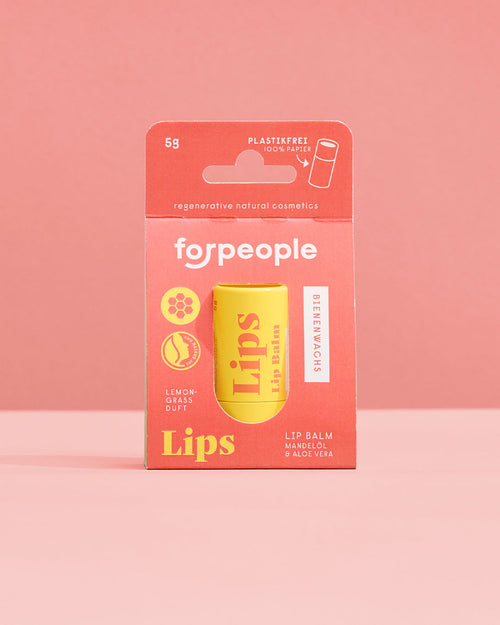
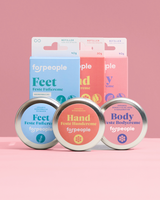
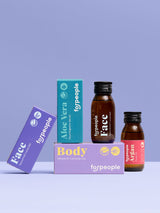
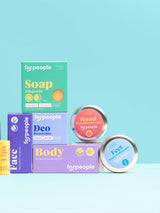
Which of our products are certified to which standard is listed on our Certification page. You will find the full ingredients on every product page. Examples: the Solid Hand Cream - Beeswax (30 g, €9.90) consists of beeswax, olive oil, sunflower oil, St. John’s wort extract and aloe vera extract. The Solid Vegan Hand Cream - Bergamot (30 g, €9.90) uses candelilla wax instead of beeswax and contains lemon and bergamot oil. The Sensitive Deodorant Cream (50 g, €8.90) contains potato starch, shea butter, baking soda, sunflower oil, corn starch and candelilla wax, with no added scent. The Aloe Vera Serum 99.6% (250 ml, €24.90) contains water from the aloe juice and is therefore preserved with potassium sorbate and sodium benzoate. The Lip Balm - Lemongrass (5 g, €4.90) is made with ingredients from certified organic farming, according to the product information. Read more: Beeswax in skin care.
Sources
- Europäisches Parlament und Rat (2009): Verordnung (EG) Nr. 1223/2009 über kosmetische Mittel, Artikel 20. ABl. L 342: 59. https://eur-lex.europa.eu/eli/reg/2009/1223/oj
- Europäische Kommission (2013): Verordnung (EU) Nr. 655/2013 zur Festlegung gemeinsamer Kriterien zur Begründung von Werbeaussagen im Zusammenhang mit kosmetischen Mitteln. ABl. L 190: 31. https://eur-lex.europa.eu/eli/reg/2013/655/oj
- ISO 16128-1:2016: Cosmetics – Guidelines on technical definitions and criteria for natural and organic cosmetic ingredients and products – Part 1: Definitions for ingredients. https://www.evs.ee/en/iso-16128-1-2016
- ISO 16128-2:2017: Cosmetics – Guidelines on technical definitions and criteria for natural and organic cosmetic ingredients – Part 2: Criteria for ingredients and products. https://www.evs.ee/en/iso-16128-2-2017
- NATRUE (2021): NATRUE Label criteria: requirements to be met by natural and organic cosmetics, Version 3.9. https://natrue.org/uploads/2025/09/EN-NATRUE-Label_Requirements_v3.9-final-version-1.pdf
- COSMOS-standard AISBL (2025): COSMOS-standard – Cosmetics Organic and Natural Standard, Version 4.2, 1. September 2025. https://www.cosmos-standard.org/en/cosmos-standard/