


Which INCI names point to mineral oil
Mineral oil products in cosmetics must be named in the ingredient list. The BfR gives the following four as typical INCI names (BfR 2018):
| INCI name | What it is | Texture |
|---|---|---|
| Paraffinum Liquidum | Liquid, purified mineral oil (medicinal white oil) | liquid |
| Paraffin | Solid paraffin wax | solid |
| Cera Microcristallina | Microcrystalline wax | solid, pliable |
| Petrolatum | Petroleum jelly (white or yellow), a mixture of at least one mineral oil and one mineral wax | ointment-like |
Depending on the product, the BfR puts the mineral oil content at between 1 and 99%. If one of these names comes near the top, it makes up a large part of the cream, because the list is ordered by weight (Regulation (EC) No 1223/2009, Art. 19). How to read a list in general is explained in How to read an INCI list.
MOSH and MOAH: two terms worth knowing
Mineral oils are complex mixtures of hydrocarbons. Experts distinguish saturated hydrocarbons, MOSH for short, and aromatic hydrocarbons, MOAH for short. MOAH may include potentially carcinogenic substances such as polycyclic aromatic compounds. That is why mineral oils for cosmetics are heavily purified, which lowers the MOAH share (BfR 2018).
The Cosmetics Regulation handles this through prohibitions: numerous petroleum distillates and paraffin oils are listed in Annex II, the list of prohibited substances, either “if they contain > 3% w/w DMSO extract” or “except if the full refining history is known and it can be shown that the substance from which it is produced is not a carcinogen” (Regulation (EC) No 1223/2009, Annex II). So only purified grades whose origin and purity are documented are permitted.
Two perspectives side by side
The debate often seems contradictory because different bodies ask different questions. The overview below puts the positions side by side.
| Body | Key statement | What it refers to |
|---|---|---|
| BfR, opinion 008/2018 | MOSH are barely absorbed through the skin; on current knowledge, no health risks are expected from use on the skin | Highly refined mineral oils of pharmaceutical quality in cosmetics |
| BfR, lip care | Oral intake must be considered; recommendation by Cosmetics Europe to use only certain mineral oil grades with a food intake limit (ADI) | Lip care products, part of which is swallowed |
| Review on skin uptake | No evidence that mineral oils and waxes from cosmetics pass through the skin into the body | 13 studies; the authors work mainly for cosmetics manufacturers and associations (Petry et al. 2017) |
| EFSA, 2023 | Genotoxicity and carcinogenicity are associated with MOAH with three or more aromatic rings; for intake via food, EFSA raises a possible concern | Mineral oil hydrocarbons in food, not in cosmetics (EFSA CONTAM Panel 2023) |
| Öko-Test, hand creams 2025 | Creams that declare paraffins are tested for MOAH; more than 10 mg/kg MOAH lowers the rating by two grades | Precaution from a consumer perspective; threshold set by Öko-Test itself (Öko-Test 2025) |
The BfR also analysed its own samples. The highest MOAH levels, roughly 1 to 4.5%, were found in four products in which petrolatum was the only mineral oil ingredient or listed near the top; in four petroleum jellies they ranged from 1.7 to 5%. The other mineral oil-containing products ranged from 0.007 to 0.3%. In ten products without mineral oil-based ingredients, MOSH and MOAH were generally not detectable; individual samples showed traces that may come from plant oils or from manufacturing, for example (BfR 2018). This shows two things: the quality of the mineral oil makes a difference, and “without mineral oil” in the formula does not automatically mean “zero hydrocarbons” in the analysis.
What the ingredient list shows and what it does not
The ingredient list names only substances that are used intentionally. Impurities in raw materials are not considered ingredients and therefore do not appear on it (Regulation (EC) No 1223/2009, Art. 19(1)(g)). So you cannot read MOAH levels off the pack; they can only be determined in the lab. What you can read: whether mineral oil was used at all and where it appears in the list.
For claims such as “without mineral oil” or “paraffin-free”, the common criteria for cosmetic claims apply: a claim must not suggest a specific benefit that is merely compliance with minimum legal requirements, and must not attribute a unique property to a product if similar products share it (Regulation (EU) No 655/2013, Annex, No. 1.3 and 4.2). In natural cosmetics, doing without is standard: under the NATRUE criteria, substances of mineral origin only count as natural if they are inorganic; mineral oil is expressly excluded (NATRUE 2021, section 3.1). An overview of the standards is in Natural cosmetics explained.
Care without mineral oil: what is available
Water-free hand creams and salves without mineral oil usually consist of plant oils, plant butter and waxes such as beeswax or candelilla wax. They also leave a film on the skin that reduces evaporation. Petroleum jelly seals the skin more strongly than a salve made of beeswax and plant oil; what that means for your choice is explained in Petroleum jelly or beeswax salve. One point to keep in mind: plant oils can oxidise and turn rancid over time. So store plant-based care cool and dark and pay attention to the smell (Recognising rancid skin oil). How waxes differ is explained in Candelilla wax or beeswax, and the criteria for solid hand creams in Solid hand cream: what to look for.
Frequently asked questions
Is paraffin in hand cream a concern?
On current knowledge, the BfR does not expect health risks from highly refined mineral oils in cosmetics applied to the skin. Consumer tests assess MOAH residues more strictly as a precaution. Whether you want to use mineral oil is your decision.
Can I see MOAH on the pack?
No. Impurities are not listed in the ingredients. You can only see whether mineral oil was used as an ingredient.
Is petroleum jelly the same as mineral oil?
Petroleum jelly (INCI: Petrolatum) is a mixture of at least two mineral oil components, an oil and a wax. So it counts as a mineral oil product.
Why do some hand creams say “without mineral oil”?
Because many people look for it. In natural cosmetics, however, doing without is standard anyway; the claim is then not a special feature of the individual product.
Does this also apply to lip care?
With lip care, some of the product is swallowed. The BfR therefore recommends that manufacturers follow the Cosmetics Europe recommendation on certain mineral oil grades. More on lips in Why do lips dry out so quickly?.
At forpeople
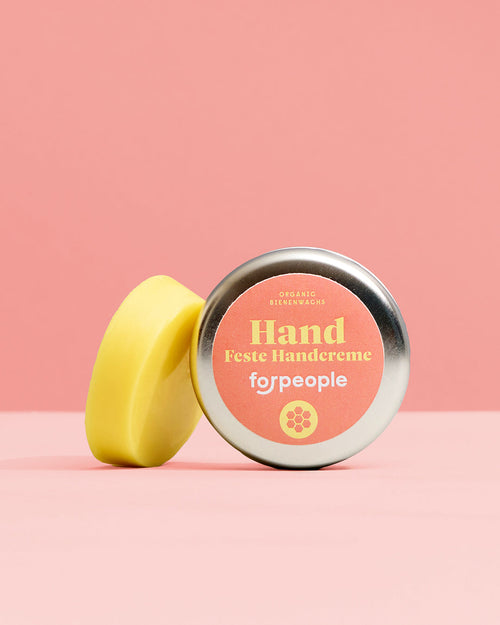
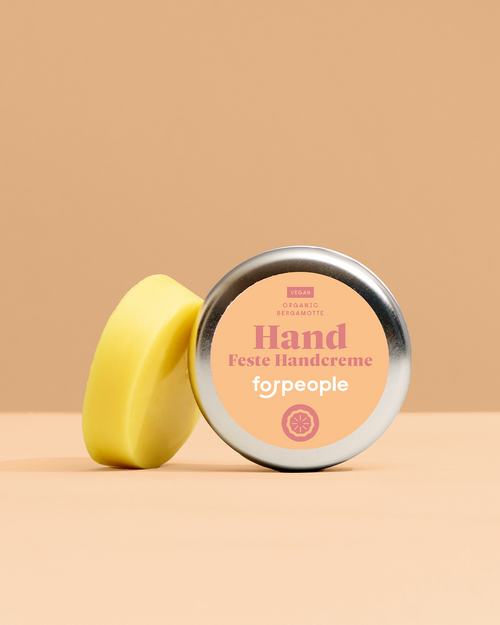
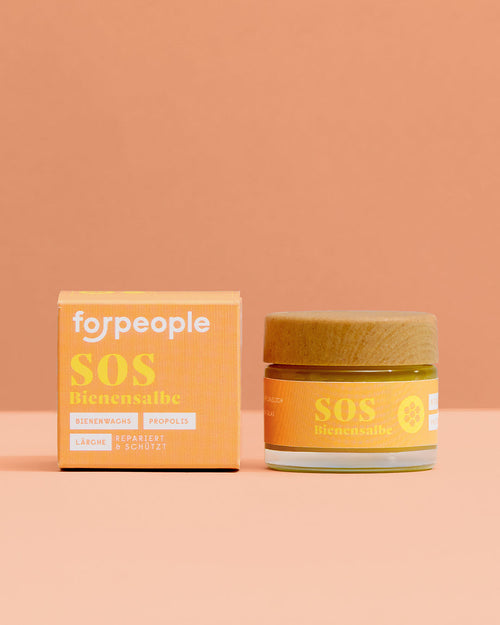
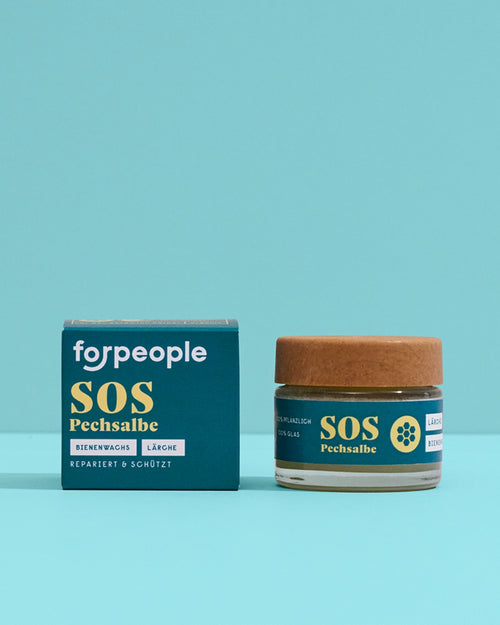
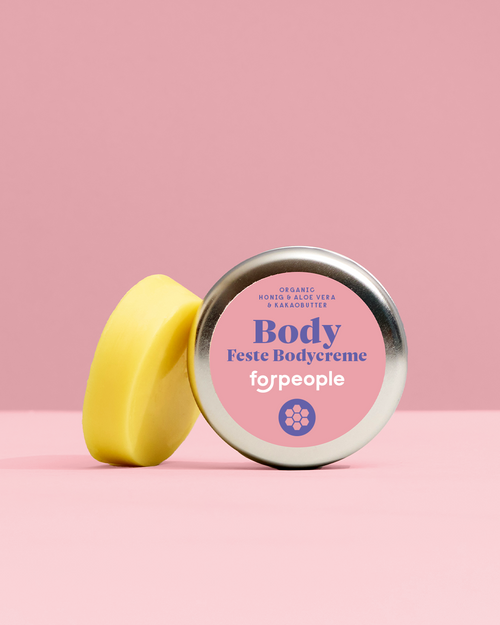
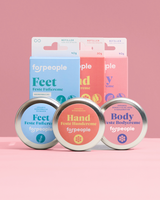
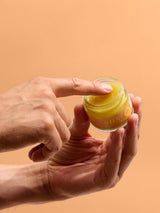
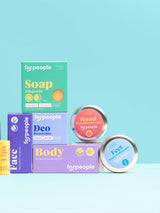
According to their INCI, our solid creams and salves contain no mineral oil; they are made of plant oils, in some cases plant butter, and beeswax or candelilla wax. The Solid Hand Cream - Beeswax (30 g, €9.90) contains beeswax, olive and sunflower oil plus St. John's wort and aloe extract; the vegan Solid Vegan Hand Cream - Bergamot (30 g, €9.90) contains candelilla wax, jojoba, olive and hemp oil, shea butter and lemon and bergamot oil. Softer options are the Beeswax Salve Larch & Mandarin in a Glass Jar (50 g, €12.90) with olive, almond and castor oil, beeswax, larch resin, propolis and essential oils, and the SOS Pitch Salve - Larch Resin in a Glass Jar (50 g, €16.90) made of olive oil, larch resin and beeswax. If you are sensitive to resin or propolis, read Allergy to tree resin, colophony or propolis? first. For the body there is the Solid Body Butter - Beeswax & Aloe Vera (40 g, €9.90). More on this: Water-free cosmetics · What does organic mean for hand cream? · How hand cream tests measure · Occlusion and TEWL
Sources
- Bundesinstitut für Risikobewertung (2018): Hochraffinierte Mineralöle in Kosmetika: Gesundheitliche Risiken sind nach derzeitigem Kenntnisstand nicht zu erwarten. Aktualisierte Stellungnahme Nr. 008/2018 vom 27. Februar 2018. https://doi.org/10.17590/20180219-123914
- European Parliament and Council (2009): Regulation (EC) No 1223/2009 on cosmetic products, Art. 19 and Annex II. OJ L 342: 59. https://eur-lex.europa.eu/eli/reg/2009/1223/oj
- EFSA Panel on Contaminants in the Food Chain (CONTAM), Schrenk D, Bignami M, Bodin L et al. (2023): Update of the risk assessment of mineral oil hydrocarbons in food. EFSA J 21(9): e08215. https://doi.org/10.2903/j.efsa.2023.8215
- Petry T, Bury D, Fautz R, Hauser M, Huber B, Markowetz A et al. (2017): Review of data on the dermal penetration of mineral oils and waxes used in cosmetic applications. Toxicol Lett 280: 70–78. https://doi.org/10.1016/j.toxlet.2017.07.899
- Öko-Test (2025): Handcremes im Test: Bekannte Marken enttäuschen. oekotest.de, 22.10.2025, sections „Testverfahren“ and „Bewertungslegende“. https://www.oekotest.de/kosmetik-wellness/handcremes-im-test-bekannte-marken-enttauschen_15126_1.html
- European Commission (2013): Commission Regulation (EU) No 655/2013 laying down common criteria for the justification of claims used in relation to cosmetic products, Annex. OJ L 190: 31. https://eur-lex.europa.eu/eli/reg/2013/655/oj
- NATRUE (2021): NATRUE Label criteria: requirements to be met by natural and organic cosmetics, Version 3.9, section 3.1. https://natrue.org/uploads/2025/09/EN-NATRUE-Label_Requirements_v3.9-final-version-1.pdf