









What happens when oil goes rancid
Plant oils oxidise in two ways: through autoxidation with oxygen from the air and through light-dependent oxidation. In both cases, hydroperoxides form first. They break down further into substances that cause the typical off-smell, and the quality of the oil drops. Autoxidation is accelerated by, among other things, free fatty acids, metals such as iron and components already damaged by heat. Temperature, light, oxygen, processing and fatty acid composition determine how stable an oil is (Choe & Min 2006).
The more double bonds a fatty acid has, the more easily oxygen attacks it. Monounsaturated oleic acid is comparatively robust, doubly unsaturated linoleic acid more sensitive and triply unsaturated linolenic acid the most sensitive.
Which oils age quickly and which slowly
| Oil | Characteristic | Sensitivity |
|---|---|---|
| Rosehip seed oil (wild rose seed oil) | cold-pressed rosehip seed oils are rich in linolenic acid (Grajzer et al. 2015) | high |
| Borage, hemp seed, safflower oil | many polyunsaturated fatty acids | high |
| Almond oil, argan oil | a lot of oleic acid, plus linoleic acid | medium |
| Olive oil | mostly oleic acid | rather low |
| Jojoba oil | around 98% wax esters, with tocopherols when unrefined; high oxidative stability (Gad et al. 2021) | low |
The table is a qualitative classification. Natural companion substances shift the picture: despite their high linolenic acid content, the rosehip seed oils studied were comparatively well protected, which the authors attribute to their antioxidants such as tocopherols and carotenoids (Grajzer et al. 2015). For jojoba oil: bleached or refined oil loses these antioxidants and with them part of its stability (Gad et al. 2021). More in Jojoba oil: why it is a liquid wax.
How to recognise rancid oil
- Smell: the most reliable sign. Smell the oil consciously once right after opening, so you have a comparison. Rancid smells sharp, musty, like cardboard, old nuts, oil paint or modelling clay.
- Skin feel: the oil absorbs less well, feels tacky or leaves a sticky film.
- Colour and clarity: clearly darker or cloudier than at the start. Slight cloudiness caused by cold, on the other hand, is harmless and disappears at room temperature.
- Date: the open jar symbol (PAO) gives the months after opening; see Cosmetics shelf life and the PAO symbol. It does not replace your nose, though: a badly stored oil can turn earlier.
In the lab, the state of oxidation is measured, among other ways, by the peroxide value, the amount of hydroperoxides. Food law shows what limits look like: extra virgin olive oil may have a peroxide value of at most 20 milliequivalents of oxygen per kilogram (Delegated Regulation (EU) 2022/2104, Annex I). You cannot measure this at home; there, smell remains the best test.
Oils with essential oils: oxidation affects the scent too
Many face and body oils contain essential oils. Their components also change through heat, light and oxygen (Turek & Stintzing 2013). Terpenes such as limonene and linalool form hydroperoxides in air. According to a review, such oxidised terpenes are a common cause of contact allergy in the population (Karlberg & Lepoittevin 2021). That is one more reason to keep scented oils tightly closed and not to take years to use them up. Background: Essential oils and fragrance allergens.
Store it right, keep it fresh longer
- Keep it dark: brown or violet glass protects, but the bottle still does not belong on a sunny windowsill.
- Keep it cool: not next to the radiator or cooker, and not in the car. Very sensitive oils such as rosehip seed oil can go into the fridge after opening.
- Keep air out: close the cap or dropper right away. The emptier the bottle, the more air it holds; small bottles make sense for sensitive oils.
- Do not get water into the bottle, and do not touch the dropper with wet fingers.
- When mixing your own products, only use fresh oils and date the mixture; see Making solid cream yourself.
Tocopherol (vitamin E) or rosemary extract is added to oils to slow down oxidation. Depending on the oil, however, tocopherols can act both as protectors and as promoters (Choe & Min 2006). An additive is therefore no excuse for poor storage. How heat changes solid products is explained in Storing solid cosmetics.
Frequently asked questions
Can I still put rancid oil on my skin?
We advise against it. Rancid oil contains breakdown products instead of fresh fats, smells unpleasant and is no longer a care oil. Throw it away.
How long does an opened skin oil last?
That depends on the oil and on how it is stored. Go by the PAO symbol and your nose. Use up sensitive oils such as rosehip seed oil sooner than jojoba oil.
Is cloudy oil rancid?
Not necessarily. Some oils turn cloudy in the cold and clear again at room temperature. What counts is the smell.
Does the fridge help?
Yes, cold slows down oxidation. Take the oil out briefly before use so that it becomes liquid.
Can a solid cream go rancid too?
Yes, because it consists of oils and butter. If it smells clearly different from when you opened it, stop using it.
At forpeople
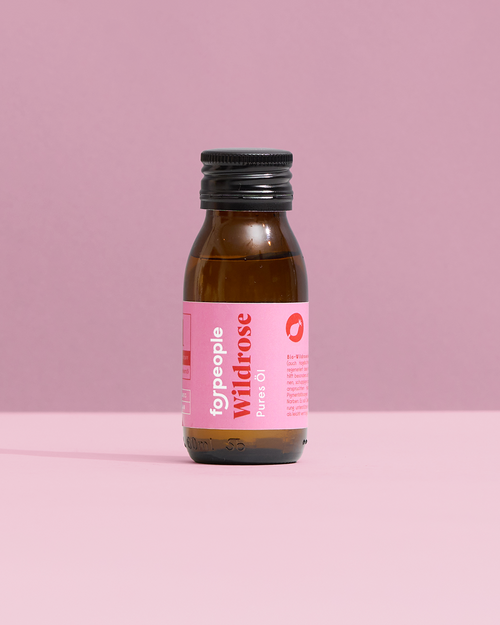
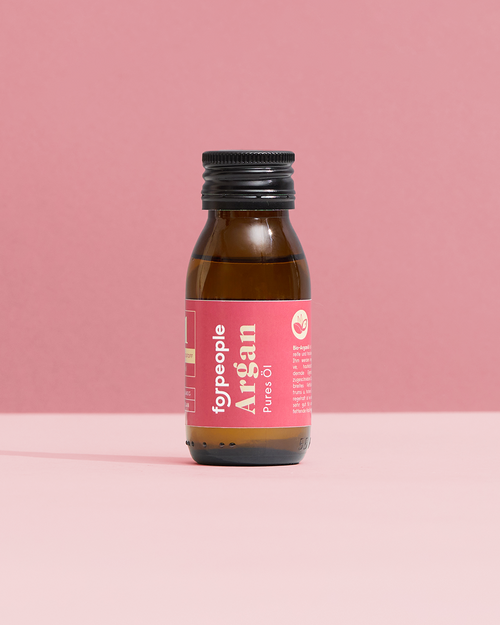
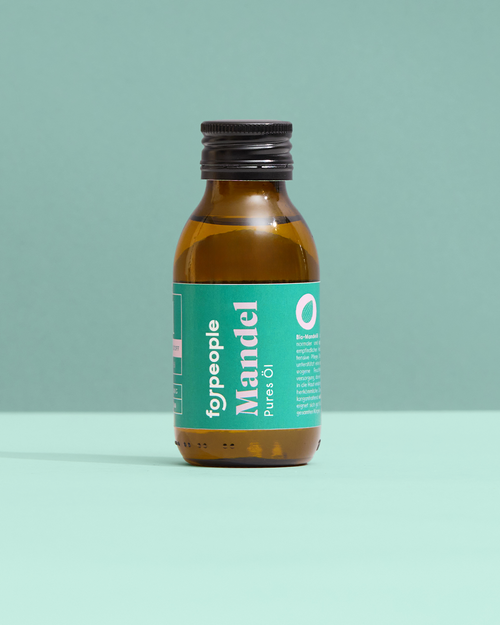
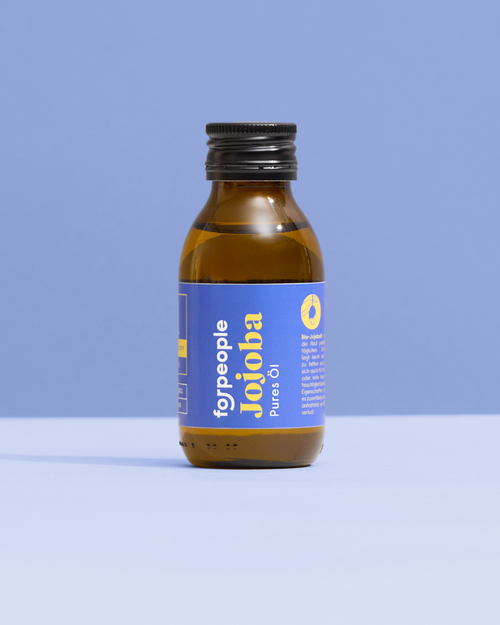
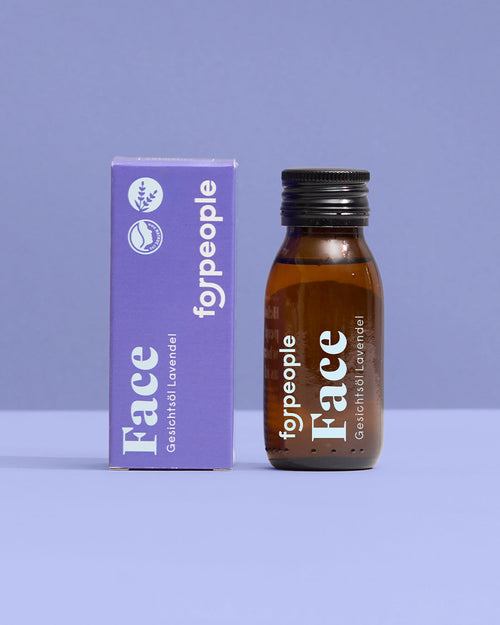
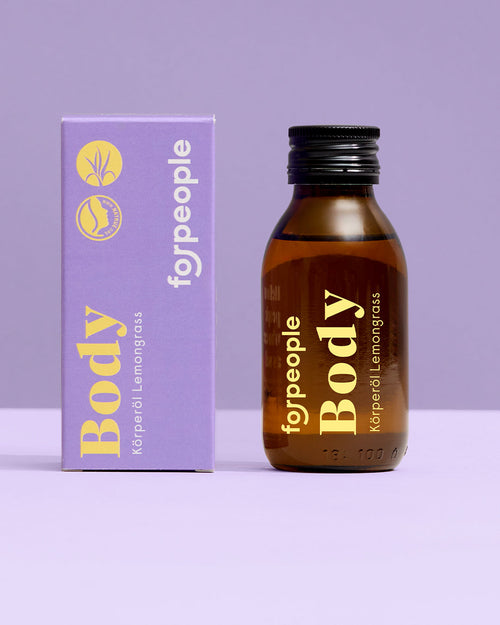
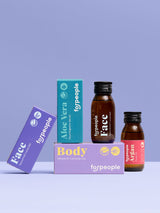
Our pure oils are cold-pressed and, according to their INCI, contain no additives. Wild Rose Seed Oil - pure (50 ml, €19.90) is the most sensitive of them and should be kept cool and dark. Argan Oil - pure (50 ml, €19.90) and Almond Oil - pure (100 ml, €14.90) are in the middle, Jojoba Oil - pure (100 ml, €16.90) is the most stable. Face Oil - Lavender (50 ml, €21.90) contains argan, rosehip and jojoba oil as well as borage and hemp seed oil and lavender oil; Body Oil - Lemongrass (100 ml, €16.90) is based on sesame and safflower oil with lemongrass oil. For both: close them tightly and keep them out of the sun. More on this: Body oil or body butter · Reading an INCI list · Homemade cream: shelf life · Resin and propolis: allergy notes
Sources
- Choe E, Min DB (2006): Mechanisms and factors for edible oil oxidation. Compr Rev Food Sci Food Saf 5(4): 169–186. https://doi.org/10.1111/j.1541-4337.2006.00009.x
- Grajzer M, Prescha A, Korzonek K, Wojakowska A, Dziadas M, Kulma A et al. (2015): Characteristics of rose hip (Rosa canina L.) cold-pressed oil and its oxidative stability studied by the differential scanning calorimetry method. Food Chem 188: 459–466. https://doi.org/10.1016/j.foodchem.2015.05.034
- Gad HA, Roberts A, Hamzi SH, Gad HA, Touiss I, Altyar AE et al. (2021): Jojoba Oil: An Updated Comprehensive Review on Chemistry, Pharmaceutical Uses, and Toxicity. Polymers (Basel) 13(11): 1711. https://doi.org/10.3390/polym13111711
- Europäische Kommission (2022): Delegierte Verordnung (EU) 2022/2104 zur Ergänzung der Verordnung (EU) Nr. 1308/2013 hinsichtlich der Vermarktungsnormen für Olivenöl, Anhang I. ABl. L 284: 1. https://eur-lex.europa.eu/eli/reg_del/2022/2104/oj
- Karlberg AT, Lepoittevin JP (2021): One hundred years of allergic contact dermatitis due to oxidized terpenes: What we can learn from old research on turpentine allergy. Contact Dermatitis 85(6): 627–636. https://doi.org/10.1111/cod.13962
- Turek C, Stintzing FC (2013): Stability of Essential Oils: A Review. Compr Rev Food Sci Food Saf 12(1): 40–53. https://doi.org/10.1111/1541-4337.12006