


Why water determines shelf life
Microorganisms need freely available water to multiply. A review of cosmetic preservation calls water, usually the main ingredient of creams, an ideal growth factor for microorganisms (Halla et al. 2018). The EU guidelines on the safety report explicitly list water-based mixtures and plant or animal raw materials among the substances that are highly susceptible to microbial growth (Implementing Decision 2013/674/EU, No. 3.3.1). A typical kitchen cream ticks both boxes: it consists largely of water or plant water and contains plant raw materials.
That is why shop-bought creams containing water have a preservative whose effectiveness has been tested. More in Preservation and water in cosmetics. Why oil and water also need an emulsifier is explained in Emulsifiers in cosmetics.
Where the germs in your kitchen come from
Specialists distinguish two routes: contamination during manufacture and contamination during use (Halla et al. 2018). Both happen more easily at home than in production with a hygiene plan.
- Raw materials: hydrosols, aloe juice, herbal extracts and tap water bring germs with them. Boiled or distilled water lowers the starting load but does not protect the finished cream.
- Tools: whisks, glasses and tins that are not clean and dry.
- Fingers: every dip into the jar brings in new germs. The review describes jars and bottles as more prone to contamination than closed dispensers such as airless pumps (Halla et al. 2018).
- Warmth: in a warm bathroom, germs multiply faster than in the fridge.
What manufacturers test, and what is missing at home
Whether a preservative is sufficient is shown by a challenge test: the product is deliberately inoculated with germs, and the lab tracks whether their number drops enough. The standard for this is ISO 11930:2019. For products in which germs can hardly grow, such as water-free ones, ISO 29621:2017 describes how a low microbiological risk is justified. The EU guidelines give examples of low risk, including products based on organic solvents or with a very high or low pH (Implementing Decision 2013/674/EU, No. 3.3.2).
| Homemade | Contains water? | Main risk | Shelf life (rough) |
|---|---|---|---|
| Cream or lotion with water, no preservative | yes | germs | days in the fridge, at most a few weeks; not predictable |
| Cream with water and preservative | yes | germs, if dosage or pH are wrong | longer, but uncertain without a challenge test |
| Fresh aloe gel from the leaf | yes, around 99% | germs, breakdown | very short, see Making aloe vera gel yourself |
| Salve, balm, solid cream of wax and oil | no | oxidation of the oils | months, as long as the oils are fresh and no water gets in |
| Pure plant oil | no | oxidation | depends on the oil; see How to tell if a skin oil is rancid |
Vitamin E and grapefruit seed extract do not preserve
Many recipes say a few drops of vitamin E or grapefruit seed extract will make a cream keep. That is not quite right.
- Vitamin E (tocopherol) is listed in the EU database of cosmetic ingredients as an antioxidant, not as a preservative (CosIng). It can protect oils from going rancid, but it does nothing against germs in the water phase.
- Grapefruit seed extract is listed in CosIng with the functions fragrance and perfuming (CosIng). Analyses of commercial grapefruit seed extracts found synthetic disinfectants such as benzethonium chloride or benzalkonium chloride in most of the samples (Ganzera et al. 2006; Avula et al. 2007). The antimicrobial effect of such products therefore often did not come from the grapefruit.
- Essential oils smell nice, but at usual doses they are not a reliable preservative. At higher amounts, the risk of skin reactions increases; more in Essential oils and fragrance allergens.
There are preservatives approved in the EU that hobby makers can buy, such as sorbic or benzoic acid. They work best in the acidic range (Halla et al. 2018). Without measuring the pH and running a challenge test, however, you do not know whether your cream is adequately protected.
How to make water-based DIY safer
- Only make as much as you will use within a few days.
- Clean tools and containers thoroughly, rinse with hot water and let them dry completely.
- Take the cream out with a clean spatula, not with your fingers.
- Keep it in the fridge and write the date you made it on the container.
- Throw it away as soon as the smell, colour or texture changes, water separates or spots appear on the surface. Do not scrape it off and keep using it.
If you want something that keeps, make it water-free: wax, butter and oil. The basic recipe is in Making solid cream yourself. Even then: take it out with dry hands, see Hygiene with water-free cosmetics. Homemade products are meant for your own use; anyone who sells cosmetics or supplies them commercially needs a safety assessment under the EU Cosmetics Regulation (Regulation (EC) No 1223/2009, Art. 10).
Frequently asked questions
How long does homemade cream last in the fridge?
Without a preservative and with water in it, only a short time: a few days, at most a few weeks. There is no reliable number, because the germ load and hygiene are different every time.
Why does my cream go mouldy so quickly?
Because it contains water and no effective preservative. Even a few germs from raw materials, air or fingers multiply in the water phase.
Is it enough to use distilled water?
It lowers the germ count at the start, but it does not stop germs from getting in later and growing.
Is a cream without preservatives healthier?
Not automatically. A water-based cream without preservation can spoil before you notice. A cream only gets by without preservation in a sensible way if it contains no water.
How long does a homemade water-free salve last?
As long as the oils stay fresh, often many months. If it smells rancid, it is past its best.
At forpeople
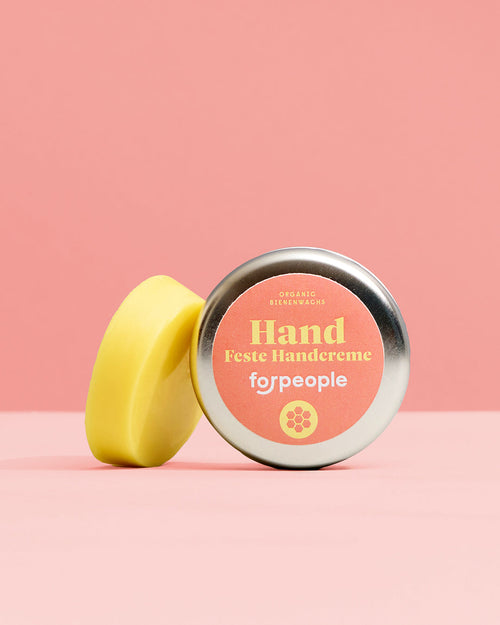
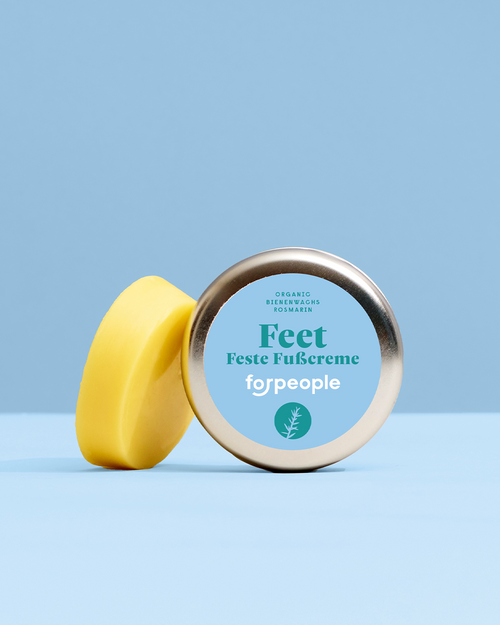
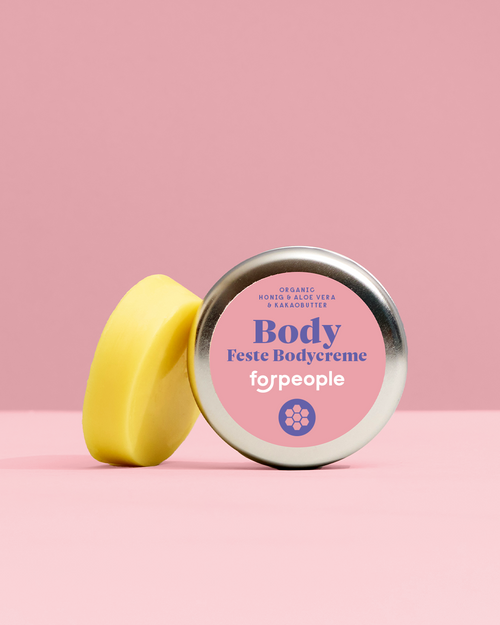
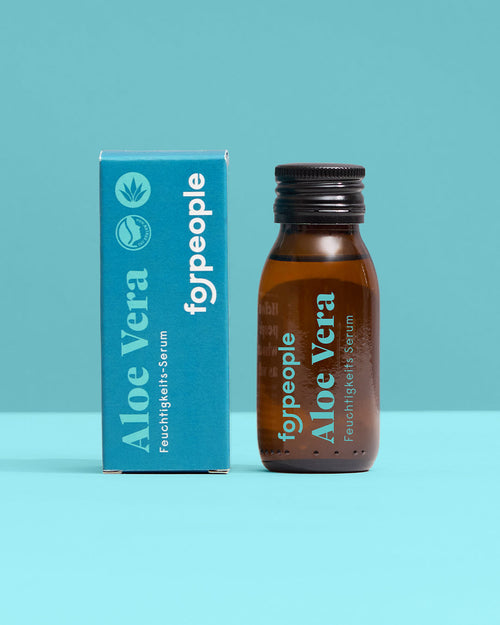
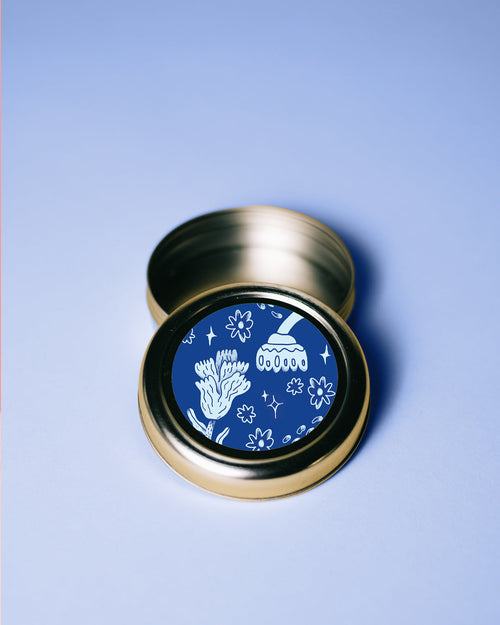
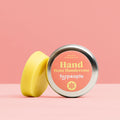
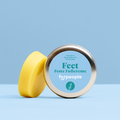
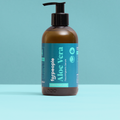
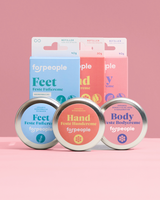
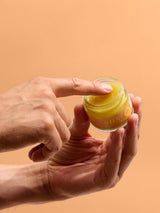
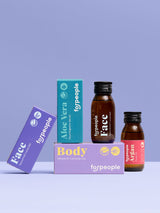
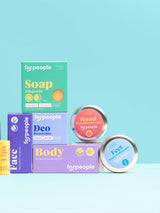
If you would rather not make it yourself: our solid creams contain no water and therefore no preservative either, for example the Solid Hand Cream - Beeswax (30 g, €9.90), the Solid Foot Cream – Rosemary & Sage (40 g, €9.90) and the Solid Body Butter - Beeswax & Aloe Vera (40 g, €9.90). The Aloe Vera Serum 99.6% (50 ml, €9.90) is different: it consists of aloe juice and is therefore almost entirely water. According to its INCI, it contains citric acid as well as potassium sorbate and sodium benzoate as preservatives. For your own water-free recipes there is the Empty Cosmetic Tin (€3.90). More on this: Water-free cosmetics · Cosmetics shelf life and the PAO symbol · Aloe vera instead of water · Reading an INCI list
Sources
- Halla N, Fernandes IP, Heleno SA, Costa P, Boucherit-Otmani Z, Boucherit K et al. (2018): Cosmetics Preservation: A Review on Present Strategies. Molecules 23(7): 1571. https://doi.org/10.3390/molecules23071571
- Europäische Kommission (2013): Durchführungsbeschluss 2013/674/EU über Leitlinien zu Anhang I der Verordnung (EG) Nr. 1223/2009 über kosmetische Mittel, Teil A Nr. 3.3.1 und 3.3.2. ABl. L 315: 82. https://eur-lex.europa.eu/eli/dec_impl/2013/674/oj
- ISO 11930:2019: Cosmetics – Microbiology – Evaluation of the antimicrobial protection of a cosmetic product. https://www.evs.ee/en/iso-11930-2019
- ISO 29621:2017: Cosmetics – Microbiology – Guidelines for the risk assessment and identification of microbiologically low-risk products. https://www.evs.ee/en/iso-29621-2017
- Ganzera M, Aberham A, Stuppner H (2006): Development and validation of an HPLC/UV/MS method for simultaneous determination of 18 preservatives in grapefruit seed extract. J Agric Food Chem 54(11): 3768–3772. https://doi.org/10.1021/jf060543d
- Avula B, Dentali S, Khan IA (2007): Simultaneous identification and quantification by liquid chromatography of benzethonium chloride, methyl paraben and triclosan in commercial products labeled as grapefruit seed extract. Pharmazie 62(8): 593–596. https://pubmed.ncbi.nlm.nih.gov/17867553/
- Europäische Kommission: CosIng – Datenbank kosmetischer Inhaltsstoffe, Einträge TOCOPHEROL und CITRUS PARADISI SEED EXTRACT. https://ec.europa.eu/growth/tools-databases/cosing/