


Which plant you need
The botanical name of aloe vera is Aloe vera (L.) Burm.f., synonymous with Aloe barbadensis Miller. It is a succulent that stores water in its thick leaves (Hamman 2008). In shops and as houseplants, however, there are many other aloe species and hybrids that look similar. Aloe vera is the most commercially used species (Hamman 2008); Aloe arborescens and Aloe ferox, among others, have also been assessed as cosmetic ingredients (CIR 2007). If you are not sure which species you have, keep the plant as a decorative plant.
Ideally, harvest a strong outer leaf from an older plant and cut it off close to the stem. The plant grows new leaves from the centre.
How the leaf is built
| Layer | What it contains | For your gel |
|---|---|---|
| Green rind | firm leaf skin with vascular bundles | remove |
| Yellow sap (latex) just under the rind | bitter yellow sap with anthraquinones such as aloin | let it drain, rinse it off |
| Clear inner gel | around 99.5% water, plus 0.5 to 1% solids such as polysaccharides, minerals, organic acids | use |
The figures on water content and solids come from a review (Hamman 2008). The yellow sap forms in cells directly beneath the leaf skin. It contains anthraquinones, which are considered phototoxic and irritate the gastrointestinal tract. For aloe raw materials in cosmetics, the industry has therefore set a limit of 50 ppm anthraquinones or lower (CIR 2007). The international aloe association describes how manufacturers remove the sap during processing: for inner leaf by peeling and rinsing, for whole leaf by filtering through activated charcoal (IASC). That is exactly what you do by hand at home. More on the processes in Aloe inner leaf or whole leaf.
Step by step
- Clean and dry your hands, knife, chopping board and container thoroughly.
- Cut off the leaf and stand it cut side down in a glass for 10 to 15 minutes. The yellow sap drains out.
- Wash the leaf, cut off the serrated edges, then peel off the upper side of the leaf flat.
- Scoop out the clear gel with a spoon. Leave any green or yellow bits behind.
- Rinse the gel briefly under running water until it is no longer yellowish.
- Blend it with a hand blender. If you prefer it smoother, pass it through a fine sieve.
- Fill it straight into a clean jar, label it and put it in the fridge, or freeze it in portions.
Test the gel on a small area, such as the crook of your arm, before using it for the first time. If your skin reacts, do not use it any further. Homemade aloe gel is only meant for external use on intact skin and not for eating or drinking.
Why it spoils so quickly
Fresh gel is practically water with a few dissolved plant substances. Water is an ideal growth factor for microorganisms (Halla et al. 2018), and plant raw materials are considered particularly susceptible in cosmetics. On top of that, the polysaccharides in aloe gel are not stable, especially under heat, acid and enzyme activity (Hamman 2008). After a while the gel becomes runnier, changes colour or smells sour.
| Homemade gel | Aloe product from a shop | |
|---|---|---|
| Yellow sap | rinsed off by hand, residue unknown | removed during processing, limit checked |
| Preservation | none | present, effectiveness tested |
| Shelf life | a few days in the fridge, longer frozen | as stated on the label |
| Germ load | unknown | checked as part of the safety assessment |
In practice: only make small amounts at a time, for example freeze it in an ice cube tray, thaw one cube at a time and use it up the same day. Do not refreeze thawed gel. If the gel smells sour or looks cloudy, throw it away. Vitamin E or grapefruit seed extract will not make it keep; why is explained in How long does homemade cream last?.
Aloin and food law
For food, the EU banned preparations from the leaves of aloe species that contain hydroxyanthracene derivatives in 2021. This was based on the assessment by the European Food Safety Authority, which could not establish a safe daily intake for these substances. The regulation also notes that these substances can be removed down to traces by filtration processes (Regulation (EU) 2021/468). This rule applies to food, not to cosmetics. But it shows why manufacturers remove the yellow sap and why homemade gel does not belong in smoothies.
Frequently asked questions
How long does homemade aloe vera gel last?
Only a few days in the fridge, because it consists almost entirely of water and contains no preservative. Frozen in small portions, it keeps longer.
What is the yellow sap from the aloe leaf?
It is the latex from the cells beneath the leaf skin. It contains anthraquinones such as aloin and is removed during processing. Let it drain and rinse the gel.
Can I use any aloe from the windowsill?
Only if you know for sure that it is aloe vera (Aloe barbadensis Miller). Many indoor aloes are other species.
Can I mix the gel with oil?
Only in your hand shortly before applying. A mixture made in advance separates without an emulsifier and spoils quickly because of the water.
Why is shop-bought aloe gel sometimes liquid?
Pure aloe gel becomes runny after blending. It usually only stays gel-like with a thickener, which then appears in the INCI.
At forpeople
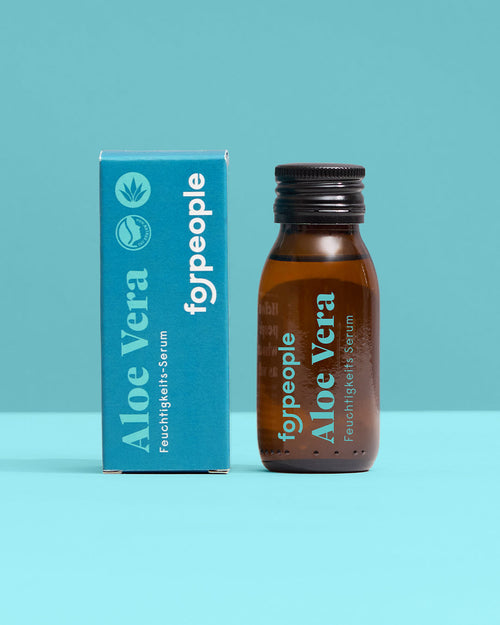
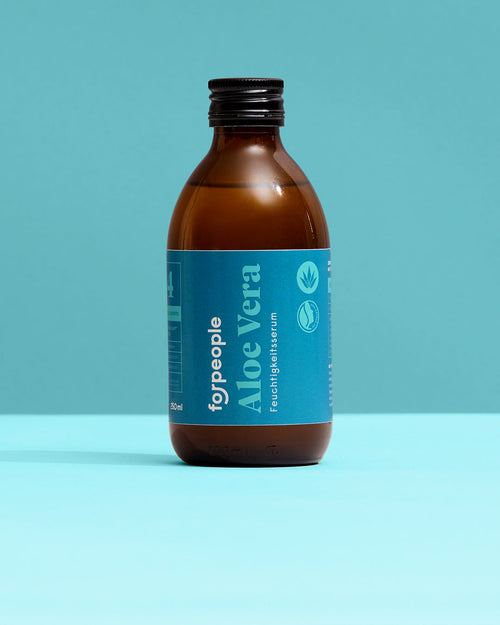
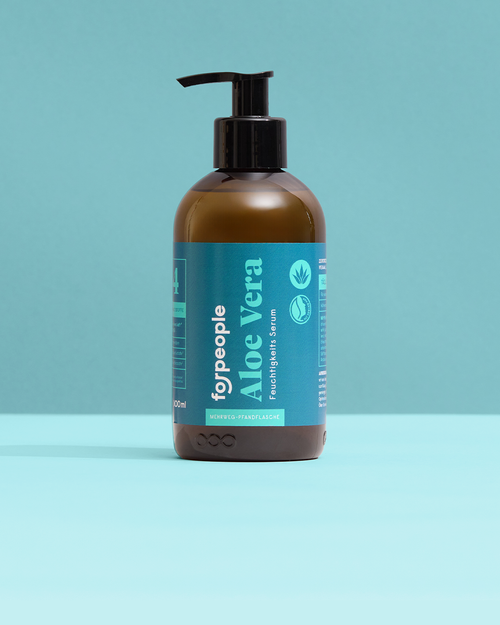
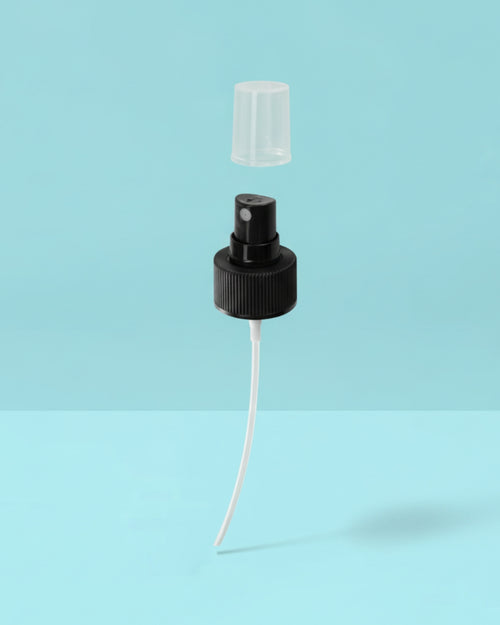
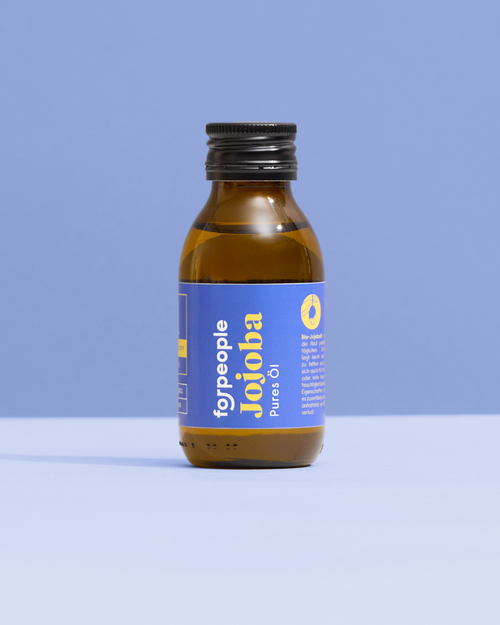
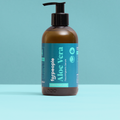
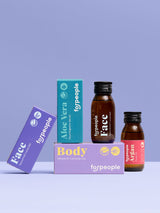
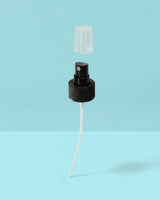
If you would rather not peel and freeze: the Aloe Vera Serum 99.6% (50 ml, €9.90) consists, according to its INCI, of aloe juice, citric acid and potassium sorbate and sodium benzoate as preservatives, without thickeners. Because it contains water, it is preserved; an aloe product without preservation would be just as short-lived as your homemade gel. The serum is also available in 250 ml as Aloe Vera Serum 99.6% (€24.90) and as Aloe Vera Serum 99.6% - Pump Bottle (300 ml, €27.90). For spraying, there is the Atomiser for Your Aloe Vera Serum (€3.90). If you want a care film afterwards, combine it with an oil such as Jojoba Oil - pure (100 ml, €16.90). More on this: Aloe vera serum 99.6%: what's inside? · How to recognise a good aloe vera product · Aloe vera instead of water · Combining aloe serum with oil or cream
Sources
- Hamman JH (2008): Composition and applications of Aloe vera leaf gel. Molecules 13(8): 1599–1616. https://doi.org/10.3390/molecules13081599
- Cosmetic Ingredient Review Expert Panel (2007): Final report on the safety assessment of Aloe Andongensis Extract, Aloe Andongensis Leaf Juice, Aloe Arborescens Leaf Extract, Aloe Arborescens Leaf Juice, Aloe Arborescens Leaf Protoplasts, Aloe Barbadensis Flower Extract, Aloe Barbadensis Leaf, Aloe Barbadensis Leaf Extract, Aloe Barbadensis Leaf Juice, Aloe Barbadensis Leaf Polysaccharides, Aloe Barbadensis Leaf Water, Aloe Ferox Leaf Extract, Aloe Ferox Leaf Juice, and Aloe Ferox Leaf Juice Extract. Int J Toxicol 26 Suppl 2: 1–50. https://doi.org/10.1080/10915810701351186
- Europäische Kommission (2021): Verordnung (EU) 2021/468 zur Änderung des Anhangs III der Verordnung (EG) Nr. 1925/2006 in Bezug auf botanische Arten, die Hydroxyanthracen-Derivate enthalten. ABl. L 96: 6. https://eur-lex.europa.eu/eli/reg/2021/468/oj
- International Aloe Science Council: Aloe FAQs (Abschnitte Latex und Verarbeitung). https://www.iasc.org/aloe_faqs
- Halla N, Fernandes IP, Heleno SA, Costa P, Boucherit-Otmani Z, Boucherit K et al. (2018): Cosmetics Preservation: A Review on Present Strategies. Molecules 23(7): 1571. https://doi.org/10.3390/molecules23071571