


What a percentage tells you – and what it doesn’t
A claim such as “99% aloe” is voluntary. The EU Cosmetics Regulation does not require percentages, only a list of ingredients. Anyone advertising an ingredient must stay truthful under the common criteria for cosmetic claims, though: an ingredient that is advertised must actually be present, and the properties of one ingredient must not be attributed to the whole product if that isn’t the case (Regulation (EU) No 655/2013).
The percentage refers to the aloe raw material, usually the juice. It doesn’t tell you how many plant compounds that juice contains. A study of 15 drinks containing aloe shows this: even among the eight products labelled as containing more than 99% aloe, the acemannan content varied widely. Only three had more than 160 mg per 100 g, four had less than 35 mg. The authors suspect processing steps such as pasteurisation as the cause and point out that manufacturers are not required to state the content (Comas-Serra et al. 2023). The study looked at drinks; it still shows that a percentage describes the amount of the raw material, not its quality.
Reading the INCI list: position and name
In the EU, ingredients are listed in descending order of weight at the time they are added. Ingredients below 1% may follow in any order (Regulation (EC) No 1223/2009, Art. 19). If aloe only comes after water, glycerin and thickeners, it isn’t the main ingredient. How to read a list as a whole is explained on the page How to read an INCI list.
| How it appears on the INCI list | What it is | What it tells you |
|---|---|---|
| Aloe Barbadensis Leaf Juice in first place | liquid juice from the leaf | aloe is the main ingredient |
| Aqua, followed by Aloe Barbadensis Leaf Juice Powder | dried juice, mixed with water again | the amount of aloe depends on the mixing ratio, which isn’t on the label |
| Aloe Barbadensis Leaf Extract further down | an extract from the leaf | aloe is one ingredient among many, usually in a small amount |
| Aloe Barbadensis Leaf Water | a separate aloe raw material with its own name | not the same as juice; ask what exactly was used |
| Thickeners such as Xanthan Gum or Carbomer | turn liquid juice into a gel | not a flaw, but a sign that the product isn’t pure juice |
A safety assessment by the Cosmetic Ingredient Review lists Leaf Juice, Leaf Extract, Leaf Water and Leaf Polysaccharides, among others, as separate cosmetic ingredients (Cosmetic Ingredient Review Expert Panel 2007).
Fresh juice or reconstituted powder
Aloe juice is often dried because powder is easier to store and transport. For a product it is later mixed with water again. That is permitted and not automatically worse. What matters is how gently the leaves were harvested, processed and dried. A review describes how the composition and structure of aloe polysaccharides depend on climate, soil, post-harvest treatment and processing (Minjares-Fuentes et al. 2018).
For you as a buyer, this means: if water (Aqua) comes before the aloe powder, the product is reconstituted. If Leaf Juice is in first place, liquid juice was used according to the label. Whether that juice was concentrated beforehand isn’t shown on the list. If in doubt, ask the manufacturer.
Acemannan: a quality marker from the lab
The gel of the aloe leaf contains two main groups of polysaccharides: an acetylated, mannose-rich storage polysaccharide called acemannan, and a polymer rich in galacturonic acid from the cell walls. Many of the properties attributed to aloe are linked to acemannan in the scientific literature (Minjares-Fuentes et al. 2018). That’s why it serves as a measure of raw material quality.
The International Aloe Science Council (IASC), an industry association, has a quality standard for aloe raw materials. Among other things, it requires at least 5% acetylated mannan by dry weight, limits contaminants, requires added maltodextrin to be declared, and names malic acid and glucose as components that must be present. Importantly, the standard explicitly applies to raw materials, not to finished products (IASC). Products with the IASC seal are listed on the association’s website. A seal is voluntary, so not having one says nothing bad about a product.
You can’t see acemannan on the label. If the value matters to you, ask the manufacturer for an analysis of the raw material.
Preservation, aloin and shelf life
Aloe juice consists mostly of water. Every cosmetic product that contains water therefore needs preservation, otherwise microorganisms such as yeast or mould can grow after opening. Potassium sorbate and sodium benzoate are common, often together with citric acid, because they work best in a slightly acidic range. Why that is so is explained under Preservation and water in cosmetics; how long an opened product lasts under Cosmetics shelf life and the PAO symbol. A water-based aloe product without any recognisable preservation is a reason to ask.
A second point is how the leaf is processed. Directly beneath the green leaf skin, the plant produces a yellow, bitter sap containing anthraquinones such as aloin. Cosmetics use the inner gel. The Cosmetic Ingredient Review recommends that the anthraquinone content of aloe ingredients used in cosmetics should not exceed 50 ppm (Cosmetic Ingredient Review Expert Panel 2007). What “inner leaf” and “whole leaf” mean is explained on the page Aloe inner leaf, whole leaf and aloin.
Organic labelling on aloe cosmetics
The EU organic regulation applies to agricultural products, processed food, feed and a list of other products such as beeswax and essential oils. Cosmetic products as finished products are not included (Regulation (EU) 2018/848, Art. 2 and Annex I). The aloe plant as an agricultural product, on the other hand, can be grown organically and certified as such.
In practice, you recognise organic ingredients by a footnote: an asterisk after the ingredient and, below the list, “from certified organic farming”. Seals for the whole product are awarded by private standards with their own rules. What these standards check is explained under Natural cosmetics standards explained.
Checklist for shopping
- Position: Aloe Barbadensis Leaf Juice is in first place.
- Content: The aloe content is stated and matches its position on the list.
- Processing: You can tell whether juice or powder with water was used.
- Short list: Few additives, and it’s clear what they are for.
- Preservation: In a water-based product, it is clearly declared.
- Organic: Organic ingredients are marked with a footnote.
- Origin and analysis: The manufacturer names the origin and can give information about the raw material on request.
Frequently asked questions
Is an aloe gel worse than a liquid aloe serum?
Not in principle. A gel contains a thickener to make it firmer. Check whether aloe is still in first place and how long the list is.
What does “100% aloe” mean on a product that contains water?
Pure aloe juice without preservation would not keep long after opening. Check the INCI list: it has to include every ingredient, including preservatives and acids.
How do I recognise reconstituted aloe powder?
By the combination of Aqua and Aloe Barbadensis Leaf Juice Powder on the INCI list. If water comes first, there is more water than aloe powder.
Does the acemannan content have to be stated?
No. Manufacturers don’t have to state the content of aloe polysaccharides. If you want to know it, ask for an analysis of the raw material.
Is organic aloe better?
Organic describes how the plant is grown, not how much of its compounds the product contains. Processing, freshness and preservation also count for quality.
At forpeople
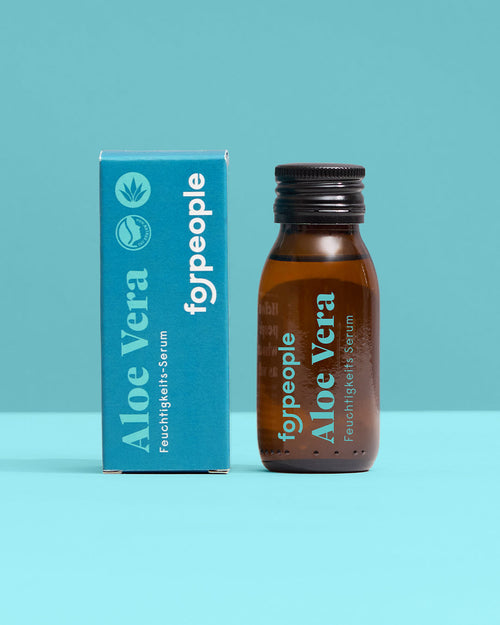
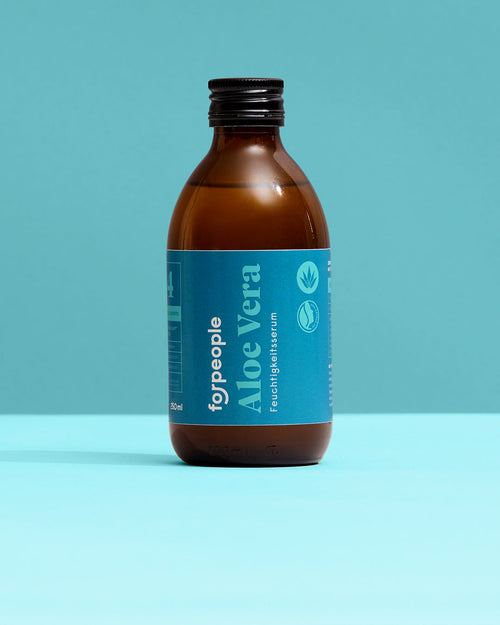
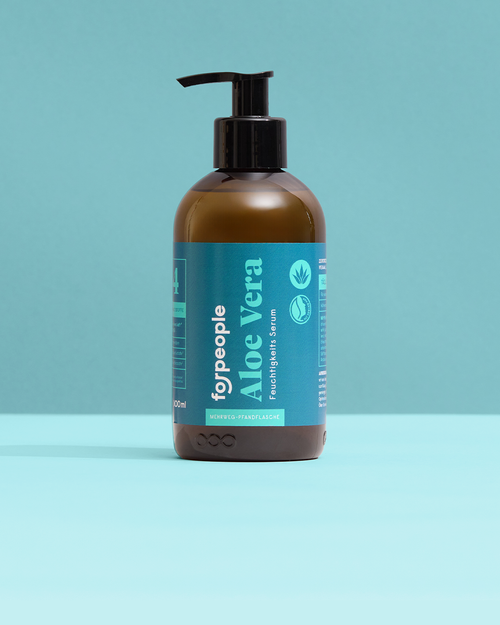
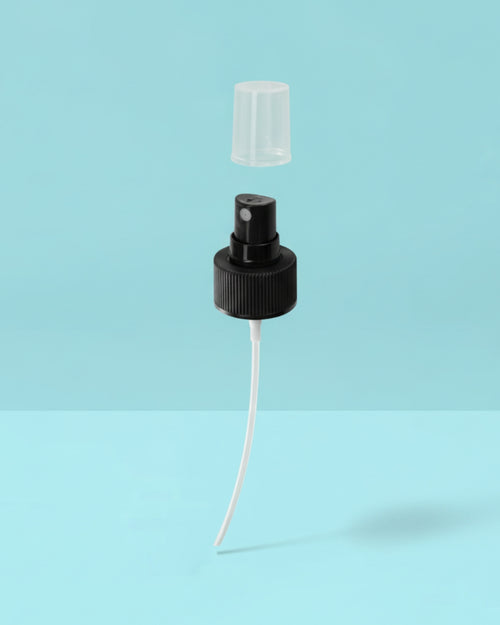
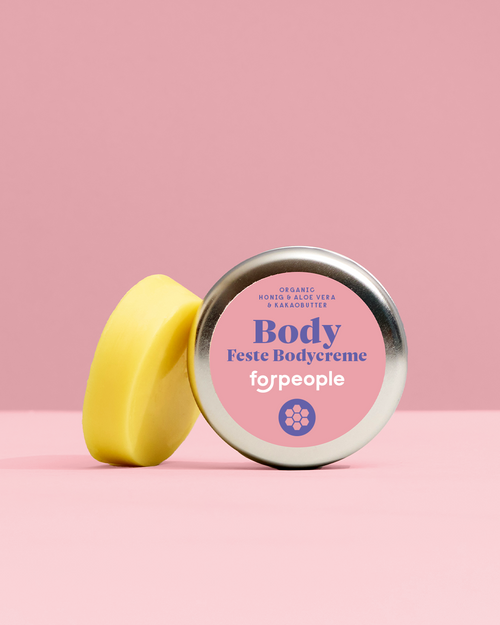
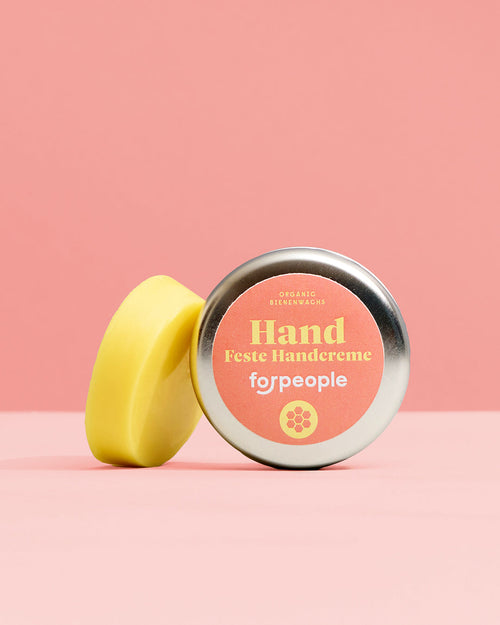
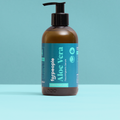
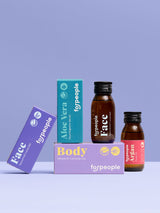
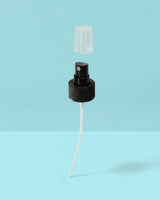
The Aloe Vera Serum 99.6% (50 ml, €9.90) consists of four ingredients according to its ingredient list: Aloe Barbadensis Leaf Juice, Citric Acid, Potassium Sorbate and Sodium Benzoate. According to the product information, it is organic aloe from controlled cultivation in Andalusia, and the juice is not processed into powder. It contains no thickener, which is why the serum is liquid. Because aloe juice contains water, the serum is not a water-free product and contains preservation. The product page does not state an acemannan value. The serum is also available as the Aloe Vera Serum 99.6% with 250 ml (€24.90) and as the Aloe Vera Serum 99.6% - Pump Bottle with 300 ml (€27.90); for spraying, there is the Atomiser for Your Aloe Vera Serum (€3.90). The Solid Body Butter - Beeswax & Aloe Vera and the Solid Hand Cream - Beeswax (€9.90 each) contain aloe extract in a small amount. How to combine the serum with oil or solid cream is explained under Combining aloe serum with oil and cream.
More on this: Aloe vera serum 99.6%: what’s inside? · Aloe instead of water in the formula · Water-free, low-water, anhydrous · Inner leaf, whole leaf and aloin
Sources
- Verordnung (EG) Nr. 1223/2009 des Europäischen Parlaments und des Rates vom 30. November 2009 über kosmetische Mittel, Artikel 19 Absatz 1 Buchstabe g. Amtsblatt der EU L 342: 59. https://eur-lex.europa.eu/eli/reg/2009/1223/oj
- Verordnung (EU) Nr. 655/2013 der Kommission vom 10. Juli 2013 zur Festlegung gemeinsamer Kriterien zur Begründung von Werbeaussagen im Zusammenhang mit kosmetischen Mitteln, Anhang, Abschnitt 2 „Wahrheitstreue“. Amtsblatt der EU L 190: 31. https://eur-lex.europa.eu/eli/reg/2013/655/oj
- Minjares-Fuentes R, Femenia A, Comas-Serra F, Rodríguez-González VM (2018): Compositional and Structural Features of the Main Bioactive Polysaccharides Present in the Aloe vera Plant. Journal of AOAC International 101(6): 1711–1719. https://doi.org/10.5740/jaoacint.18-0119
- Comas-Serra F, Estrada P, Minjares-Fuentes R, Femenia A (2023): Evaluation of Acemannan in Different Commercial Beverages Containing Aloe Vera (Aloe barbadensis Miller) Gel. Gels 9(7): 552. https://doi.org/10.3390/gels9070552
- International Aloe Science Council (IASC): Aloe vera Quality Standard (Rohstoffstandard, vom Vorstand verabschiedet) und Beschreibung des Zertifizierungsprogramms. https://www.iasc.org/program_details
- Cosmetic Ingredient Review Expert Panel (2007): Final report on the safety assessment of Aloe Andongensis Extract, Aloe Andongensis Leaf Juice, Aloe Arborescens Leaf Extract, Aloe Arborescens Leaf Juice, Aloe Arborescens Leaf Protoplasts, Aloe Barbadensis Flower Extract, Aloe Barbadensis Leaf, Aloe Barbadensis Leaf Extract, Aloe Barbadensis Leaf Juice, Aloe Barbadensis Leaf Polysaccharides, Aloe Barbadensis Leaf Water, Aloe Ferox Leaf Extract, Aloe Ferox Leaf Juice, and Aloe Ferox Leaf Juice Extract. International Journal of Toxicology 26 Suppl 2: 1–50. https://doi.org/10.1080/10915810701351186
- Verordnung (EU) 2018/848 des Europäischen Parlaments und des Rates vom 30. Mai 2018 über die ökologische/biologische Produktion und die Kennzeichnung von ökologischen/biologischen Erzeugnissen, Artikel 2 und Anhang I. Amtsblatt der EU L 150: 1. https://eur-lex.europa.eu/eli/reg/2018/848/oj