



Why water-based before oil-based works
Skincare products work roughly on two principles. Humectants bind water in the top layer of the skin. Film formers such as oils, butters and waxes lie on top and slow down evaporation. A review of moisturisers describes that humectants are therefore usually combined with film-forming substances, and that film-forming substances work best when applied to slightly damp skin (Sethi et al. 2016). How the two groups work together is explained in detail under Humectants, occlusives and emollients.
Aloe is one of the water-binding ingredients. In a study with 20 women, creams containing freeze-dried aloe extract increased the water content of the horny layer, but did not change transepidermal water loss. The authors interpret this as a humectant effect (Dal'Belo et al. 2006). The second step closes exactly this gap: plant oils stay in the uppermost layers of the horny layer and reduce water loss there. In a measurement of four plant oils, three of them reduced water loss similarly to paraffin oil; only jojoba oil did not show this effect (Patzelt et al. 2012). What water loss through the skin is, is explained under Occlusion and transepidermal water loss; why jojoba oil is chemically a liquid wax, under Jojoba oil: why it is a liquid wax.
Step by step
- Prepare your skin: Wash your face or hands and only pat them lightly. A little remaining moisture is fine.
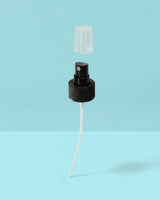
- Apply the serum: Put a small amount into your palm and pat it onto your skin, or spray it on with the atomiser. An almond-sized amount is enough for the face.
- Wait briefly: Let the serum absorb until it no longer runs. Your skin can still feel fresh and slightly damp.
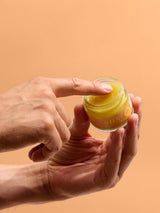
- Oil or solid cream on top: Warm two or three drops of oil between your palms and press them on. Glide the solid cream over your skin until the warmth releases a little, or put it on the back of your hand first and then spread it. More on the technique under How to apply solid cream.
- Let it absorb: After a few minutes, most of it has been absorbed. If your skin is still clearly shiny afterwards, use less oil or cream next time.
You can also rub serum and oil together briefly in your palm and apply them together. That doesn’t create a stable mixture, because water and oil separate again, but it works for immediate use. Never add oil to the serum bottle: the serum has only been assessed in its original composition, and anything you add can bring in germs. More on this under Hygiene with water-free cosmetics.
Which combination for which situation
The following overview is not based on skin types but on body area and occasion. Try out which amount feels good to you.
| Situation | First step | Second step | What to watch |
|---|---|---|---|
| Face in the morning | apply serum thinly | one or two drops of a light oil, for example jojoba oil | little oil so nothing shines; in the sun, sun protection afterwards |
| Face in the evening | serum | two or three drops of face oil | in the evening the layer can be a little richer |
| Hands during the day | serum after washing your hands | solid hand cream, thinly | only as much as keeps your hands from feeling greasy |
| Hands overnight | serum | solid hand cream a little thicker, cotton gloves if needed | the night is time to absorb |
| Feet | serum after a shower or foot bath | solid foot cream, especially on heels and balls of the feet | socks afterwards so nothing slips |
| Body after showering | serum with the atomiser on still damp skin | body butter or body oil | both spread more easily on damp skin |
| Hair | a few sprays of serum into the lengths | one or two drops of oil into the ends | go easy on the oil, or your hair will look heavy |
Whether you use oil or solid cream depends on the area. Oil spreads more easily over large areas and on the face; solid cream stays as a film longer on areas under strain such as hands and heels. You’ll find a comparison under Body oil or body butter; how long such a film lasts, under How long does a care film last?.
Morning and evening
In the morning, your care should absorb quickly so that sun protection, make-up or gloves sit well afterwards. In the evening there is more time. Measurements over the course of the day show that water loss through the skin is higher in the evening and at night than in the morning (Yosipovitch et al. 1998). A slightly richer layer in the evening therefore makes sense.
Typical mistakes
- Too much oil: A few drops are enough. Too much stays on your skin as shine and rubs off on pillows and clothes.
- Wrong order: Serum on top of solid cream spreads poorly and runs off.
- Waiting too long: If your skin is completely dry again after the serum, the oily film is missing the moisture it is meant to hold.
- On irritated skin: Don’t apply the products to broken or irritated skin. If your skin reacts, stop using them and seek medical advice.
- Not testing something new: Try a new product on a small area first, for example the inside of your elbow.
All the steps rest on the same basis: the horny layer holds water well when it has enough moisture and lipids of its own (Rawlings & Harding 2004).
Frequently asked questions
Can I mix aloe serum and oil and fill them into one bottle?
No. Water and oil separate, and any mixture outside the original bottle has not been tested for shelf life. Only mix the amount you apply straight from your hand.
How long should I wait between serum and cream?
Only until the serum no longer runs – usually less than a minute. Your skin can still be slightly damp.
Do I even need oil after the aloe serum?
On normal skin, the serum is often enough on its own. If your skin feels tight after a while, the film that slows evaporation is missing. Then an oil or a solid cream on top helps.
Does this work under sun protection?
Yes. Serum first, a little oil if you like, then sun protection as the last layer in a sufficient amount.
Does the combination also work with a water-based cream?
Yes. The order stays the same: first the thinnest product, then the thicker one, and the richest in oil last.
At forpeople
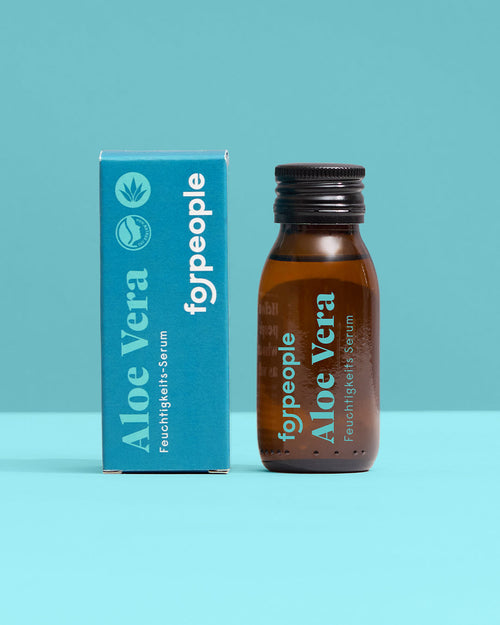
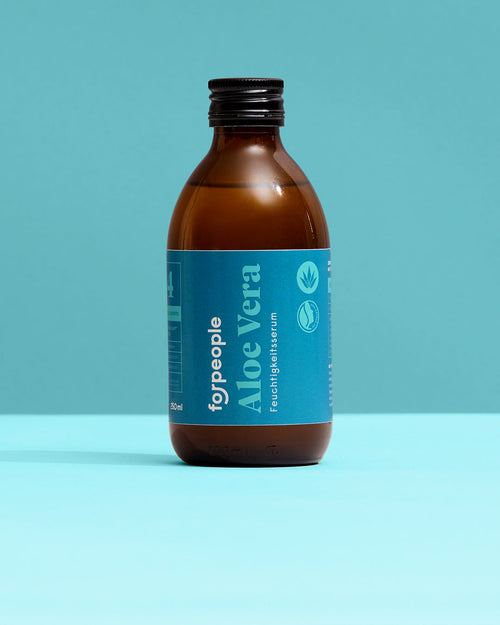
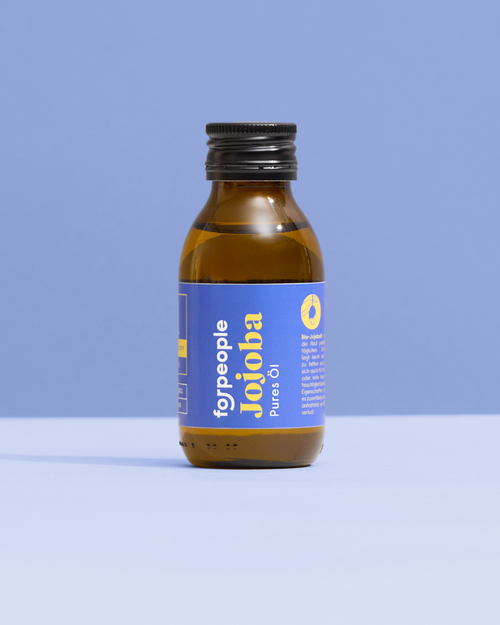
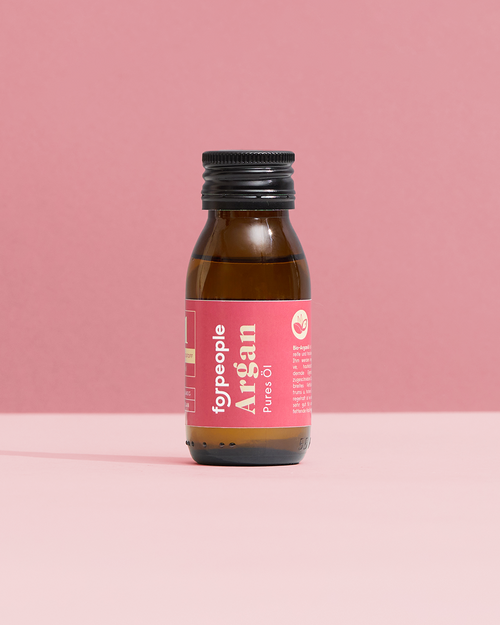
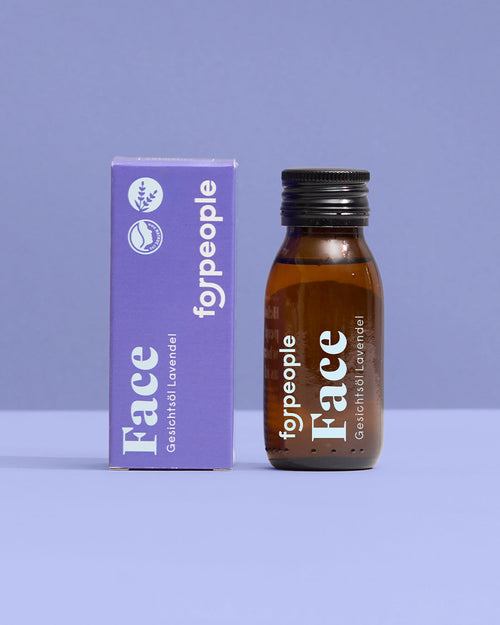
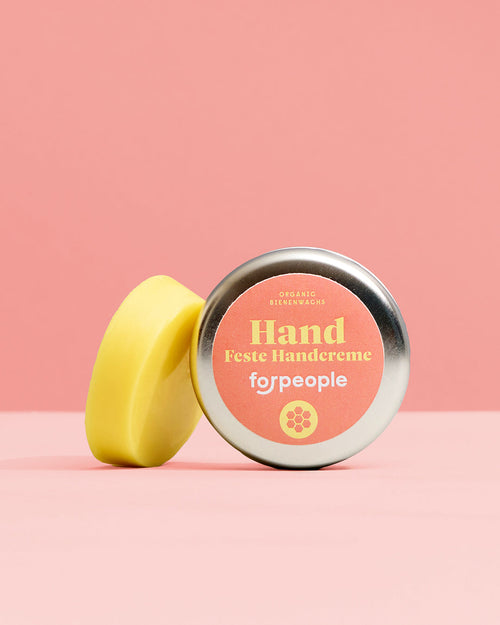
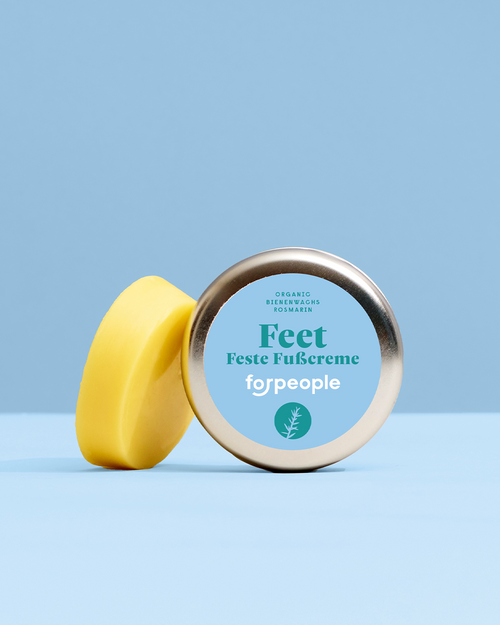
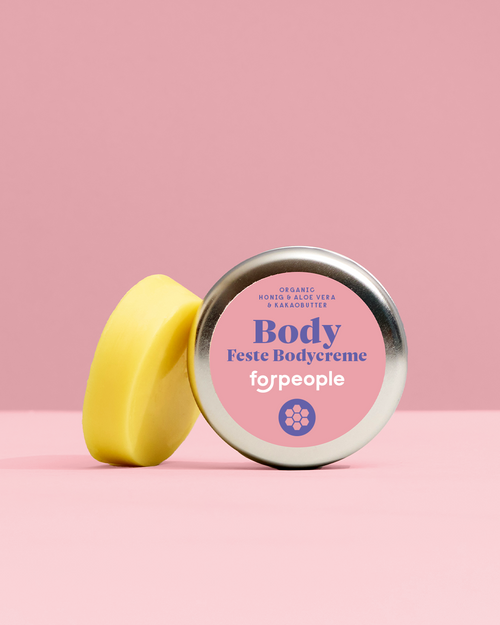
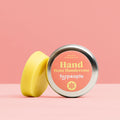
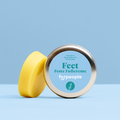
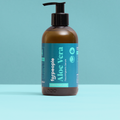
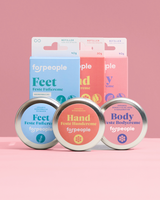
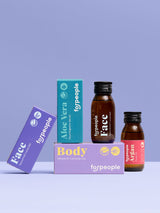
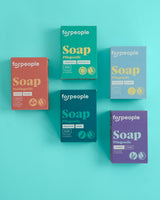
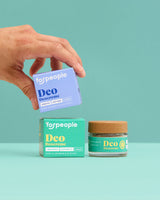
The Aloe Vera Serum 99.6% (50 ml, €9.90) is liquid and contains no thickener; it is also available with 250 ml as the Aloe Vera Serum 99.6% (€24.90). According to its ingredient list, it contains citric acid, potassium sorbate and sodium benzoate alongside aloe juice, so it is water-based and preserved. As a light oil for face and hair, the Jojoba Oil - pure (100 ml, €16.90) or the Argan Oil - pure (50 ml, €19.90) work well; the Face Oil - Lavender (50 ml, €21.90) also contains lavender oil, an essential oil with a scent. The solid creams are made for hands, feet and body: the Solid Hand Cream - Beeswax (€9.90), the Solid Foot Cream – Rosemary & Sage (€9.90) and the Solid Body Butter - Beeswax & Aloe Vera (€9.90). All three are water-free and consist of waxes, butters and plant oils.
More on this: Aloe vera serum 99.6%: what’s inside? · How to spot a good aloe vera product · Body oil or body butter · Humectants, occlusives, emollients
Sources
- Dal'Belo SE, Gaspar LR, Maia Campos PM (2006): Moisturizing effect of cosmetic formulations containing Aloe vera extract in different concentrations assessed by skin bioengineering techniques. Skin Research and Technology 12(4): 241–246. https://doi.org/10.1111/j.0909-752X.2006.00155.x
- Sethi A, Kaur T, Malhotra SK, Gambhir ML (2016): Moisturizers: The Slippery Road. Indian Journal of Dermatology 61(3): 279–287. https://doi.org/10.4103/0019-5154.182427
- Patzelt A, Lademann J, Richter H, Darvin ME, Schanzer S, Thiede G et al. (2012): In vivo investigations on the penetration of various oils and their influence on the skin barrier. Skin Research and Technology 18(3): 364–369. https://doi.org/10.1111/j.1600-0846.2011.00578.x
- Rawlings AV, Harding CR (2004): Moisturization and skin barrier function. Dermatologic Therapy 17 Suppl 1: 43–48. https://doi.org/10.1111/j.1396-0296.2004.04s1005.x
- Yosipovitch G, Xiong GL, Haus E, Sackett-Lundeen L, Ashkenazi I, Maibach HI (1998): Time-dependent variations of the skin barrier function in humans: transepidermal water loss, stratum corneum hydration, skin surface pH, and skin temperature. Journal of Investigative Dermatology 110(1): 20–23. https://doi.org/10.1046/j.1523-1747.1998.00069.x