


Where jojoba oil comes from
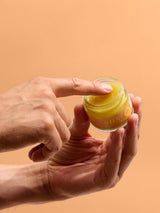
The jojoba shrub comes from the deserts of northern Mexico and the south-western USA, such as the Sonoran Desert; today it is also grown in countries such as Argentina, Chile and Egypt (Gad et al. 2021). The wax is found mainly in the seeds. About half of their weight is wax, around 50–52% of the seed weight (Gad et al. 2021). Cold-pressed, untreated jojoba oil is golden yellow and has a slightly nutty scent.
In the ingredient list, jojoba oil is called Simmondsia Chinensis Seed Oil. The word "oil" in the name is a convention – chemically it is a wax. How to read INCI names is explained on Reading an INCI list.
Wax instead of oil: the chemical difference
Most plant oils such as olive, sunflower or almond oil consist of triglycerides: three fatty acids attached to one glycerol molecule. Jojoba oil is built differently. It consists almost entirely of wax esters – compounds of one long-chain fatty acid and one long-chain fatty alcohol each. It also contains a few free fatty acids, alcohols, hydrocarbons, sterols and tocopherols (Gad et al. 2021).
The fatty acids and alcohols in jojoba oil mostly have 20 or 22 carbon atoms and one double bond each (Gad et al. 2021). The most common wax esters are compounds of eicosenoic acid, erucic acid, eicosenol and docosenol. The exact make-up of the fatty alcohols also depends on cultivation: in a multi-year fertilisation trial, the nitrogen supply changed the composition of the fatty alcohols and other quality traits, while the fatty acids stayed the same (Tietel et al. 2024).
| Jojoba oil | Typical plant oil (e.g. sunflower oil) | Beeswax | |
|---|---|---|---|
| Main constituent | wax esters (around 98%) | triglycerides | wax esters, plus hydrocarbons and free fatty acids |
| State at room temperature | liquid | liquid | solid |
| Melting/solidifying | melting point about 7 °C | varies by oil | melting range 61–66 °C |
| Unsaturated bonds | one double bond per fatty acid and per alcohol | in sunflower oil mostly two (linoleic acid) | mostly saturated |
| Oxidative stability | high (unrefined) | lower in oils rich in linoleic acid | stable |
Sources: Gad et al. 2021 (Table 6 and text); Orsavova et al. 2015; Huanbutta et al. 2026. The row on oxidative stability is a simplified, qualitative classification.
Why is jojoba oil liquid while beeswax is solid, even though both consist of wax esters? Because the chains in jojoba oil are unsaturated. The double bonds prevent the molecules from packing tightly. In beeswax the chains are mostly saturated – which creates a solid crystal structure. More on this on Beeswax in skin care and Candelilla wax or beeswax.
Oxidative stability: why jojoba oil keeps for a long time
Oils go rancid when oxygen attacks the double bonds of the fatty acids. The more double bonds, the more susceptible. Jojoba oil has only one double bond per fatty acid and naturally contains tocopherols (forms of vitamin E) that slow down oxidation. Its thermal and oxidative stability is therefore high (Gad et al. 2021).
Processing matters: if jojoba oil is bleached or "stripped", the natural antioxidants are lost and oxidative stability drops sharply (Gad et al. 2021). Cold-pressed, unrefined jojoba oil keeps it. Growing conditions also affect traits such as tocopherol content and oxidative stability (Tietel et al. 2024).
For you this means: stored properly, jojoba oil usually keeps longer than oils rich in linoleic acid. How to judge the shelf life of an opened bottle is explained on Shelf life of cosmetics. More on the fatty acids of sunflower and olive oil on Olive oil and sunflower oil on the skin.
When jojoba oil turns solid
The melting point of jojoba oil is about 7 °C (Gad et al. 2021). In the fridge or when stored in a cold hallway in winter, it can therefore turn cloudy or form flakes. This is not spoilage. At room temperature it becomes clear and liquid again. Simply leave the bottle in a warm room for a while, not in hot water.
Skin feel
The scientific literature describes jojoba oil as spreading well without the oily, greasy feel of some other fats (Gad et al. 2021). It spreads easily. Chemically it resembles the wax esters that also occur in skin sebum; the review mentions this structural similarity (Gad et al. 2021). However, this does not allow any statement that jojoba oil influences sebum production – there is no robust evidence for that.
Like other fats, jojoba oil settles on the skin and so reduces part of the evaporation of water. It does not form a thick film like a solid wax. The stratum corneum itself holds water through its lipids and through water-binding substances inside the cells (Rawlings and Harding 2004). How fats, waxes and humectants work together is explained on Humectants, occlusives, emollients and Occlusion and transepidermal water loss.
This is how jojoba oil is often used:
- Pure: a few drops on still slightly damp skin, for example on the face, the hands or dry areas.
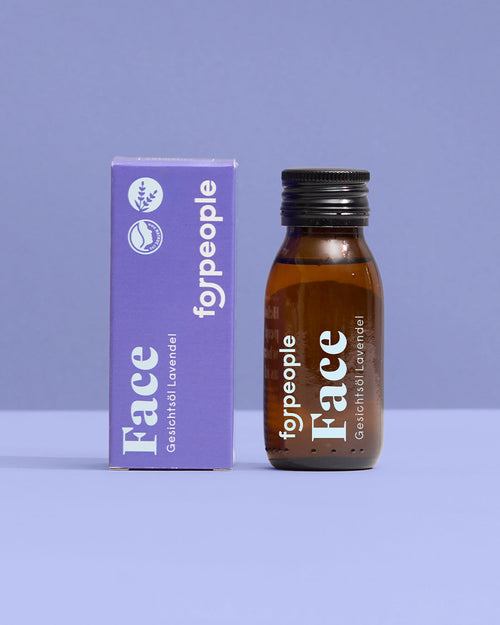
- As part of a blend: in face oils it gives the blend stability and a light skin feel. The Face Oil - Lavender combines jojoba oil with argan, rosehip, borage and hemp seed oil.
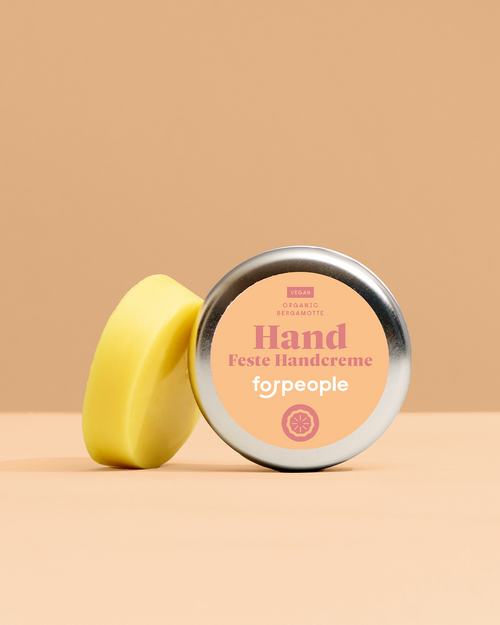
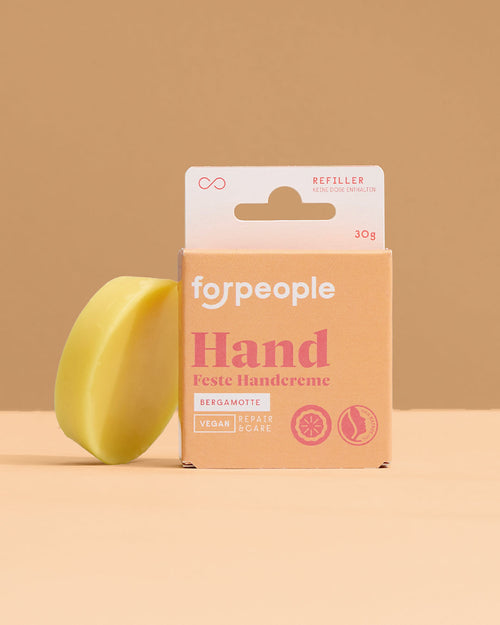
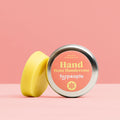
- In solid care: in the Solid Vegan Hand Cream - Bergamot, jojoba oil comes directly after candelilla wax and makes the hard, vegan formula more supple.
If your skin turns red or stings after application, stop using it. If a reaction persists, have it checked by a doctor.
Frequently asked questions
Is jojoba oil suitable for oily skin?
Jojoba oil feels light. Whether it suits your skin is best found out with a small amount over a few days. Promises that jojoba oil regulates blemishes or sebum are not backed by evidence.
Why is my jojoba oil cloudy?
It was probably too cold. Below about 7 °C, jojoba oil solidifies. At room temperature it becomes clear again.
Is golden or colourless jojoba oil better?
Golden jojoba oil is unrefined and contains its natural tocopherols. Colourless jojoba oil is usually refined or bleached and therefore less stable against oxidation (Gad et al. 2021).
Can I combine jojoba oil with a solid cream?
Yes. For example, a few drops of oil in the morning and a solid cream in the evening. You will find a comparison of liquid and solid care on Body oil or body butter and Solid cream or tube.
At forpeople
Jojoba oil (Simmondsia Chinensis Seed Oil) is in the ingredient list of these products:
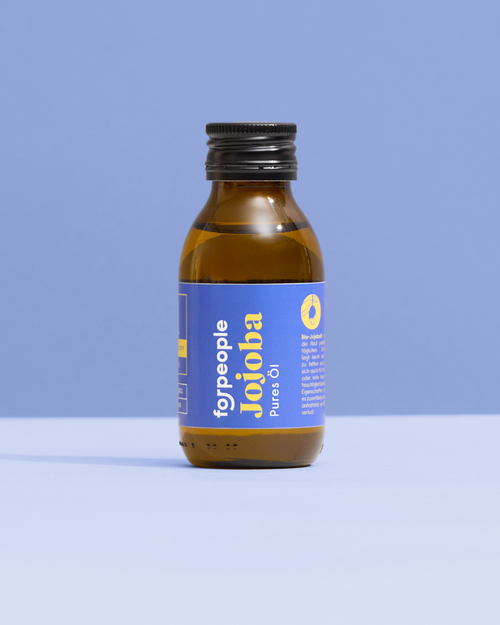
- Jojoba Oil - pure, 100 ml, €16.90 – pure, cold-pressed jojoba oil as the only ingredient.
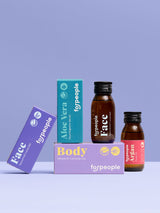
- Face Oil - Lavender, 50 ml, €21.90 – with argan, rosehip, jojoba, borage and hemp seed oil plus lavender oil.
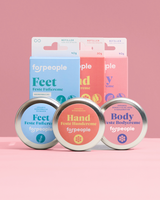
- Solid Vegan Hand Cream - Bergamot, 30 g, €9.90 – vegan, candelilla wax and jojoba oil, plus olive oil and shea butter. Available as a refill for €7.90 to refill the tin (how refilling works).
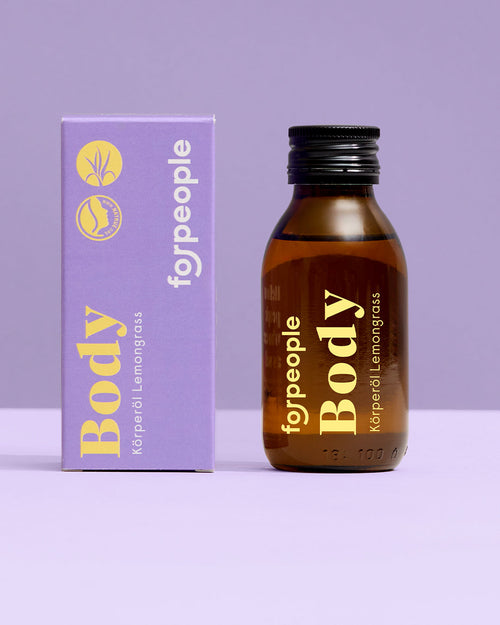
If you are looking for an oil with a classic triglyceride structure for the body, you will find it in the Body Oil - Lemongrass. More on care without water: Water-free cosmetics.
Sources
- Gad HA, Roberts A, Hamzi SH et al. (2021): Jojoba Oil: An Updated Comprehensive Review on Chemistry, Pharmaceutical Uses, and Toxicity. Polymers (Basel) 13(11): 1711. doi:10.3390/polym13111711
- Tietel Z, Melamed S, Galilov I et al. (2024): Elevated nitrogen fertilization differentially affects jojoba wax phytochemicals, fatty acids and fatty alcohols. Front Plant Sci 15: 1425733. doi:10.3389/fpls.2024.1425733
- Orsavova J, Misurcova L, Ambrozova JV et al. (2015): Fatty Acids Composition of Vegetable Oils and Its Contribution to Dietary Energy Intake and Dependence of Cardiovascular Mortality on Dietary Intake of Fatty Acids. Int J Mol Sci 16(6): 12871–12890. doi:10.3390/ijms160612871
- Huanbutta K, Chuttong B, Danmek K et al. (2026): Beeswax in Pharmaceutical Sciences: A Comprehensive Review of Its Chemical Composition, Functional Applications, Types, and Formulation Roles. Int J Mol Sci 27(8): 3486. doi:10.3390/ijms27083486
- Rawlings AV, Harding CR (2004): Moisturization and skin barrier function. Dermatol Ther 17 Suppl 1: 43–48. doi:10.1111/j.1396-0296.2004.04s1005.x