



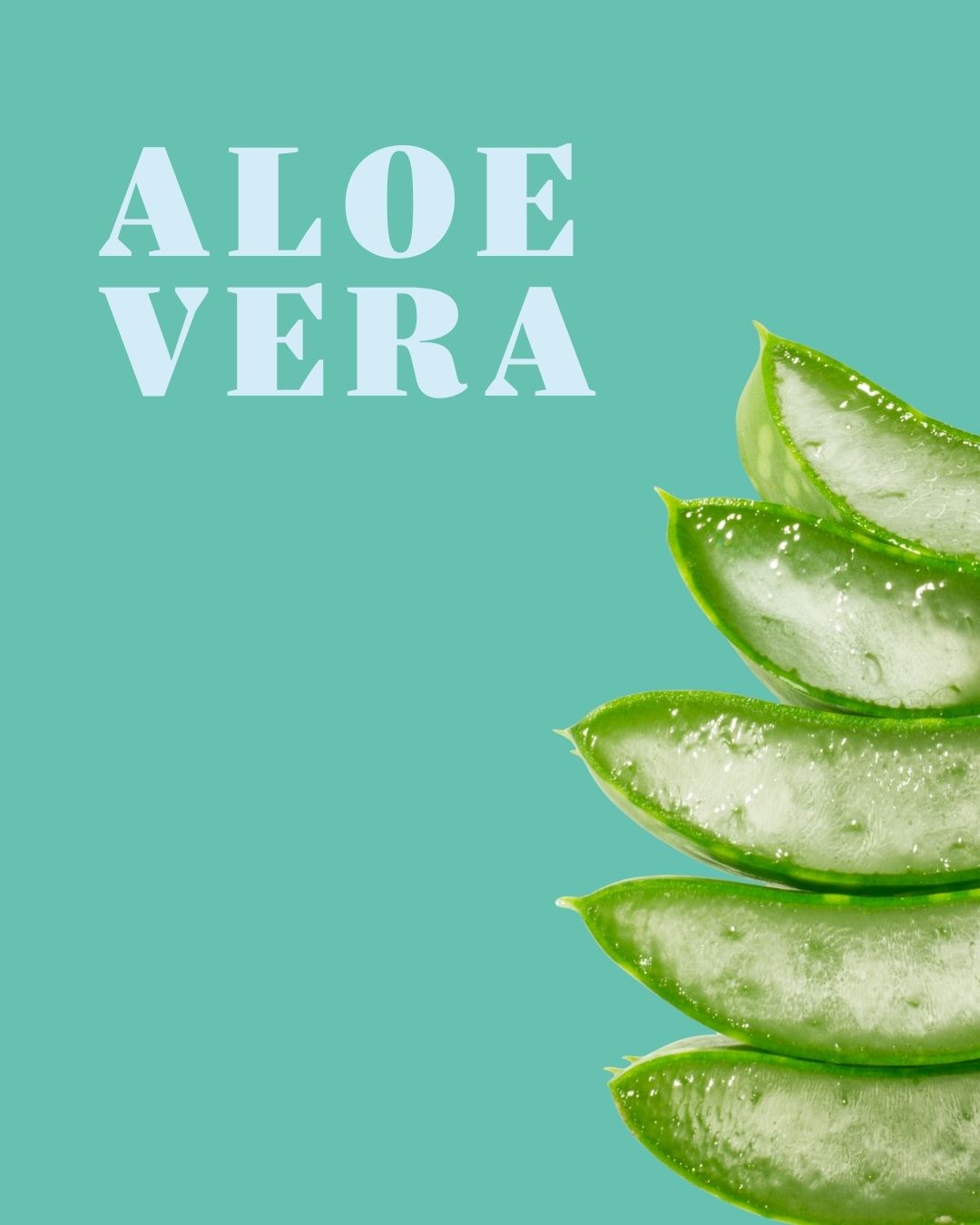
An aloe vera serum consists almost entirely of the juice of the aloe leaf. The gel inside the leaf is about 99.5% water, plus dissolved sugar chains such as acemannan, minerals and organic acids. On the skin, a serum like this is a light, watery product that feels fresh and works well under an oil or cream. That it measurably increases skin moisture over days has not been shown so far.
Gel, juice and latex: what is inside an aloe leaf
True aloe (Aloe vera, also called Aloe barbadensis Miller) stores water in its thick leaves: beneath the green rind with its vascular bundles lies a colourless, soft tissue, the gel. It is about 99.5% water; the remaining 0.5 to 1% is made up of polysaccharides, minerals, enzymes, vitamins, phenolic compounds and organic acids (Hamman 2008).
Many researchers regard acemannan, a partially acetylated mannan, as the main polysaccharide. Sugar chains like these are sensitive to heat, acid and enzymes (Hamman 2008), so how much of them ends up in a finished product depends on the processing.
| Part of the leaf | What it is | What it contains | Role in cosmetics |
|---|---|---|---|
| Gel (inner leaf) | clear, soft tissue inside the leaf | about 99.5% water, polysaccharides such as acemannan, minerals, organic acids | starting material for aloe juice |
| Juice (INCI: Aloe Barbadensis Leaf Juice) | the liquid obtained from the leaf | like the gel, made either from the inner leaf or from the whole leaf and then filtered | main ingredient of many aloe serums |
| Latex | yellow, bitter sap from cells just beneath the rind | anthraquinones such as aloin | is removed; industry limit for cosmetics: 50 ppm anthraquinones |
The anthraquinones in the latex are laxative, irritate the gastrointestinal tract and can make the skin sensitive to light. For aloe raw materials in cosmetics, the expert panel of the Cosmetic Ingredient Review cites an industry-established limit of 50 ppm anthraquinones, or 0.005% (CIR 2007). The INCI name does not tell you whether a juice comes only from the inner leaf or from the whole, filtered leaf; there is more on this in Aloe inner leaf or whole leaf: what is aloin?
What is proven about the effect on skin, and what is not
Aloe is considered a moisturiser. On healthy skin, this has mostly been measured with formulated products rather than pure aloe juice, and with mixed results:
| Study | What was tested | Result |
|---|---|---|
| Dal'Belo et al. 2006, 20 women, forearm | cream with 0.1 to 0.5% freeze-dried aloe extract, compared with the same cream without aloe | more water in the outer skin layer, after a single application with the two higher amounts and after two weeks with all three; water loss through the skin did not change |
| Fox et al. 2014, 19 and 23 women, forearm | 3% solution of polysaccharides from aloe gel in water, compared with plain water | slightly more moisture after a single application, but not clearly more than with water; after four weeks of use twice a day, measured skin moisture went down, while with water alone it went up |
The authors of the first study interpret their result as aloe binding water in the uppermost layer of the skin (Dal'Belo et al. 2006); the second study reaches the opposite conclusion after repeated use (Fox et al. 2014). Neither tested a serum made of 99.6% aloe juice. That such a serum measurably increases skin moisture over time is therefore not proven.
What you feel when you apply it is still real: the serum spreads easily, feels cool and leaves no greasy film. Many other properties attributed to aloe come from studies on medicines, on cells or on animals; nothing follows from them for a skincare product.
How to use an aloe vera serum
- Face: After cleansing, put a small amount into your palm, spread it over your face and neck and let it sink in briefly.
- With oil or cream: While your skin is still slightly damp, apply a few drops of oil or a thin layer of solid cream on top. The film of fat slows down the evaporation of the water. The order and variations are described in Combining aloe vera serum with oil or solid cream.
- Body and hair: Spread thinly on dry or tight-feeling areas; a spray bottle helps on larger areas. Use only a few drops in your hair.
- Test first: Skin reactions to aloe have been described in individual cases (CIR 2007). So try a new product on a small area first, see Trying a new product: how do I test it on a small area?
- External use only: The serum is meant for intact skin, not for broken skin, and not for drinking.
Our Aloe Vera Serum: ingredients, pH and shelf life
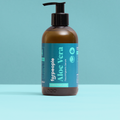
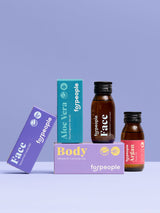
According to its ingredient list, our serum consists of Aloe Barbadensis Leaf Juice (organic aloe vera juice), Citric Acid, Potassium Sorbate and Sodium Benzoate. Aloe makes up 99.6%, and according to the product page it comes from Andalusia. It contains no thickener, which is why the serum is liquid.
The other three ingredients are there for a reason: wherever there is water, bacteria, yeasts and moulds can multiply once a product has been opened. Potassium sorbate and sodium benzoate, the salts of sorbic and benzoic acid, preserve the serum. How well organic acids like these work depends on the pH (Halla et al. 2018), which is why citric acid makes the serum slightly acidic. How long it keeps after opening is shown on the label; what the open-jar symbol means is explained in Cosmetics shelf life: hourglass symbol and PAO after opening. Do not add anything to the bottle, not even oil, because the serum has only been tested in its original composition.
There are three sizes with the same contents:
- Aloe Vera Serum 99.6%, 50 ml in a glass bottle with a cork stopper, €9.90
- Aloe Vera Serum 99.6%, 250 ml in a glass bottle with a cork dispenser, €24.90
- Aloe Vera Serum 99.6% - Pump Bottle, 300 ml, €27.90
Each ingredient is explained in Aloe Vera Serum 99.6%: what is inside?, and there is more about the raw material in Aloe vera in cosmetics.
Frequently asked questions
What is an aloe vera serum good for?
As a light, watery product for face, body and hair that feels fresh and works well under an oil or cream. A measurably higher skin moisture over time has not been proven.
Is aloe vera gel the same as aloe juice?
Almost. The gel is the tissue inside the leaf, the juice is the liquid obtained from it. A shop-bought "gel" is usually aloe juice with a thickener. Our serum contains none and is therefore liquid.
Can I use the serum after sunbathing?
Yes, as light care on intact skin. Aloe juice contains no UV filter and does not replace sun protection. If your skin is very red or blisters after time in the sun, get medical advice.
Does an aloe serum need to go in the fridge?
A preserved serum does not; keeping it tightly closed, cool and out of direct sunlight is enough. Homemade gel without preservatives, on the other hand, belongs in the fridge and lasts only a few days even there; see Making aloe vera gel yourself.
What is aloin, and should it be in the serum?
Aloin comes from the yellow latex beneath the leaf rind and is meant to be removed during processing. For aloe raw materials in cosmetics there is an industry limit of 50 ppm anthraquinones (CIR 2007).
Sources
- Hamman JH (2008): Composition and Applications of Aloe vera Leaf Gel. Molecules 13(8): 1599–1616. doi:10.3390/molecules13081599
- Cosmetic Ingredient Review Expert Panel (2007): Final report on the safety assessment of Aloe Andongensis Extract, Aloe Andongensis Leaf Juice, Aloe Arborescens Leaf Extract, Aloe Arborescens Leaf Juice, Aloe Arborescens Leaf Protoplasts, Aloe Barbadensis Flower Extract, Aloe Barbadensis Leaf, Aloe Barbadensis Leaf Extract, Aloe Barbadensis Leaf Juice, Aloe Barbadensis Leaf Polysaccharides, Aloe Barbadensis Leaf Water, Aloe Ferox Leaf Extract, Aloe Ferox Leaf Juice, and Aloe Ferox Leaf Juice Extract. International Journal of Toxicology 26 Suppl 2: 1–50. doi:10.1080/10915810701351186
- Dal'Belo SE, Gaspar LR, Maia Campos PM (2006): Moisturizing effect of cosmetic formulations containing Aloe vera extract in different concentrations assessed by skin bioengineering techniques. Skin Research and Technology 12(4): 241–246. doi:10.1111/j.0909-752X.2006.00155.x
- Fox LT, du Plessis J, Gerber M, van Zyl S, Boneschans B, Hamman JH (2014): In vivo skin hydration and anti-erythema effects of Aloe vera, Aloe ferox and Aloe marlothii gel materials after single and multiple applications. Pharmacognosy Magazine 10(Suppl 2): S392–S403. doi:10.4103/0973-1296.133291
- Halla N, Fernandes IP, Heleno SA, Costa P, Boucherit-Otmani Z, Boucherit K, Rodrigues AE, Ferreira ICFR, Barreiro MF (2018): Cosmetics Preservation: A Review on Present Strategies. Molecules 23(7): 1571. doi:10.3390/molecules23071571


Leave a comment
This site is protected by hCaptcha and the hCaptcha Privacy Policy and Terms of Service apply.