


What candelilla wax is
Candelilla wax comes from the candelilla plant (Euphorbia antisyphilitica), which grows in the dry regions of northern Mexico. Its almost leafless stems are coated with a thick layer of wax that protects the plant against heat, cold and insects (Núñez-García et al. 2022). Traditionally, the wax is obtained by boiling the stems with diluted sulphuric acid; extraction with citric acid is being studied as a gentler alternative. The raw wax is brownish and is filtered and bleached for cosmetics (Núñez-García et al. 2022).
In the ingredient list, candelilla wax appears as Euphorbia Cerifera (Candelilla) Wax or Euphorbia Cerifera Cera. Both names mean the same wax. How to decode INCI names is explained on Reading an INCI list.
What the two waxes are made of
The key difference lies in the chemistry. Beeswax contains a large share of wax esters – compounds of a long-chain fatty acid and a long-chain alcohol – plus hydrocarbons and free fatty acids (Huanbutta et al. 2026). Candelilla wax consists mainly of long-chain hydrocarbons with 29 to 33 carbon atoms, above all hentriacontane; esters, fatty alcohols and acids are present in smaller amounts (Núñez-García et al. 2022). A study on wax gels made from both waxes confirms this: the main constituents are wax esters in beeswax and hydrocarbons in candelilla wax, and this is exactly what determines how the gels behave with different oils (Hwang et al. 2026).
The differences at a glance
| Beeswax | Candelilla wax | |
|---|---|---|
| Origin | animal, from honey bees | plant, from Euphorbia antisyphilitica (northern Mexico) |
| INCI | Cera Alba | Euphorbia Cerifera (Candelilla) Wax / Cera |
| Main constituents | wax esters, plus hydrocarbons and free fatty acids | hydrocarbons (mainly hentriacontane), fewer esters |
| Melting | melting range 61–66 °C (European Pharmacopoeia), plastic from about 32 °C | around 66 °C in one measurement of Mexican samples |
| Hardness and behaviour | supple, mouldable, more elastic | harder, stiffer, more brittle |
| Vegan | no | yes |
Sources for the table: Huanbutta et al. 2026; Núñez-García et al. 2022; Hwang et al. 2026. Values vary with origin and processing.
Hardness, melting point and gloss in practice
Hardness: candelilla wax is hard. In one study, carnauba and candelilla wax showed higher stiffness but lower elasticity than beeswax – so they behave in a more brittle way (Núñez-García et al. 2022). In practice this means: with candelilla wax, a smaller amount is often enough to make a product firm. Too much makes a cream crumbly.
Melting point: beeswax melts over a range of about 61 to 66 °C (Huanbutta et al. 2026). For candelilla wax, melting temperatures of around 66 °C were measured in samples from four Mexican communities (Núñez-García et al. 2022). Both are therefore well above body temperature. A solid cream stays firm at room temperature and only softens when rubbed. In summer heat both kinds of formula can soften, because the oils and butters they contain melt earlier than the wax – tips on this are on Storing solid cosmetics in summer.
Gloss and surface: candelilla wax is used in cosmetics as a film-forming ingredient that makes products more stable as temperatures rise (Núñez-García et al. 2022). It is often said that candelilla wax gives sticks and balms more gloss. We have not found a robust comparative measurement of the gloss of the two waxes in the scientific literature. How glossy a surface looks depends heavily on the formula and on cooling during production anyway.
Skin feel: both waxes remain on the skin as a thin film that reduces the evaporation of water. How this works is explained on Occlusion and transepidermal water loss. How a formula feels depends heavily on the oils and butters the wax is combined with.
Why you cannot simply swap the waxes
Because the waxes differ chemically, they behave differently in blends with oils. In one study, gels were made from beeswax, candelilla wax and a 1:1 blend with eleven plant oils. With beeswax, the gels became weaker with more unsaturated oils; with candelilla wax they became stronger. The researchers attribute this to the wax esters in beeswax and the hydrocarbons in candelilla wax (Hwang et al. 2026). The study comes from food research, but it shows the principle: which oil works well with which wax has to be tested for each formula.
For a vegan solid cream, it is therefore not enough to replace beeswax 1:1 with candelilla wax. Usually less wax is used, and the oils and butters are adjusted, for example with shea butter for more suppleness. More on shea butter on Shea butter: composition.
Vegan solid care
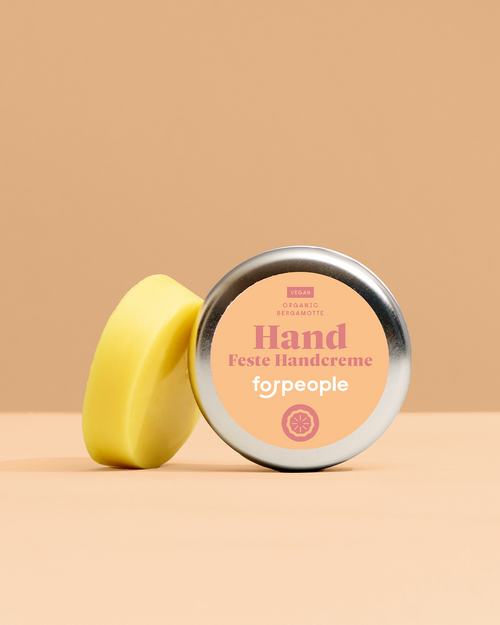
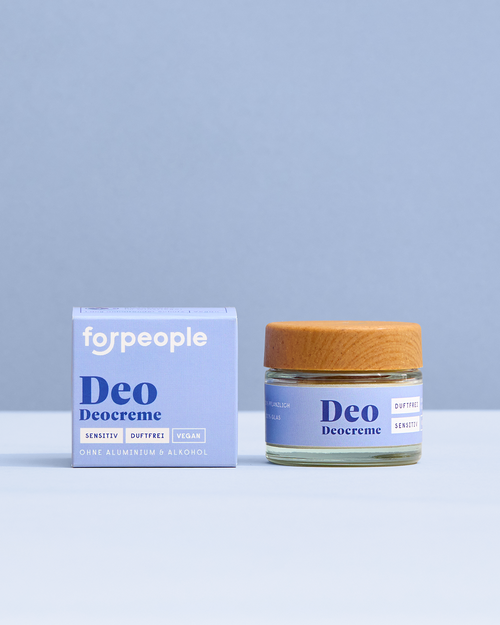
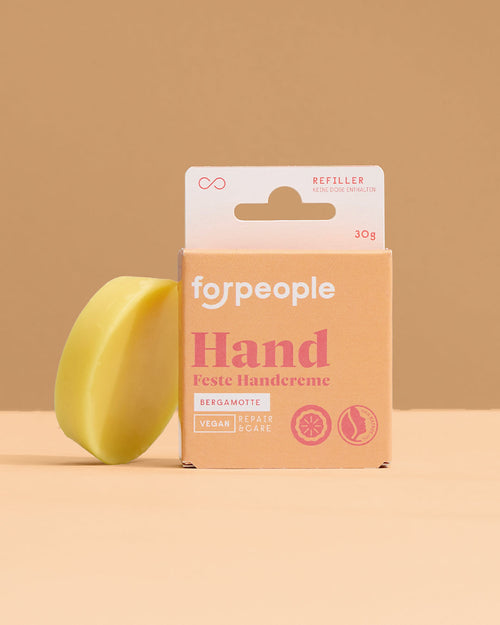
If you want to avoid animal ingredients, you can recognise vegan solid care by its INCI list: instead of Cera Alba, it lists a plant wax such as candelilla wax. Examples are the Solid Vegan Hand Cream - Bergamot, where candelilla wax comes first, followed by jojoba oil, olive oil and shea butter, and the Sensitive Deodorant Cream, which contains candelilla wax alongside starch, shea butter, baking soda and sunflower oil. What baking soda does in a deodorant is explained on Baking soda in deodorant.
The choice between the two waxes is mainly a question of your values and your preferred skin feel. Neither is fundamentally "better". General information on care without water is on Water-free cosmetics.
Frequently asked questions
Does candelilla wax care for skin the same way as beeswax?
Both form a film that reduces the evaporation of water. How a cream feels, however, depends on the whole formula: which oils, how much wax, whether butters are included. A direct comparison on the skin is only possible between specific products.
Why is my vegan hand cream harder?
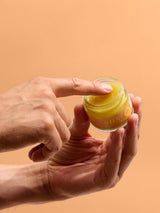
Candelilla wax is harder and more brittle than beeswax. Warm the cream briefly between your fingers. How to apply solid creams is explained on Solid cream or tube.
Is candelilla wax suitable for sensitive skin?
Candelilla wax is used in many cosmetic products. Whether a product suits your skin depends on all its ingredients, including fragrances. More on this on Care without fragrance.
Are there other plant waxes?
Yes, for example carnauba wax, rice bran wax or sunflower wax. Like candelilla wax, carnauba wax is stiffer and more brittle than beeswax (Núñez-García et al. 2022). Jojoba oil is chemically a wax too, but liquid – see Jojoba oil: a liquid wax.
At forpeople
Candelilla wax is in the ingredient list of these products:
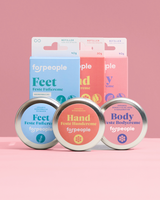
- Solid Vegan Hand Cream - Bergamot, 30 g, €9.90 – vegan, with candelilla wax, jojoba oil, olive oil and shea butter, with lemon and bergamot oil. Also available as a refill for €7.90.
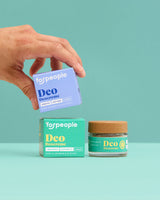
- Sensitive Deodorant Cream, 50 g, €8.90 – without fragrances, with candelilla wax.
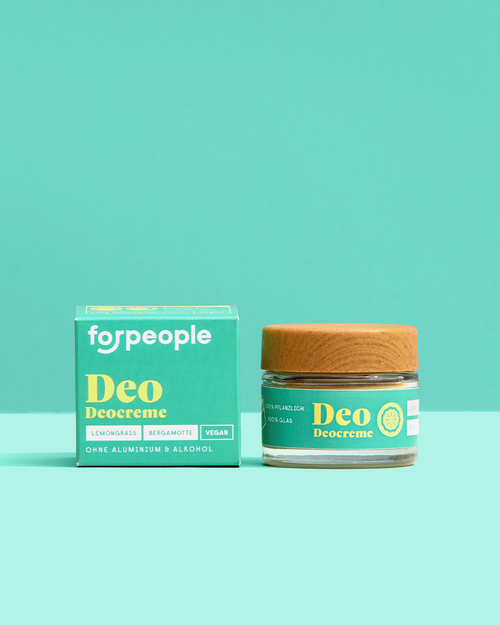
- Deodorant Cream - Lemon, 50 g, €8.90 – with candelilla wax and bergamot and lemongrass oil.
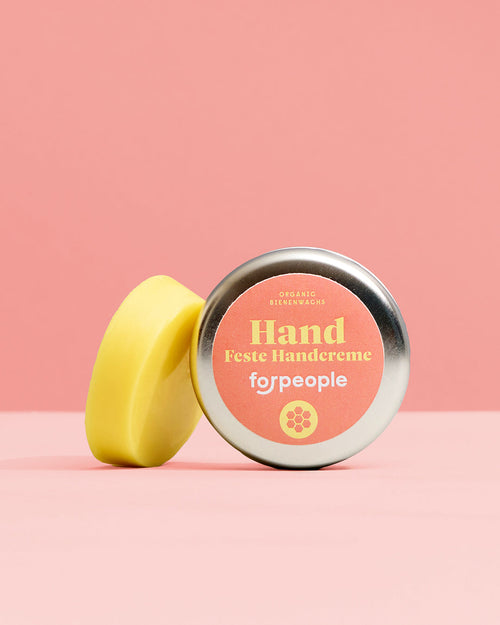
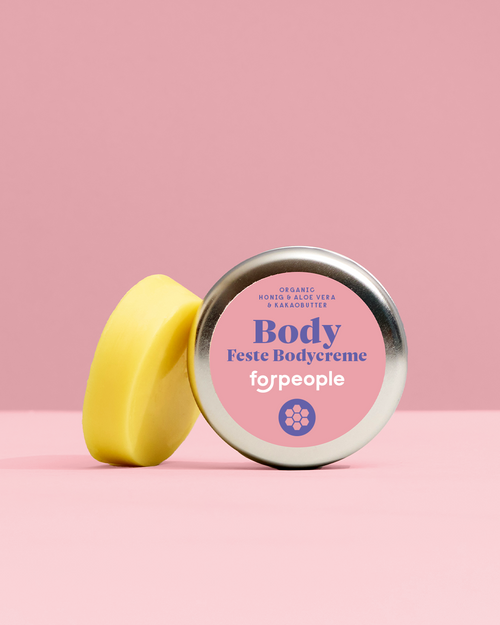
Made with beeswax are, for example, the Solid Hand Cream - Beeswax and the Solid Body Butter - Beeswax & Aloe Vera. More on beeswax: Beeswax in skin care.
Sources
- Núñez-García IC, Rodríguez-Flores LG, Guadiana-De-Dios MH et al. (2022): Candelilla Wax Extracted by Traditional Method and an Ecofriendly Process: Assessment of Its Chemical, Structural and Thermal Properties. Molecules 27(12): 3735. doi:10.3390/molecules27123735
- Hwang HS, Kim S, Winkler-Moser JK (2026): The effect of oil unsaturation on gel strength of binary beeswax-candelilla wax oleogels is dependent on the content of hydrocarbons and wax esters. Food Chem 514: 149141. doi:10.1016/j.foodchem.2026.149141
- Huanbutta K, Chuttong B, Danmek K et al. (2026): Beeswax in Pharmaceutical Sciences: A Comprehensive Review of Its Chemical Composition, Functional Applications, Types, and Formulation Roles. Int J Mol Sci 27(8): 3486. doi:10.3390/ijms27083486