


Origin: the shea tree
The shea tree (Vitellaria paradoxa, formerly Butyrospermum parkii) grows in the savanna south of the Sahara, from West Africa to Uganda. Its fruits provide the kernels, which contain about 30 to 54% fat depending on the sample (Akihisa et al. 2010). In the ingredient list, shea butter still appears under the old botanical name: Butyrospermum Parkii Butter, sometimes with "(Shea)" added.
Traditionally, the butter is made by hand: the kernels are roasted and pressed, the mass is churned with water, and the separated fat is boiled, sieved and cooled (Honfo et al. 2014). There are also industrial processes using presses or solvents followed by refining.
The fatty acids: stearic acid and oleic acid
Like all plant fats, shea butter consists mostly of triglycerides – glycerol with three fatty acids attached. Two fatty acids dominate:
- Stearic acid (saturated, 18 carbon atoms): solid at room temperature, provides firmness.
- Oleic acid (monounsaturated, 18 carbon atoms): liquid at room temperature, provides softness.
In a study of 36 samples from seven African countries, stearic acid ranged from 28 to 56% and oleic acid from 34 to 61% (Akihisa et al. 2010). A second study of 150 samples from Mali, Burkina Faso, Nigeria and Uganda also found large differences: stearic acid dominates in West African shea butter, oleic acid in Ugandan shea butter (Di Vincenzo et al. 2005). Butter from East Africa is therefore usually softer.
| Feature | West Africa (e.g. Mali, Burkina Faso, Nigeria) | East Africa (e.g. Uganda) |
|---|---|---|
| Predominant fatty acid | stearic acid | oleic acid |
| Triterpene alcohols | generally higher | generally lower |
| Texture | firmer | softer |
Sources: Di Vincenzo et al. 2005; Akihisa et al. 2010. The texture is derived from the fatty acid profile.
According to Akihisa et al. (2010), stearic acid and triterpene content are linked to the latitude and altitude of the growing site: higher values are found where it is warmer. So there is no such thing as "the" shea butter – two batches can differ considerably.
The unsaponifiable fraction
The unsaponifiable fraction of a fat is the part that does not turn into soap during soap making, because it does not consist of triglycerides. It includes sterols, fatty alcohols, tocopherols (forms of vitamin E), triterpene alcohols and hydrocarbons such as squalene (Abdel-Razek et al. 2023).
In shea butter this fraction is comparatively high. In the samples from seven countries it made up 2 to 12% of the fat (Akihisa et al. 2010). Most of it consists of triterpene alcohols, mainly α- and β-amyrin, lupeol and butyrospermol. They accounted for 22 to 72% of the unsaponifiable fraction (Akihisa et al. 2010).
What exactly these substances do on the skin is less clear than is often claimed. Many statements come from laboratory experiments and cannot be transferred directly to a cream. What is established: tocopherols protect the unsaturated fatty acids in the fat from oxidation and thus contribute to shelf life (Abdel-Razek et al. 2023).
Unrefined or refined
Shea butter is traded in two basic forms:
- Unrefined (raw, natural): yellowish to ivory, with a nutty, smoky scent of its own. All accompanying substances remain.
- Refined: cleaned, deacidified, bleached and deodorised. It is white, almost odourless and more uniform in quality.
One study compared what refining and separation into a solid fraction (stearin) and a liquid fraction (olein) do to the accompanying substances (Abdel-Razek et al. 2023). Results:
| Component | Crude shea butter | Refined shea stearin | Refined shea olein |
|---|---|---|---|
| Total tocopherols (mg/100 g) | 10.06 | 1.27 | 9.25 |
| γ- and δ-tocopherol | present | not detected | not detected |
| Squalene (mg/g) | 0.20 | 0.03 | 0.05 |
| Unsaponifiable fraction and sterols | starting value | lower | largely unchanged |
Source: Abdel-Razek et al. 2023, Table 4 and text. This is a single study with specific samples.
So the accompanying substances preferably move into the liquid fraction, and refining mainly lowers tocopherols and squalene. For you this means: unrefined shea butter is closer to the raw material but smells stronger and varies more. Refined shea butter is more neutral in scent and more consistent. Both forms provide the typical fatty acids.
Shea butter in solid care
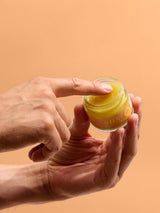
Shea butter does not melt sharply but gradually softens with skin warmth. That makes it suitable for solid creams, balms, deodorant creams and lip care. In formulas it has several jobs:
- It makes wax and oil blends more supple, so a solid cream does not crumble.
- It adds body without being as hard as a wax.
- As a fat, it settles on the skin like oils and keeps it supple. How fats and waxes reduce evaporation is explained on Humectants, occlusives, emollients.
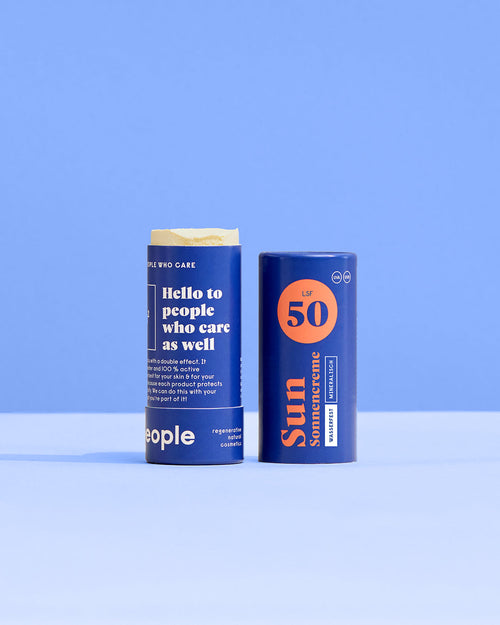
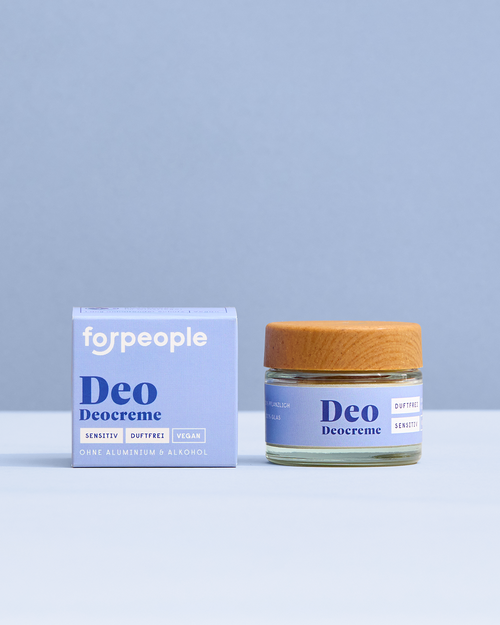
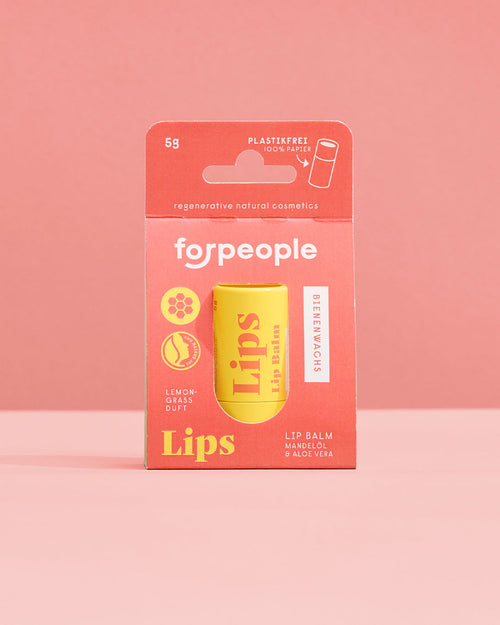
In the Solid Sunscreen SPF50, shea butter is the first ingredient, ahead of the mineral UV filters zinc oxide and titanium dioxide. In the Sensitive Deodorant Cream it is the second ingredient after potato starch. The Lip Balm - Lemongrass combines it with beeswax and sunflower oil. More on waxes on Beeswax in skin care and Candelilla wax or beeswax.
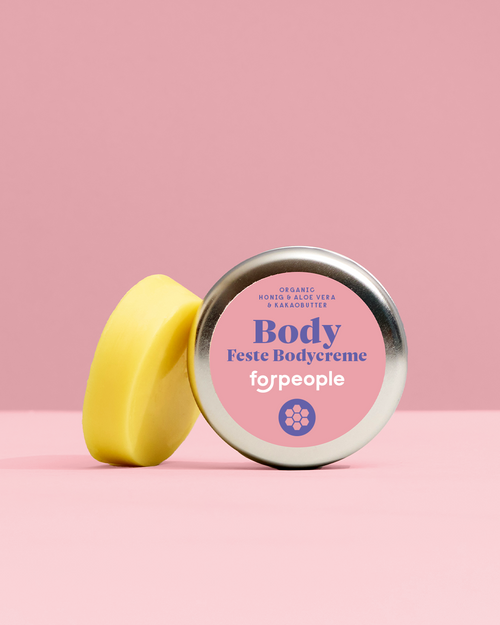
Shea butter and cocoa butter are often combined. The Solid Body Butter - Beeswax & Aloe Vera contains both. Whether an oil or a butter suits you better is described on Body oil or body butter.
Frequently asked questions
Why has my shea butter become grainy?
When shea butter melts and then slowly solidifies again, the different fats can crystallise separately. Small grains form. This is a cosmetic flaw, not spoilage; the grains melt on the skin. That is why solid care is best stored cool – see Storing solid cosmetics in summer.
Is shea butter a problem for people who react to nuts?
Shea butter comes from a seed kernel. If you react to nuts or seeds, ask a doctor before use and test a new product on a small patch of skin first.
Does shea butter go rancid?
Thanks to its high share of saturated fatty acids and its tocopherols, shea butter is fairly stable. Over time it can still oxidise. If a product smells clearly rancid, stop using it. More on this on Shelf life of cosmetics.
Why does the INCI say "Butyrospermum Parkii"?
That is the older botanical name of the shea tree. The INCI name was kept, even though the plant is now called Vitellaria paradoxa. More on Reading an INCI list.
At forpeople
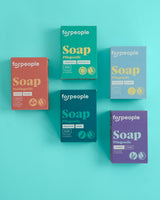
Shea butter (Butyrospermum Parkii Butter) is in the ingredient list of these products, among others:
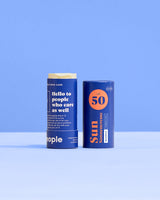
- Solid Sunscreen SPF50, 40 g, €17.90 – shea butter as the first ingredient, mineral UV protection with zinc oxide and titanium dioxide.
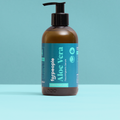
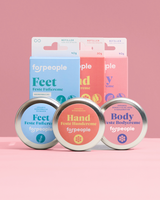
- Solid Body Butter - Beeswax & Aloe Vera, 40 g, €9.90 – with cocoa butter, olive oil, beeswax, sunflower oil and shea butter.
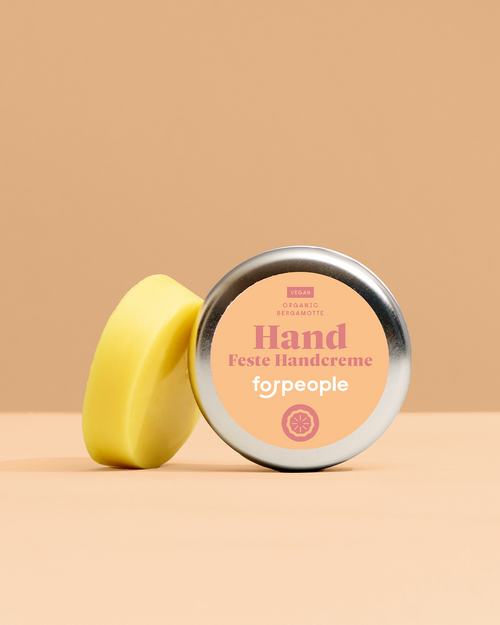
- Solid Vegan Hand Cream - Bergamot, 30 g, €9.90 – vegan, with candelilla wax, jojoba oil, olive oil and shea butter.
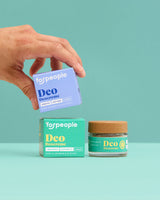
- Sensitive Deodorant Cream, 50 g, €8.90 – without fragrances, with starch, shea butter and baking soda.
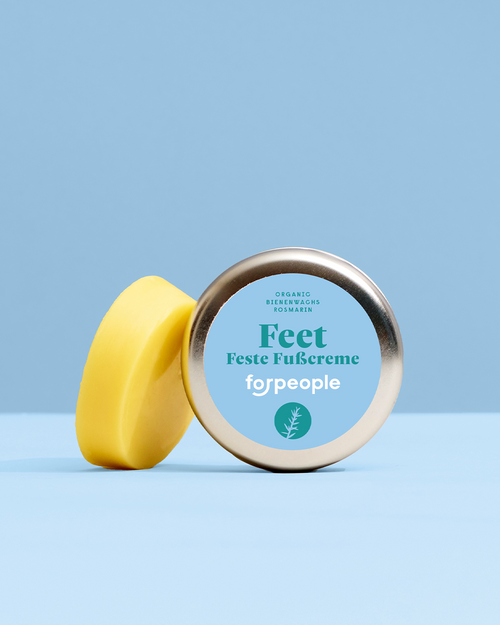
The Solid Foot Cream – Rosemary & Sage and the lip balms also contain shea butter. General information on formulas without water: Water-free cosmetics.
Sources
- Akihisa T, Kojima N, Katoh N et al. (2010): Triterpene alcohol and fatty acid composition of shea nuts from seven African countries. J Oleo Sci 59(7): 351–360. doi:10.5650/jos.59.351
- Di Vincenzo D, Maranz S, Serraiocco A et al. (2005): Regional variation in shea butter lipid and triterpene composition in four African countries. J Agric Food Chem 53(19): 7473–7479. doi:10.1021/jf0509759
- Honfo FG, Akissoe N, Linnemann AR et al. (2014): Nutritional composition of shea products and chemical properties of shea butter: a review. Crit Rev Food Sci Nutr 54(5): 673–686. doi:10.1080/10408398.2011.604142
- Abdel-Razek AG, Abo-Elwafa GA, Al-Amrousi EF et al. (2023): Effect of Refining and Fractionation Processes on Minor Components, Fatty Acids, Antioxidant and Antimicrobial Activities of Shea Butter. Foods 12(8): 1626. doi:10.3390/foods12081626