


What happens during saponification
Soap is a salt of fatty acids. It forms when animal or plant fats, such as olive or coconut oil, react with a strong base such as sodium hydroxide. Sodium hydroxide makes solid soap, potassium hydroxide soft or liquid soap (Mijaljica et al. 2022). Chemically, each fat molecule (a triglyceride) is split into three fatty acids and one glycerin; the fatty acids combine with the sodium to form soap.
How much lye a fat needs is described by the saponification value. It states how many milligrams of potassium hydroxide are needed to saponify one gram of fat completely. Every oil has its own value. Soap makers use it to calculate the amount of lye for their recipe.
| Step | What happens | Free lye? |
|---|---|---|
| Preparing the lye | sodium hydroxide is dissolved in water or another liquid | yes, highly caustic |
| Mixing lye and oils | saponification begins, the mixture thickens | yes, still reactive |
| Pouring into a mould, letting it set | most of the lye reacts within the first days | decreasing |
| Curing, usually several weeks | the remaining reaction finishes, water evaporates, the soap gets harder | no, with a correct recipe |
Superfatting: why some oil is left over
Handmade soaps are usually superfatted. This means the soap maker uses less lye than would be needed in theory for all the oils. A small part of the oils then remains unsaponified in the soap. There are two reasons for this. First, it ensures the lye is used up completely, even if the saponification values of the oils vary slightly. Second, a little oil remains in the bar and affects how your skin feels when washing. The level of superfatting is not stated on the label.
The glycerin formed during saponification also usually stays in handmade soap, because it is not separated off.
Why Sodium Hydroxide is on the INCI list
The INCI list names the ingredients in descending order of their weight at the time they were added (Regulation (EC) No 1223/2009, Art. 19). For soap, there are two common ways of writing it:
- Starting materials: "Olea Europaea Fruit Oil, Cocos Nucifera Oil, Aqua, Sodium Hydroxide …". Here you see what went into the pot, including the lye.
- Reaction products: "Sodium Olivate, Sodium Cocoate …". In the EU database of cosmetic ingredients, Sodium Olivate is listed as the sodium salt of the fatty acids from olive oil, and Sodium Cocoate correspondingly for coconut oil, each with the function "cleansing" (CosIng).
Both ways describe the same soap. "Sodium Hydroxide" on the list therefore does not mean there is lye in the finished bar. Sodium hydroxide as a substance is regulated in cosmetics, by the way: Annex III of the Cosmetics Regulation (No. 15a) sets maximum amounts and warnings for certain uses, such as a pH below 11 when used to adjust pH. How to read an INCI list in general is explained in Reading an INCI list.
The pH: alkaline, but not caustic
In a study of commercial soaps, the majority had a pH of 9 to 10 (Tarun et al. 2014). A review gives pH 8.5 to 11 for soap in general and pH 5.5 to 7 for synthetic cleansing bars (syndets) (Mijaljica et al. 2022). The skin surface, on the other hand, is slightly acidic. In a study of 330 people, the natural skin pH was on average below 5. After washing it rises temporarily; even tap water with a pH of around 8 raised it for up to six hours before it returned (Lambers et al. 2006).
Soap or syndet is therefore a question of skin type and preference. If your skin feels tight after washing, applying care afterwards can help; more in Cracked hands from washing and The skin barrier explained simply. If your skin reacts, stop using the soap.
Making soap yourself: take care with the lye
Sodium hydroxide solution is highly caustic and can seriously damage skin and eyes. Anyone making their own soap wears safety goggles and gloves, works with an accurate scale and a soap calculator, always adds the lye to the water and not the other way round, and keeps children and pets away. A course with an experienced soap maker is a sensible way to start. Homemade soap is meant for your own use; anyone who sells it or supplies it commercially needs, among other things, a safety assessment under the EU Cosmetics Regulation (Regulation (EC) No 1223/2009, Art. 10). Soap also contains water; why homemade products with water age differently from water-free ones is explained in How long does homemade cream last?.
Frequently asked questions
Is natural soap caustic?
No, if it has been calculated correctly and fully matured. The lye has then reacted completely with the oils. Soap is alkaline, but not caustic.
Why is sodium hydroxide listed in my soap's ingredients?
Because the INCI list names the starting materials added during manufacture. In the finished bar, it is present as soap.
What is Sodium Olivate?
The sodium salt of the fatty acids from olive oil, in other words the actual soap made from olive oil. Some manufacturers write it this way instead of "olive oil + sodium hydroxide".
Why does soap have to cure?
During curing, saponification finishes and water evaporates. The soap becomes harder and lasts longer. How to store it afterwards so it does not go mushy is explained in Storing solid soap.
Is natural soap water-free?
No. The lye is dissolved in water or another liquid for manufacture, and part of it stays in the bar. The terms are explained in Water-free, low-water, anhydrous.
At forpeople
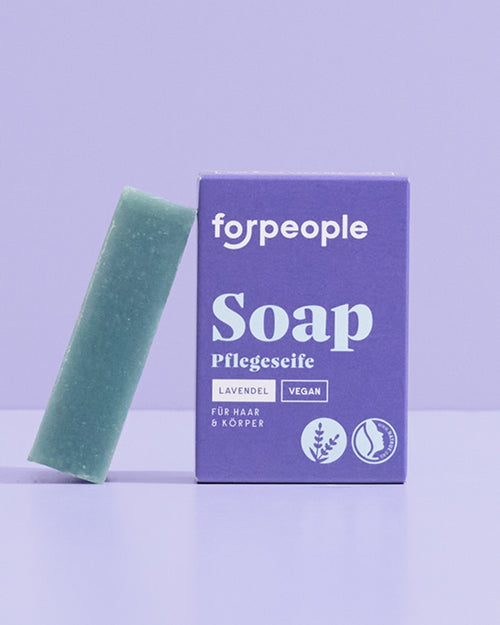
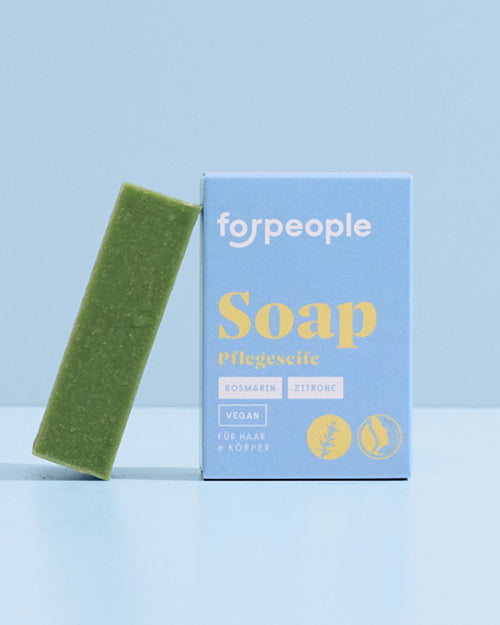
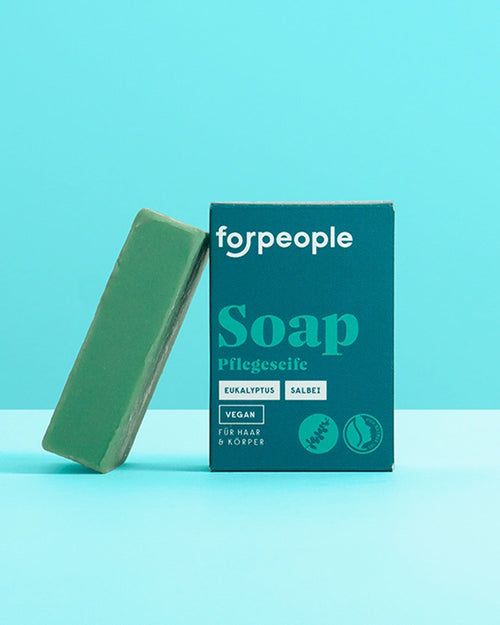
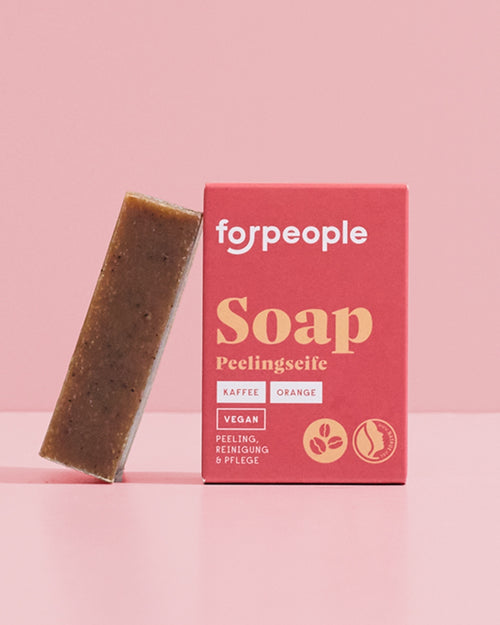
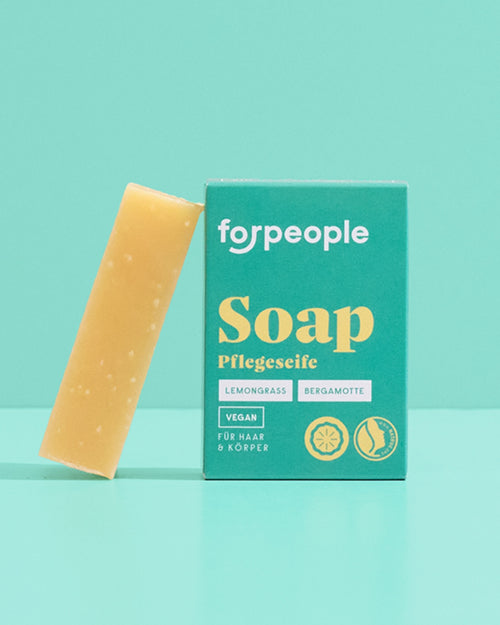
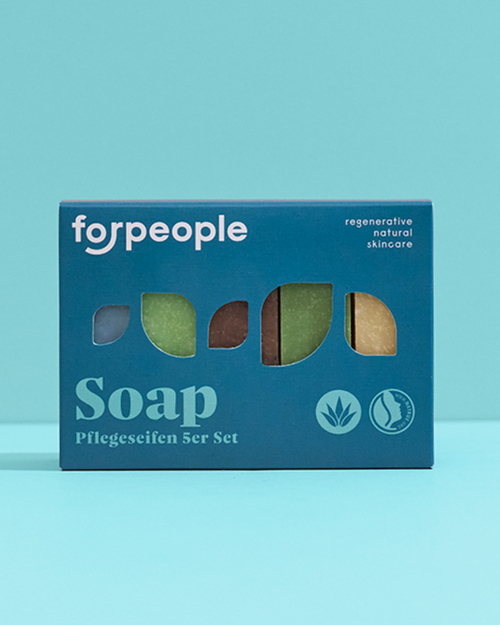
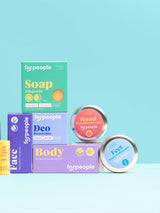
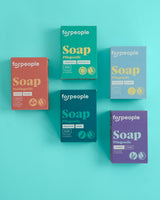
Our solid soaps (75 g each, €8.90) are made from plant oils and sodium hydroxide, and their INCI lists name the starting materials. For the Aloe Vera Soap – Lavender, the list begins with olive oil, coconut oil, Aqua and Sodium Hydroxide; the same applies to Aloe Vera Soap – Rosemary & Lemon, Aloe Vera Soap – Eucalyptus & Sage and Aloe Vera Soap with Scrub - Coffee & Orange. In the Aloe Vera Soap - Lemongrass, aloe juice (Aloe Barbadensis Leaf Juice) is in third place ahead of Sodium Hydroxide, with Aqua further down; here aloe juice replaces part of the water. All our soaps therefore contain water. Several varieties come together in the Organic Soap Set – 5 Scents in a Value Pack (€39.90). More on this: Aloe vera instead of water · Storing solid soap · Essential oils and fragrance allergens · Reading an INCI list
Sources
- Mijaljica D, Spada F, Harrison IP (2022): Skin Cleansing without or with Compromise: Soaps and Syndets. Molecules 27(6): 2010. https://doi.org/10.3390/molecules27062010
- Tarun J, Susan J, Suria J, Susan VJ, Criton S (2014): Evaluation of pH of Bathing Soaps and Shampoos for Skin and Hair Care. Indian J Dermatol 59(5): 442–444. https://doi.org/10.4103/0019-5154.139861
- Lambers H, Piessens S, Bloem A, Pronk H, Finkel P (2006): Natural skin surface pH is on average below 5, which is beneficial for its resident flora. Int J Cosmet Sci 28(5): 359–370. https://doi.org/10.1111/j.1467-2494.2006.00344.x
- Europäisches Parlament und Rat (2009): Verordnung (EG) Nr. 1223/2009 über kosmetische Mittel, Art. 10, Art. 19 und Anhang III Nr. 15a. ABl. L 342: 59. https://eur-lex.europa.eu/eli/reg/2009/1223/oj
- Europäische Kommission: CosIng – Datenbank kosmetischer Inhaltsstoffe, Einträge SODIUM OLIVATE und SODIUM COCOATE. https://ec.europa.eu/growth/tools-databases/cosing/