


What happens in a bar of soap
Soap forms when fats and oils react with lye. This produces the salts of the fatty acids, which are the actual soap, and glycerine as a second product. In industry, part of this glycerine is separated off with the lye and sold as a raw material in its own right; so-called soap-lye crude glycerine comes from exactly this process (PubChem: Glycerol). In many handmade soaps, by contrast, the glycerine stays in the bar. What exactly happens during saponification and whether a finished soap still contains lye is explained in Is there still lye in natural soap?
Glycerine is hygroscopic, meaning it absorbs moisture from the air (PubChem: Glycerol). In skin care, this is exactly what is wanted, because it acts as a humectant; more in Humectants, occlusives, emollients. In a humid bathroom, however, it also means that the surface of a soap containing glycerine stays damp longer and softens faster.
Then there is superfatting. Many soapmakers use slightly less lye than would be needed to saponify all the oils. A small part of the oils therefore stays unsaponified in the bar. This makes the soap feel milder, but also somewhat softer. And the oil blend plays a role: soaps with a lot of olive oil are considered rather soft and need time to cure, while coconut oil makes them harder and more foaming.
The most common reasons for mushy soap
| Cause | What happens | What helps |
|---|---|---|
| Soap dish without drainage | The soap sits in a puddle, the underside dissolves | Dish with a grid or ridges, magnetic holder |
| Shelf in the shower spray | The soap gets wet every time you shower, even when it is not used | Choose a spot out of the spray |
| No airflow | The soap does not dry between uses | Air the room after showering, do not put the soap in a closed tin |
| Wet soap in the travel tin | The moisture stays trapped | Let it dry before packing, open the tin when you arrive |
| Fresh, barely cured soap | The bar still contains more water | Store new soaps dry and airy until you need them |
| Soft formula | Lots of olive oil, superfatting, glycerine | Be especially consistent about dry storage |
How to store bar soap properly
- Rinse briefly after washing: Rinse off lather so that no slimy layer forms.
- Let it drip: Hold the soap in your hand for a moment or shake it off before putting it down.
- Air from all sides: Ideally the soap hangs freely or rests on just a few points. A magnetic holder keeps it on the wall so that it dries all round.
- Out of the water: A shelf or the edge of the washbasin that the shower spray does not reach is better than the shower shelf.
- Keep spare bars dry: Unused bars belong in a dry cupboard, not in the humid bathroom. That way they keep hardening.
- Cut large bars: If you cut a large bar in half and only use one half, less surface gets wet.
The same rules apply to shampoo bars. With solid cream it is the other way round: it does not tolerate heat well, and water hardly matters. This is explained in Storing solid cosmetics.
Is mushy soap unhygienic?
Many people worry that germs grow on used soap. Studies do find bacteria on used bars, more on wet, heavily used ones than on dry, rarely used ones (Brook & Brook 1993). Whether these germs transfer to the skin during handwashing was tested specifically: bars were inoculated with bacteria at levels well above those found on used soap, and 16 people washed their hands with them. Afterwards, none of the test bacteria could be detected on anyone's hands. The authors conclude that washing your hands with a previously used bar carries little risk (Heinze & Yackovich 1988). The study used a commercial deodorant soap whose additive was not active against the bacteria tested.
Still: a soap stored dry is more pleasant, lasts longer and does not form a slimy rim. Rinse the soap dish itself regularly and let it dry. If you share a bar with several people and would rather not, give everyone their own bar. More on hygiene with solid products in Hygiene with water-free cosmetics.
On the go, at the gym and when travelling
Soap is most often mushy on the go because it goes into a tin wet. A tin with a drainage grid keeps the bar away from water at the bottom. After showering, let the soap air-dry briefly, then pack it and open the tin when you arrive. A natural-fibre soap pouch can be hung up to dry, and small leftovers can be used up in it. Whether bar soap is allowed in hand luggage is explained in Solid cream in hand luggage.
Frequently asked questions
Why does natural soap soften faster than supermarket soap?
Handmade soap often keeps its glycerine and is frequently superfatted. Both make it feel milder, but more sensitive to moisture.
Can I rescue mushy soap?
Yes. Leave it in an airy, dry place for a day or two until the surface is firm again. You can simply use up the softened layer next time you wash.
Is a wooden soap dish a good idea?
Only if it has ridges or bars and dries well itself. A flat dish in which water stands makes any soap mushy.
How long does a bar of soap last?
That depends on size, formula, frequency of use and storage. A fixed figure cannot be given reliably. Stored dry, a bar lasts much longer than in a puddle.
Does bar soap contain water?
Yes, bar soaps are made with water and still contain some when finished. Unlike solid creams, they are therefore not water-free cosmetics. The terms are explained in Water-free, low-water, anhydrous.
At forpeople
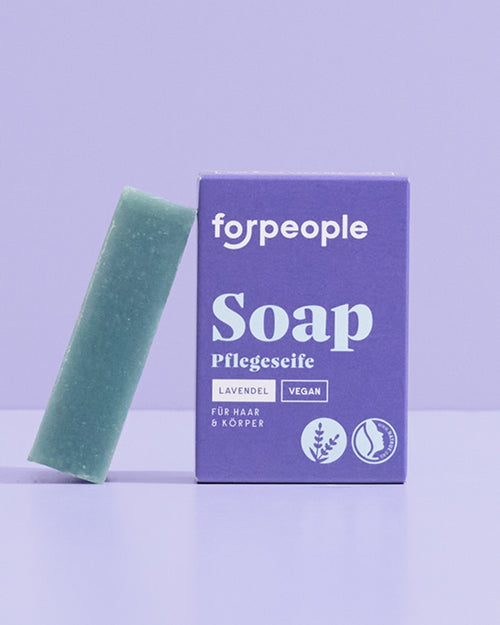
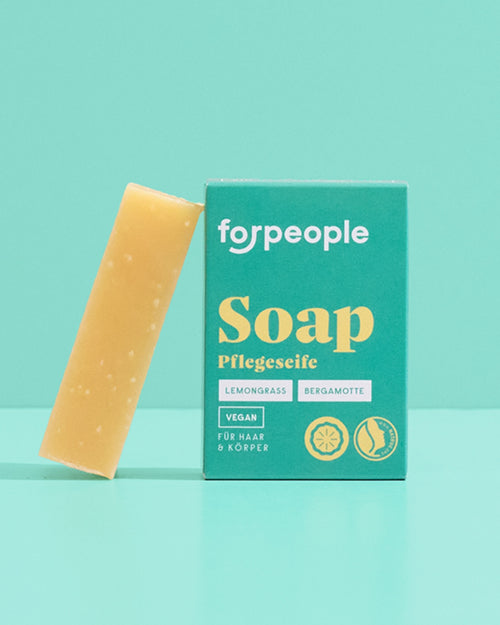
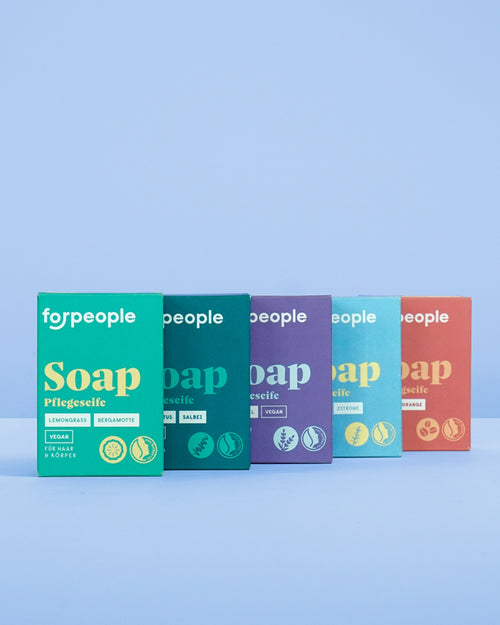
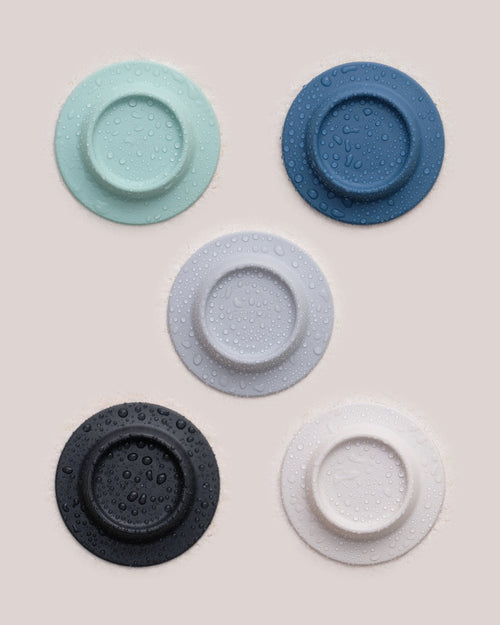
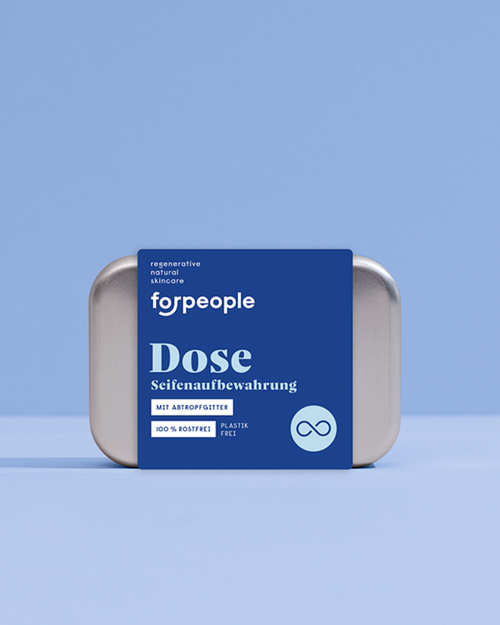
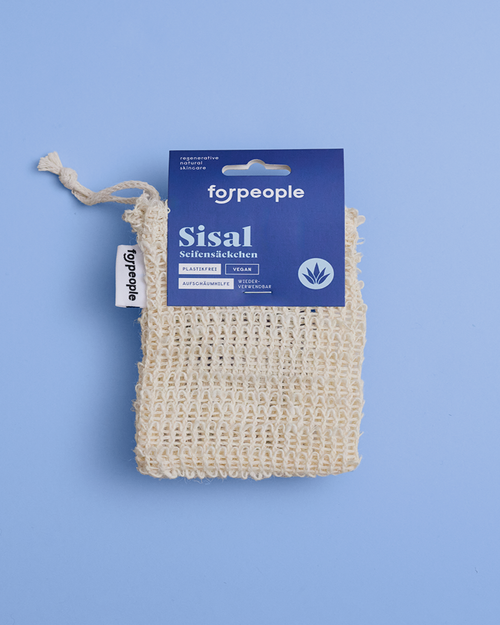
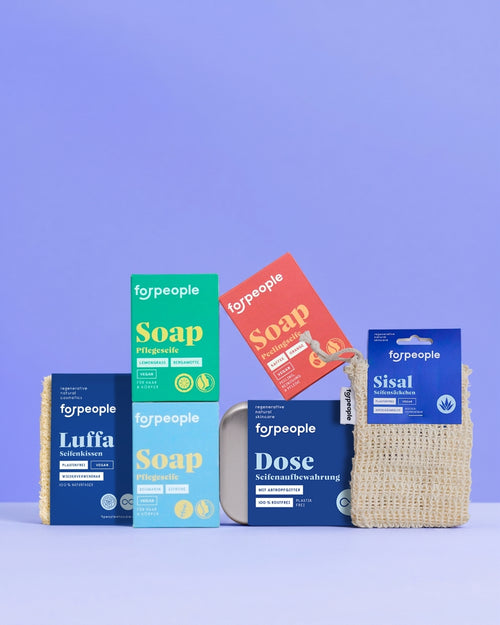
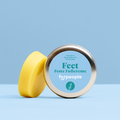
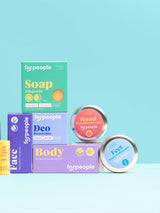
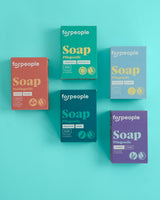
According to the ingredient list, our bar soaps contain, among other things, olive oil, coconut oil, water, sodium hydroxide and shea butter, for example the Aloe Vera Soap – Lavender (75 g, €8.90) and the Aloe Vera Soap - Lemongrass (75 g, €8.90); all five varieties come in the Aloe Soap Set – 5 Scents, Individually Wrapped (€42.90). For dry storage: the Soapi Magnetic Soap Holder for Bar Soap (€12.95): a bottle cap is pressed into the soap, a magnet holds it, and the holder sticks to smooth surfaces such as tiles or glass with a waterproof adhesive pad; the Aluminium Soap Tin with Drainage Grid (€8.90), the Luffa Soap Dish – Natural (€3.90) and the Sisal Soap Pouch (€3.90). For travelling there is the Soap Travel Set – for On the Go (€39.90). More on this: Is there still lye in natural soap? · Cracked hands from washing · How to read an INCI list · Shelf life and the PAO symbol
Sources
- National Center for Biotechnology Information (NCBI): PubChem Compound Summary for CID 753, Glycerol (Abschnitte Physical Description, Methods of Manufacturing). https://pubchem.ncbi.nlm.nih.gov/compound/753
- Brook SJ, Brook I (1993): Contamination of bar soaps in a household setting. Microbios 76(306): 55–57. https://pubmed.ncbi.nlm.nih.gov/8264434/
- Heinze JE, Yackovich F (1988): Washing with contaminated bar soap is unlikely to transfer bacteria. Epidemiol Infect 101(1): 135–142. https://doi.org/10.1017/s0950268800029290