


Not all soap is the same
In everyday language, anything that lathers is called "soap". Chemically there are two groups:
- Soap in the strict sense is made when oils and fats react with lye. The ingredient list then shows oils together with Sodium Hydroxide or Potassium Hydroxide, or the finished salts such as Sodium Olivate. Such soaps are alkaline. How saponification works and why finished soap should no longer contain free lye is explained in Is there still lye in natural soap?.
- Syndets are cleansers made from synthetic surfactants. Most liquid soaps and washing lotions belong to this group, but so do some solid "cleansing bars". Their pH can be set to neutral or slightly acidic.
So the form says little: there are solid syndets and liquid soaps based on potassium. If you want to know exactly, read the INCI list; how to do that is covered in Reading an INCI list.
What this means for dry hands
The natural skin surface is acidic. A large series of measurements with 330 participants arrived at a natural pH of about 4.7 on average. Soaps and even tap water raise it; after water alone it took up to six hours to come back down (Lambers et al. 2006). In experiments, alkaline solutions with pH 10 made the stratum corneum swell and changed its fats, even without surfactants (Ananthapadmanabhan et al. 2004). In a study of 29 cleansing products, skin irritation was clearly linked to pH; the mildest products were mostly syndets (Baranda et al. 2002).
That doesn't mean syndets are automatically mild. How much a surfactant dries out the skin depends on how strongly it reacts with skin proteins and fats. Some surfactants are considered mild, others clearly more irritating (Ananthapadmanabhan et al. 2004). Conversely, many bar soaps contain nourishing oils and butters. For very dry hands a mild syndet can be the better choice; if you like soap and moisturise afterwards, you'll usually get on well with it.
Bar soap and liquid soap compared
| Feature | Classic bar soap | Liquid soap (usually a syndet) |
|---|---|---|
| Surfactants | soap salts from saponified oils | synthetic surfactants, often combined |
| pH value | alkaline | adjustable, often neutral to slightly acidic |
| Water content | low, solid | mostly water |
| Preservation | often without preservatives | usually necessary because of the water |
| Dosing | by feel, often less | one pump, often more than needed |
| Microorganisms on the product | detectable more often if it sits wet | less often in the product, more on the outside of the dispenser |
| Storage | needs to dry between uses | straightforward |
Sources for the table: Ananthapadmanabhan et al. 2004, Baranda et al. 2002, McBride 1984. Why water-based products need preservatives is covered in Preservation and water in cosmetics.
And what about hygiene?
The most common concern with bar soap: whatever lives on the wet bar ends up on your hands the next time you wash. This has been studied several times. In one study, 92 to 96 per cent of samples from used bar soaps were microbiologically positive, compared with 8 per cent for liquid soaps. The amounts on the bars were small compared with what lives on hands anyway, and with liquid soaps microbes were found on the outside of the dispenser (McBride 1984). In one experiment, 16 people washed with soap bars that had deliberately been heavily contaminated with bacteria. Afterwards none of the test microbes could be detected on any hand. The authors saw little risk in hand washing with used bar soap (Heinze & Yackovich 1988).
For the household this means: both forms are suitable for washing your hands. What matters is that the bar doesn't sit in a puddle but can dry between uses. Where many people use the same soap, for example in medical practices, their own hygiene rules apply; a dispenser is usually provided there. How to keep soap dry is covered in Solid soap goes mushy.
How to be kind to your hands when washing
- Lukewarm, not hot. The warmer a surfactant solution, the more it irritated the skin in the experiment (Berardesca et al. 1995).
- Little soap. Rubbing the bar once briefly or half a pump is enough for normally dirty hands.
- Rinse thoroughly. Soap residue on the skin keeps drying it out.
- Pat dry instead of rubbing. Dry between your fingers too.
- Moisturise afterwards. Ideally straight away, while your skin is still warm. A small amount is enough.
If you wash your hands many times a day, you'll find more in Dry, cracked hands from frequent washing. If washing up and cleaning make your hands rough, read Rough hands from washing up. Why hands dry out so quickly in the first place is explained in Why hands dry out faster. If your hands stay red, cracked or painful for weeks, seek medical advice.
Frequently asked questions
Does bar soap dry out hands more than liquid soap?
Not necessarily. Classic soap is alkaline, many liquid soaps are set to neutral or slightly acidic. But how dry your hands get also depends on the surfactants, the amount, the water temperature and moisturising afterwards.
Is bar soap unhygienic?
Microorganisms can be detected on wet bar soap. However, studies found no transfer to the hands during normal washing. What matters is that the soap can dry.
What does "pH skin-neutral" mean?
Usually that a product is set to a slightly acidic pH of around 5.5. Classic soap can't be, because soap salts are only stable in the alkaline range.
Is plain household soap good for dry hands?
Plain household soap is a simple soap without extra nourishing oils. For dry hands it isn't a good everyday choice.
Do I need hand cream after soap?
If your hands are dry, yes. Every cleanser removes fat from the skin, and a cream gives it back.
At forpeople
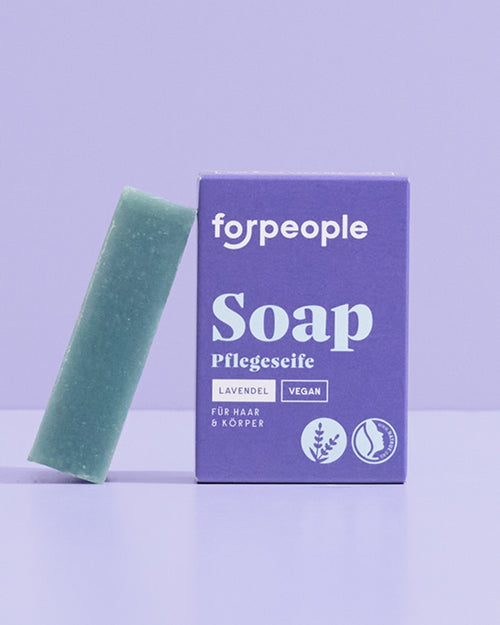
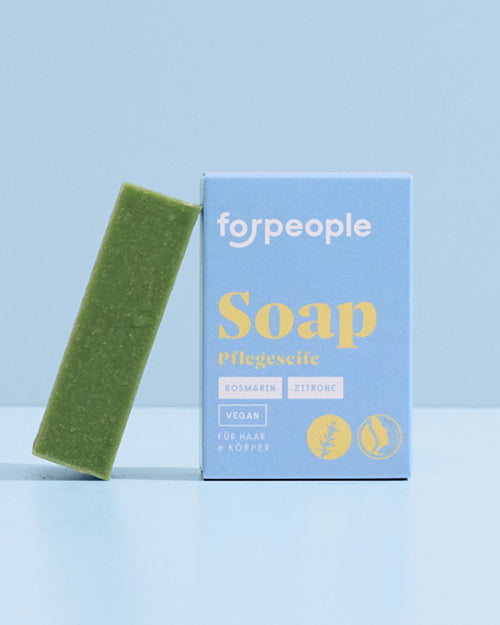
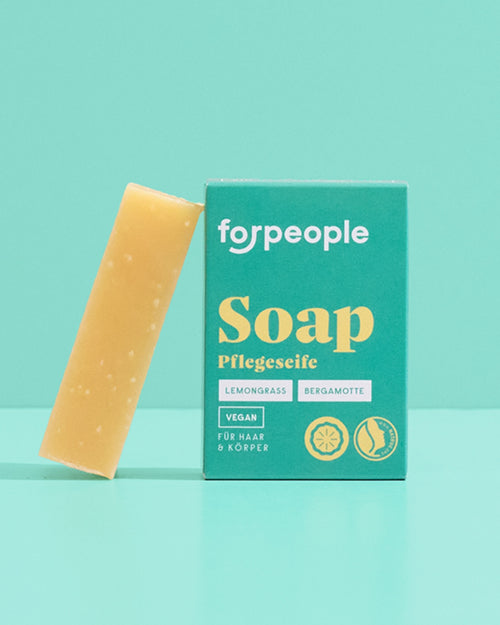
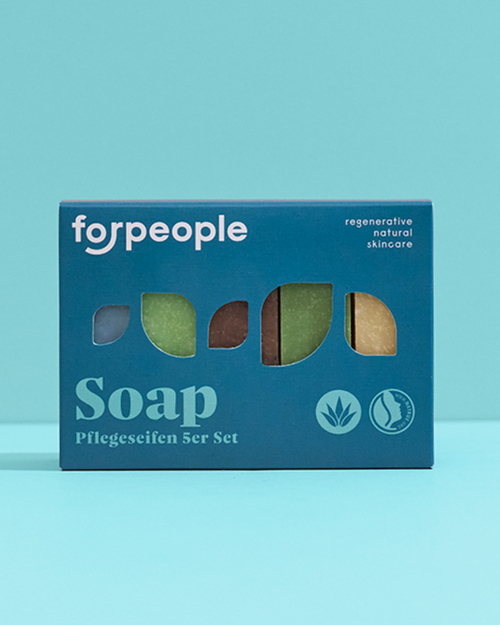
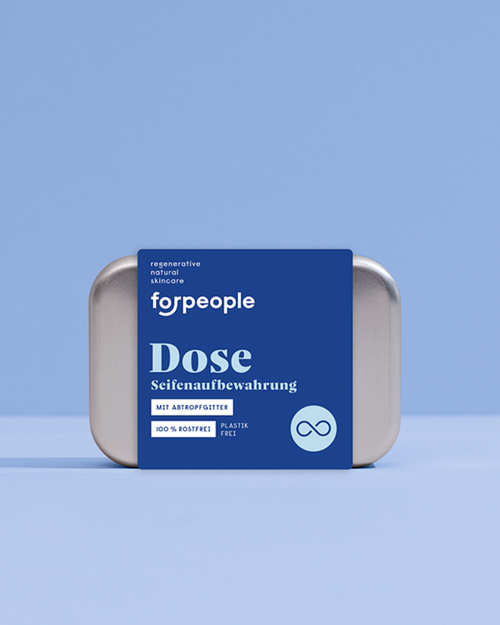
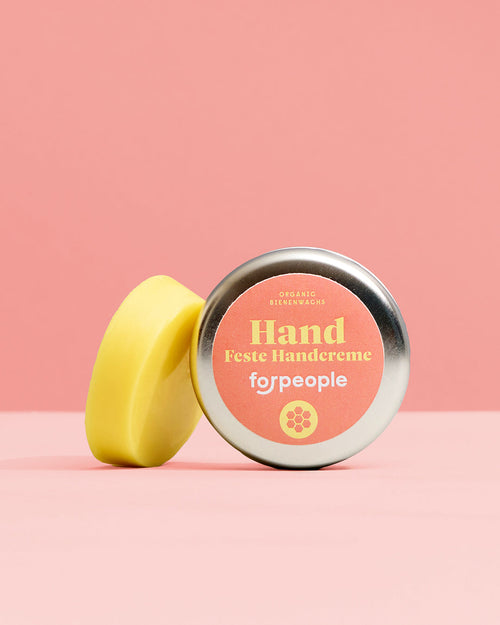
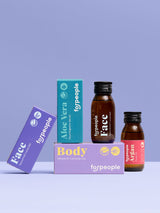
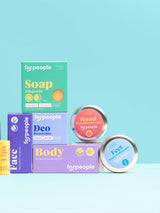
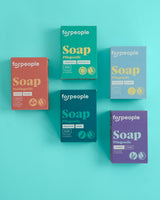
Our soaps are classic soaps made from saponified plant oils and are therefore alkaline. According to their INCI lists, the Aloe Vera Soap – Lavender and the Aloe Vera Soap – Rosemary & Lemon (75 g each, €8.90) contain olive and coconut oil, shea butter, castor, sunflower and argan oil among other ingredients; the Aloe Vera Soap - Lemongrass (75 g, €8.90) also contains aloe vera juice. All three are scented with essential oils. Five varieties come in the Organic Soap Set – 5 Scents in a Value Pack (€39.90). So that the soap can dry, there is the Aluminium Soap Tin with Drainage Grid (€8.90) and the Soapi Magnetic Soap Holder for Bar Soap (€12.95). After washing, the water-free Solid Hand Cream - Beeswax (30 g, €9.90) is a good fit. More on this: Essential oils and fragrance allergens · The skin barrier simply explained · Dry despite moisturising? · Overnight hand mask
Sources
- Ananthapadmanabhan KP, Moore DJ, Subramanyan K, Misra M, Meyer F (2004): Cleansing without compromise: the impact of cleansers on the skin barrier and the technology of mild cleansing. Dermatol Ther 17(Suppl 1): 16–25. https://doi.org/10.1111/j.1396-0296.2004.04s1002.x
- Baranda L, González-Amaro R, Torres-Alvarez B, Alvarez C, Ramírez V (2002): Correlation between pH and irritant effect of cleansers marketed for dry skin. Int J Dermatol 41(8): 494–499. https://doi.org/10.1046/j.1365-4362.2002.01555.x
- Lambers H, Piessens S, Bloem A, Pronk H, Finkel P (2006): Natural skin surface pH is on average below 5, which is beneficial for its resident flora. Int J Cosmet Sci 28(5): 359–370. https://doi.org/10.1111/j.1467-2494.2006.00344.x
- Heinze JE, Yackovich F (1988): Washing with contaminated bar soap is unlikely to transfer bacteria. Epidemiol Infect 101(1): 135–142. https://doi.org/10.1017/s0950268800029290
- McBride ME (1984): Microbial flora of in-use soap products. Appl Environ Microbiol 48(2): 338–341. https://doi.org/10.1128/aem.48.2.338-341.1984
- Berardesca E, Vignoli GP, Distante F, Brizzi P, Rabbiosi G (1995): Effects of water temperature on surfactant-induced skin irritation. Contact Dermatitis 32(2): 83–87. https://doi.org/10.1111/j.1600-0536.1995.tb00751.x