


What essential oils are
Essential oils are not oils in the sense of olive oil or sunflower oil. They are not made of fats, but of many small, fat-soluble and highly volatile molecules from various chemical classes (Turek and Stintzing 2013). That is why they evaporate and smell, while fatty oils stay on the skin.
They are obtained mainly in two ways: most essential oils are produced by distillation with steam or water. Citrus peel oils such as lemon, orange or bergamot, on the other hand, are usually obtained by pressing the peel (SCCS 2012). A single essential oil can contain dozens of individual substances. Which ones, and in what ratio, depends on the plant, cultivation, harvest and processing.
Essential oils are sensitive. Heat, light and oxygen can change their composition, for example through oxidation (Turek and Stintzing 2013). This is not only a question of scent but also of tolerability, as the next section shows.
Why Linalool, Limonene and others appear in the INCI
Fragrance substances may be grouped together in the ingredient list as "Parfum". For certain fragrance substances known as contact allergens, however, the Cosmetics Regulation requires them to be named individually as well, as soon as they exceed the threshold of 0.001% (leave-on) or 0.01% (rinse-off) (Regulation (EC) No 1223/2009, Annex III). The declaration is information, not a warning: it is meant to help people who already react to one of these substances to avoid it.
The EU Scientific Committee on Consumer Safety (SCCS) stated in 2012 that the same limits should apply to these substances whether they are added as a single substance or are contained as a constituent of a natural raw material (SCCS 2012). That is why natural cosmetics with essential oils in particular often show a whole series of such names at the end of the INCI. The SCCS estimated that around 1–3% of the population in Europe have a contact allergy to fragrance substances.
Some of these substances change on contact with air. According to the SCCS opinion, Linalool and Limonene rarely cause reactions in their unchanged form, whereas the oxidation products formed in air do so considerably more often. This also applies to linalool and linalyl acetate, the main constituents of lavender oil, when the oil is exposed to air (SCCS 2012). Storing products with essential oils closed, cool and dark therefore makes particular sense.
Which constituents come from which oil
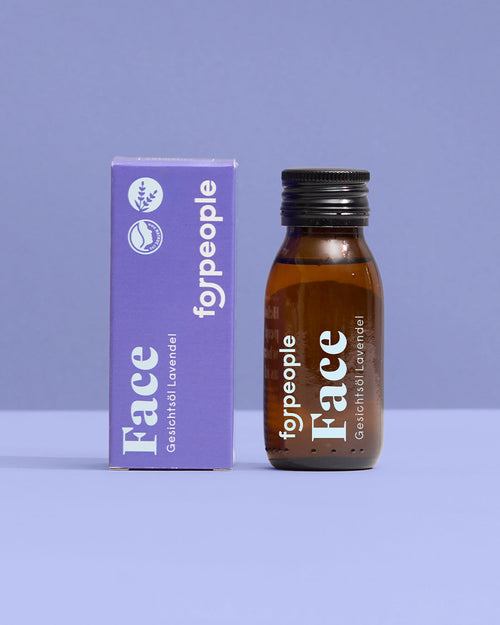
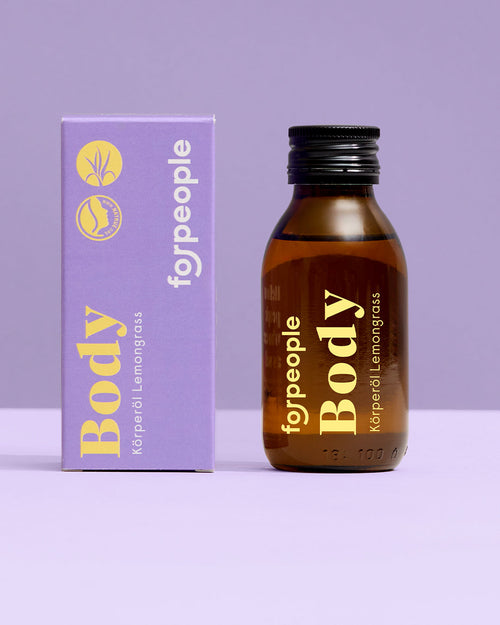
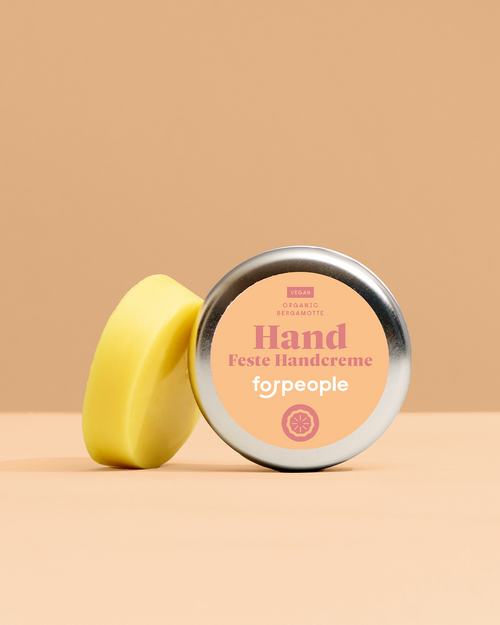
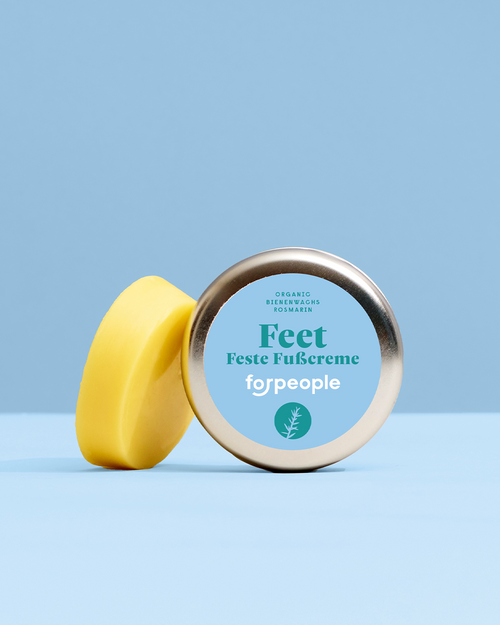
The table below shows which fragrance substances are named in the INCI of some forpeople products as constituents of the essential oils they contain. It is based on the ingredient information in the shop and shows how much the declarations differ from oil to oil.
| Product | Essential oils according to INCI | Fragrance substances named individually |
|---|---|---|
| Face Oil - Lavender | lavender (Lavandula Angustifolia Oil) | Linalool, Limonene |
| Body Oil - Lemongrass | lemongrass (Cymbopogon Flexuosus Oil) | Citral, Geraniol, Citronellol |
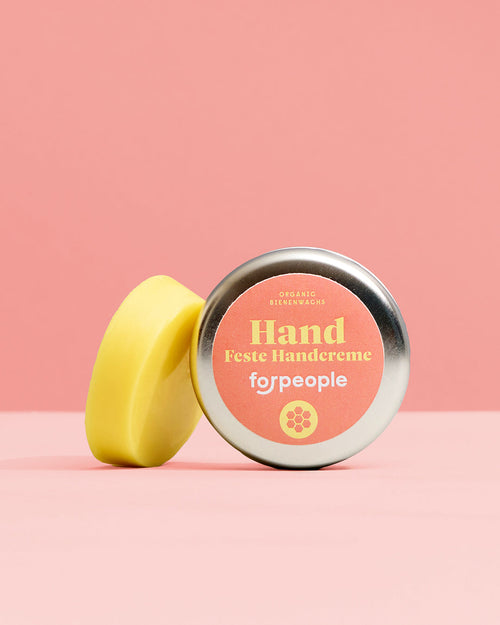
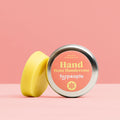
| Solid Vegan Hand Cream - Bergamot | lemon, bergamot | Limonene, Geraniol, Citral, Linalool |
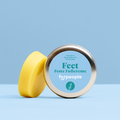
| Solid Foot Cream – Rosemary & Sage | rosemary, eucalyptus, clary sage | Linalool, Limonene, Geraniol |
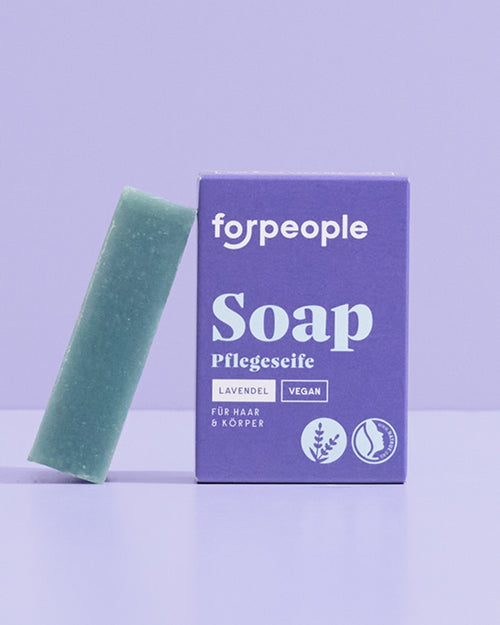
| Aloe Vera Soap – Lavender | lavandin (Lavandula Hybrida Grosso), lavender | Linalool, Linalyl Acetate, Camphor, Beta-Caryophyllene, Limonene, Terpineol, Geraniol, Pinene, Geranyl Acetate |
The soap has the longest list. It is a rinse-off product, for which the higher threshold of 0.01% applies; so the number of names says nothing about the amount of fragrance, but mainly shows which substances the oil in question contains and which of them are on the list.
What Regulation (EU) 2023/1545 changes
Until 2023, 24 allergenic fragrance substances had to be declared individually. In 2012, the SCCS had identified 56 further fragrance substances that have clearly caused allergies in humans. With Regulation (EU) 2023/1545, the European Commission therefore considerably extended the labelling obligation (Regulation (EU) 2023/1545):
- More individual substances: Substances that now have to be declared individually include Pinene, Terpineol, Camphor, Beta-Caryophyllene, Terpinolene, Alpha-Terpinene and Linalyl Acetate.
- Whole essential oils and extracts too: Some plant oils and extracts are now on the list themselves, for example lemon peel oil (Citrus Limon Peel Oil) and lavender oils or extracts, which are to be declared uniformly as "Lavandula Oil/Extract".
- Same thresholds: The new entries are also subject to 0.001% in leave-on products and 0.01% in rinse-off products.
- Uniform names: Similar substances have been grouped into entries, and it is specified under which name they appear in the INCI.
Transition periods: The regulation entered into force in August 2023. Products that do not meet the new requirements could still be placed on the EU market for the first time until 31 July 2026. Products already placed on the market before then may still be sold until 31 July 2028 (Regulation (EU) 2023/1545, Annex). Older and new labelling can therefore be found side by side in shops until 2028.
Natural does not mean free of allergens
Whether a fragrance substance comes from a plant or from a lab makes no difference to the labelling. A product with essential oils is not automatically gentler than a perfumed product. Equally, not every product with essential oils is unsuitable for you. What matters is which individual substances you react to. If you know that, the INCI helps you choose; how it is structured is explained on the page How to read an INCI list.
If your skin is sensitive or you react to fragrances, products without added fragrance are an obvious choice. An overview is available on the page Fragrance-free: ingredients at a glance. If your skin reacts, stop using the product and seek medical advice.
Frequently asked questions
Are Linalool and Limonene added chemicals?
Not necessarily. They occur naturally in many essential oils, for example in lavender or citrus peel. If they appear in the INCI, this only means that they are present above the labelling threshold. At forpeople, they are marked with a double asterisk as constituents of natural essential oils.
Why does a scented product have no allergens in its INCI?
Either the substances subject to labelling are below the threshold, or the scent comes from substances that are not on the list, for example from an extract.
Are essential oils in cosmetics safe?
Cosmetic products in the EU must be safe under normal use; this is assessed for every product in a safety report. For people with a known fragrance allergy, the individual labelling is the most important tool.
How should I store products with essential oils?
Tightly closed, cool and protected from light. This slows down the oxidation of the fragrance substances. More on this on the page Cosmetics shelf life and the PAO symbol.
At forpeople
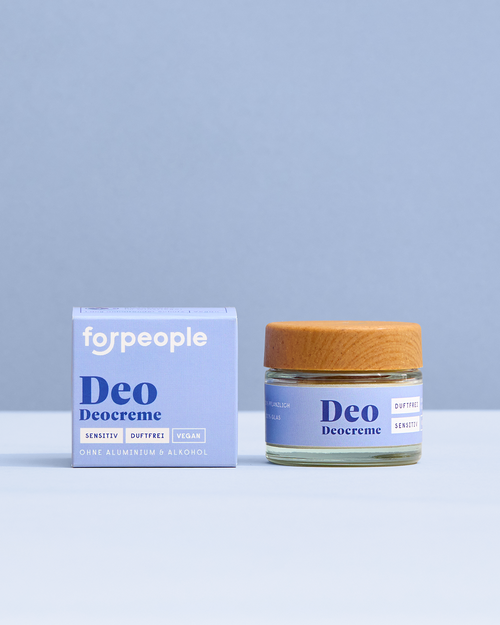
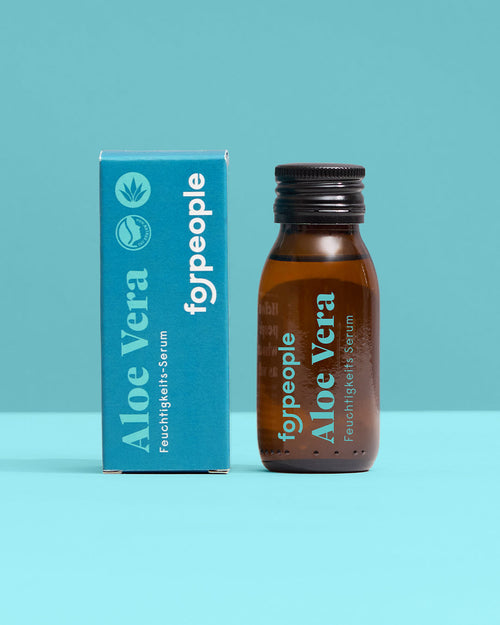
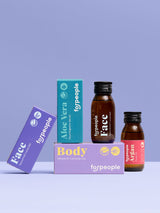
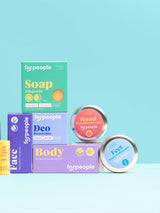
Some forpeople products contain essential oils, others have no added fragrance. According to their INCI, products without essential oils include the Solid Hand Cream - Beeswax, the Sensitive Deodorant Cream, the Aloe Vera Serum 99.6% and the Jojoba Oil - pure. In all ingredient information in the shop, constituents of essential oils are marked with a double asterisk. More about deodorant creams on Deodorant without aluminium: making the switch.
- Solid Hand Cream - Beeswax, 30 g, €9.90, without essential oils
- Sensitive Deodorant Cream, 50 g, €8.90, without essential oils
- Face Oil - Lavender, 50 ml, €21.90, with lavender oil
- Solid Vegan Hand Cream - Bergamot, 30 g, €9.90, with lemon and bergamot oil
Read more: Fragrance-free: ingredients at a glance · Natural cosmetics standards explained · Body oil or body butter
Sources
- Verordnung (EG) Nr. 1223/2009 des Europäischen Parlaments und des Rates vom 30. November 2009 über kosmetische Mittel, Art. 19 und Anhang III. ABl. L 342 vom 22.12.2009, S. 59. eur-lex.europa.eu/eli/reg/2009/1223/oj
- Verordnung (EU) 2023/1545 der Kommission vom 26. Juli 2023 zur Änderung der Verordnung (EG) Nr. 1223/2009 hinsichtlich der Kennzeichnung allergieauslösender Duftstoffe in kosmetischen Mitteln. ABl. L 188 vom 27.7.2023, S. 1. eur-lex.europa.eu/eli/reg/2023/1545/oj
- Scientific Committee on Consumer Safety (SCCS) (2012): Opinion on fragrance allergens in cosmetic products. SCCS/1459/11, verabschiedet am 26.–27. Juni 2012. ec.europa.eu – sccs_o_102.pdf
- Turek C, Stintzing FC (2013): Stability of Essential Oils: A Review. Compr Rev Food Sci Food Saf 12(1): 40–53. doi:10.1111/1541-4337.12006