



Two oils, two fatty acid profiles
Plant oils consist mostly of triglycerides: glycerol with three fatty acids attached. Which fatty acids these are determines the properties of the oil. In olive and sunflower oil, two fatty acids are in the foreground:
- Oleic acid (C18:1): monounsaturated, with one double bond.
- Linoleic acid (C18:2): polyunsaturated, with two double bonds. The body cannot produce it itself.
An analysis of 14 plant oils by gas chromatography found the following values for one sample each (Orsavova et al. 2015):
| Fatty acid (share of all fatty acids) | Olive oil | Sunflower oil |
|---|---|---|
| Oleic acid (C18:1) | 66.4% | 28.0% |
| Linoleic acid (C18:2) | 16.4% | 62.2% |
| Palmitic acid (C16:0) | 16.5% | 6.2% |
| Stearic acid (C18:0) | 2.3% | 2.8% |
Source: Orsavova et al. 2015, Table 1. Values vary with variety, cultivation and processing. There are also sunflower varieties whose oil is bred to contain a lot of oleic acid ("high oleic"). In the INCI list you can sometimes recognise such oils by the name Helianthus Annuus Hybrid Oil.
In the ingredient list, olive oil is called Olea Europaea Fruit Oil and sunflower oil Helianthus Annuus Seed Oil. How to read these names is explained on Reading an INCI list.
What research says about oils on the skin
The stratum corneum, the outermost layer of the skin, holds water mainly through its ordered lipids between the skin cells and through water-binding substances inside the cells (Rawlings and Harding 2004). An oil on the skin can affect this lipid layer, and differently depending on the fatty acid. More on the structure on The skin barrier, simply explained.
The study with olive and sunflower oil. Danby and colleagues (2013) studied 19 adult volunteers, with and without a history of skin disease. In the first group, participants applied six drops of olive oil to one forearm twice a day for five weeks. In the second group, olive oil went on one forearm and sunflower oil on the other for four weeks. Results:
- After four weeks, olive oil significantly reduced the integrity of the stratum corneum and caused mild redness – in participants with and without a history of skin disease.
- Sunflower oil preserved the integrity of the stratum corneum, caused no redness and improved skin hydration.
The authors conclude that not every natural oil is good for the skin and call for further research (Danby et al. 2013). The study is small, and it applied pure oil to the same spot for weeks. Formulas in which olive oil is mixed with other ingredients were not studied.
Oleic acid as a substance. That oleic acid in particular can disturb the skin barrier fits with older experiments using pure fatty acids. Tanojo and colleagues (1998) applied various fatty acids dissolved in propylene glycol to volunteers' forearms for three hours under occlusion. Unsaturated fatty acids clearly increased transepidermal water loss – the amount of water that evaporates through the skin – with oleic acid having the strongest effect (Tanojo et al. 1998). These conditions are far from a normal cream. But they show that free oleic acid can make the lipid layer of the stratum corneum more permeable. What transepidermal water loss means is explained on Occlusion and transepidermal water loss.
What this means in everyday life
Some cautious conclusions can be drawn from the findings:
- Pure olive oil as a care oil: if you apply pure olive oil to the same area of skin every day over a long period, it can put a strain on the stratum corneum. That is a reason not to rely on it exclusively.
- Sunflower oil: it performed better in the study mentioned. Oils rich in linoleic acid are, however, more prone to oxidation and should be stored cool and dark.
- The amount matters: an oil as one ingredient among many is something different from a pure oil in large amounts.
If your skin turns red, feels tight or stings after using an oil, stop using it. If a reaction persists, have it checked by a doctor.
Why blends and wax content play a role
In solid creams, oils are almost never used alone. They are blended with other oils, butters and waxes. That changes things in several ways:
- Mix of fatty acids: if olive oil is combined with sunflower oil, the share of oleic acid in the overall blend falls, and linoleic acid is added.
- Wax film: a wax such as beeswax forms a film on the skin that reduces the evaporation of water (Huanbutta et al. 2026). The oil then sits partly within a wax structure.
- Amount per application: with a solid cream you usually apply only a thin layer.
Whether the finding on pure olive oil therefore applies to a particular blend has not been studied. To be honest: nobody knows this for every formula. What can be said is that the studies concerned pure oil, and that formulas with several oils and wax are composed differently.
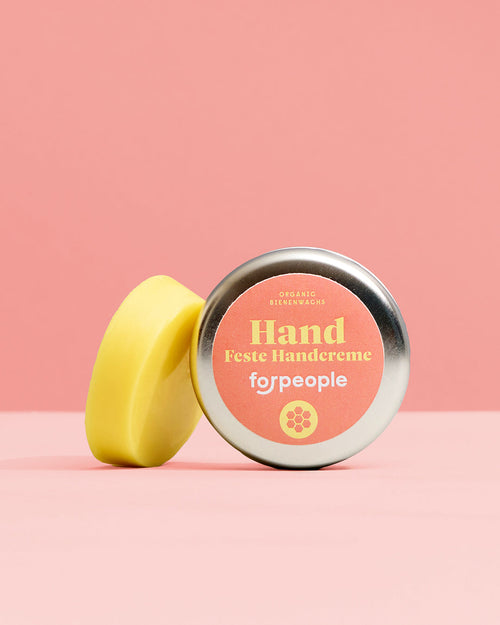
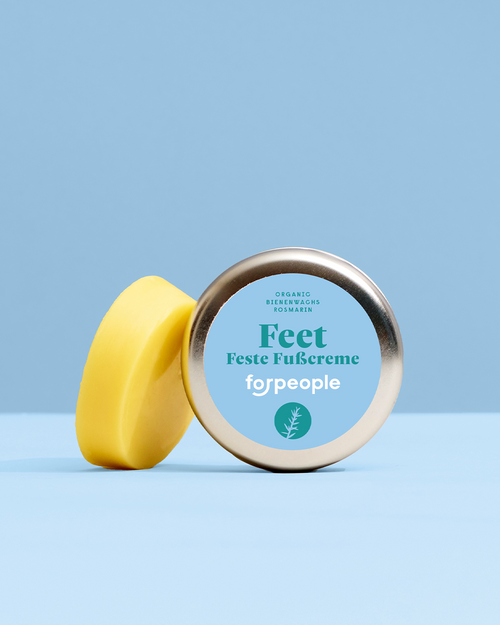
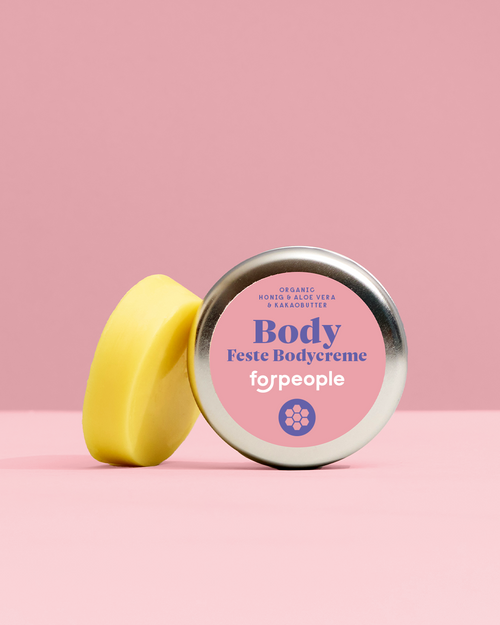
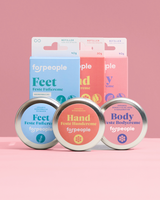
One example of such a blend is the Solid Hand Cream - Beeswax: beeswax comes first, followed by olive oil and sunflower oil. In the Solid Foot Cream – Rosemary & Sage, sunflower oil comes first, followed by beeswax, olive oil and shea butter. The Solid Body Butter - Beeswax & Aloe Vera combines cocoa butter, olive oil, beeswax, sunflower oil and shea butter. More on waxes on Beeswax in skin care, more on butters on Shea butter: composition.
Olive oil in soap: a different case
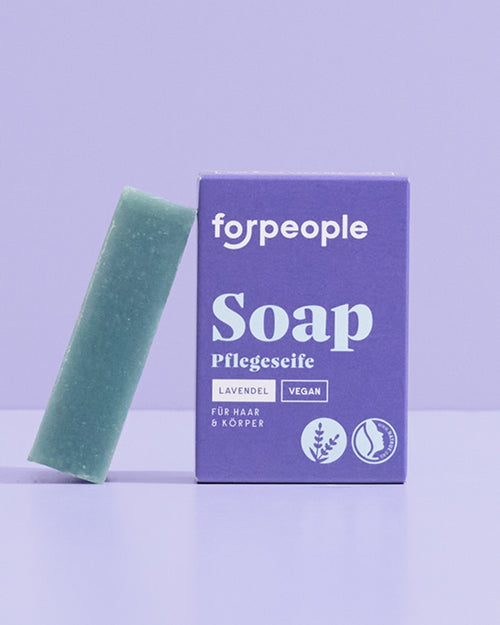
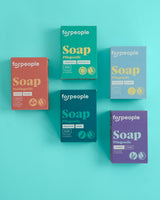
In solid soap, olive oil is no longer an oil in the true sense. During saponification the fat reacts with lye (sodium hydroxide) and becomes soap and glycerol. That is why the INCI list of the Aloe Vera Soap – Lavender shows olive oil alongside Sodium Hydroxide and Aqua. The findings on olive oil as a care oil cannot be applied to soap, because soap is rinsed off after a short time. Why soap and frequent washing dry out the skin is explained on Cracked hands from washing.
Frequently asked questions
Should I avoid olive oil completely?
Not necessarily. The findings concern pure olive oil over weeks. If you are looking for a pure oil for skin care, an oil rich in linoleic acid such as sunflower oil is the more cautious choice based on this study. In blends with wax and other oils, olive oil is a common ingredient.
Is sunflower oil from the kitchen suitable?
Cooking oil is often refined and, depending on the variety, can contain a lot of oleic acid. For the skin, cold-pressed oils are usually used. Check for a fresh smell; rancid oil does not belong on the skin.
Why does sunflower oil go rancid faster?
Linoleic acid has two double bonds and reacts with oxygen more easily than oleic acid. Store it cool, dark and tightly closed. More on Shelf life of cosmetics.
Oil or butter for dry skin on the body?
That depends on how quickly you want something to absorb and how long you want to feel the care. You will find a comparison on Body oil or body butter and Dry skin in winter.
At forpeople
Olive oil or sunflower oil is in the ingredient list of these products, each blended with wax and other fats:
- Solid Hand Cream - Beeswax, 30 g, €9.90 – beeswax, olive oil, sunflower oil, without essential oils.
- Solid Foot Cream – Rosemary & Sage, 40 g, €9.90 – sunflower oil first, with beeswax, olive oil and shea butter plus essential oils.
- Solid Body Butter - Beeswax & Aloe Vera, 40 g, €9.90 – cocoa butter, olive oil, beeswax, sunflower oil, shea butter.
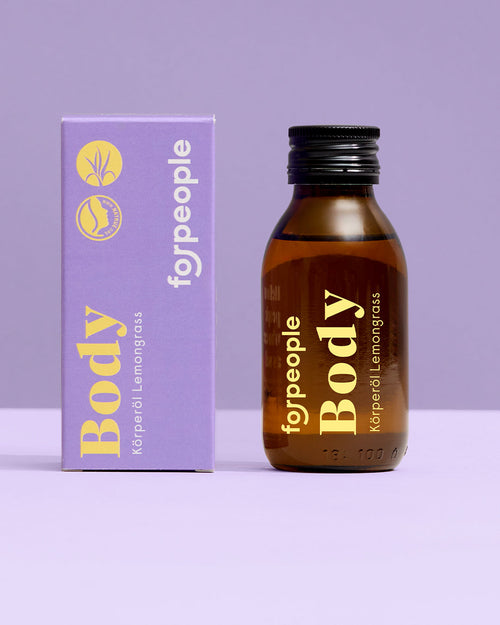
- Body Oil - Lemongrass, 100 ml, €16.90 – a liquid oil made from sesame, safflower, sea buckthorn seed and sunflower oil, without olive oil.
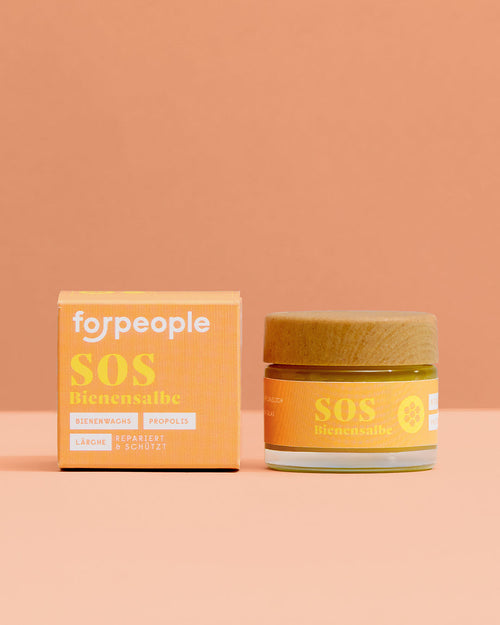
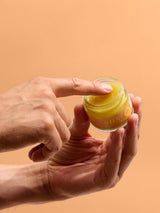
Olive oil is also the first ingredient of the Beeswax Salve Larch & Mandarin in a Glass Jar. General information on care without water: Water-free cosmetics.
Sources
- Danby SG, AlEnezi T, Sultan A et al. (2013): Effect of olive and sunflower seed oil on the adult skin barrier: implications for neonatal skin care. Pediatr Dermatol 30(1): 42–50. doi:10.1111/j.1525-1470.2012.01865.x
- Tanojo H, Boelsma E, Junginger HE et al. (1998): In vivo human skin barrier modulation by topical application of fatty acids. Skin Pharmacol Appl Skin Physiol 11(2): 87–97. doi:10.1159/000029813
- Orsavova J, Misurcova L, Ambrozova JV et al. (2015): Fatty Acids Composition of Vegetable Oils and Its Contribution to Dietary Energy Intake and Dependence of Cardiovascular Mortality on Dietary Intake of Fatty Acids. Int J Mol Sci 16(6): 12871–12890. doi:10.3390/ijms160612871
- Rawlings AV, Harding CR (2004): Moisturization and skin barrier function. Dermatol Ther 17 Suppl 1: 43–48. doi:10.1111/j.1396-0296.2004.04s1005.x
- Huanbutta K, Chuttong B, Danmek K et al. (2026): Beeswax in Pharmaceutical Sciences: A Comprehensive Review of Its Chemical Composition, Functional Applications, Types, and Formulation Roles. Int J Mol Sci 27(8): 3486. doi:10.3390/ijms27083486