




What happens to the film after you apply it
A solid cream consists of oils, plant butters and waxes. On warm skin, these ingredients behave differently. The liquid oils spread and penetrate the uppermost cell layers of the stratum corneum. In a study using confocal Raman microscopy, paraffin oil and two plant oils were measured 30 and 90 minutes after application: all three were found in the upper layers of the stratum corneum, with similar concentration profiles. Petrolatum, used for comparison, made the stratum corneum swell considerably more, a sign of a denser film (Stamatas et al. 2008). A second study came to a similar result: plant oils and paraffin oil only penetrated the first upper layers of the stratum corneum and caused semi-occlusion, meaning evaporation was slowed down but not stopped (Patzelt et al. 2012).
Waxes behave differently. Beeswax only melts between 62 and 65 °C, candelilla wax between 68.5 and 72.5 °C (Regulation (EU) No 231/2012). So on the skin they stay solid and lie on the surface as a fine layer. That is the part you still feel as a slightly waxy protection after applying the cream. How this film slows evaporation is explained in Occlusion and TEWL; more about the wax itself is in Beeswax in skin care.
What wears the film away
Experts use the term substantivity to describe how well a preparation adheres to the skin. A research team at the University of Tübingen developed measuring methods that simulate skin-to-skin and clothing-to-skin contact. The authors point out that up to 90% of an applied preparation can be removed from the skin again through contact with the environment. In their tests, film-forming preparations adhered best, and a conventional semi-solid cream was in the middle (Herrmann et al. 2017).
| Influence | What happens to the film | What this means for you |
|---|---|---|
| Washing your hands with soap or wash gel | surfactants dissolve fats; in doing so they also act on the skin's own lipids (Ananthapadmanabhan et al. 2004) | reapply afterwards |
| Rinsing with water only | wax and oil are not water-soluble and are removed less than with soap | a smaller amount is often enough |
| Friction from clothing, gloves, tools, handlebars | part of it is rubbed off mechanically (Herrmann et al. 2017) | with a lot of contact, reapply more often but thinly |
| Swimming, sweating, drying off with a towel | the film is partly removed; for sunscreen the rule is to reapply after such activities (Diffey 2001) | reapply after drying off |
| Rest without contact, for example at night | oil sinks into the upper layers of the stratum corneum, the wax stays longer | apply a little more in the evening |
For your hands, washing is the biggest influence. Surfactants are made to remove fat from the skin. They do not distinguish between dirt, hand cream and the lipids of the stratum corneum. According to this review, mild surfactants and a neutral to slightly acidic pH can be gentler (Ananthapadmanabhan et al. 2004). Why your hands dry out particularly quickly is explained in Why hands dry out faster than other skin.
Reapplying: when and how much
Instead of going by the clock, it is better to go by what your skin has just been through:
- After washing your hands: dry your hands well, then rub the solid cream over your palm once or twice and massage it in. If you wash your hands ten times a day, you do not need to reapply every time; it is best after the washes after which your hands stay dry for a while.
- When working with gloves or tools: a very small amount more often is better. A thick film just rubs off faster and makes your hands slippery.
- In the evening: apply a little more. Hardly anything is rubbed off overnight, so the film stays on longer.
- When your skin feels tight: this is the most reliable signal. It tells you that the surface has become drier again.
A sign that you used too much: your skin still looks shiny after five to ten minutes or leaves marks on paper and screens. Then use less next time. How to spread solid cream evenly is explained in How do I apply a solid cream correctly?. If your hands are under heavy strain at work, you will find tips in Hand care for trades and gardening, and if you are wondering about sport, read Moisturise before or after climbing?.
Differences depending on the body area
How long a film lasts depends a lot on where it is:
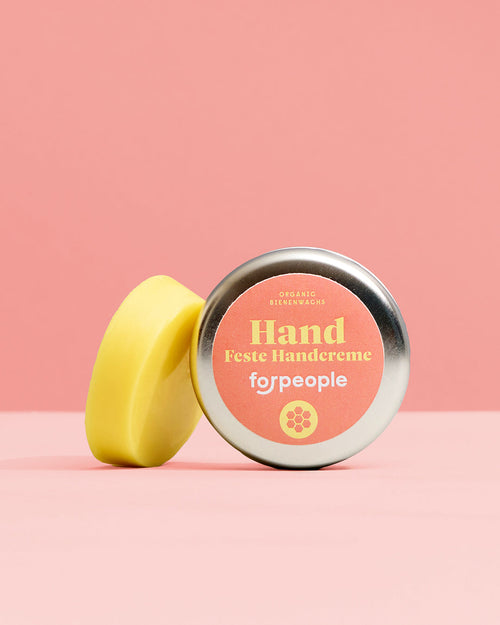
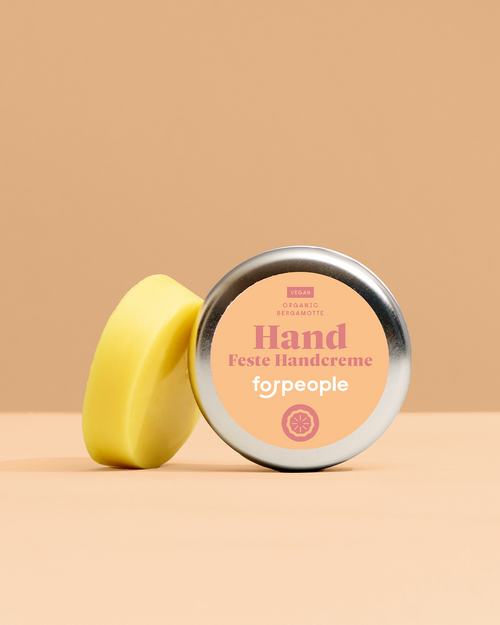
- Hands: shortest time, because they are constantly washed and used for gripping. A hand cream with beeswax such as the Solid Hand Cream - Beeswax is designed for this everyday use: a small amount, spread quickly.
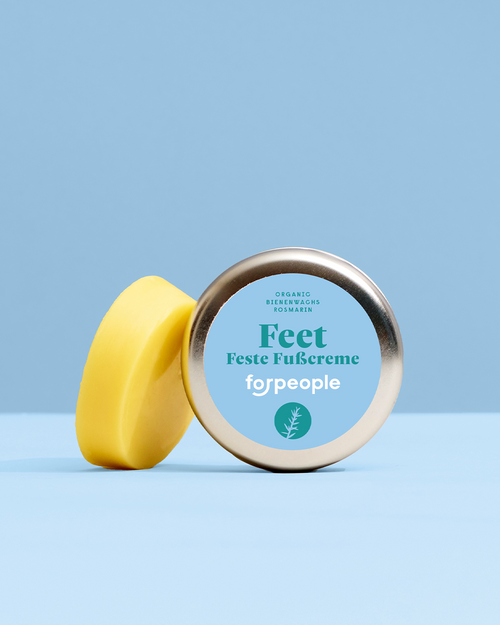
- Feet: little is rubbed off under socks, but the fabric absorbs some of it. The Solid Foot Cream – Rosemary & Sage is best applied in the evening, so the film stays on the skin overnight. Why heels need particular care is explained in Why heel skin gets so thick and cracks.
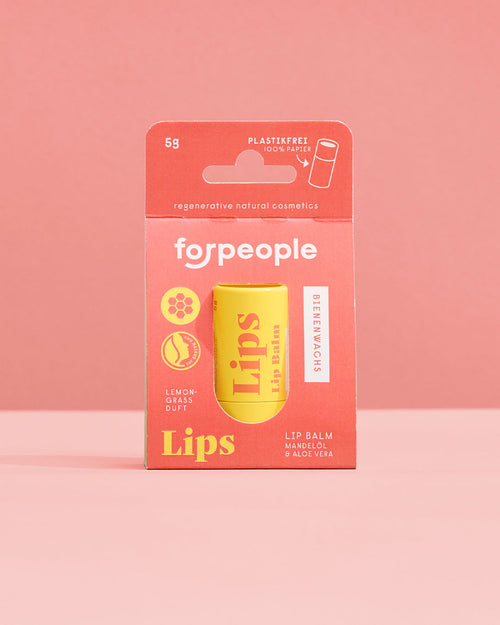
- Lips: eating, drinking and talking remove the film quickly. A stick such as the Lip Balm - Lemongrass is therefore meant for frequent, small reapplications. More in Why do lips dry out so quickly?.
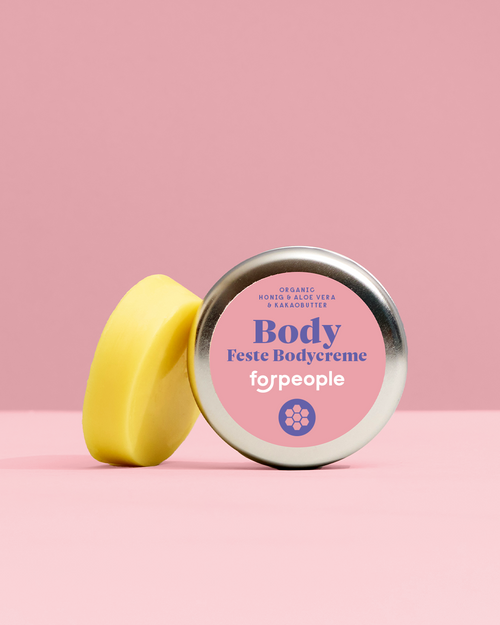
- Body: clothing rubs over large areas. A butter such as the Solid Body Butter - Beeswax & Aloe Vera leaves a more noticeable film than an oil; let it sink in briefly before getting dressed.
Water resistance is a separate property
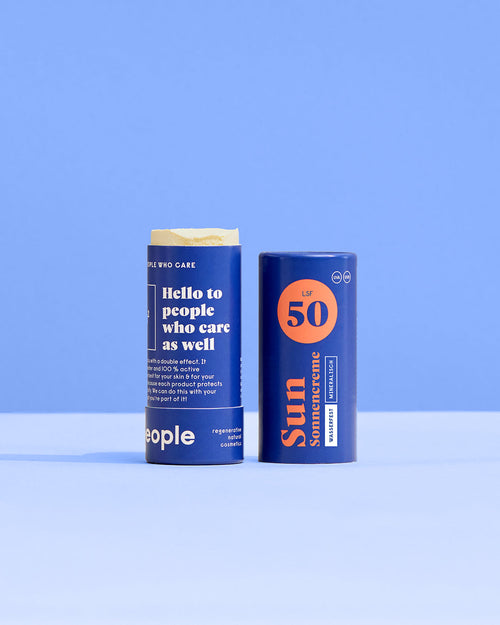
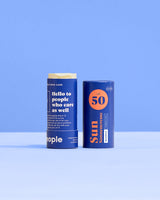
For sunscreen, adhesion on wet skin is specifically tested and labelled as "water-resistant". That does not mean the film stays on permanently. Towels, sand and sweat wear it away. A model calculation on sun protection recommends reapplying early after you start spending time in the sun, and again after swimming, towelling, heavy sweating or rubbing (Diffey 2001). The Solid Sunscreen SPF50 has been tested as water-resistant; it too should be reapplied after drying off. What the label means exactly is explained in SPF, UVA and water resistance.
Frequently asked questions
How long does hand cream last after applying it?
By the next hand wash with soap, a large part is usually gone. Without washing, a thin wax film stays considerably longer but is gradually worn away by gripping and rubbing. A fixed number of hours cannot be given reliably.
Do I have to reapply after every hand wash?
Not necessarily. If your hands feel tight after drying, reapplying makes sense. If you wash very often, it is often enough to reapply after some of the washes and in the evening.
Does wax stay on the skin until I wash it off?
Partly, yes, because wax stays solid at skin temperature. But clothing, towels and touching things also gradually remove wax.
Does a thicker film last longer?
Only to a limited extent. Excess cream is quickly rubbed off and ends up on clothing or objects. Several thin layers spread over the day usually feel more pleasant.
Is it harmful to reapply too often?
With water-free care without irritating ingredients, usually not. If your skin turns red or stings, stop using it. Do not use the cream on injured or irritated skin.
At forpeople
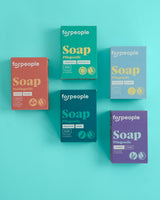
Our solid creams are water-free and consist of wax, oils and, depending on the product, plant butters. The Solid Hand Cream - Beeswax (30 g, €9.90) is based on beeswax, olive oil and sunflower oil and contains no essential oils. The Solid Vegan Hand Cream - Bergamot (30 g, €9.90) uses candelilla wax, jojoba oil and shea butter. For your feet there is the Solid Foot Cream – Rosemary & Sage (40 g, €9.90), for your body the Solid Body Butter - Beeswax & Aloe Vera (40 g, €9.90). Read more: Dry, cracked hands from frequent washing · Greasy or well cared for? · Why does solid cream last so long? · Water-free cosmetics
Sources
- Stamatas GN, de Sterke J, Hauser M, von Stetten O, van der Pol A (2008): Lipid uptake and skin occlusion following topical application of oils on adult and infant skin. J Dermatol Sci 50(2): 135–142. https://doi.org/10.1016/j.jdermsci.2007.11.006
- Patzelt A, Lademann J, Richter H, Darvin ME, Schanzer S, Thiede G et al. (2012): In vivo investigations on the penetration of various oils and their influence on the skin barrier. Skin Res Technol 18(3): 364–369. https://doi.org/10.1111/j.1600-0846.2011.00578.x
- Europäische Kommission (2012): Verordnung (EU) Nr. 231/2012 mit Spezifikationen für Lebensmittelzusatzstoffe, Einträge E 901 Bienenwachs und E 902 Candelillawachs. ABl. L 83: 1. https://eur-lex.europa.eu/eli/reg/2012/231/oj
- Herrmann S, Daniels R, Lunter D (2017): Methods for the determination of the substantivity of topical formulations. Pharm Dev Technol 22(4): 487–491. https://doi.org/10.3109/10837450.2015.1135346
- Ananthapadmanabhan KP, Moore DJ, Subramanyan K, Misra M, Meyer F (2004): Cleansing without compromise: the impact of cleansers on the skin barrier and the technology of mild cleansing. Dermatol Ther 17 Suppl 1: 16–25. https://doi.org/10.1111/j.1396-0296.2004.04s1002.x
- Diffey BL (2001): When should sunscreen be reapplied? J Am Acad Dermatol 45(6): 882–885. https://doi.org/10.1067/mjd.2001.117385