


What "greasy" actually describes
In cosmetic research, skin feel is not described with a single word but with trained assessors and fixed attributes. In one study, a panel of 14 people assessed eight liquid emollients, including sunflower oil, paraffin oil and silicones. Among other things, they rated difficulty of spreading, gloss, residue, stickiness, slipperiness, softness and oiliness. These sensory impressions could be predicted well from measurable properties such as spreadability, viscosity and surface tension (Parente et al. 2005).
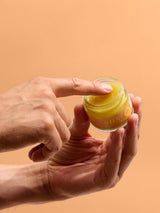
So "greasy" is usually a mix of gloss, residue and stickiness. "Well cared for", by contrast, describes softness and suppleness without anything sticking to your fingers. Both can come from the same cream; the difference often lies in amount and time. The role of emollients, humectants and occlusives is explained in Humectants, occlusives, emollients.
Spreading and viscosity: how fat spreads
Spreading means how far an oil spreads out on a surface by itself. A research team examined 53 emollients on an artificial skin surface, including esters, silicones, plant and mineral oils. The result: across all groups of substances, viscosity had the greatest influence on spreading. First a drop spreads by itself, then penetration into the porous surface determines how much further it goes (Douguet et al. 2017).
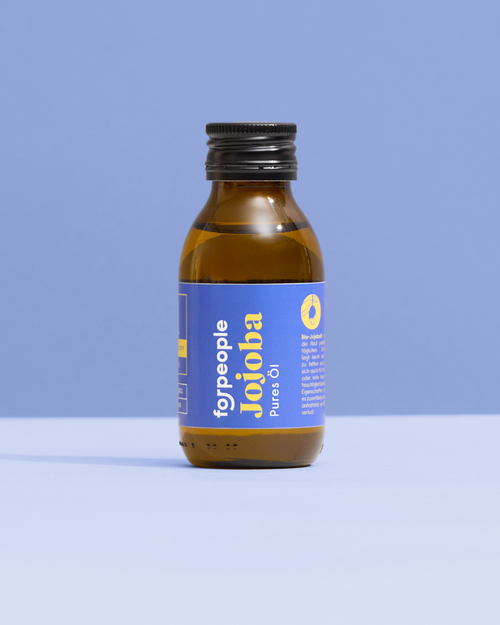
This can also be felt in the finished product. Emulsions with different emollients spread differently in sensory tests, and this matched friction measurements (Savary et al. 2013). In another study, olive oil instead of a light ester made the emulsions firmer, harder to spread, stickier and more viscous (Huynh et al. 2021). For solid creams this means: formulas with a lot of butter and thick oils feel richer than those with thin oils such as the Jojoba Oil - pure. Why jojoba oil feels so light is explained in Jojoba oil: a liquid wax.
What really happens when a cream "sinks in"
"Absorbs quickly" is a feeling in everyday life: the shine disappears, the skin no longer feels sticky. Physically, several things happen. Plant oils and paraffin oil penetrate the upper layers of the stratum corneum; this was measured with Raman microscopy 30 and 90 minutes after application (Stamatas et al. 2008). Wax stays solid and lies on top as a thin layer.
Friction changes too. A measuring method using a finger on artificial skin was able to distinguish different creams after spreading and absorption; moisturised skin showed higher friction (Skedung et al. 2016). This explains why care that has sunk in feels "grippy" and soft, while an excess feels slippery.
| What you feel | Likely cause | What it means |
|---|---|---|
| skin still shiny after 10 minutes | more applied than the stratum corneum takes up | too much, use less next time |
| sticky fingers, marks on paper or screen | butter or thick oil not yet worked in | keep massaging or remove the excess |
| hands slip when gripping | film on the palms too thick | focus on the backs of your hands, go easy on the palms |
| slightly waxy film without shine | wax lies thinly on the skin | intended: it slows evaporation |
| skin soft, no longer tight | oils in the upper layers of the stratum corneum, film holds moisture | well cared for |
What our customer reviews show
In our analysis of reviews from September 2026, we counted how often absorption is praised or criticised. The differences between the products fit their formulas well:
| Product | Absorption praised | Absorption criticised |
|---|---|---|
| Solid Hand Cream - Beeswax | 54 | 4 |
| Solid Vegan Hand Cream - Bergamot | 21 | 11 |
| Solid Foot Cream – Rosemary & Sage | 36 | 14 |
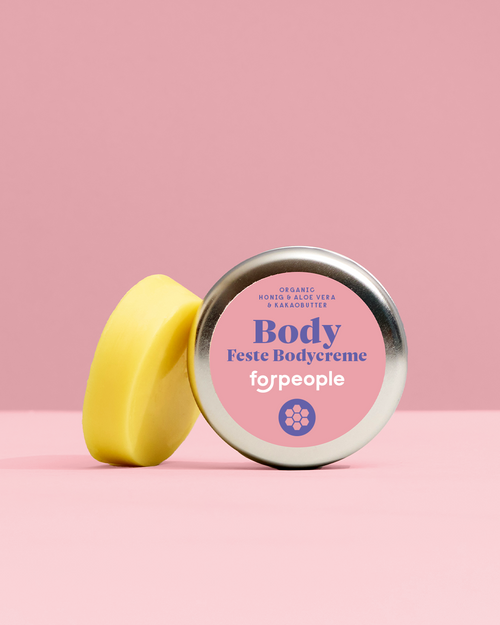
| Solid Body Butter - Beeswax & Aloe Vera | 9 | 6 |
| Beeswax Salve Larch & Mandarin | 9 | 6 |
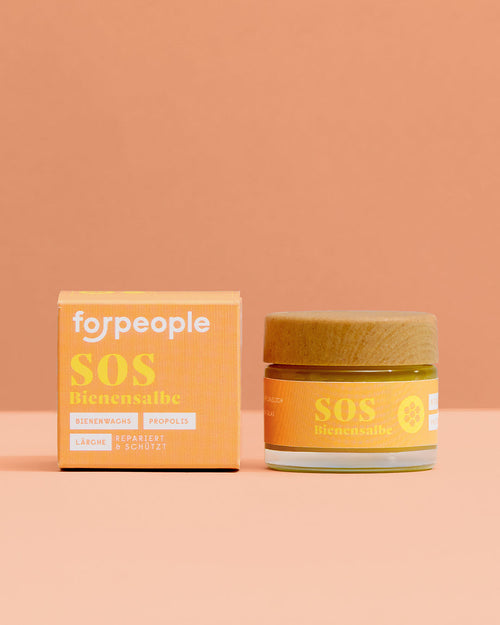
| SOS Pitch Salve - Larch Resin | 9 | 11 |
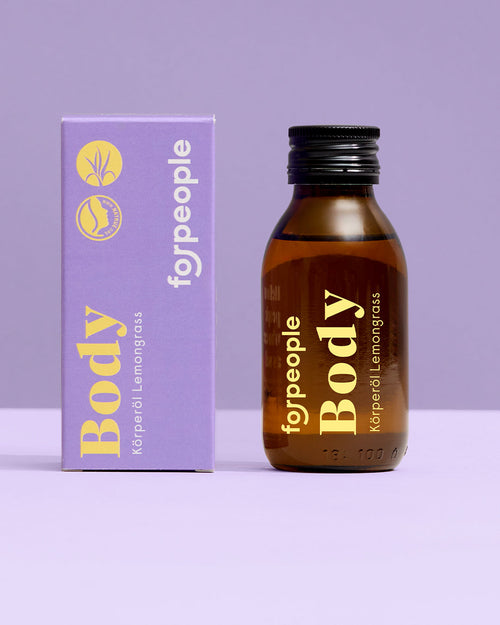
| Body Oil - Lemongrass | 31 | 1 |
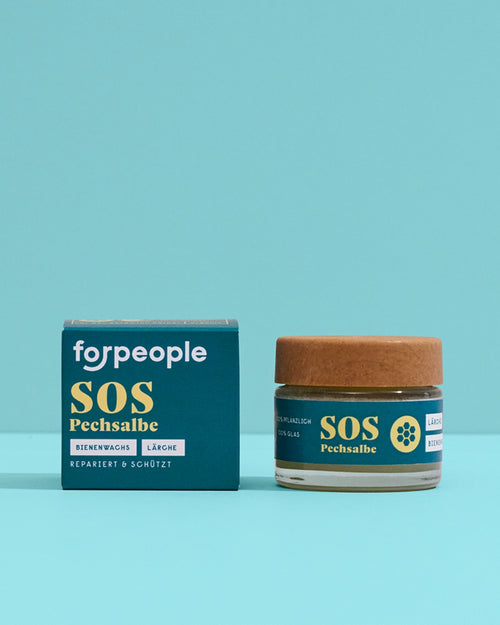
Light oils and the hand cream with beeswax are almost only praised for how they absorb. With butter and salves the picture is more mixed; for the SOS Pitch Salve - Larch Resin in a Glass Jar, the voices describing a noticeable film are in the majority. That is not a weakness but its purpose: salves are made for a clearer protective film. More in Salve, balm, butter, solid cream.
When a noticeable film makes sense
A film that feels annoying on your hands during the day can be just right elsewhere:
- At night: feet, elbows or hands can take more in the evening; nobody reaches for their phone with them.
- In cold and wind: a denser film slows evaporation more. See Dry skin in winter and Occlusion and TEWL.
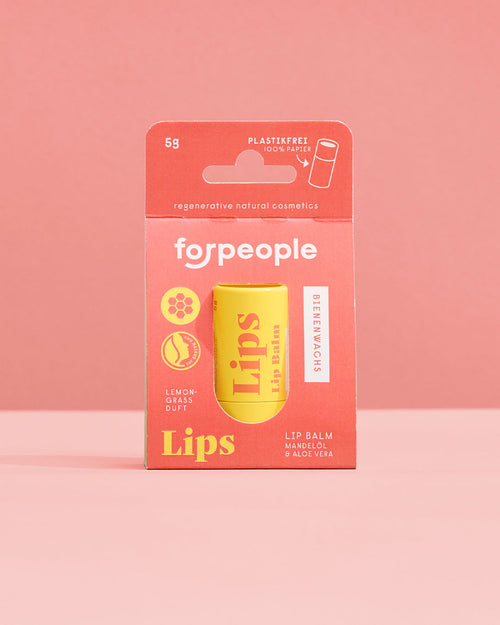
- Lips: they have hardly any sebaceous glands; a waxy film such as from the Lip Balm - Lemongrass is welcome here. See Why do lips dry out so quickly?.
- When climbing or working: here any residue on the palms gets in the way. Then apply after the exertion instead; tips in Moisturise before or after climbing?.
If a product feels too heavy despite a small amount, a lighter form may suit you better, such as an oil instead of a butter. A comparison is in Body oil or body butter.
Frequently asked questions
Is a greasy cream bad for the skin?
Not in principle. The feeling mainly tells you something about amount and formula. People prone to blemishes often find rich care too heavy on the face; on hands and feet this is rarely an issue.
Why does the same cream sometimes feel greasy and sometimes fine?
Because amount, skin temperature and skin condition vary. On very dry skin the shine disappears faster, on warm skin the cream spreads more easily.
How do I know the amount is right?
After five to ten minutes your skin is no longer shiny, feels soft and leaves no marks. A light, waxy film may remain.
Do solid creams absorb worse than creams from a tube?
They absorb differently. With an emulsion, a large water content evaporates, which quickly feels dry. With a solid cream almost everything stays on the skin, so you need less. More in Solid cream or tube.
Does it help to wipe off excess cream?
Yes. A dry cloth removes the excess, the thin film remains.
At forpeople
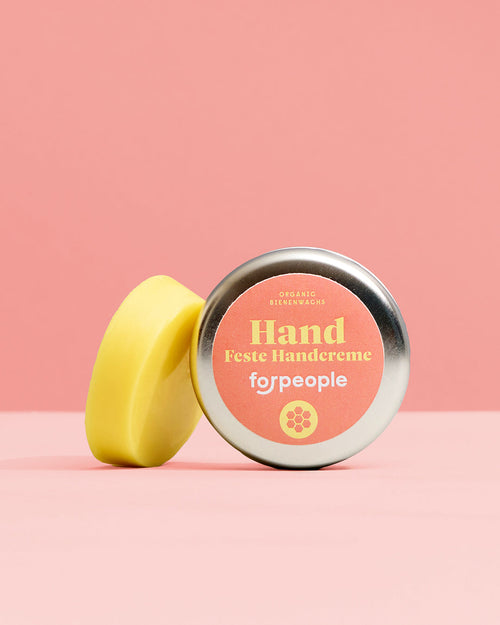
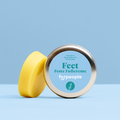
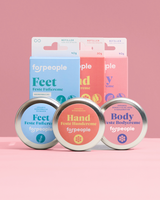
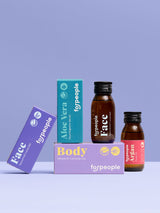
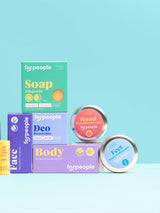
If you are looking for a light skin feel, start with the Solid Hand Cream - Beeswax (30 g, €9.90) for your hands or the Body Oil - Lemongrass (100 ml, €16.90) for your body. A more noticeable film comes from the Solid Body Butter - Beeswax & Aloe Vera (40 g, €9.90) and the Beeswax Salve Larch & Mandarin in a Glass Jar (50 g, €12.90), which is scented with essential oils. Read more: How do I apply a solid cream correctly? · How long does a care film stay on the skin? · Water-free cosmetics · The skin barrier explained simply
Sources
- Parente ME, Gámbaro A, Solana G (2005): Study of sensory properties of emollients used in cosmetics and their correlation with physicochemical properties. J Cosmet Sci 56(3): 175–182. https://pubmed.ncbi.nlm.nih.gov/16116522/
- Douguet M, Picard C, Savary G, Merlaud F, Loubat-Bouleuc N, Grisel M (2017): Spreading properties of cosmetic emollients: Use of synthetic skin surface to elucidate structural effect. Colloids Surf B Biointerfaces 154: 307–314. https://doi.org/10.1016/j.colsurfb.2017.03.028
- Savary G, Grisel M, Picard C (2013): Impact of emollients on the spreading properties of cosmetic products: a combined sensory and instrumental characterization. Colloids Surf B Biointerfaces 102: 371–378. https://doi.org/10.1016/j.colsurfb.2012.07.028
- Huynh A, Garcia AG, Young LK, Szoboszlai M, Liberatore MW, Baki G (2021): Measurements meet perceptions: rheology-texture-sensory relations when using green, bio-derived emollients in cosmetic emulsions. Int J Cosmet Sci 43(1): 11–19. https://doi.org/10.1111/ics.12661
- Stamatas GN, de Sterke J, Hauser M, von Stetten O, van der Pol A (2008): Lipid uptake and skin occlusion following topical application of oils on adult and infant skin. J Dermatol Sci 50(2): 135–142. https://doi.org/10.1016/j.jdermsci.2007.11.006
- Skedung L, Buraczewska-Norin I, Dawood N, Rutland MW, Ringstad L (2016): Tactile friction of topical formulations. Skin Res Technol 22(1): 46–54. https://doi.org/10.1111/srt.12227