






Two kinds of deodorant stains
Most guides on "deodorant stains" mean residues from antiperspirants. Their principle is based on aluminium salts that form a gel plug in the sweat pores and so reduce the flow of sweat to the skin surface (Teerasumran et al. 2023). The typical white streaks and yellowish, stiff patches under the arms are usually attributed to this combination of aluminium salts and sweat.
An aluminium-free deodorant cream works differently. It does not reduce sweat but targets odour. How this works with baking soda is explained in Baking soda in deodorant; what happens when you switch, in Deodorant without aluminium: how it works and how to switch. The base of a deodorant cream is fat: shea butter, plant oil and wax hold starch and baking soda together and make the cream spreadable. It is exactly these fats that can soak into fabric.
| Antiperspirant with aluminium | Fat-based deodorant cream | |
|---|---|---|
| Typical stain | white streaks, yellowish, stiff patches | dark, slightly translucent grease stain; white powder traces |
| Where from | aluminium salts, sweat | shea butter, oil, wax; starch and baking soda |
| When visible | often only after many washes | often immediately, especially with too much cream |
| Especially tricky | light cotton, white shirts | silk, viscose, synthetics, dark and tight tops |
| Prevention | let it dry, apply less | pea-sized amount, rub in, let it absorb |
How to avoid stains from deodorant cream
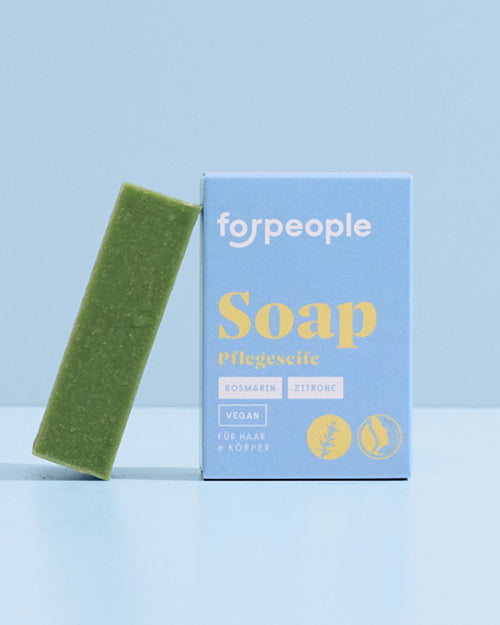
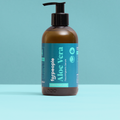
- Apply to dry skin: Wash your armpits, for example with an Aloe Vera Soap – Rosemary & Lemon, and dry them thoroughly. On damp skin the cream spreads less well and tends to stick to the fabric.
- Use less: A pea-sized amount per armpit is enough. More cream does not work better; it just stays on the skin and goes into the fabric.
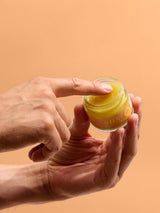
- Rub in well: Warm the cream briefly between your fingers and spread it thinly until nothing white is visible.
- Let it absorb: Only get dressed once your skin no longer feels greasy. A few minutes are usually enough.
- Wait after shaving: Freshly shaved skin is more sensitive. Apply deodorant cream a little later; that is also kinder to your skin.
- Choose your clothes: With silk, satin and tight synthetic tops, be especially sparing or wear an extra layer underneath on those days.
- Keep the tin clean: Take cream out with dry fingers or a spatula so that no water gets into it.
How much film stays on the skin and why care sometimes feels greasy is explained in Greasy or well cared for? In warm weather, a deodorant cream gets softer and is easier to apply too thickly; storage tips are in Storing solid cosmetics.
Removing grease stains from deodorant cream
Grease stains come out best while they are fresh. Plant oils oxidise over time through oxygen, light and heat (Choe & Min 2006); older grease stains are therefore often harder to remove and can turn yellow. Here is how:
- Read the care label: The symbols show the most severe treatment the fabric can take without irreversible damage: washing, bleaching, drying and ironing (ISO 3758:2023). Choose temperature and products accordingly.
- Remove the excess: Lift off fresh cream with the back of a spoon or a paper towel; do not rub.
- Loosen the grease: Put a drop of washing-up liquid or a little liquid detergent on the stain, work it in gently with your fingers and leave it for a while. With delicate colours, test on a hidden spot first.
- Wash: At the highest temperature the label allows. Many heavy-duty detergents contain enzymes that break down fat and protein soiling; whether a detergent contains enzymes must be stated on the pack (Regulation (EC) No 648/2004, Annex VII).
- Check before drying: If the stain is still visible, do not tumble-dry or iron. Heat can set grease in the fabric. Repeat steps 3 and 4.
- Silk, wool and "do not wash": Take these to the dry cleaner and say that it is a grease stain.
White traces of starch and baking soda are usually just powder sitting on top. They can often be brushed out with a dry, soft cloth and come out in the normal wash.
Does baking soda damage colours?
Baking soda, chemically sodium bicarbonate, is slightly alkaline in water; a freshly prepared solution has a pH of about 8.3 (PubChem: Sodium Bicarbonate). Many detergents are alkaline too. We are not aware of reliable studies on whether the small amount of baking soda from a deodorant cream changes textile colours. In practice: do not leave residues in the fabric for days, wash tops with deodorant cream traces promptly, and with very delicate fabrics let the cream absorb well before getting dressed. If your skin reacts to baking soda, you will find tips in Baking soda in deodorant.
Frequently asked questions
Does aluminium-free deodorant cause yellow stains?
The typical yellow, stiff patches are usually attributed to antiperspirants with aluminium salts. Deodorant creams tend to cause grease stains. If such grease stains are left unwashed for a long time, they can also turn yellow.
How much deodorant cream should I use?
A pea-sized amount per armpit. If you can still see something white after rubbing it in, it was too much.
What works best on grease stains?
Fresh stains can usually be pre-treated with washing-up liquid or liquid detergent and then washed as warm as the label allows. The key is not to rub and not to dry before the stain is gone.
Can I apply deodorant cream and put on a white shirt straight away?
Better wait a few minutes. Freshly applied cream transfers to fabric most easily.
Is deodorant cream suitable for sport?
That depends on you. Deodorant cream does not reduce sweat; with heavy sweating it can also migrate into clothing. Wash after sport and reapply.
At forpeople
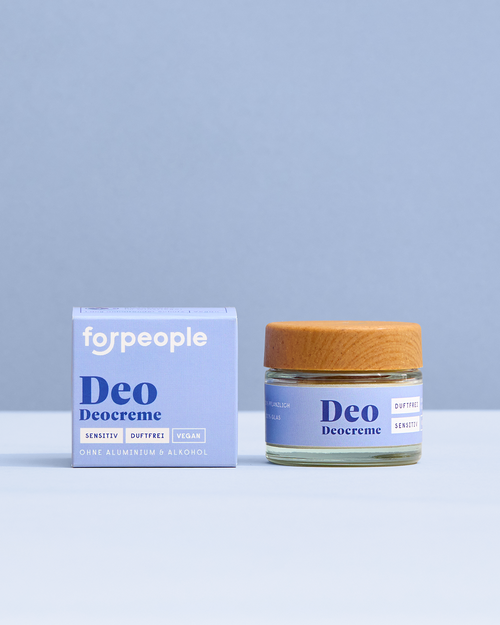
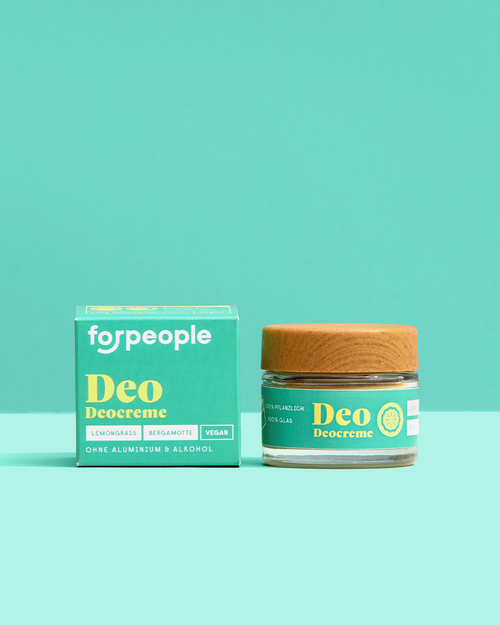
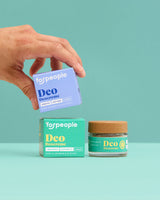
Our deodorant creams contain no aluminium salts. According to the ingredient list, the Sensitive Deodorant Cream (50 g, €8.90) consists of potato starch, shea butter, baking soda, sunflower oil, corn starch and candelilla wax, without fragrance. The Deodorant Cream - Lemon (50 g, €8.90) has the same base plus essential oils of bergamot and lemongrass. Both are water-free; to avoid stains, the same applies here: pea-sized, rub in, let it absorb. Both contain baking soda; if your skin is sensitive, stop using it if your skin reacts. More on this: Deodorant without aluminium · Baking soda in deodorant · Water-free cosmetics · Chafing when running and cycling
Sources
- Teerasumran P, Velliou E, Bai S, Cai Q (2023): Deodorants and antiperspirants: New trends in their active agents and testing methods. Int J Cosmet Sci 45(4): 426–443. https://doi.org/10.1111/ics.12852
- Choe E, Min DB (2006): Mechanisms and factors for edible oil oxidation. Compr Rev Food Sci Food Saf 5(4): 169–186. https://doi.org/10.1111/j.1541-4337.2006.00009.x
- ISO 3758:2023: Textiles – Care labelling code using symbols. https://www.evs.ee/en/iso-3758-2023
- Europäisches Parlament und Rat (2004): Verordnung (EG) Nr. 648/2004 über Detergenzien, Anhang VII A. ABl. L 104: 1. https://eur-lex.europa.eu/eli/reg/2004/648/oj
- National Center for Biotechnology Information (NCBI): PubChem Compound Summary for CID 516892, Sodium Bicarbonate. https://pubchem.ncbi.nlm.nih.gov/compound/516892