







Mineral sunscreen leaves a white cast because zinc oxide and titanium dioxide reflect and scatter light on the surface of the skin – that is exactly how they protect. How strong the white sheen is depends on three things: the amount, how you apply it and the shade. Tinted mineral sunscreens contain iron oxides that balance out the white sheen; on fair to medium skin it is then barely noticeable.
| UV filters | Zinc oxide and titanium dioxide, non-nano, purely mineral |
|---|---|
| Sun protection factor | SPF 50 |
| Water in the formula | none (solid sunscreen made from shea butter, plant-oil triglycerides and beeswax) |
| Variants | untinted (white), LIGHT SAND (beige-tinted with iron oxides), OCEAN BLUE (blue-tinted with ultramarine) |
| Sizes | 40 g (untinted) and mini 20 g (untinted, LIGHT SAND, OCEAN BLUE) |
| Water-resistant | yes, tested |
| Packaging | paper tube without plastic coating |
What sunscreen has to do with corals is explained in our blog article "What does sunscreen actually have to do with corals?"
Mineral UV filters work much like a mirror on your skin. The tiny particles like titanium dioxide and zinc oxide in the sunscreen sit on your skin and reflect the skin-damaging sun exposure. A bonus over sunscreens with chemical UV filters: a mineral sunscreen protects you straight away, since it doesn't have to sink in to take effect.
How to reduce the white cast
- Choose a tinted version: LIGHT SAND balances the white sheen with beige iron oxides. OCEAN BLUE is deliberately colourful – for children, for example, so you can see where you have already applied it.
- Warm it up and apply in stages: Warm the solid cream briefly on your skin, then spread thin layers instead of one thick one. Protection depends on the amount, though – don't skimp, just spread it evenly.
- Wait a few minutes: The sheen is strongest right after application and fades afterwards.
- Apply to dry skin: The solid cream spreads less well on damp skin.
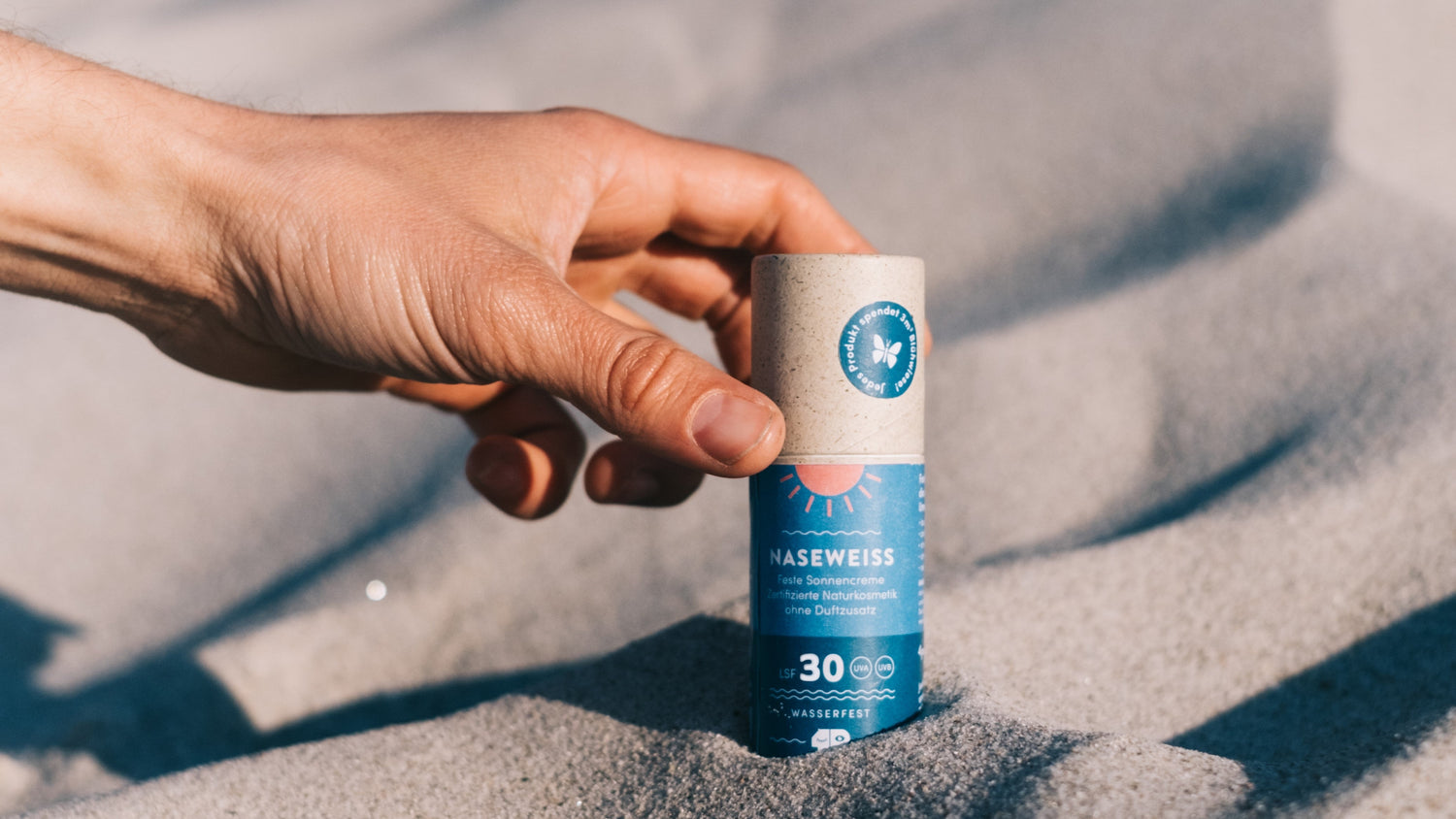
Our Naseweiss also works with mineral UV filters, but leaves barely any white cast. To get good sun protection, you should apply a generous layer. You can then rub it into your skin. What's left is a barely noticeable white film. Only on heavily haired parts of the body can a somewhat whiter residue remain, since cream often gathers on the hairs.
Frequently asked questions
Does a tinted sunscreen protect just as well?
Yes, the sun protection comes from zinc oxide and titanium dioxide, not from the shade. The iron oxides only provide the colour.
Why not just use nano particles, so there is no white cast?
Smaller particles leave less of a white cast. We deliberately use particles in non-nano size; the white sheen is the price for that, and the tinted shade balances it out.



Leave a comment
This site is protected by hCaptcha and the hCaptcha Privacy Policy and Terms of Service apply.