



The difference lies in the formula
Beard care follows the same rules as any water-free care. A beard oil consists of one or more plant oils, sometimes with essential oils for scent. A beard balm contains the same oils plus a wax, usually beeswax or candelilla wax, and often a plant butter such as shea or cocoa butter. The wax makes the mixture solid at room temperature; the warmth of your hands makes it spreadable. A beard pomade contains even more wax and is mainly used for styling.
| Beard oil | Beard balm | Beard pomade/wax | |
|---|---|---|---|
| Composition | plant oils | oils + wax + often butter | lots of wax, little oil |
| Texture | liquid | firm to creamy, melts in the hand | firm, tacky |
| Reaches the skin | well, especially with a short beard | partly | hardly, stays on the hair |
| Hold and shape | none | light | strong |
| Feel | light, absorbs | noticeable film | stiff |
| Suits | stubble to medium length, dry skin underneath | medium to long, unruly hair | moustache, twisted tips |
The terms are not defined by law. What a product really is shows in the ingredient list. How the terms salve, balm and butter are used in general is explained in Salve, balm, butter, solid cream.
What oil does to beard hair and skin
Beard hair is often thicker and curlier than scalp hair. The skin underneath is stressed by shaving, trimming and washing and is hard to reach under the hair. Many describe the feeling as dry, tight skin under the beard, especially in the first weeks or in winter.
Oil does two things. On the skin, it leaves a thin film that reduces evaporation; how this works is explained in Occlusion and TEWL. On the hair, it coats the surface and makes it more supple. How deeply an oil penetrates the hair depends on its composition. In laboratory tests, coconut oil penetrated the hair shaft, mineral oil did not; sunflower oil did not penetrate because of its bulkier molecular structure (Rele & Mohile 2003). A follow-up study found indications that the oil film on hair treated with coconut, olive and sunflower oil gets thinner over time because part of the oil is absorbed by the hair; this was not seen with mineral oil (Keis et al. 2005). In everyday terms: a few minutes after applying, your beard feels less oily than right afterwards.
Which oil for your beard?
| Oil | What makes it special | Feel |
|---|---|---|
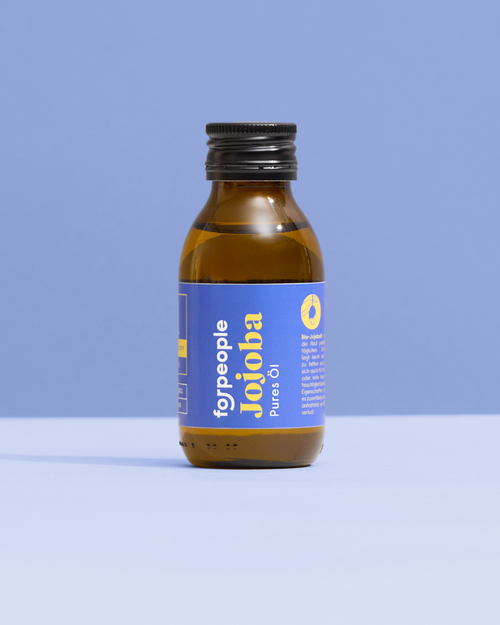
| Jojoba oil | chemically a liquid wax: about 98% wax esters, only few triglycerides (Gad et al. 2021) | light, not very greasy, good as a base |
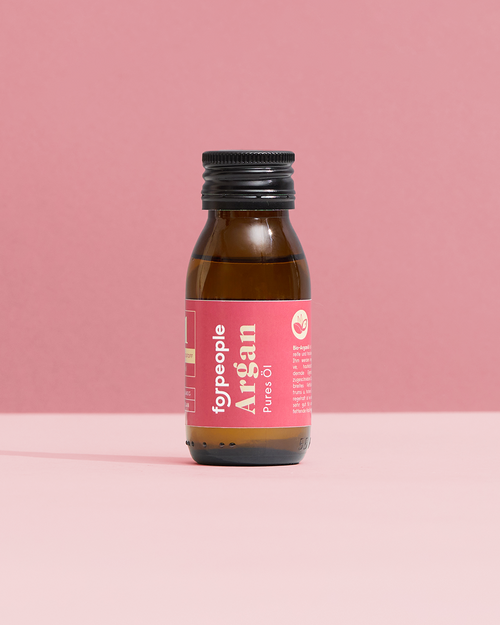
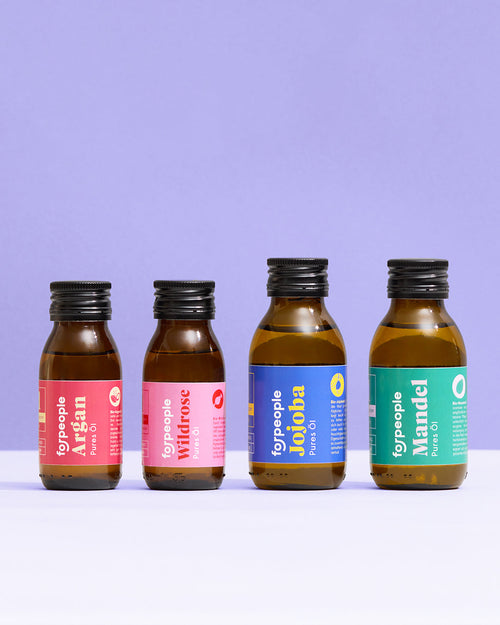
| Argan oil | plant oil that loses quality much faster when warm (Gharby et al. 2014) | medium, nourishing |
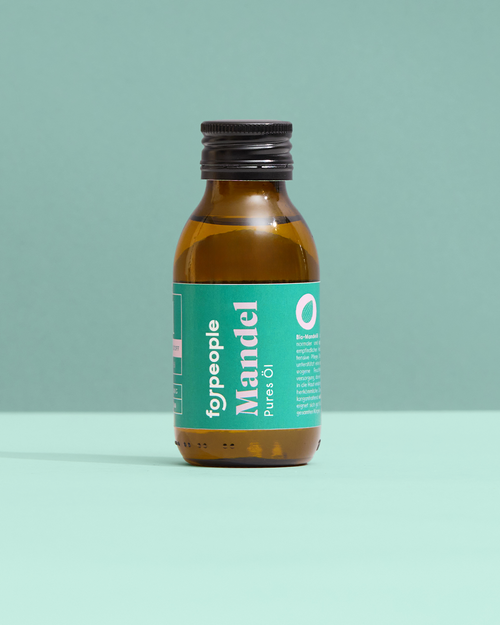
| Almond oil | mild, versatile plant oil | somewhat richer |
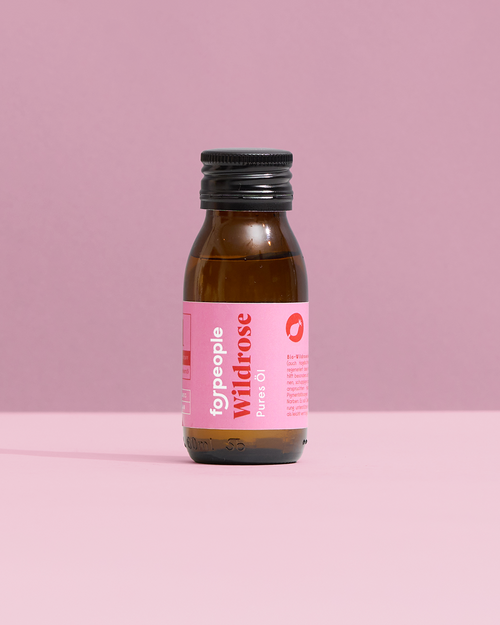
| Wild rose seed oil | many polyunsaturated fatty acids, so store it especially cool and dark | light |
Why jojoba counts as a liquid wax and therefore feels different from a cooking oil is explained in Jojoba oil: why it is a liquid wax. Oils with many polyunsaturated fatty acids age faster. For argan oil, quality after twelve months at 25 °C in the dark was still satisfactory according to the Moroccan standard, while at 40 °C it declined quickly (Gharby et al. 2014). So don't keep your beard oil on a warm bathroom windowsill. How to tell if an oil has gone off is explained in How to tell if an oil is rancid.
How to apply
- After showering: Pat your beard towel-dry. Slightly damp hair spreads oil more evenly.
- Oil: Two to three drops for a short beard, more for a longer one. Rub between your palms and massage against the direction of growth down to the skin, then smooth in the direction of growth.
- Balm: Take a small amount with your fingernail or thumb, let it melt in your hands, work it through the length and shape with a comb or brush.
- Less is more: Too much oil or balm makes the beard stringy and can leave stains on collars and pillows. How to get such grease stains out of fabric is explained in Grease stains from deodorant cream; the principle is the same.
Essential oils give a beard oil its scent but are not necessary. They sit right under your nose and can irritate sensitive skin. If that applies to you, use a pure oil without fragrance; background in Without fragrance and essential oils. If the skin under your beard stays red, flaky or painful for a longer time despite care, have it checked by a doctor.
Making your own beard balm
A balm is one of the simplest formulas for personal use because it contains no water and therefore needs no emulsifier and no preservative. Many recipes use roughly one part wax to three to four parts oil and butter, weighed, not measured by volume. More wax makes the balm firmer and gives more hold; more oil makes it softer. Here is how:
- Melt the wax and butter slowly in a water bath, take off the heat, then stir in the oils.
- Pour into a clean, dry tin and let it cool without the lid so that no condensation forms.
- Once cool, test it: too hard, melt again and add oil; too soft, add a little wax.
- Work cleanly, keep water out of the tin and note the date. Shelf life depends mainly on the freshest and the most delicate oil.
Why wax and oil work in this ratio and how candelilla wax instead of beeswax changes the result is explained in detail in Making solid cream: wax and oil and Candelilla wax or beeswax. Important: homemade products are meant for personal use. Anyone who supplies cosmetic products in the course of a commercial activity, whether sold or given away, needs, among other things, a responsible person and a safety assessment (Regulation (EC) No 1223/2009, Articles 2, 4 and 10).
Frequently asked questions
Do I need beard oil and beard balm?
Not necessarily. For a short beard, oil is usually enough. For a long beard, balm helps with shaping. If you use both, apply oil for the skin first, then a little balm for the length.
Does beard oil make my beard grow faster?
No. Oil cares for hair and skin; it has no proven effect on growth.
Can I use pure jojoba oil as beard oil?
Yes. Jojoba oil is a common base for beard oils because it is light and feels only slightly greasy. You can use it on its own or mix it with argan or almond oil.
How often should I use beard oil?
Once a day, usually after showering, is enough for most people. With dry indoor heating or in winter, twice a day.
Does beard balm leave stains on the pillow?
It can if too much product stays in the beard. Use only a little in the evening or apply the balm in the morning instead.
At forpeople
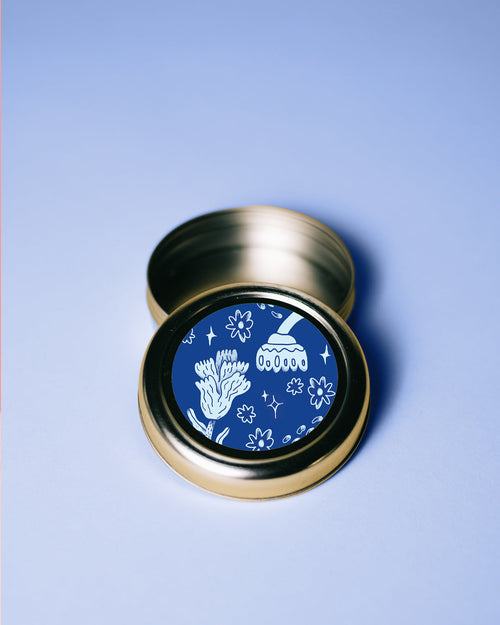
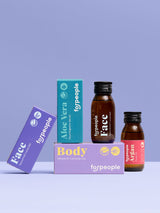
We do not sell a ready-made beard balm. The base ingredients for beard oil are available as pure, cold-pressed oils without additives: Jojoba Oil - pure (100 ml, €16.90), Argan Oil - pure (50 ml, €19.90), Almond Oil - pure (100 ml, €14.90) and Wild Rose Seed Oil - pure (50 ml, €19.90). All four together come in the Care Oil Set – 4 Organic Oils for Face, Body & Hair (€69.90). If you mix your own balm, you can fill it into the Empty Cosmetic Tin (€3.90). More on this: Body oil or body butter · How long does homemade cream last? · Beeswax in skin care · Water-free cosmetics
Sources
- Rele AS, Mohile RB (2003): Effect of mineral oil, sunflower oil, and coconut oil on prevention of hair damage. J Cosmet Sci 54(2): 175–192. https://pubmed.ncbi.nlm.nih.gov/12715094/
- Keis K, Persaud D, Kamath YK, Rele AS (2005): Investigation of penetration abilities of various oils into human hair fibers. J Cosmet Sci 56(5): 283–295. https://pubmed.ncbi.nlm.nih.gov/16258695/
- Gad HA, Roberts A, Hamzi SH, Gad HA, Touiss I, Altyar AE et al. (2021): Jojoba Oil: An Updated Comprehensive Review on Chemistry, Pharmaceutical Uses, and Toxicity. Polymers (Basel) 13(11): 1711. https://doi.org/10.3390/polym13111711
- Gharby S, Harhar H, Kartah B, Guillaume D, Chafchaouni-Moussaoui I, Bouzoubaa Z et al. (2014): Oxidative stability of cosmetic argan oil: a one-year study. J Cosmet Sci 65(2): 81–87. https://pubmed.ncbi.nlm.nih.gov/24797024/
- Europäisches Parlament und Rat (2009): Verordnung (EG) Nr. 1223/2009 über kosmetische Mittel, Artikel 2, 4 und 10. ABl. L 342: 59. https://eur-lex.europa.eu/eli/reg/2009/1223/oj