








How friction on the skin builds up
When you run, your thighs move past each other with every step; when you cycle, your groin rubs against the saddle and your shorts with every pedal stroke. A single movement is harmless. What matters is the strength of the friction and the number of repetitions: the higher the frictional force, the fewer repetitions it takes before the skin is damaged. Research on friction blisters has shown this (Knapik et al. 1995). A ten-kilometre run quickly adds up to several thousand steps.
Moisture plays a big role. A study at the Swiss materials testing institute Empa measured the friction between forearm skin and fabric at different levels of skin hydration. In every participant, friction rose with skin moisture. Between very dry and normally moist skin, the friction coefficient typically increased by 43% in women and 26% in men. With completely wet fabric, friction was more than twice as high as natural skin on dry fabric (Gerhardt et al. 2008). The researchers explain this by moist skin becoming softer and fitting more closely against the surface.
The review on friction blisters describes the same pattern: moist skin increases friction, very dry or very wet skin reduces it (Knapik et al. 1995). So skin that is damp with sweat, but not dripping, is the least favourable state. In warm weather you reach it within a few minutes.
Where chafing typically happens in sport
Chafing is common. In a survey of 259 sports students at two German universities, 34% reported chafing as an exercise-related skin complaint; blisters and dry skin were even more common (Drewitz et al. 2024). These areas are especially affected:
| Area | Typical cause | What helps prevent it |
|---|---|---|
| Inner thighs | Skin on skin when running and walking, especially in summer and in a skirt or loose shorts | Close-fitting shorts or tights with a longer leg, gliding film |
| Groin and seat area | Saddle, seams, underwear that slips when cycling | Cycling shorts with a chamois pad, no underwear underneath; a saddle that fits |
| Armpits | Arm swing, sleeve seams | Shirts with flat or offset seams |
| Nipples | Running shirt rubbing on long distances | Smooth technical shirt, gliding film or plaster |
| Shoulders, hips, under-bust band | Backpack, hydration vest or bra straps | Adjust the straps properly, wider straps, gliding film |
| Feet and heels | Shoe and sock, often with blisters | Shoes that fit, synthetic-fibre socks, breaking shoes in |
Clothing first
A gliding film cannot make up for the wrong clothing. The key points:
- Material: cotton soaks up sweat and stays wet on the skin. Technical fabrics made of synthetic fibres or merino wool wick moisture away better. In one study of runners, acrylic socks led to fewer foot blisters (Knapik et al. 1995).
- Fit: what fits closely moves with the skin and rubs less. Loose shorts flap and chafe. For the thighs, cycling or running shorts with legs that reach past the rubbing area help.
- Seams: flat or bonded seams where there is a lot of movement. Cut out labels on the inside if they press.
- Cycling shorts: the chamois pad is made for direct skin contact. Underwear underneath brings extra seams into play. Wash the shorts after every ride and let them dry completely.
- Trying new kit: never test new shoes, shorts or saddles for the first time at a race or on the longest tour of the year.
Gliding film: what it does and what to look out for
A gliding film puts a thin layer of fat between the surfaces that rub against each other. This lets them slide past each other more easily. There are different product types for this:
| Product type | Composition | Note |
|---|---|---|
| Petroleum jelly | Mixture of hydrocarbons from crude oil | Cheap and widely used, feels heavy |
| Chamois cream for cycling | Often an emulsion with water, sometimes with cooling agents or fragrance | Partly absorbs; check the ingredient list |
| Water-free balm or solid cream | Plant oils, butters and wax, no water | Stays on the skin as a film; softens with body heat |
| Powder | Mineral or plant-based powders | Keeps skin dry; on the feet, drying powders did not lower the risk of blisters in studies |
The last point comes from the review on friction blisters: neither drying powders nor antiperspirants with emollients reduced the probability of foot blisters there (Knapik et al. 1995). For chafing on the thighs and groin, there are hardly any studies on individual products. Which form works best for you is therefore mainly a matter of experience.
How to apply a gliding film:
- Apply before getting dressed, on clean and dry skin.
- Only a thin layer and only where it rubs. A pea-sized amount is usually enough for both inner thighs.
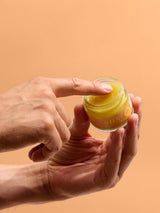
- Warm solid products briefly between your fingers, then spread.
- For long sessions, heat or rain, top up on the way. Small tins fit in a jersey pocket.
For sensitive areas such as the groin and near intimate areas, use only products without fragrance and without essential oils, and none of them belong on mucous membranes. More on fragrances in Essential oils and fragrance allergens and Fragrance-free: ingredients at a glance. How petroleum jelly and beeswax salves differ is explained in Petroleum jelly or beeswax salve.
After your workout
After training, rinse off sweat and what is left of the gliding film with lukewarm water and pat your skin dry rather than rubbing. Fresh, dry clothes help more than sitting around in wet cycling shorts. You can apply a fragrance-free care product to skin that is red but intact. How body oil and body butter differ for this is explained in Body oil or body butter.
When not to treat it yourself: if the skin is open, weeping, very red, swollen or warm, or if blisters have formed, a care cream is not the right product. Get advice at a pharmacy or from a doctor and take a break until the skin has closed again. If chafing from cycling keeps coming back in the same place, it is worth looking at your saddle, riding position and shorts.
Frequently asked questions
Do I really need petroleum jelly against chafing?
No. Petroleum jelly is one of several ways to create a gliding film. A water-free balm made of plant oils and wax does the same job. Clothing, fit and applying in good time matter more than the product.
Why does it chafe more in summer?
Because you sweat more. Damp skin rubs more strongly against fabric and skin than dry skin. In summer you also often wear shorter or looser shorts, where skin lies directly on skin.
Does powder help against chafed thighs?
Powder can keep the skin dry for a while. When sweat takes over, though, it clumps. For foot blisters, studies found no benefit from drying powders. Many people combine close-fitting shorts with a thin gliding film.
Can I use a hand cream as a gliding film?
A water-free, fragrance-free hand cream made of wax and oil can serve as a gliding film on small areas, such as the nipples or under a backpack strap. For larger areas like the thighs, a body butter is more practical.
Does a film of fat damage cycling shorts?
That depends on the chamois pad and the product. Cycling shorts manufacturers sometimes give guidance on this in the care instructions. Wash your shorts after every ride so that fat and sweat don't build up in the pad.
At forpeople
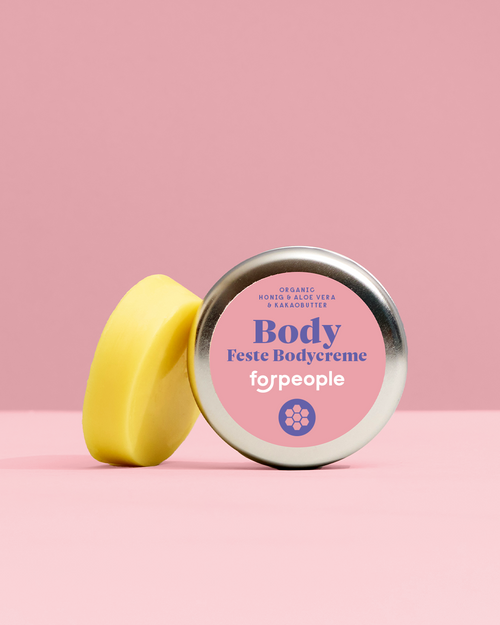
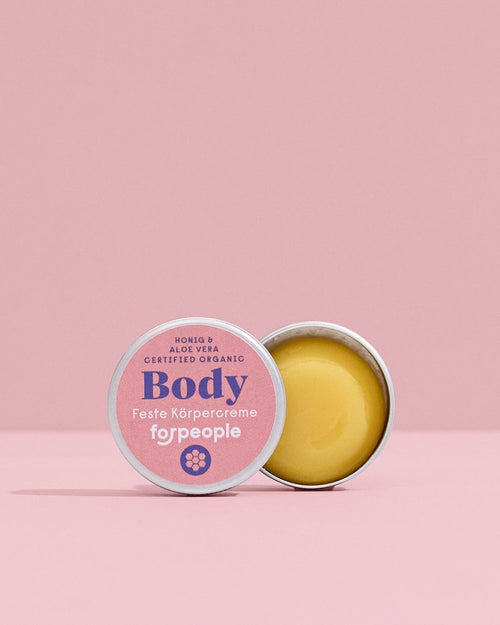
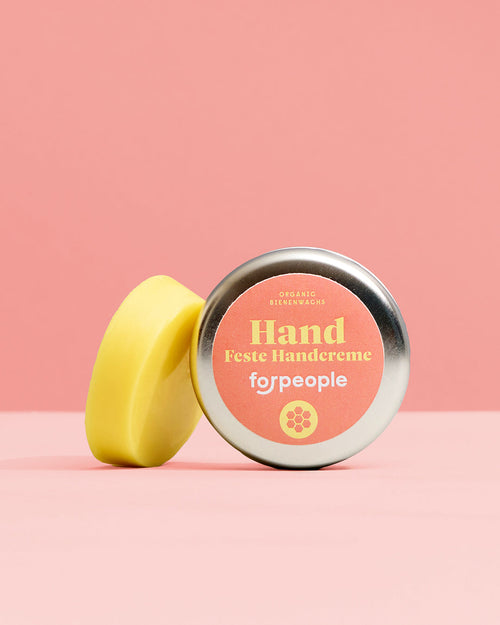
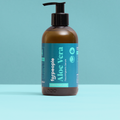
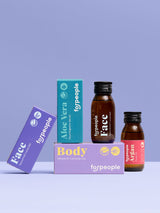
For larger areas such as the inner thighs, the fragrance-free Solid Body Butter - Beeswax & Aloe Vera (40 g, €9.90) works well. It is made of cocoa butter, olive oil, beeswax, sunflower oil, shea butter and aloe extract, with no water; you can refill the tin with the Solid Body Butter Refill - Beeswax & Aloe Vera (40 g, €7.90). For your jersey pocket or running belt, it comes as the Solid Body Butter Mini – Beeswax & Aloe Vera (8 g, €5.90). On small areas you can use the Solid Hand Cream - Beeswax (30 g, €9.90), which also has no added fragrance. The Beeswax Salve Larch & Mandarin in a Glass Jar (50 g, €12.90) contains larch resin, propolis and essential oils; it is better suited to feet or shoulders under a backpack, not to the groin and intimate area. Resin and propolis can trigger skin reactions, see Resin and propolis: allergy notes. Do not apply to open or injured skin; if you notice a skin reaction, stop using the product. More on this: How to apply a solid cream · Salve, balm, butter, cream · Sun protection in the mountains and snow · Moisturise before or after climbing?
Sources
- Knapik JJ, Reynolds KL, Duplantis KL, Jones BH (1995): Friction blisters. Pathophysiology, prevention and treatment. Sports Medicine 20(3): 136–147. https://doi.org/10.2165/00007256-199520030-00002
- Gerhardt LC, Strässle V, Lenz A, Spencer ND, Derler S (2008): Influence of epidermal hydration on the friction of human skin against textiles. Journal of the Royal Society Interface 5(28): 1317–1328. https://doi.org/10.1098/rsif.2008.0034
- Drewitz KP, Hasenpusch C, Kreuzpointner F, Schwirtz A, Klenk A, Apfelbacher CJ (2024): Cross-sectional study on exercise-related skin complaints among sports students at two German universities. Scientific Reports 14(1): 11829. https://doi.org/10.1038/s41598-024-62357-9