


The three building blocks at a glance
In the scientific literature, moisturizing products are classified by how they work (Sethi et al. 2016). Many substances belong to more than one group: shea butter, for example, smooths the skin and forms a film at the same time. So the classification describes functions, not rigid boxes.
| Building block | What it does | Examples | Typically found in |
|---|---|---|---|
| Humectants | attract water and bind it in the stratum corneum | glycerin, urea, hyaluronic acid, lactic acid | water-based creams, lotions, serums |
| Occlusives | form a film and reduce evaporation | beeswax, candelilla wax, shea butter, cocoa butter, petroleum jelly, lanolin | ointments, balms, solid creams, lip care |
| Emollients | fill rough spots between the skin flakes, make the skin soft and smooth | sunflower oil, olive oil, jojoba oil, almond oil, plant-based esters | almost all creams, body oils |
Humectants: attracting water
Humectants are hygroscopic, which means they attract water. According to a review, they draw it from two directions: from the deeper skin into the epidermis and, in humid air, from the environment (Sethi et al. 2016). The skin has such substances of its own, the natural moisturizing factor in the horny cells. More in The skin barrier explained simply.
- Glycerin is the best-known humectant and is considered particularly effective (Sethi et al. 2016). The skin also makes it itself, and when applied it improves the hydration of the stratum corneum and its mechanical properties in studies (Fluhr et al. 2008).
- Urea occurs naturally in the skin's moisturizing factor and is hygroscopic (Piquero-Casals et al. 2021). At lower concentrations (around 10%) it mainly binds moisture; at higher concentrations (20–30%) it loosens hardened skin (Sethi et al. 2016). That is why high-dose urea is found mainly in foot creams. You can find the comparison with water-free care in Urea or water-free cream?
- Hyaluronic acid binds a great deal of water and is used mainly in facial care and serums.
Humectants have one weakness: the water they draw into the epidermis can easily evaporate again from there. That is why they are usually combined with occlusives (Sethi et al. 2016).
Occlusives: slowing evaporation
Occlusives are water-insoluble fats that form a film on the skin and physically reduce transepidermal water loss. They work best when applied to slightly damp skin (Sethi et al. 2016). How dense a film is varies greatly: petroleum jelly is considered very dense, while plant oils tend to form a partly permeable film (Patzelt et al. 2012). Waxes and solid butters lie in between and also give a cream its firmness.
The drawback of many occlusives is how they feel on the skin. Too much feels greasy (Sethi et al. 2016). We explain the mechanism in detail in Occlusion and transepidermal water loss. There are separate pages on the individual raw materials: Beeswax in skincare, Candelilla wax or beeswax and Shea butter: composition.
Emollients: smoothing and softening
Emollients are mainly oils and other lipids. They settle into the fine unevenness between the skin flakes and make the skin softer, more flexible and smoother (Sethi et al. 2016). You feel this right away: rough skin feels silkier after applying cream, even if its water content has barely changed yet. Smooth, soft skin is one of the immediate effects of moisturizers (Draelos 2018).
Plant oils differ in their fatty acids and therefore in how they feel on the skin. Some absorb faster, others stay noticeable for longer. How olive oil and sunflower oil differ, for example, is explained in Olive oil or sunflower oil for the skin, and jojoba oil in Jojoba oil: a liquid wax.
How emulsions and water-free care combine the building blocks
Emulsions are mixtures of water and oil held together by an emulsifier. Most creams and lotions in tubes are emulsions. Their advantage: they can combine water-soluble humectants and fats in one product. They spread easily and absorb quickly because part of the water evaporates as you rub them in. Because water provides a habitat for microorganisms, water-based products usually need preservation. More in Emulsifiers in cosmetics and Why water in cosmetics needs preservation.
Water-free care such as balms, ointments and solid creams consists only of fats, waxes and oils. It provides no water itself and usually no humectant. Its focus is on slowing evaporation and making the skin supple. It is more concentrated, needs no emulsifier and no preservation against germs. We explain the principle in Water-free cosmetics.
| Emulsion (cream in a tube) | Water-free care (solid cream, balm) | |
|---|---|---|
| Humectants | often included (glycerin, urea) | usually not included |
| Occlusives | little to a lot, depending on the formula | main component (waxes, butters) |
| Emollients | oils, esters | plant oils |
| Water, emulsifier, preservation | usually yes | no |
| Skin feel | light, absorbs quickly | richer, a small amount is enough |
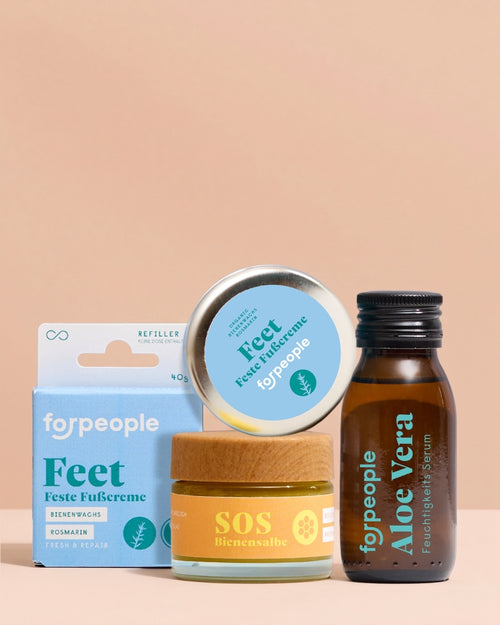
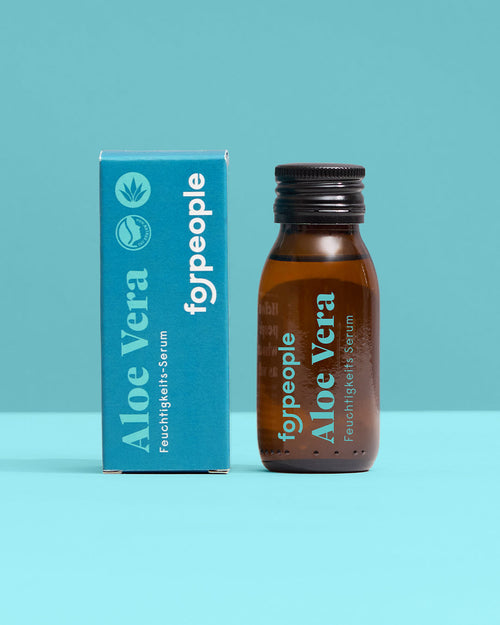
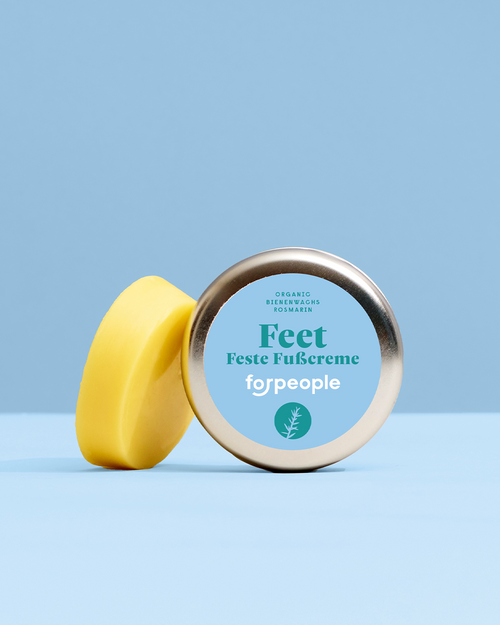
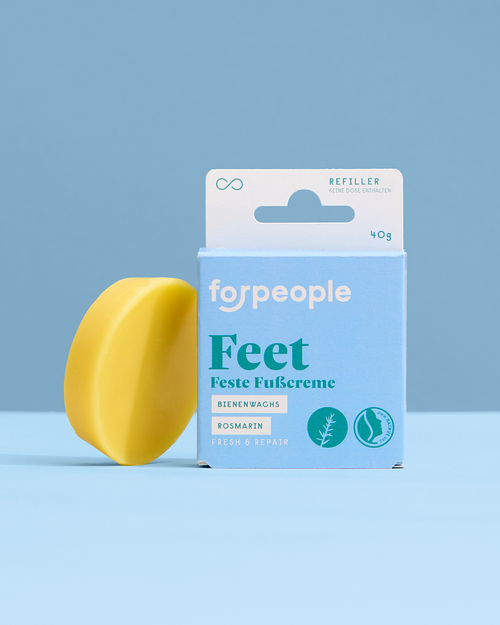
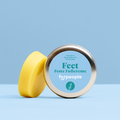
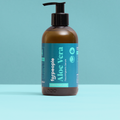
The two approaches do not exclude each other. You can combine them when you apply them: first bring moisture to the skin, for example with a watery serum or simply on skin that is still slightly damp after washing, then apply a water-free cream on top that slows evaporation. This is how the Foot Care Set – 3 Steps for Cracked Heels is built, in which the Aloe Vera Serum 99.6% is applied before the Solid Foot Cream – Rosemary & Sage. On your hands, a solid hand cream right after drying off is usually enough.
How to recognise a formula on the label is explained in Reading an INCI list: if AQUA comes first, it is a water-based formula. If waxes, butters or oils come first, it is fat-based.
Frequently asked questions
Does a water-free cream contain any moisture at all?
It contains no water. But it holds back the water that is in your skin better, because its film slows evaporation.
Is glycerin good or bad for dry skin?
Glycerin is a well-studied humectant that improves the hydration of the stratum corneum (Fluhr et al. 2008). It works best together with fats that slow evaporation.
Is oil an occlusive or an emollient?
Both. Plant oils mainly make the skin supple and at the same time form a thin, partly permeable film (Patzelt et al. 2012).
Do I need all three building blocks?
Not necessarily in one product. On slightly damp skin, care made of occlusives and emollients is often enough, because the water is already there.
At forpeople
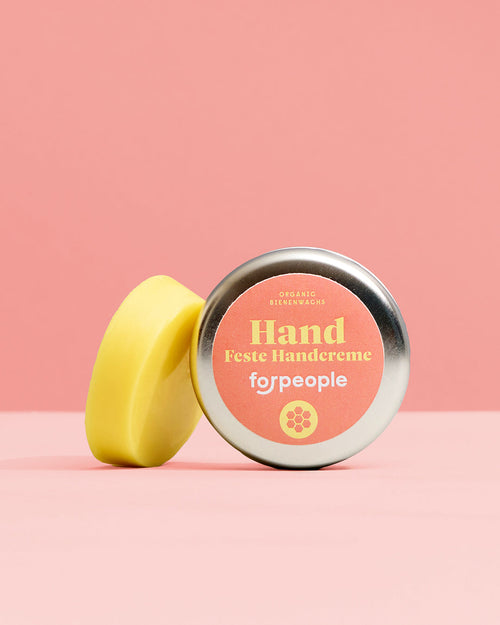
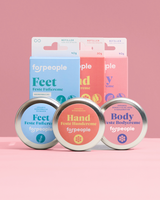
Our solid creams are water-free and combine waxes (occlusives) with butters and oils (emollients):
- Solid Hand Cream - Beeswax, 30 g, €9.90: beeswax, olive oil, sunflower oil.
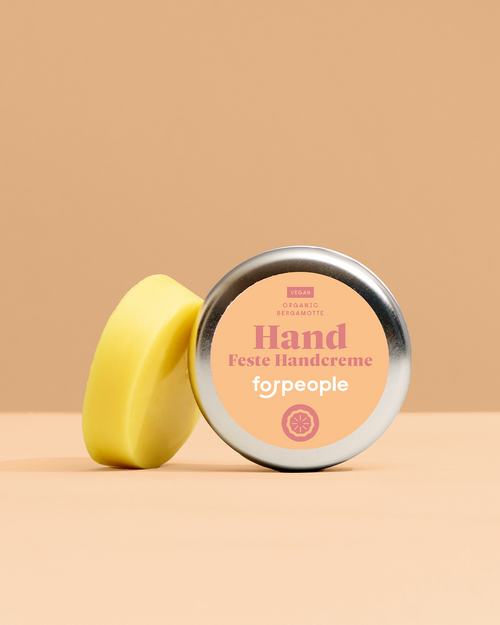
- Solid Vegan Hand Cream - Bergamot, 30 g, €9.90: vegan, with candelilla wax, jojoba oil and shea butter.
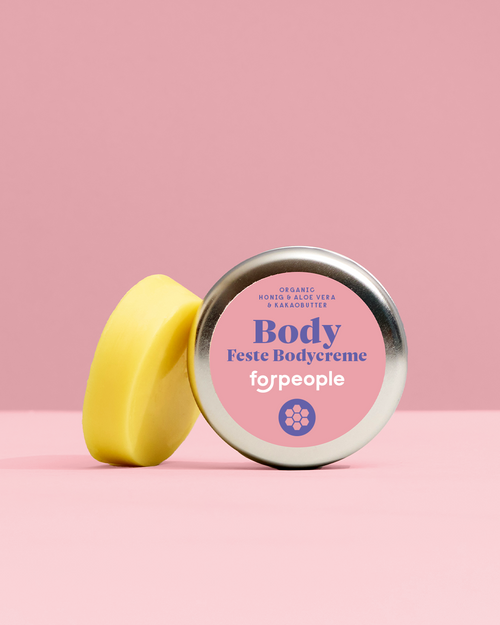
- Solid Body Butter - Beeswax & Aloe Vera, 40 g, €9.90: cocoa butter, olive oil, beeswax, sunflower oil, shea butter.
- Foot Care Set – 3 Steps for Cracked Heels, €39.90: aloe vera serum, beeswax balm and solid foot cream with refill.
Sources
- Sethi A, Kaur T, Malhotra SK, Gambhir ML (2016): Moisturizers: The Slippery Road. Indian J Dermatol 61(3): 279–287. https://doi.org/10.4103/0019-5154.182427
- Fluhr JW, Darlenski R, Surber C (2008): Glycerol and the skin: holistic approach to its origin and functions. Br J Dermatol 159(1): 23–34. https://doi.org/10.1111/j.1365-2133.2008.08643.x
- Piquero-Casals J, Morgado-Carrasco D, Granger C, Trullàs C, Jesús-Silva A, Krutmann J (2021): Urea in Dermatology: A Review of its Emollient, Moisturizing, Keratolytic, Skin Barrier Enhancing and Antimicrobial Properties. Dermatol Ther (Heidelb) 11(6): 1905–1915. https://doi.org/10.1007/s13555-021-00611-y
- Patzelt A, Lademann J, Richter H, Darvin ME, Schanzer S, Thiede G et al. (2012): In vivo investigations on the penetration of various oils and their influence on the skin barrier. Skin Res Technol 18(3): 364–369. https://doi.org/10.1111/j.1600-0846.2011.00578.x
- Draelos ZD (2018): The science behind skin care: Moisturizers. J Cosmet Dermatol 17(2): 138–144. https://doi.org/10.1111/jocd.12490