















Solid foot cream with rosemary & sage
Solid foot cream without water, with beeswax, shea butter and essential oils of rosemary, eucalyptus and clary sage. 40 g in a refillable tin, for dry feet and rough heels. Dermatologically tested.
Filters
10 products
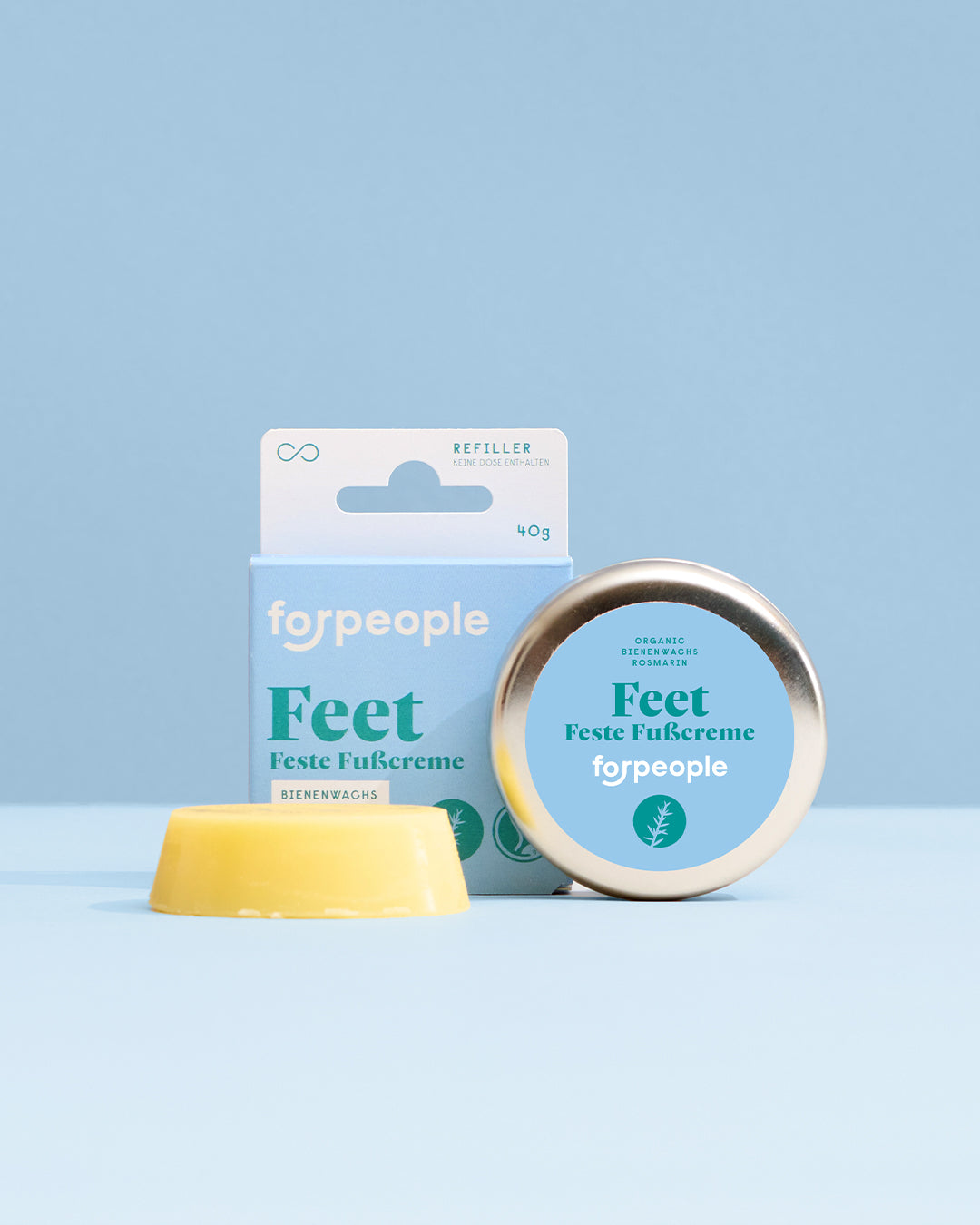
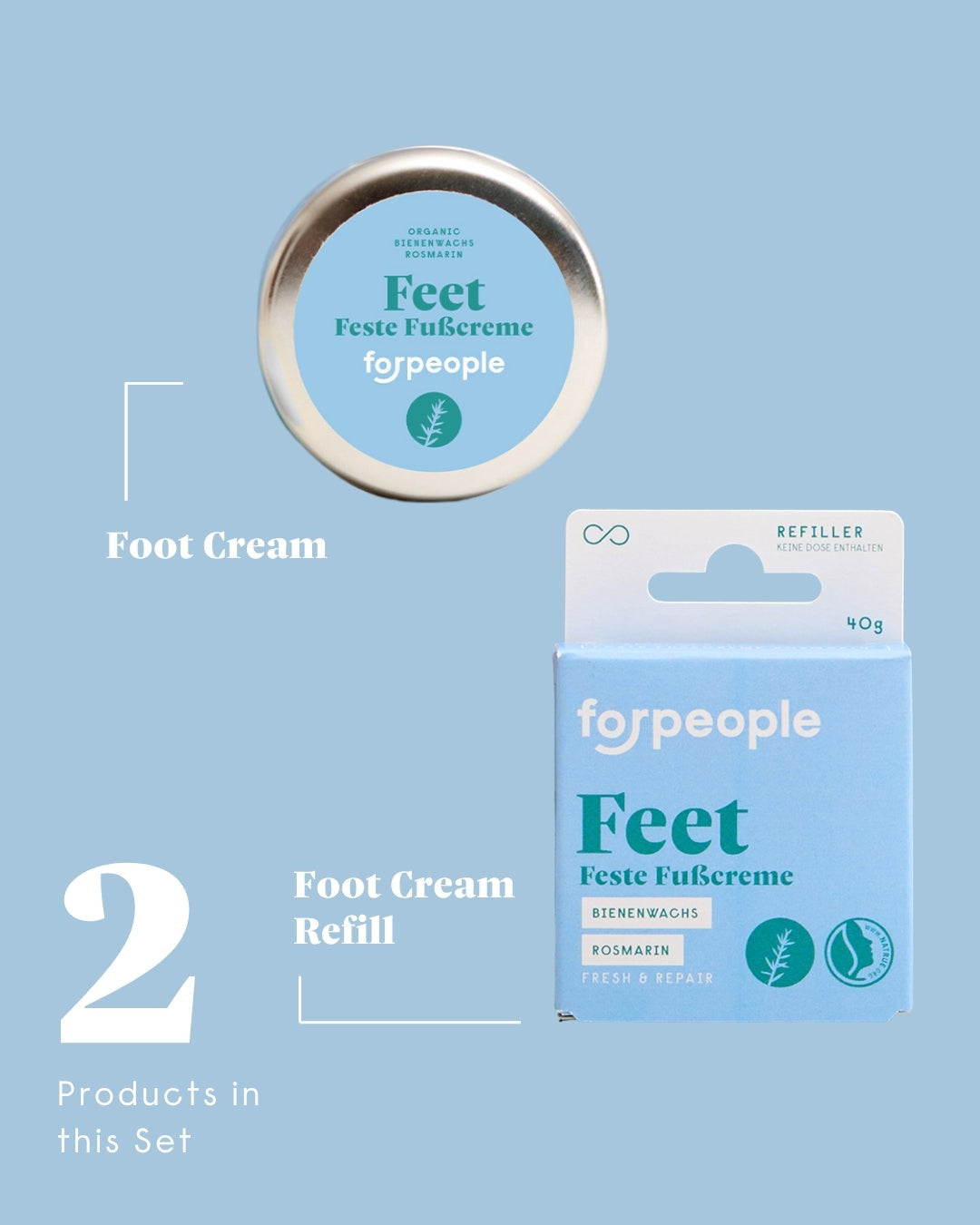
Foot Care Set – For Dry, Rough Feet (2× Rosemary Cream)
Sale priceFrom €16,90
Regular price€17,80 (€21,13/100g)
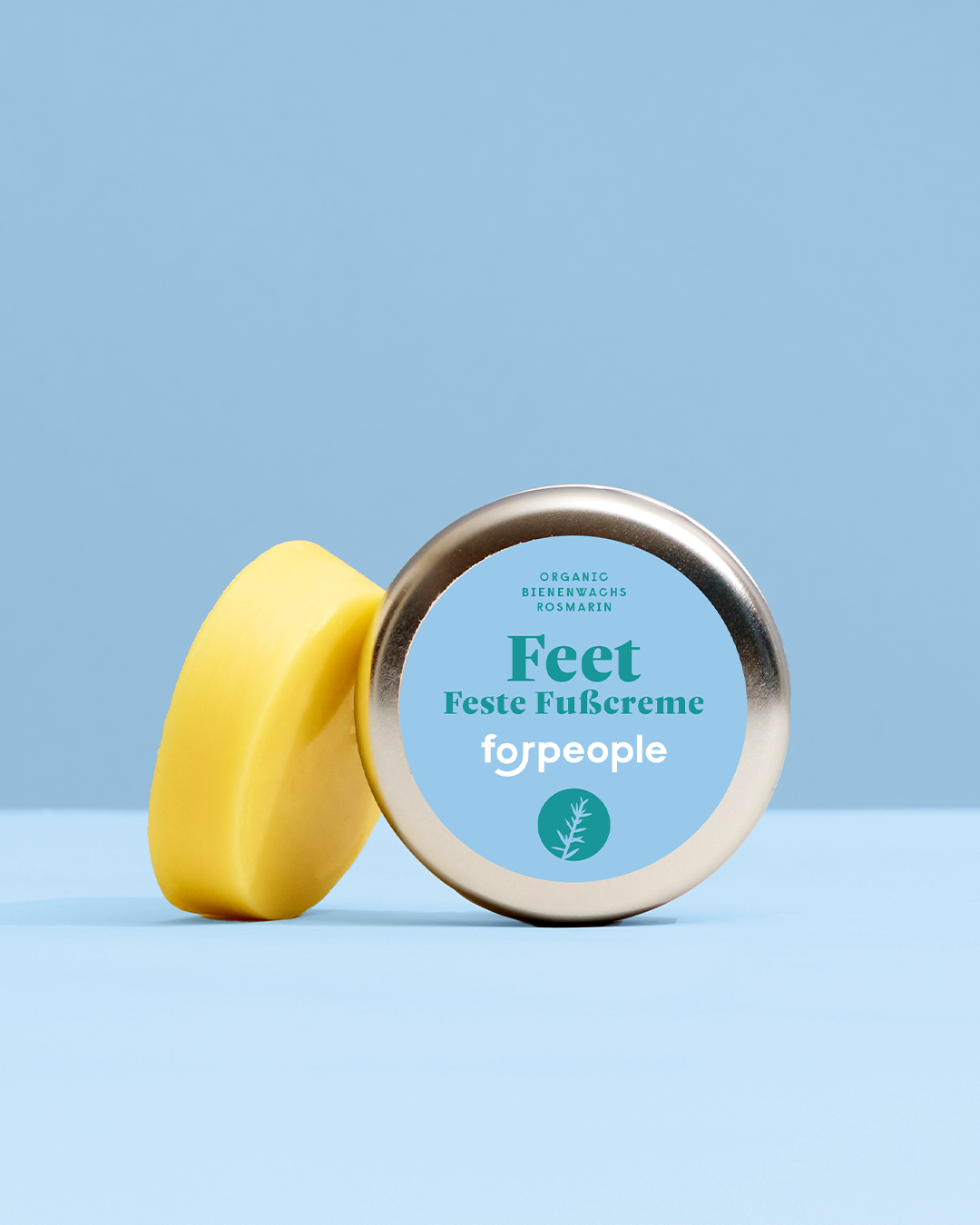
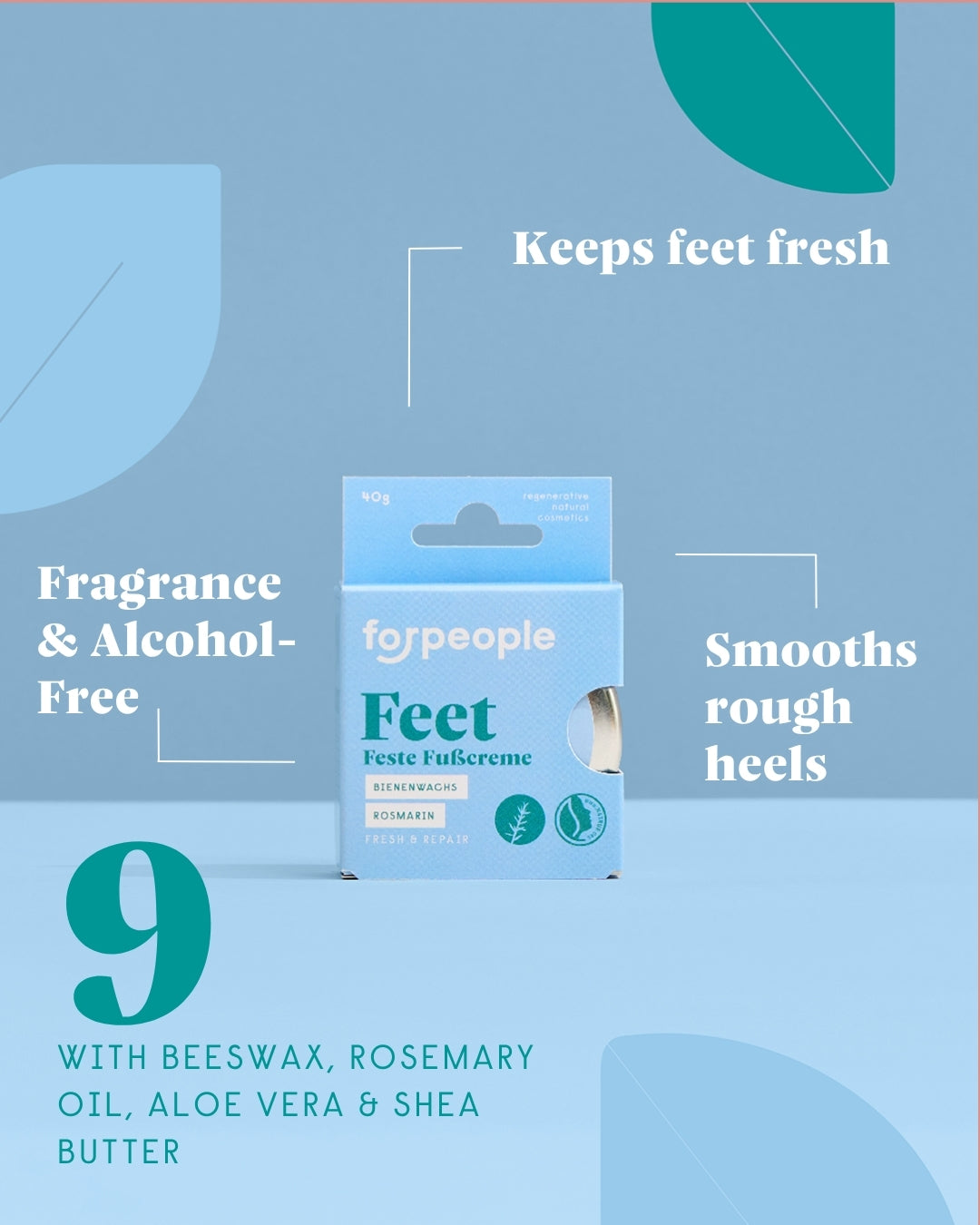
Solid Foot Cream – Rosemary & Sage
Sale priceFrom €9,90 (€24,75/100g)

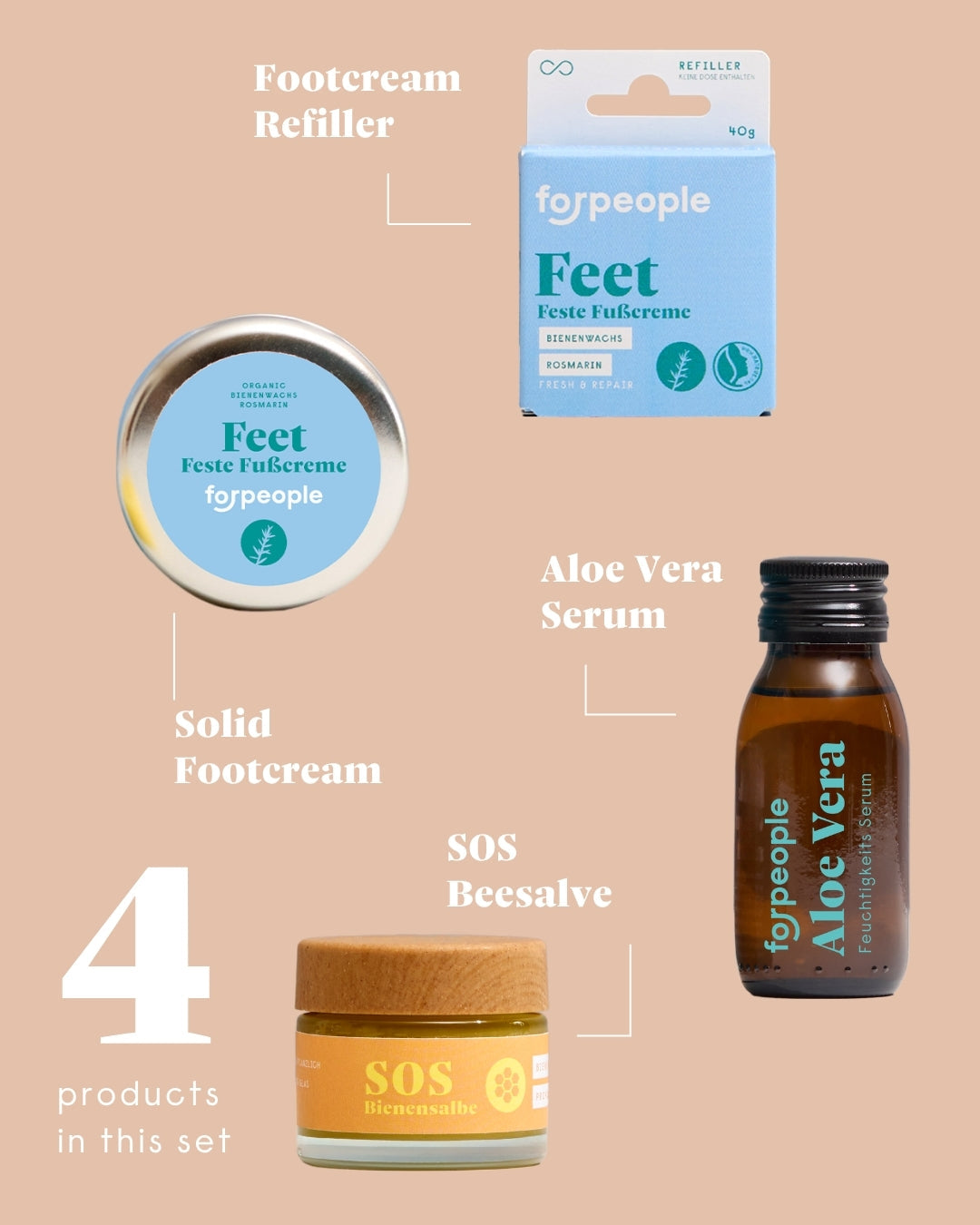

Foot Care Set – 3 Steps for Cracked Heels
Sale price€39,90
Regular price€42,60 (€22,17/100g)
Bundle deal
Build your own care bundle
Save 5% on 3 items, 9% on 5 and 13% on 7 or more.

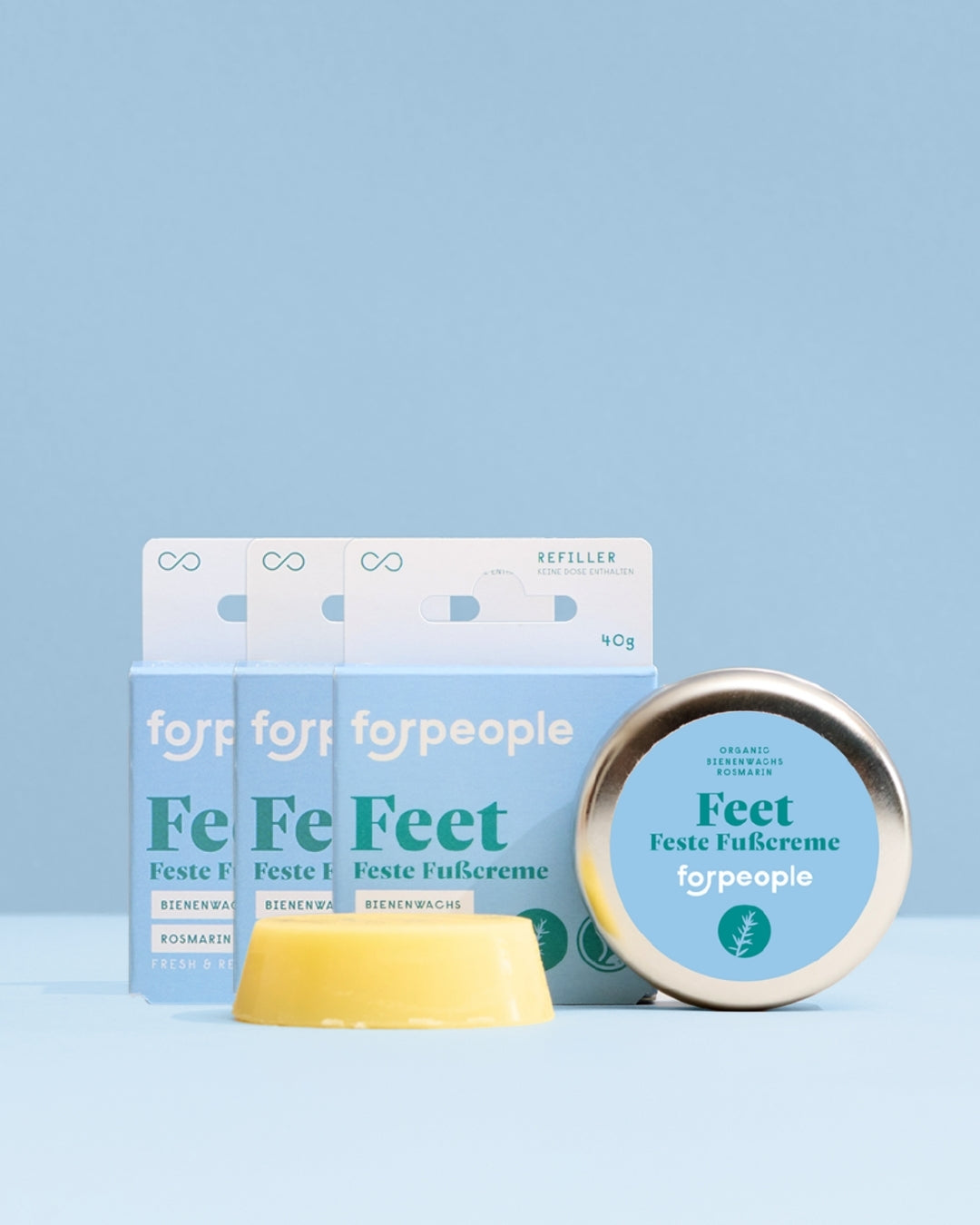
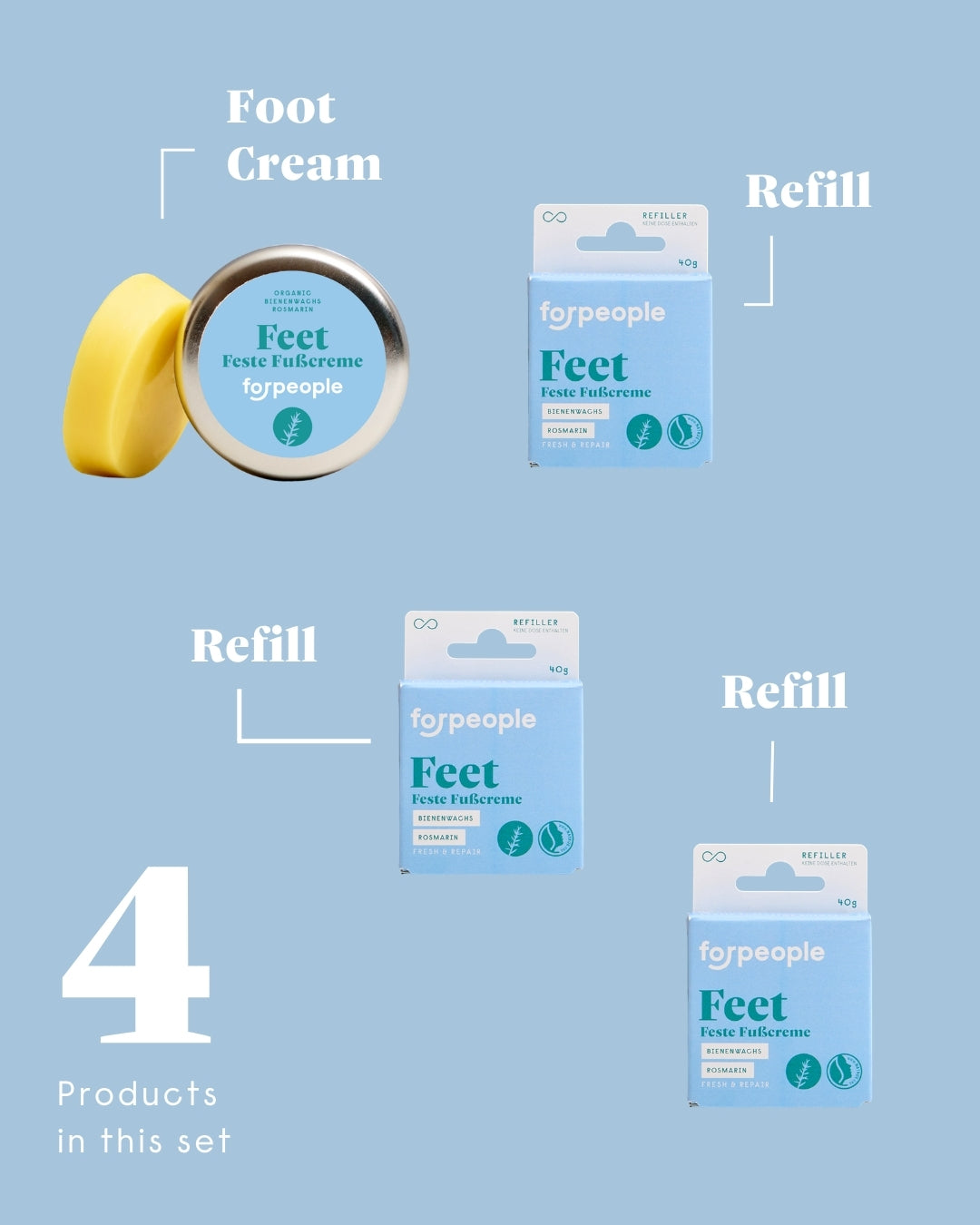
Foot Care Set XL – for Dry Feet
Sale price€29,90
Regular price€33,60 (€37,38/100g)
Free shippingSave €3,50

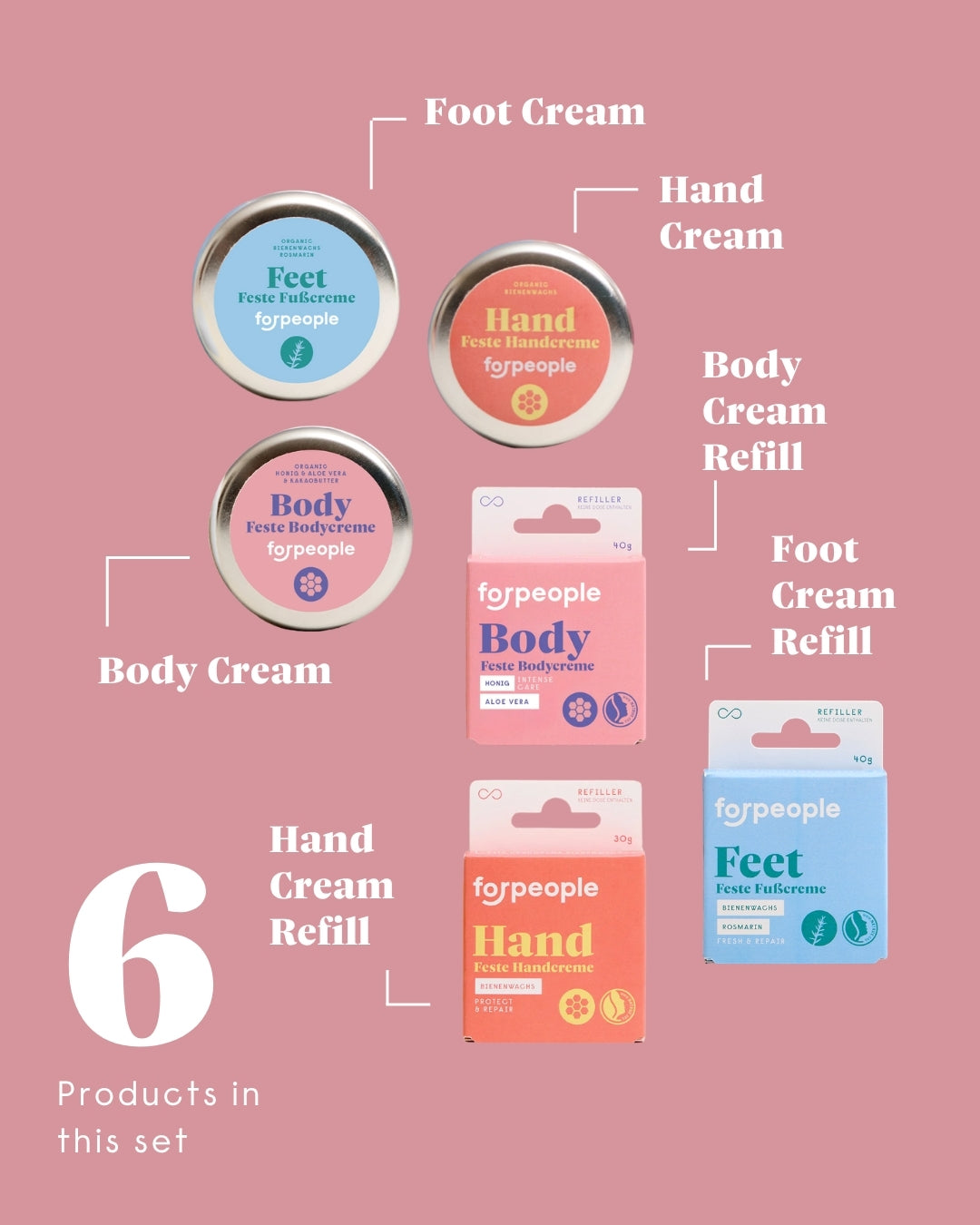
Solid Care for Dry Skin – Hands, Feet & Body
Sale price€49,90
Regular price€53,40 (€22,68/100g)
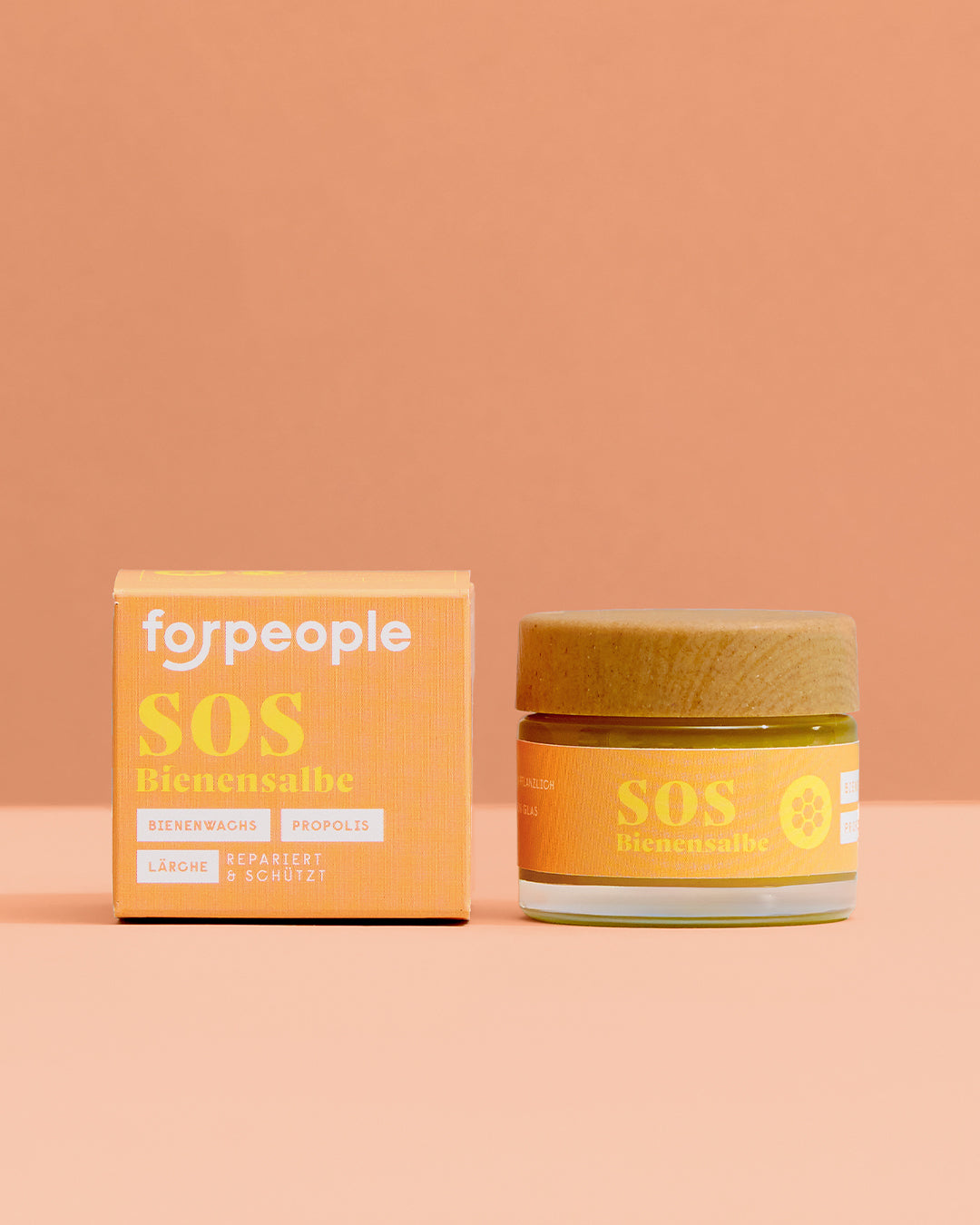
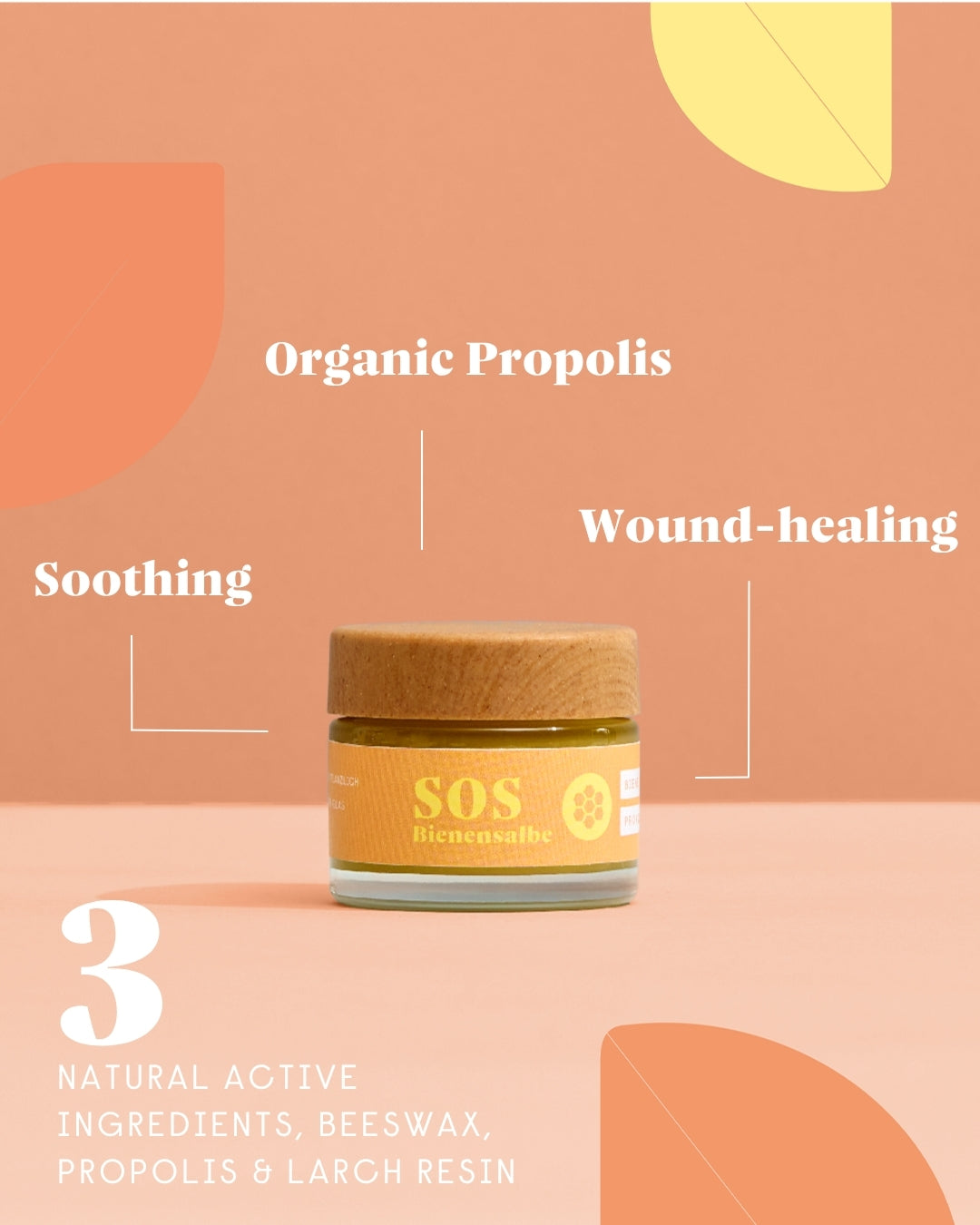
Beeswax Salve – Larch & Mandarin in a Glass Jar
Sale priceFrom €12,90 (€25,80/100g)
Tested & honest
Externally certified & tested in German labs
Dermatologically tested
Tested in German labs — for dry & sensitive skin.
Certified natural cosmetics
NaTrue-certified and Made in Germany.
30-day money-back
Try it in peace — returns even on opened products.
NEWOn sale

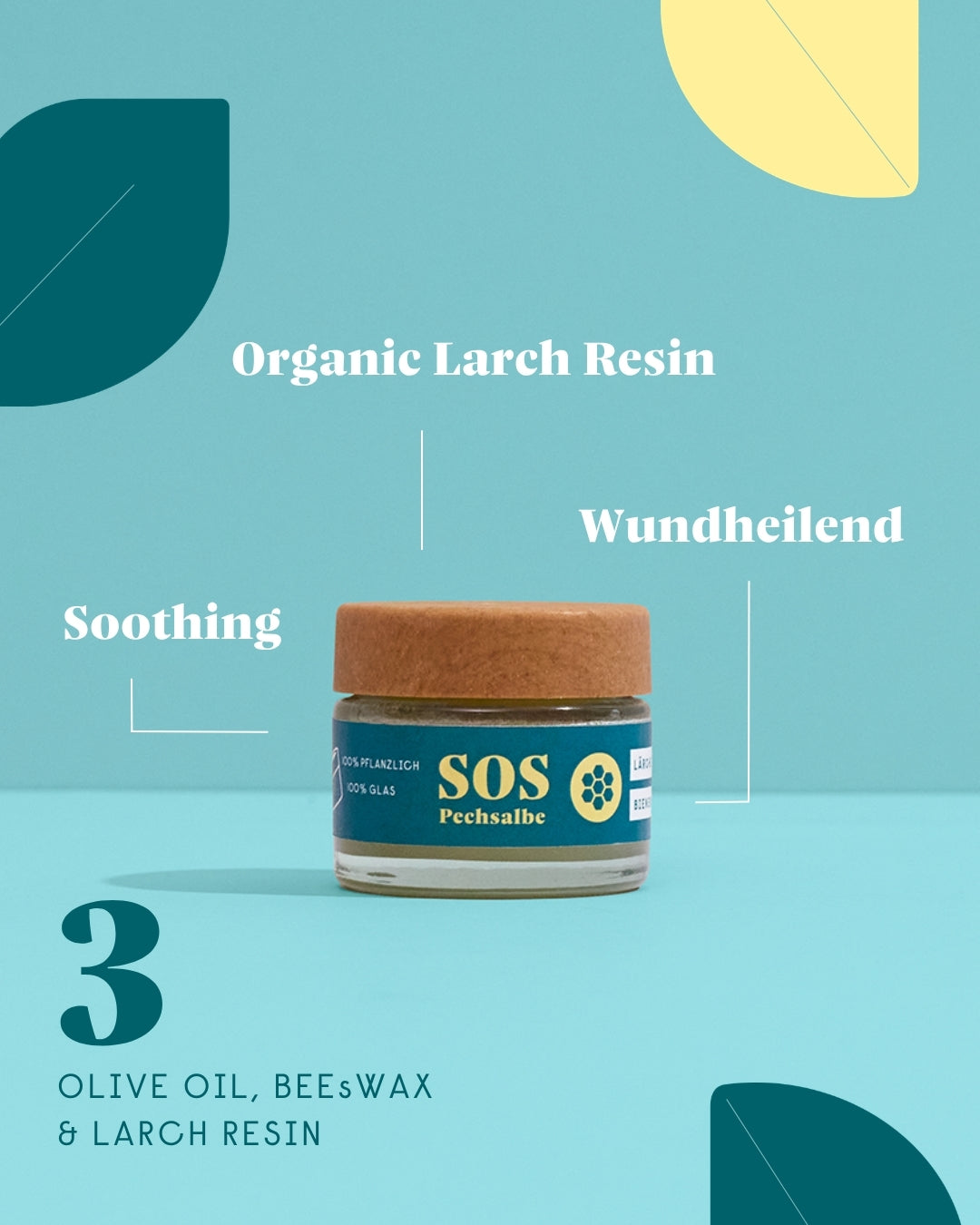
SOS Pitch Salve - Larch Resin in a Glass Jar
Sale priceFrom €16,90 (€33,80/100g)
Free shippingSave €3,60

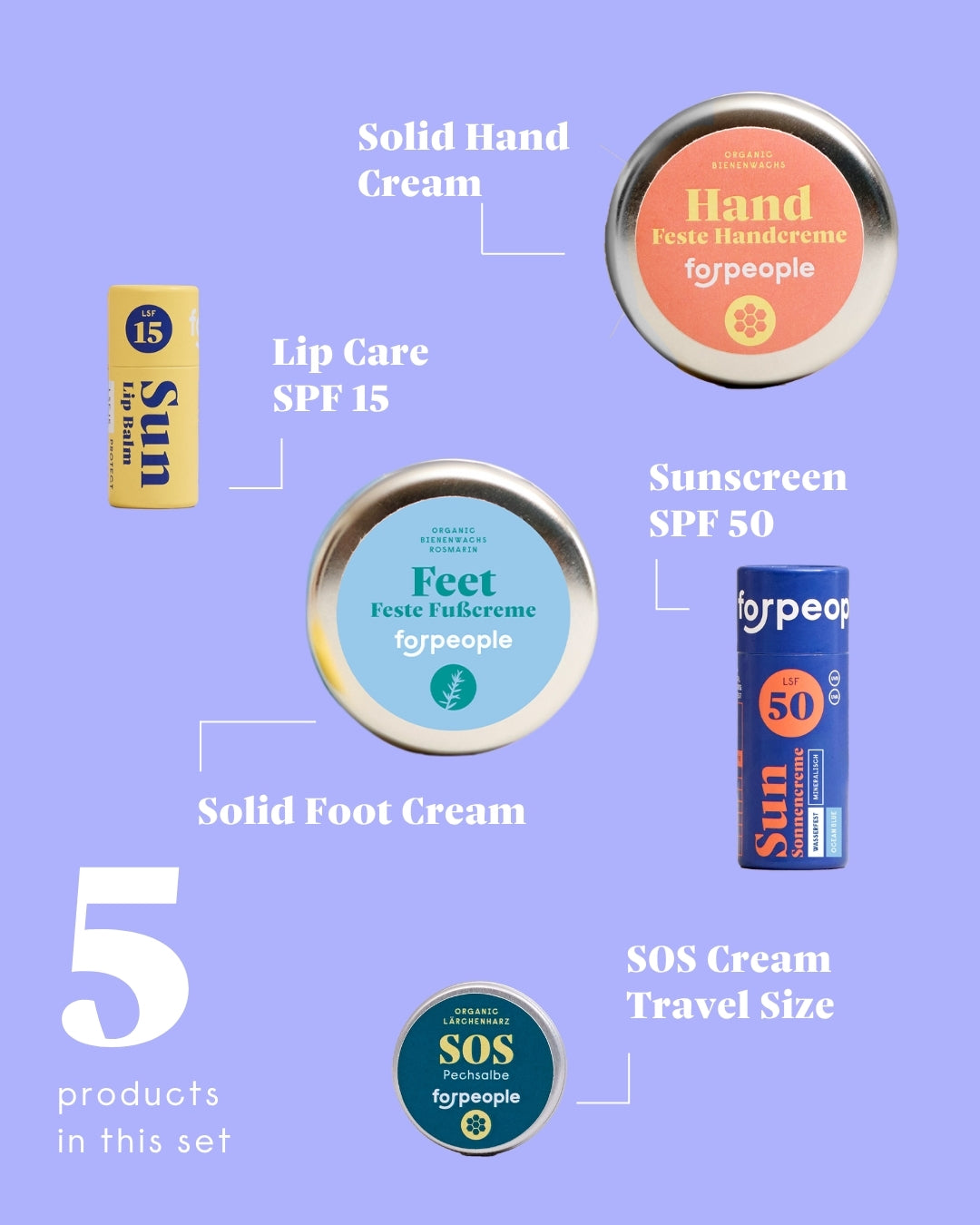
skincare Travel Set – for Your Carry-On
Sale price€39,90
Regular price€43,50 (€49,26/100g)
Free shipping

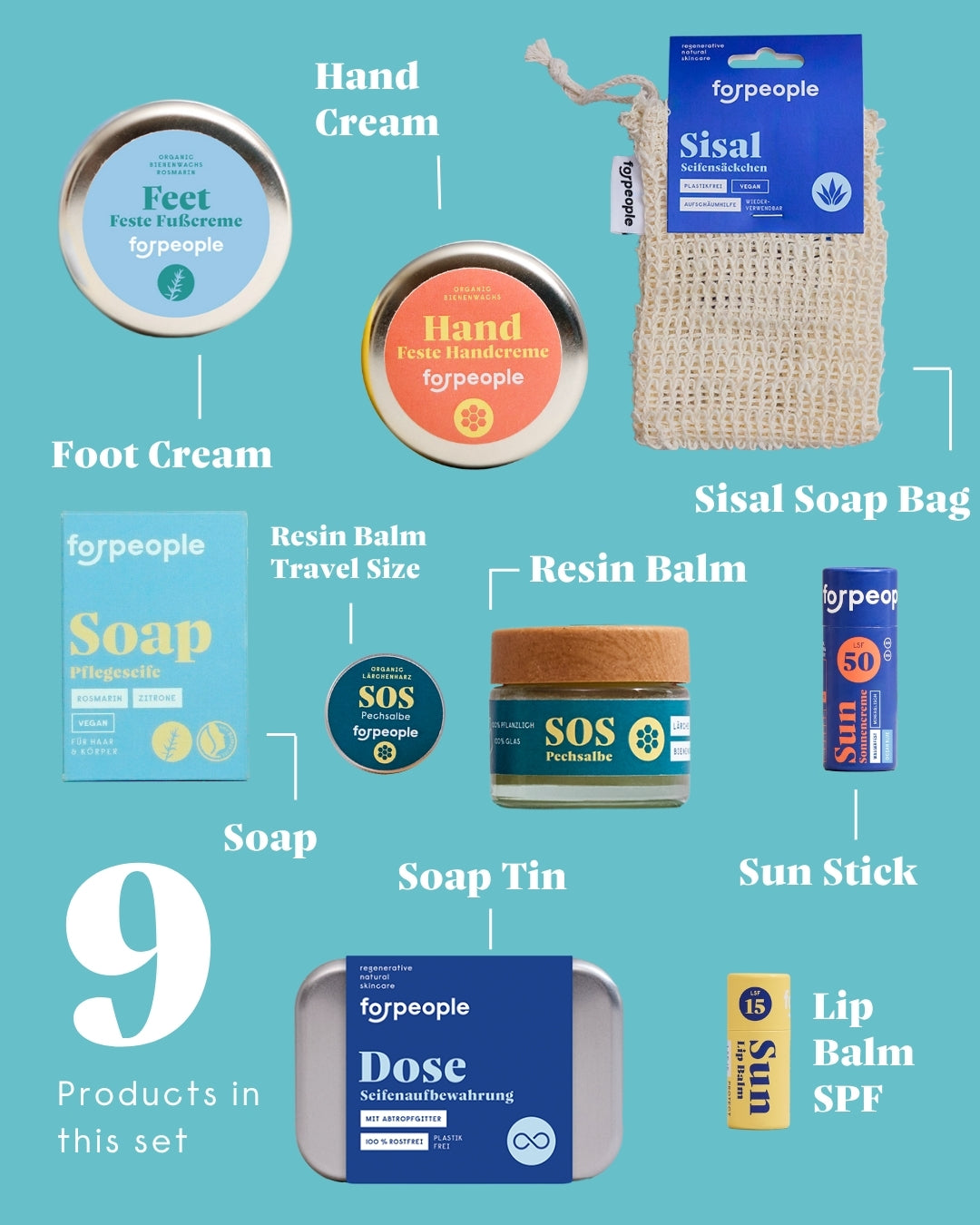
Outdoor Set – Sun Protection & SOS Care for Stressed Skin
Sale price€79,90
Regular price€83,10 (€35,04/100g)
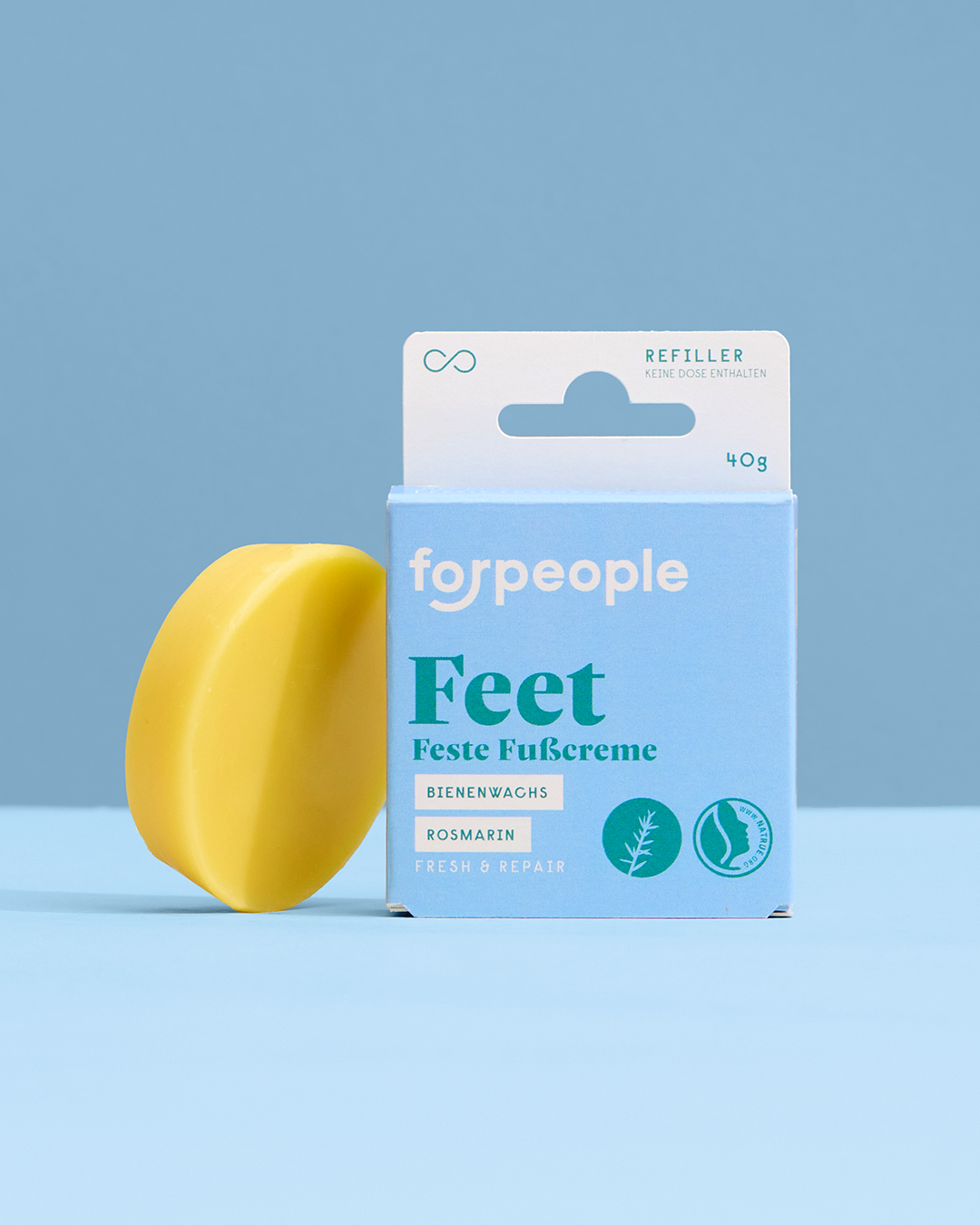
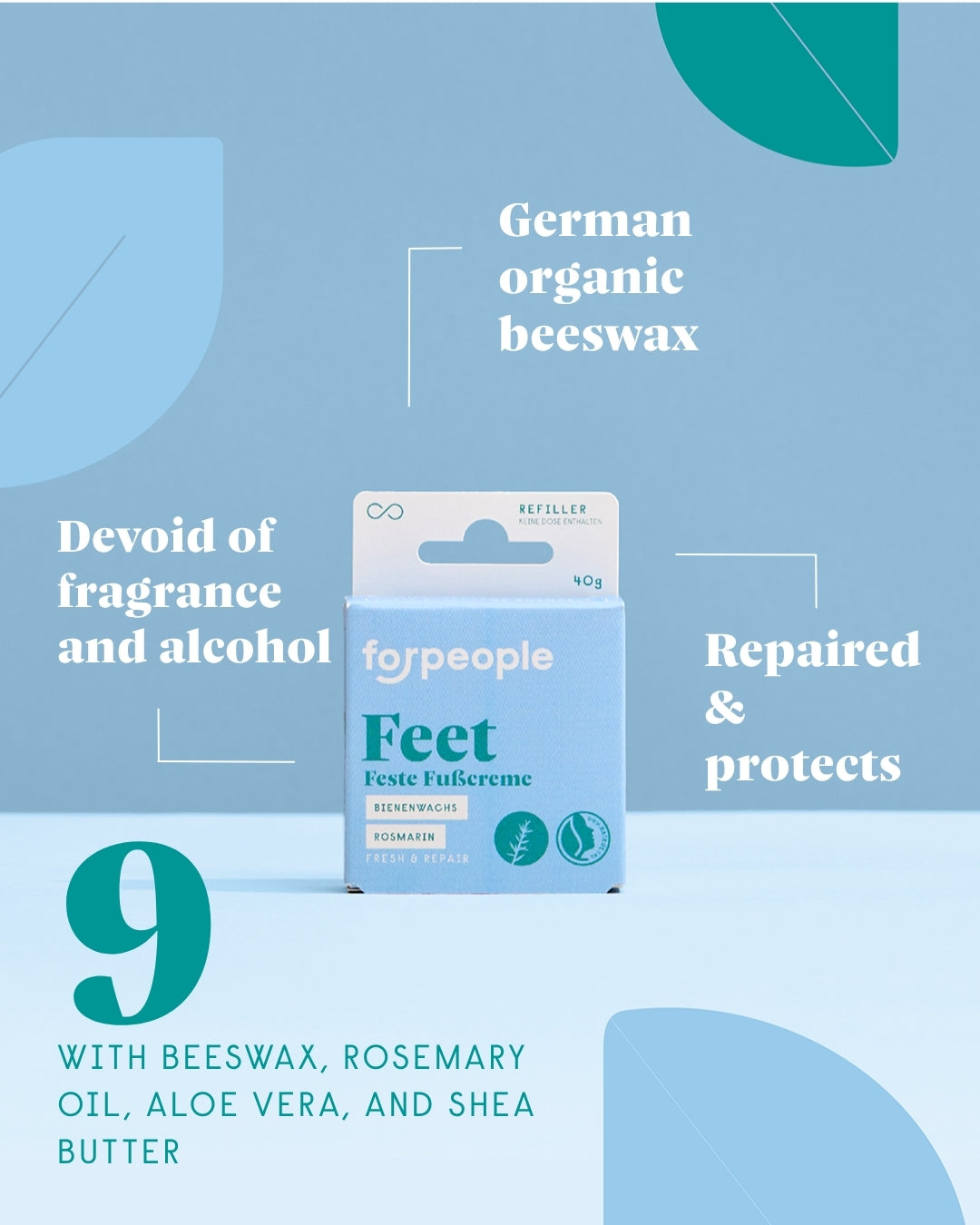
Solid Foot Cream Refill - Rosemary & Sage
Sale priceFrom €7,90 (€19,75/100g)
Foot cream for cracked heels: questions and answers
