



How much callus should stay?
A callus is the skin's response to pressure and friction. Ill-fitting shoes, the position of the foot and a lot of activity create these forces, and the skin thickens its horny layer in the places that carry the load (Singh et al. 1996). The medical literature treats this as a normal physical response; once the mechanical cause is gone, the thickening usually recedes on its own (Freeman 2002).
So the aim is a smooth, flexible surface, not complete removal. If you sand down to the soft, pink skin, you take away the area's protection, and because the pressure remains, the skin builds the layer up again (see Calluses keep coming back). A rule of thumb: stop as soon as the area feels smoother, and remove a little regularly instead of a lot once in a while.
The tools compared
| Tool | How it works | Wet or dry | Suitable for | Caution |
|---|---|---|---|---|
| Pumice stone | porous, rough stone that rubs off the top layer | on soaked, wet skin | broad, painless calluses on the heel and ball of the foot | dries slowly; rinse after use and let it dry |
| Foot file, rasp | rough surface made of abrasive paper, ceramic or metal | usually dry, follow the manufacturer's instructions | edge of the heel, light to moderate calluses | coarse metal rasps take off a lot quickly; work with little pressure |
| Electric callus remover | rotating abrasive roller | usually dry, follow the manufacturer's instructions | larger areas | works fast; short passes, do not stay on one spot |
| Callus shaver, blade | cuts off layers | not for use at home | podiatry with trained staff | risk of injury |
| Foot peel socks, acid peels, products with urea or salicylic acid | chemically loosen the bond between the horny cells | as directed on the pack | broad areas of thickened skin, used over days to weeks | also act on the surrounding skin; not on cracked or sensitive skin |
Callus-dissolving products (keratolytics) contain, for example, salicylic acid or urea and are used over several weeks (IQWiG 2025). With urea, the effect depends on the concentration: up to 10% it mainly binds moisture, above that it increasingly loosens horny cells (Celleno 2018). According to one review article, products with salicylic acid can also attack the tissue around the callus (Freeman 2002). So apply them precisely and follow the instructions. How urea and water-free care complement each other is explained under Urea or water-free cream?
Pumice stone: step by step
- Soak your feet in warm water for about ten minutes (IQWiG 2025). What the bath does to the skin is explained under A foot bath before applying cream.
- Wet the pumice stone and rub it over the soaked callus with light pressure. The excess horny layer comes away best on wet skin (Baden 1980).
- Rub off only the top layer (IQWiG 2025) and check with your finger in between. Stop as soon as the area is smoother.
- Rinse your feet and dry them thoroughly, including between the toes.
- Apply cream.
File and electric device
Files and rasps remove callus with a rough surface. According to the manufacturers, most are meant for dry skin; there you can see well how much has already come off. Work with little pressure and, if the file has two sides, use the coarse side first and then the fine one.
Electric callus removers work on the same principle with a rotating abrasive roller, only faster. So keep the passes short, keep the device moving and feel the skin in between. Devices with milling attachments are a different matter. IQWiG advises people without training against callus milling tools just as it does against blades and shavers (IQWiG 2025).
Callus shavers and blades: why not at home?
A callus shaver uses a blade to cut off thin layers. Unlike with sanding, you can hardly see or feel how deep a stroke goes. IQWiG recommends doing without blades and callus shavers because the risk of injury is too great, especially for people without training. In podiatry, by contrast, sharper instruments are unproblematic when used professionally (IQWiG 2025). The medical literature also describes paring with a blade as part of professional treatment (Singh et al. 1996). That is why you will not find instructions for the shaver here.
How often, and what comes next?
For ongoing care, one session a week is enough for most people. For thickened pressure spots, IQWiG describes regular repetition, for example every other evening, each time only on the top layer (IQWiG 2025).
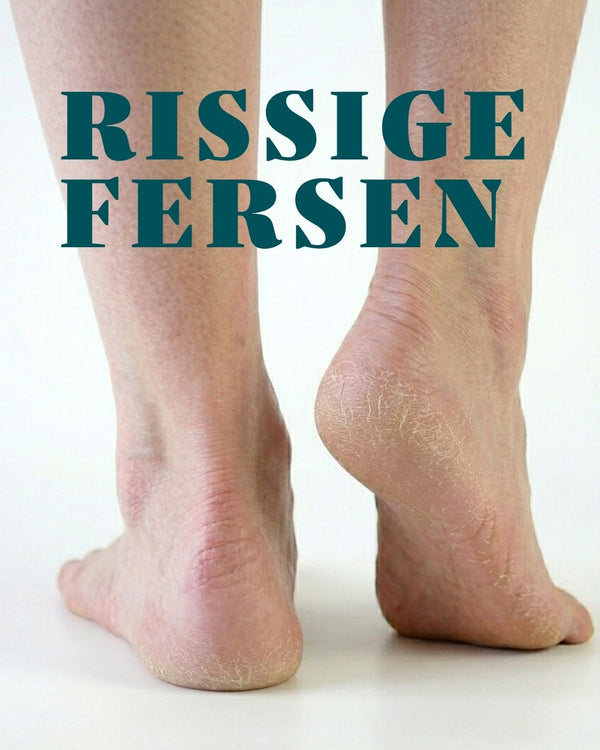
After removal, care is the more important part. Callused skin contains less moisture and is less elastic than unaffected foot skin (Hashmi et al. 2015). Dry callus becomes rigid and can crack at the edge of the heel, see Why heel skin gets so thick and cracks. A cream rich in oils and waxes leaves a film on the skin that reduces evaporation. The mechanism is explained under Occlusion and transepidermal water loss.
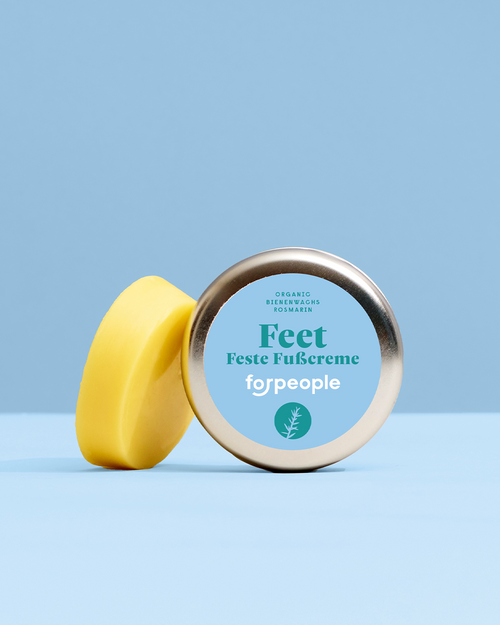
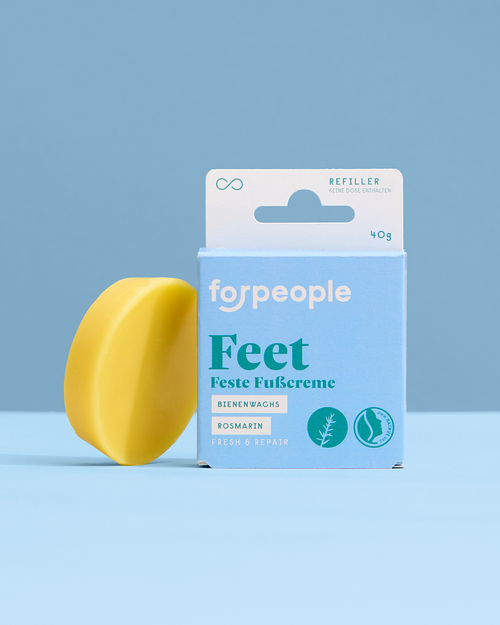
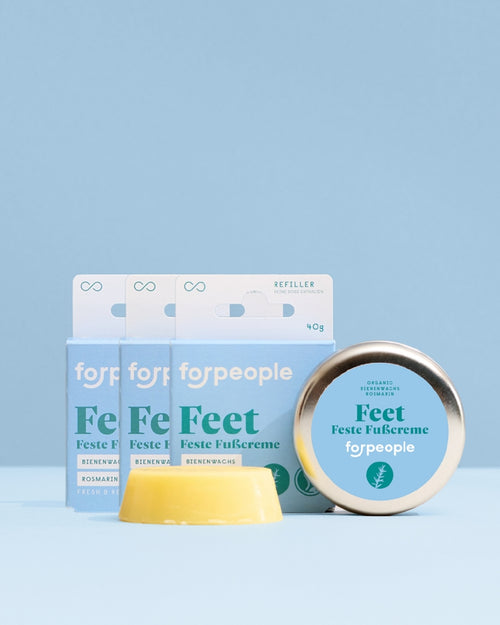
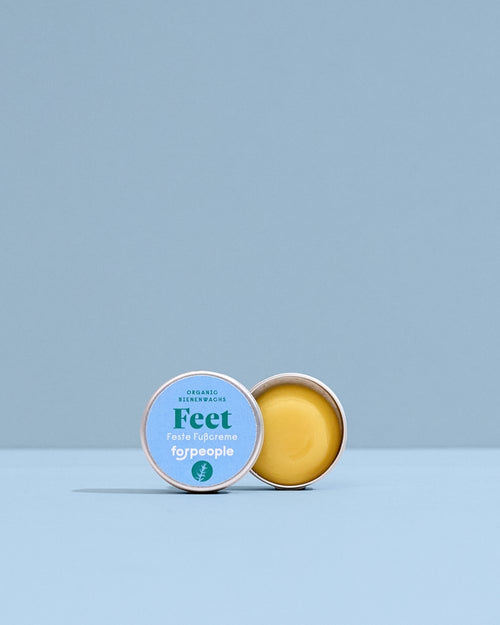
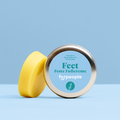
The Solid Foot Cream – Rosemary & Sage is water-free and consists of sunflower oil, beeswax, olive oil and shea butter. When the tin is empty, you put in a refill; as a supply there is the Foot Care Set XL with a tin and three refills. For your gym bag and for travel there is the travel size in a tin. What cotton socks add after applying cream is explained under Foot cream overnight with socks.
Rinse the pumice stone and file under running water after every use and let them dry completely in the air. Each person uses their own tool. Once the surface is worn smooth, replace it.
When to see a podiatrist or doctor?
Cosmetics care for the skin; they do not treat medical conditions. If you have diabetes, circulation problems or reduced sensation in your feet, you should not remove calluses yourself and should not use callus-dissolving products either. For people with diabetes or circulation problems in the legs, IQWiG recommends professional treatment by a podiatrist, and likewise for anyone who cannot reach their feet well (IQWiG 2025). Have a spot looked at professionally if it hurts at a single point (this may be a corn or a wart), if cracks are deep or bleed, if the skin is red, swollen or warm, or if an injury after removal does not improve. In detail: Cracked heels: when to see a podiatrist or doctor?
What customers say
A selection of verified reviews from our shop (collected via Judge.me), translated from German and partly shortened.
“I love this solid foot cream. A very nice-smelling and caring cream. I use it every morning and I am convinced that I will not try any other one.”
Customer review of Solid Foot Cream Refill - Rosemary & Sage, 5 out of 5 stars, January 2026, verified purchase
Frequently asked questions
Do I use the pumice stone wet or dry?
Wet, and on soaked skin. That is how the excess horny layer comes away best (Baden 1980).
Is a callus shaver dangerous?
It cuts, and the depth of a stroke is hard to judge. Because of the risk of injury, IQWiG advises against using blades and shavers yourself (IQWiG 2025).
The solid foot cream is hard. How do I get it onto my heel after filing?
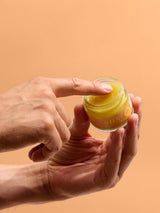
Rub the surface of the cream directly over the heel. The warmth of your skin melts a thin layer, which you then spread with your hands. This feels unfamiliar at first. More under How do I apply a solid cream properly?
Does the cream absorb quickly after callus removal?
A water-free cream stays on the skin as a film and needs a few minutes. So apply it sparingly and preferably in the evening. Cotton socks keep it on the heel and the floor clean.
What does the solid foot cream smell of, and does freshly smoothed skin tolerate it?
The scent comes from essential oils of rosemary, eucalyptus and clary sage. Freshly sanded skin can react more sensitively. If your skin reacts, stop using it. An overview for anyone who avoids fragrances is available under Without fragrance and essential oils.
At forpeople
We do not sell tools for callus removal. For the step afterwards there are:
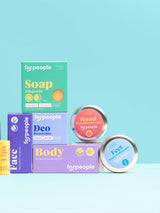
- Solid Foot Cream – Rosemary & Sage, 40 g, €9.90: water-free, made from sunflower oil, beeswax, olive oil and shea butter, with essential oils of rosemary, eucalyptus and clary sage, in a metal tin.
- Solid Foot Cream Refill - Rosemary & Sage, 40 g, €7.90: refill for the tin.
- Solid Foot Cream Travel Size – Rosemary & Sage in a Tin, 8 g, €5.90.
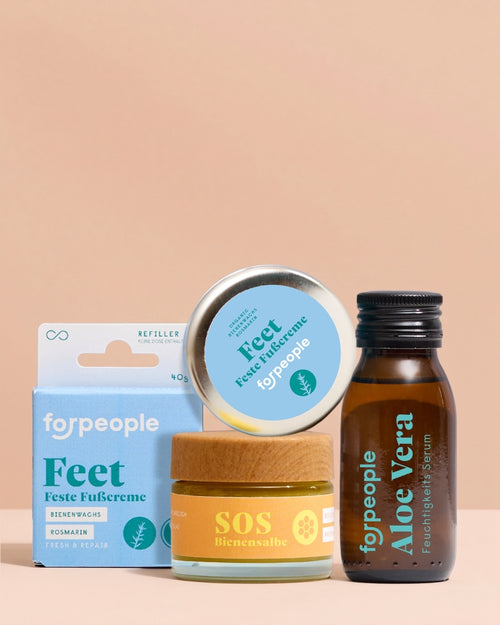
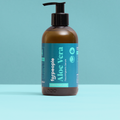
- Foot Care Set – 3 Steps for Cracked Heels, €39.90: aloe vera serum, beeswax salve and solid foot cream with refill.
More on this: Does walking barefoot give you more calluses? · Calluses keep coming back · Urea or water-free cream? · How the refill works · Calluses from strength training
From the blog: Cracked Heels, Dry Feet: What Really Helps – and What Doesn't · Well-cared-for feet for spring: care tips
Sources
- Institut für Qualität und Wirtschaftlichkeit im Gesundheitswesen (IQWiG) (2025): Was tun bei Hühneraugen? gesundheitsinformation.de, aktualisiert am 19. März 2025. https://www.gesundheitsinformation.de/was-tun-bei-huehneraugen.html
- Baden HP (1980): The pumice stone in dermatologic therapy. J Am Acad Dermatol 2(1): 29–30. https://doi.org/10.1016/s0190-9622(80)80287-8
- Freeman DB (2002): Corns and calluses resulting from mechanical hyperkeratosis. Am Fam Physician 65(11): 2277–2280. https://pubmed.ncbi.nlm.nih.gov/12074526/
- Singh D, Bentley G, Trevino SG (1996): Callosities, corns, and calluses. BMJ 312(7043): 1403–1406. https://doi.org/10.1136/bmj.312.7043.1403a
- Hashmi F, Nester C, Wright C, Newton V, Lam S (2015): Characterising the biophysical properties of normal and hyperkeratotic foot skin. J Foot Ankle Res 8: 35. https://doi.org/10.1186/s13047-015-0092-7
- Celleno L (2018): Topical urea in skincare: A review. Dermatol Ther 31(6): e12690. https://doi.org/10.1111/dth.12690