





Why walking barefoot builds up calluses
The skin responds to repeated pressure and friction by having the cells of the epidermis divide more often. The skin becomes thicker and contains more keratin (IQWiG 2025). In line with this, a study of heel skin found more dividing cells in the lowest layer of the epidermis and more adhesion proteins that hold the horny cells together (Kim et al. 2010). So more horny cells are formed, and they are shed more slowly. The medical literature treats this thickening as a normal physical response to sustained pressure (Freeman 2002).
In a shoe, the sole spreads part of these forces. Barefoot, the ground meets the skin directly, especially at the heel, the ball of the foot and the big toe. The harder and rougher the ground and the longer the distance, the more reason the skin has to thicken its horny layer. This applies outdoors as well as on tiles and wooden floors at home. Why calluses come back as long as the load remains is explained under Calluses keep coming back.
What research knows about people who walk barefoot
An international research team, including members from Harvard University, Chemnitz University of Technology and Moi University in Kenya, studied people in Kenya and in the United States (Holowka et al. 2019). The findings as stated in the abstract of the paper:
- People who frequently walk barefoot have thicker and harder calluses than people who usually wear shoes.
- Callus thickness did not come at the expense of the sense of touch: stimuli at the frequencies that occur during walking were perceived regardless of callus thickness.
- Callus thickness did not change how hard the foot strikes the ground during walking.
- Cushioned shoes protect as well, but reduce the sense of touch. They lower the rate of loading at impact and at the same time increase the force impulse.
| Feature | Thick callus | Cushioned shoe sole |
|---|---|---|
| Protection of the sole | yes, measured as hardness and stiffness of the skin | yes, plus comfort |
| Sense of touch while walking | is retained, regardless of thickness | decreases |
| Foot strike | thickness does not change impact forces | lower rate of loading, larger force impulse |
The study describes what calluses do. It does not show that walking barefoot benefits the body. The authors themselves describe the consequences of the different loading for the skeleton as an open question (Holowka et al. 2019).
The real problem is dryness
There are no sebaceous glands on the sole of the foot (Smith & Thiboutot 2008), so the skin there has no oily film of its own. In a study of 93 people, calluses and cracked heels contained less moisture and were less elastic than unaffected foot skin (Hashmi et al. 2015). People with dry skin also develop calluses more often under pressure and friction (IQWiG 2025).
Barefoot, the two come together. The horny layer gets thicker, and without sock and shoe it is exposed to the air. Warm, dry air, hot ground and frequent washing make the surface dry out faster. With every step the heel is pressed wide and the edge of the heel has to stretch. A thick, dry horny layer cannot do that and cracks, at first only on the surface. The process is explained under Why heel skin gets so thick and cracks, and what is particular about the warm season under Why do heels crack in summer?
Care for barefoot walkers: smooth, do not remove
The callus should stay, but stay supple. A routine you can keep up:
- Wash in the evening: rinse off dirt and sand with lukewarm water and dry thoroughly, including between the toes.
- Look at your soles: this way you notice small cuts, splinters or thorns early.
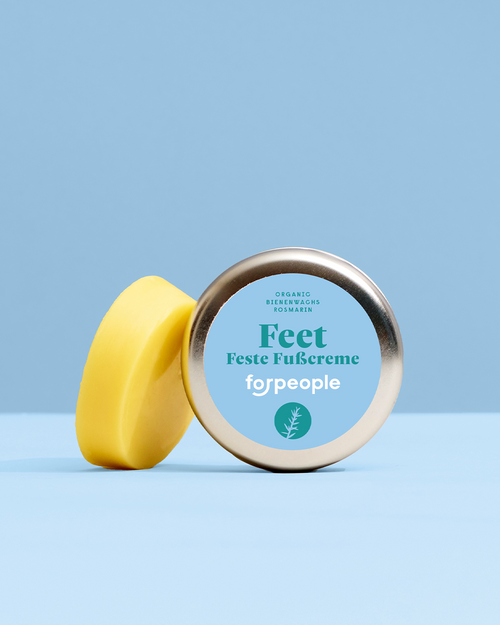
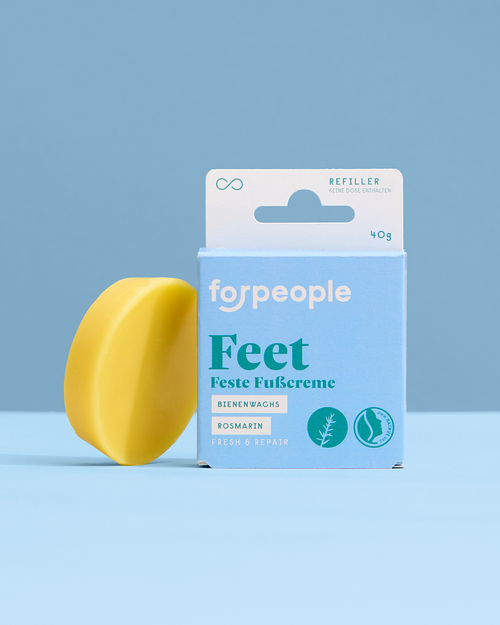
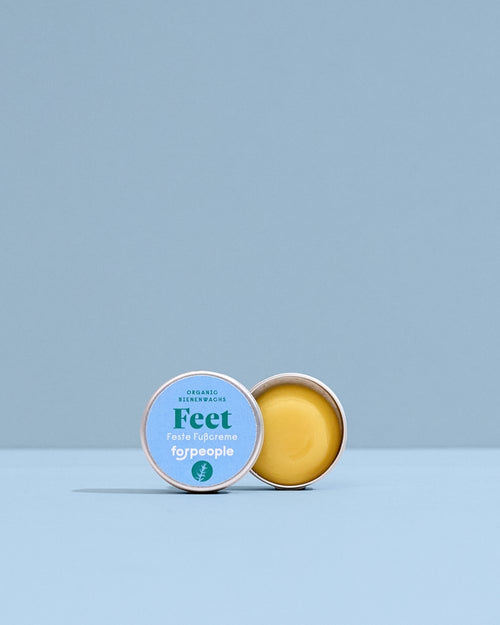
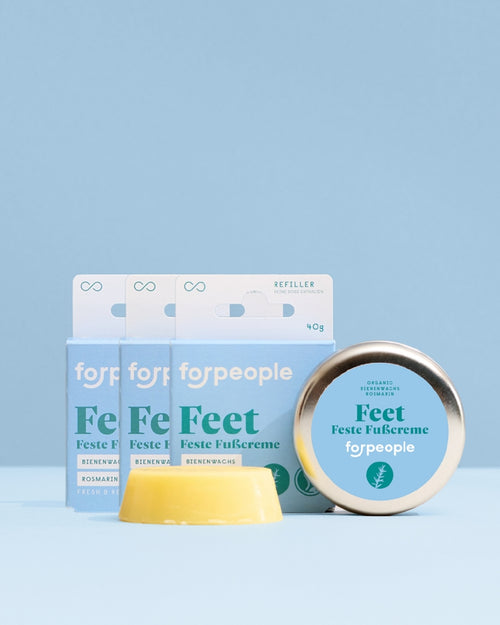
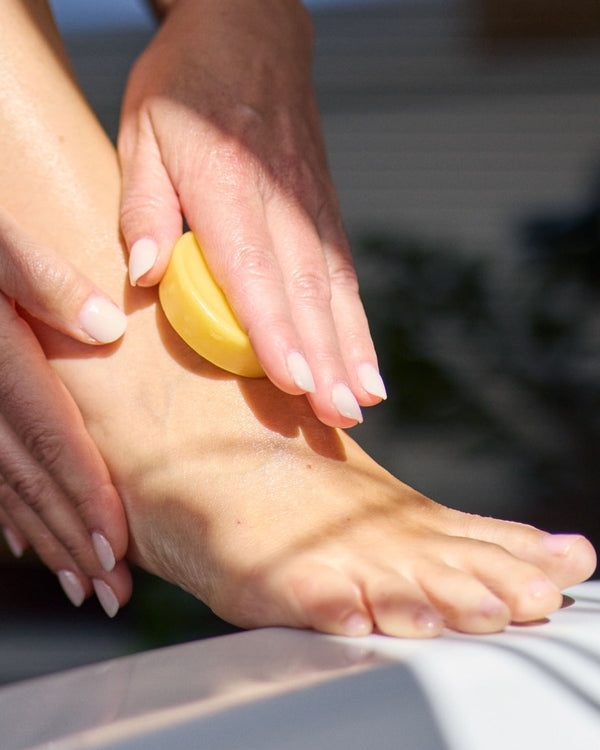
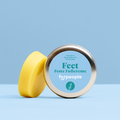
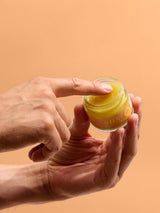
- Apply a thin layer of cream: a cream rich in oils and waxes leaves a film on the skin that reduces evaporation, see Occlusion and transepidermal water loss. The Solid Foot Cream – Rosemary & Sage is water-free and consists of sunflower oil, beeswax, olive oil and shea butter. For the tin there is the refill, for on the go the travel size.
- Socks for the night: cotton socks keep the cream on the heel, more under Foot cream overnight with socks.
- Smooth about once a week, if needed: round off hard ridges at the edge of the heel with a pumice stone and leave the area under the heel and ball of the foot alone. Which tool is suitable is explained under Pumice stone, file or shaver?
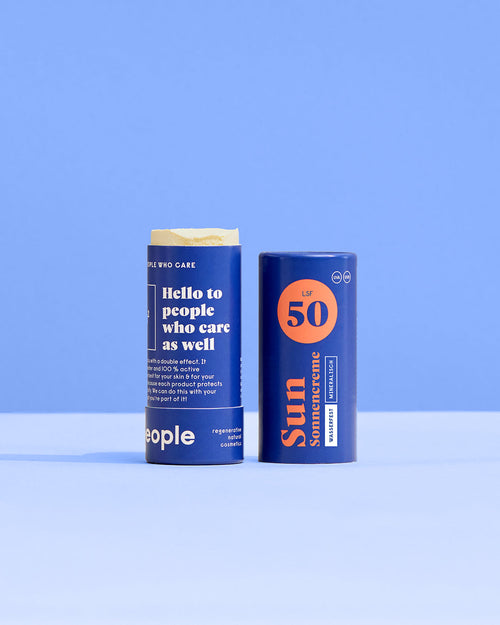
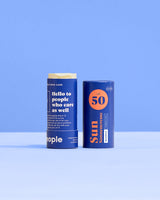
Two practical notes. Apply cream in the evening and not right before walking barefoot: a fresh oily film makes the sole slippery on smooth floors. And the top of the foot gets a lot of sun when you are barefoot. Sun protection belongs there too, for example the Solid Sunscreen SPF50.
Do the calluses go down again?
Yes. Thickened skin caused by pressure and friction usually recedes once the mechanical cause is gone (Freeman 2002). If you wear shoes and socks again in autumn, you will gradually notice the sole becoming thinner and softer. Conversely, the skin needs time in spring to adapt again. So increase distances and rough surfaces step by step. On friction in other parts of the body: Preventing chafing when running and cycling.
When to see a podiatrist or doctor?
Cosmetics care for the skin; they do not treat medical conditions. Have your feet looked at by a podiatrist or doctor if cracks are deep, bleed or hurt when you walk, if a spot presses at a single point (this may be a corn or a wart), if a foreign object is stuck in the sole or if the skin turns red, swells or feels warm. People with reduced sensation in their feet often do not notice pressure spots at first (IQWiG 2025). If you have diabetes, circulation problems or reduced sensation, you should therefore check with a doctor beforehand whether walking barefoot is an option for you, and not remove calluses yourself. In detail: Cracked heels: when to see a podiatrist or doctor?
What customers say
A selection of verified reviews from our shop (collected via Judge.me), translated from German and partly shortened.
“Rich care that goes a very long way. My barefoot-walker feet are really well cared for […]”
Customer review of Solid Foot Cream Refill - Rosemary & Sage, 5 out of 5 stars, May 2026, verified purchase
Frequently asked questions
Do I feel less of the ground with thick calluses?
Not according to the study mentioned: callus thickness was not related to how well stimuli at the frequencies typical of walking were perceived (Holowka et al. 2019).
Should I remove the calluses before the barefoot season?
No. They are the protection the sole needs outdoors. Only round off hard edges at the heel and keep the rest supple with cream.
Do I also get more calluses at home on tiles or wooden floors?
Yes, if you walk barefoot there a lot. Hard, smooth floors also load the heel and ball of the foot directly. How strongly the skin responds depends on how much you walk and how rough the floor is.
Does the solid foot cream make the sole slippery?
Right after applying, yes, because a water-free cream does not absorb at once but stays on the skin as a film. Apply it sparingly and in the evening and put socks on over it. How much is enough is explained under How do I apply a solid cream properly?
Can I take the solid foot cream with me in summer?
Yes. It is solid and comes in a closable metal tin. It gets softer in warm conditions, so do not leave it in direct sun or in a parked car. Cream that has gone soft becomes firm again in a cool place. More under Storing solid cosmetics: heat, summer and winter.
What does the solid foot cream smell of?
Of herbs. The scent comes from essential oils of rosemary, eucalyptus and clary sage. If you prefer to avoid fragrances, you will find an overview under Without fragrance and essential oils.
At forpeople
- Solid Foot Cream – Rosemary & Sage, 40 g, €9.90: water-free, made from sunflower oil, beeswax, olive oil and shea butter, with essential oils of rosemary, eucalyptus and clary sage, in a metal tin.
- Solid Foot Cream Refill - Rosemary & Sage, 40 g, €7.90: refill for the tin.
- Solid Foot Cream Travel Size – Rosemary & Sage in a Tin, 8 g, €5.90.
- Foot Care Set XL – for Dry Feet, tin and 3 refills, €29.90.
More on this: Pumice stone, file or shaver? · Calluses keep coming back · Why heel skin cracks · Foot care before and after hiking
From the blog: Well-cared-for feet for spring: care tips · Cracked heels, tired feet, dry skin: why 90% of all foot creams are mostly water
Sources
- Holowka NB, Wynands B, Drechsel TJ et al. (2019): Foot callus thickness does not trade off protection for tactile sensitivity during walking. Nature 571(7764): 261–264. https://doi.org/10.1038/s41586-019-1345-6
- Freeman DB (2002): Corns and calluses resulting from mechanical hyperkeratosis. Am Fam Physician 65(11): 2277–2280. https://pubmed.ncbi.nlm.nih.gov/12074526/
- Kim SH, Kim S, Choi HI et al. (2010): Callus formation is associated with hyperproliferation and incomplete differentiation of keratinocytes, and increased expression of adhesion molecules. Br J Dermatol 163(3): 495–501. https://doi.org/10.1111/j.1365-2133.2010.09842.x
- Hashmi F, Nester C, Wright C, Newton V, Lam S (2015): Characterising the biophysical properties of normal and hyperkeratotic foot skin. J Foot Ankle Res 8: 35. https://doi.org/10.1186/s13047-015-0092-7
- Smith KR, Thiboutot DM (2008): Thematic review series: skin lipids. Sebaceous gland lipids: friend or foe? J Lipid Res 49(2): 271–281. https://doi.org/10.1194/jlr.R700015-JLR200
- Institut für Qualität und Wirtschaftlichkeit im Gesundheitswesen (IQWiG) (2025): Hühnerauge. gesundheitsinformation.de, aktualisiert am 19. März 2025. https://www.gesundheitsinformation.de/huehnerauge.html