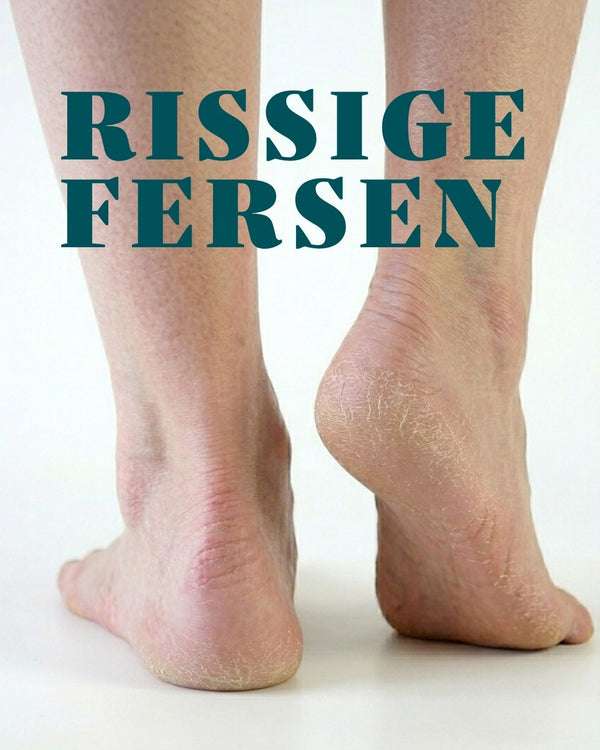
The problem: hard, cracked heels in winter
A callus is a thickened outer skin layer in places exposed to pressure and friction: the edge of the heel, under the ball of the foot, the outside of the big toe. It is yellowish, smooth and hard and usually does not hurt. In winter it often becomes more noticeable: your feet spend all day in boots, your heels feel like cardboard in the evening, and fine cracks form along the edge of the callus that catch on tights. How calluses form and why they grow back is described in Calluses keep coming back: why they grow back and what helps; deep cracks are called fissures, more on this in Skin fissures: what the word means and what is in fissure balm.
Online you will find recipes with vinegar soaks, a slice of lemon under your sock, baking soda in a foot bath, crushed aspirin tablets or peel socks. This page puts them into perspective and shows what helps instead.
Why this happens in autumn and winter
Three things come together in the cold season. First, pressure: sturdy, lined shoes press and rub in different places from sandals, and the skin responds with more callus. Second, the air: according to a review, low humidity and cold weaken the skin's barrier function overall and make it more susceptible to mechanical stress (Engebretsen et al. 2016). The sole of the foot also has no sebaceous glands and therefore no fat film of its own; its thick outer layer only stays supple as long as it holds enough water, as Why heel skin gets so thick and cracks explains. Third, the change: inside the boot the skin gets damp, then it dries out again in heated air. What this means in detail is covered in Dry feet in winter: what causes it, what helps?
Dry callus becomes brittle. It can no longer stretch with every step, and cracks form along its edge. Home remedies that merely “burn away” callus do nothing about these causes.
The solution step by step
| Step | What you do | Why |
|---|---|---|
| Right away: soak | put your feet in warm, not hot, water for five to ten minutes | Warm water softens calluses (NHS); longer and hotter tends to dry the skin out |
| Right away: file | rub in one direction with a wet pumice stone or a file until a thin, smooth layer remains | A thin layer of callus protects the heel from pressure |
| Right away: dry | thoroughly, including between the toes | Damp spaces between the toes get soggy |
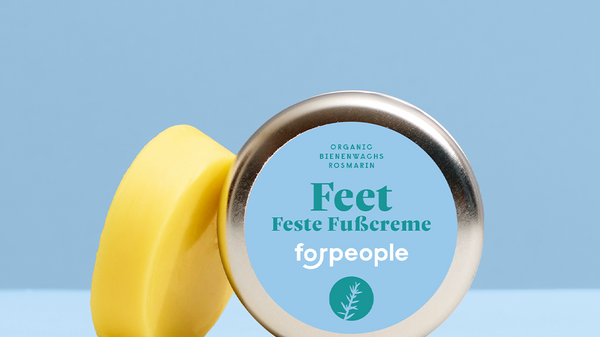
| Every day: moisturise | a rich foot cream such as the Solid Foot Cream – Rosemary & Sage on slightly damp skin, cotton socks on top in the evening | The fat film slows evaporation and keeps heels supple; the cream does not dissolve callus |
| Every day: dry your shoes | air your boots overnight, change socks daily | That way the skin does not stay soaked for hours |
| Prevention: reduce pressure | well-fitting winter shoes, padded socks, keep an eye on pressure points | Without pressure and friction, less callus forms |
| Prevention: for thick callus | use a higher-strength urea cream from the pharmacy underneath | Urea binds water and softens callus; the comparison is in Urea or water-free cream? |
These steps are common practice. How long and how warm the foot bath may be is described in Foot soak before moisturising: how long, how warm, is it worth it?; which tool is suitable in Pumice stone wet or dry? How to remove calluses properly; what socks overnight do in Foot cream overnight with socks: does it help?
What helps – and what doesn't
| Home remedy | Active substance and strength | What happens to the callus | Assessment |
|---|---|---|---|
| Warm water, then pumice stone | none | softens, is removed mechanically | helps; do not remove too much |
| Vinegar in a foot bath | acetic acid; vinegar contains 5 to 15.5 g acid per 100 ml, further diluted in the bath | softens because of the warm water; an acid effect of its own has not been shown | according to current knowledge adds nothing; stings on cracks |
| Vinegar essence | up to 25 g acetic acid per 100 g | attacks the skin | do not use; classed as corrosive to skin from 25 % |
| Lemon juice, lemon slice | citric acid, pH 2.0 to 2.6 | fruit acid in unknown amount | better not; also attacks healthy skin |
| Baking soda in a foot bath | sodium bicarbonate, makes the water slightly alkaline | no additional effect shown | does little harm to intact skin, but adds nothing |
| Aspirin paste | acetylsalicylic acid, breaks down into salicylic acid; arithmetically 10 % and more | salicylic acid loosens the bonds between cells | better not; uncontrolled strength, absorbed through the skin |
| Peel socks | lactic, glycolic, citric, salicylic acid, sometimes urea; strength as stated on the pack | the callus peels off in large areas after a few days | works, but not on broken skin and not with diabetes without medical advice |
The “Assessment” column is our evaluation based on the sources below.
Why acids can work at all. Fruit acids such as lactic, glycolic and citric acid loosen the cohesion of the horny cells; the usual explanation is that they bind calcium from the cell junctions. For cosmetics for daily use, the US expert panel for cosmetic safety recommends less than 10 per cent fruit acid and a pH of at least 3.5; above 20 per cent they count as a chemical peel, including against calluses (Kornhauser et al. 2010). Salicylic acid dissolves the bonds between cells, not the keratin fibres themselves (Arif 2015). Acetic acid is not a fruit acid, and we have found no study showing that it dissolves callus to any significant extent.
Vinegar and vinegar essence. Under German food law, vinegar contains 5 to 15.5 grams of acid per 100 millilitres, vinegar essence more than 15.2 and at most 25 grams per 100 grams (EssigV). Acetic acid is classed as corrosive to skin from 25 per cent and as irritating to skin and eyes between 10 and 25 per cent (CLP Regulation, Annex VI). Household vinegar is below that but has a pH of 2.0 to 3.4 (Clemson Extension).
Lemon and baking soda. Lemon juice has a pH of 2.0 to 2.6 (Clemson Extension), well below the recommended lower limit of 3.5; fruit acids can also increase sensitivity to UV light (Kornhauser et al. 2010). Baking soda makes the water slightly alkaline; more about the substance in Baking Soda.
Aspirin paste. In a moist environment, acetylsalicylic acid gradually breaks down into salicylic acid and acetic acid (PubChem). One 500 milligram tablet in about 5 millilitres of liquid works out at roughly 10 per cent; recipes with several tablets are higher. Salicylic acid is absorbed through the skin, more so under foil; poisoning has been described with use over large areas (Arif 2015).
Peel socks. Your feet sit in plastic covers with an acid solution for 30 to 60 minutes; after a few days the callus peels, and after ten to fourteen days it is over. Stiftung Warentest names limits: with diabetes, ask a doctor first; treat athlete's foot, nail fungus or warts first; do not use on broken, sore or tattooed skin or on children's feet; stay seated while the solution works (Stiftung Warentest 2025).
Typical mistakes
- Using vinegar essence neat or as a compress. It is at the threshold of causing burns and has no place on your feet.
- A lemon slice or paste under foil overnight. The acid acts for hours on the healthy skin around it too, and more is absorbed under foil.
- Removing everything at once. Callus is a protection. Callus planes and blades do not belong in untrained hands; cuts on the heel are painful and let germs in.
- Hot, long foot baths. Tempting in winter, but they tend to dry the skin out; five to ten minutes in warm water is enough.
- Pulling off the flakes after peel socks. Let them come off by themselves, otherwise the skin underneath tears.
- Not moisturising after filing. Freshly filed skin dries out again quickly in heated air.
- Acid on cracked skin. On open cracks it stings and can penetrate deeper.
When to seek medical advice
If you have diabetes, do not treat calluses yourself. The international guideline on preventing diabetic foot ulcers explicitly lists not using chemical agents or plasters to remove callus as part of self-care; excessive callus should be removed by a trained professional (Bus et al. 2024). The UK National Health Service also advises against treating calluses and corns yourself if you have circulation problems, a weakened immune system or are older (NHS). Also seek advice from a podiatrist or doctor if
- nothing improves after three weeks of self-care, or a spot bleeds, oozes pus or hurts badly (NHS),
- the callus has cracked deeply, see Cracked heels: when to see a podiatrist or doctor,
- a sharply defined, painful spot with a hard core suggests a corn,
- the skin between the toes or on the sole flakes and itches; whether it is a fungus is for the practice to decide, see Dry feet or athlete's foot?,
- toes turn white, blue or numb in the cold; that is not a skincare matter,
- the skin turns red, blisters or burns badly after vinegar, lemon, a paste or peel socks.
If vinegar essence or another acid has got onto your skin and it burns, rinse the area immediately with plenty of water and seek medical advice if blisters form or the pain persists.
Frequently asked questions
Why are calluses worse in winter?
Sturdy shoes press and rub more, dry and cold air weakens the skin barrier, and the sole of the foot has no fat film of its own. Dry callus becomes brittle and cracks at the edge.
Does vinegar help with calluses?
It has not been studied whether vinegar dissolves callus to any significant extent. A vinegar soak softens the callus like any warm foot bath; afterwards it is easier to file. On cracked skin, vinegar stings.
Can I use vinegar essence on calluses?
No. Vinegar essence contains up to 25 per cent acid; acetic acid is classed as corrosive to skin from 25 per cent and as irritating to skin between 10 and 25 per cent.
Does baking soda help with calluses?
Baking soda makes the foot bath slightly alkaline. We have found no study showing an advantage over warm water alone.
How does aspirin paste work on calluses?
In a moist environment, acetylsalicylic acid breaks down into salicylic acid, which dissolves the bonds between the horny cells. Depending on the recipe, the paste is very concentrated, also attacks healthy skin and is absorbed more under foil. It is not for people with diabetes, circulation problems or an aspirin allergy.
Can I use peel socks if I have diabetes?
Not without medical advice. The international guideline on foot care in diabetes advises against removing callus with chemical agents or plasters; that is what podiatry is for.
What should go on my feet after filing?
A foot cream on still slightly damp skin, ideally with cotton socks on top in the evening. It does not dissolve callus, but it keeps the skin supple.
At forpeople
We do not sell callus removers. Our foot care is meant for afterwards: water-free cream that keeps the skin supple after the foot bath and the pumice stone.
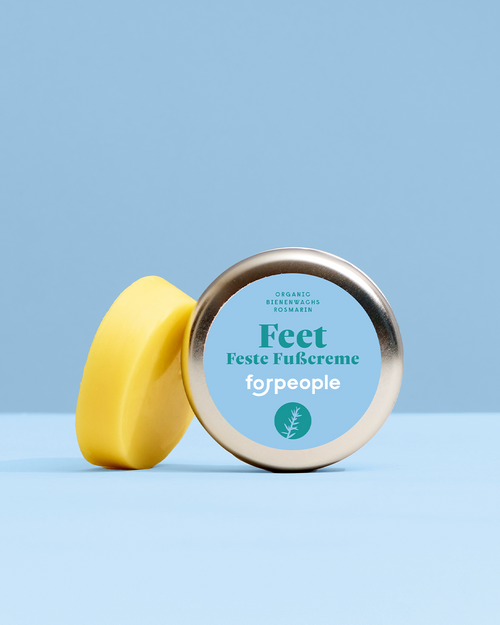
- Solid Foot Cream – Rosemary & Sage, 40 g, €9.90: sunflower and olive oil, beeswax, shea butter, St John's wort extract and essential oils of rosemary, eucalyptus and clary sage; according to the product page not for children under 7 and not for broken skin.
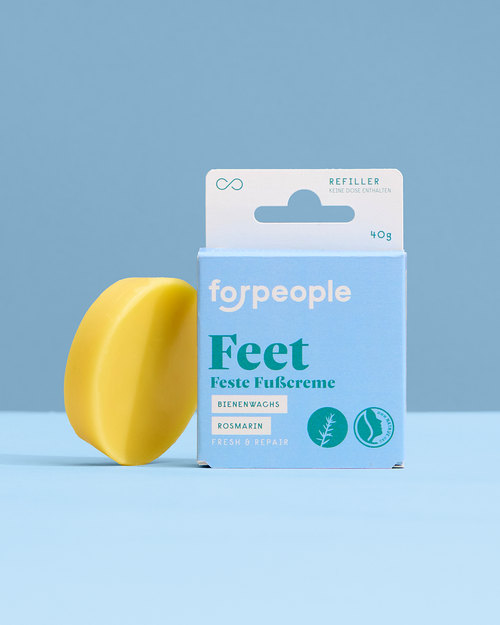
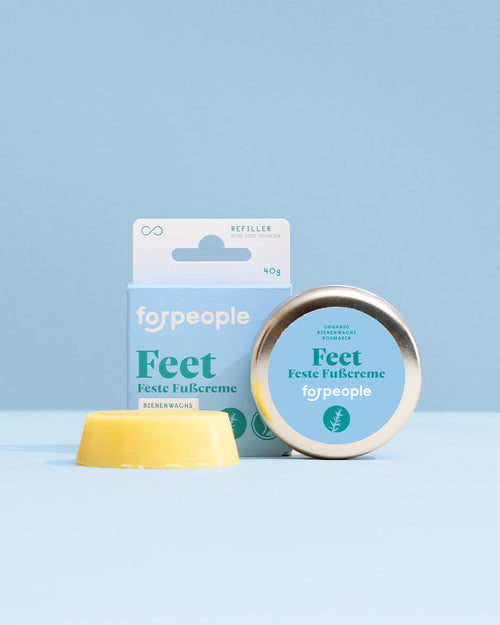
- Solid Foot Cream Refill - Rosemary & Sage, 40 g, €7.90: the same cream for refilling the tin.
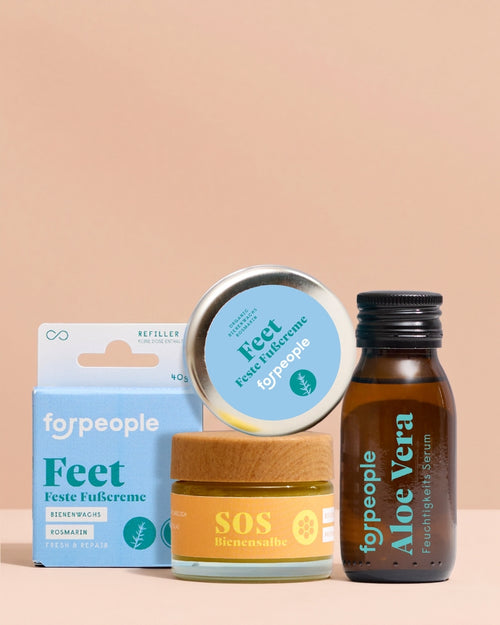
- Foot Care Set – 3 Steps for Cracked Heels, €39.90: Aloe Vera Serum, beeswax salve and solid foot cream.
- Foot Care Set – For Dry, Rough Feet (2× Rosemary Cream), 80 g, €16.90: two solid foot creams with rosemary and sage.
Read more: Does walking barefoot give you more calluses? · Why do feet get drier with age? · Cold cream: water-free, but no protection from frost
From the blog: Cracked heels, dry feet: what really helps – and what doesn't · What goes into the solid foot cream – and why
Sources
- German Vinegar Regulation (Verordnung über den Verkehr mit Essig und Essigessenz, EssigV), §§ 1 and 2. gesetze-im-internet.de, accessed 29 October 2026. https://www.gesetze-im-internet.de/essigv/__1.html
- Regulation (EC) No 1272/2008 on classification, labelling and packaging of substances and mixtures (CLP), Annex VI Table 3.1, index no. 607-002-00-6 (acetic acid), specific concentration limits. OJ L 353 of 31.12.2008. https://eur-lex.europa.eu/eli/reg/2008/1272/oj
- Clemson Cooperative Extension: pH Values of Common Foods and Ingredients. Table (PDF), accessed 29 October 2026. https://www.clemson.edu/extension/food/_files/ph-of-common-foods-table.pdf
- Kornhauser A, Coelho SG, Hearing VJ (2010): Applications of hydroxy acids: classification, mechanisms, and photoactivity. Clinical, Cosmetic and Investigational Dermatology 3: 135–142. https://doi.org/10.2147/CCID.S9042
- Arif T (2015): Salicylic acid as a peeling agent: a comprehensive review. Clinical, Cosmetic and Investigational Dermatology 8: 455–461. https://doi.org/10.2147/CCID.S84765
- PubChem: Aspirin (CID 2244), section Stability/Shelf Life. National Center for Biotechnology Information, accessed 29 October 2026. https://pubchem.ncbi.nlm.nih.gov/compound/2244
- Stiftung Warentest (2025): Anti-Hornhaut-Fußmasken: Weichere Füße, aber nicht für alle. test.de, 13 June 2025, accessed 29 October 2026. https://www.test.de/Anti-Hornhaut-Fussmasken-Weichere-Fuesse-aber-nicht-fuer-alle-6224053-0/
- Bus SA, Sacco ICN, Monteiro-Soares M, Raspovic A, Paton J, Rasmussen A et al. (2024): Guidelines on the prevention of foot ulcers in persons with diabetes (IWGDF 2023 update). Diabetes/Metabolism Research and Reviews 40(3): e3651. https://doi.org/10.1002/dmrr.3651
- NHS: Corns and calluses. Last reviewed 28 July 2026, accessed 29 October 2026. https://www.nhs.uk/conditions/corns-and-calluses/
- Engebretsen KA, Johansen JD, Kezic S, Linneberg A, Thyssen JP (2016): The effect of environmental humidity and temperature on skin barrier function and dermatitis. Journal of the European Academy of Dermatology and Venereology 30(2): 223–249. https://doi.org/10.1111/jdv.13301